 Birch Bay
 Why a Nooksack Roof Has to Work Harder Than Most
A roof in Nooksack isn't just shedding rain like a roof three hours inland would. It's dealing with salt-laden air coming off the water, long stretches of low-intensity driving rain rather than short downpours, and a mossy, shaded understory that never fully dries out for months at a time. Any one of those on its own is manageable. Together, over years, they're what actually shortens a roof's working life here — not one dramatic storm, but slow, steady wear that a generic install spec doesn't account for.
That's the core difference between a "new roof installation" done to a national average standard and one done for Whatcom County conditions. The materials can be identical. What changes is the underlayment strategy, the flashing detail at every penetration, the ventilation plan, and the attention paid to how the roof will perform in its fifth and tenth year, not just its first.
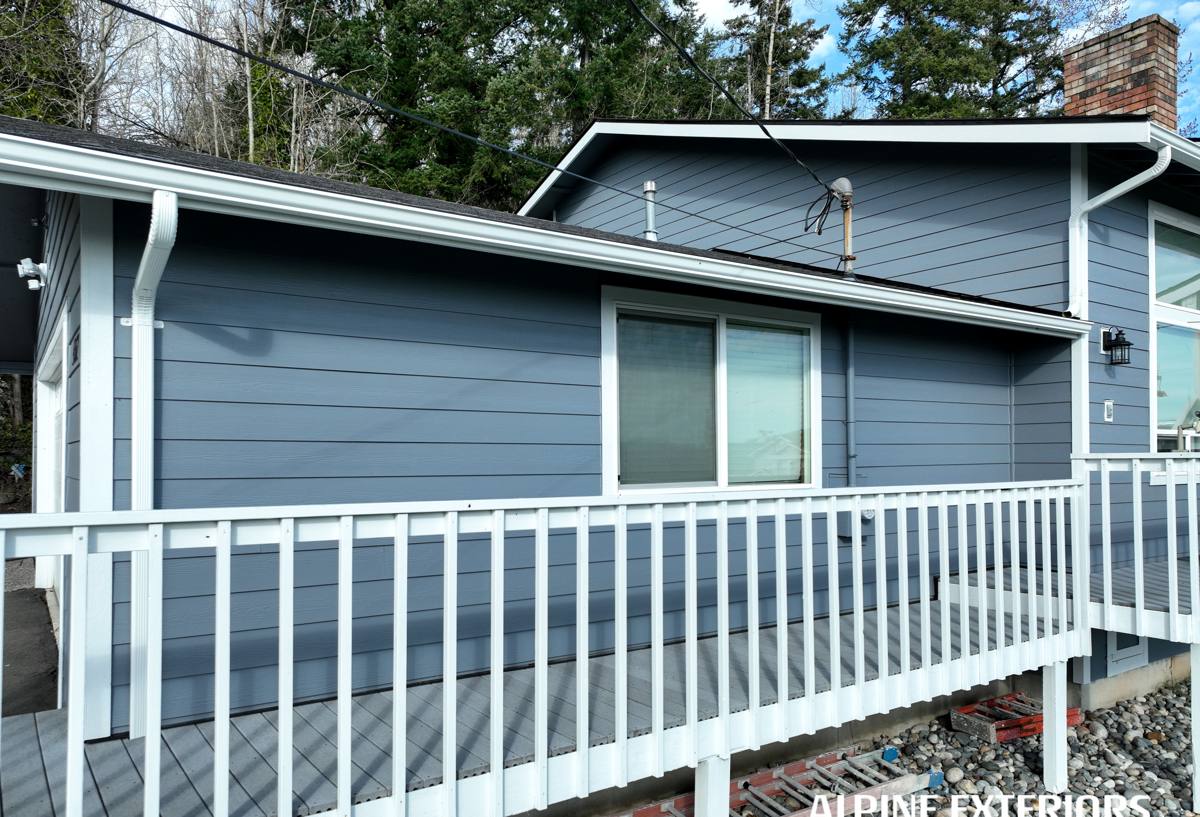
Signs a Nooksack Home Needs a New Roof, Not Another Repair
Roofs rarely fail all at once here — they degrade gradually, and homeowners often patch the same trouble spot two or three times before asking whether a full replacement makes more sense. A few patterns are worth paying attention to.
What you can see from the ground
- Shingles that are cupping, curling at the edges, or losing their granules in patches (not just at the ridge)
- Moss or algae buildup that comes back within a season or two of being cleaned off
- Flashing around chimneys, skylights, or wall-to-roof transitions that looks lifted, rusted, or caulked over repeatedly
- Sagging in the roofline, especially over porches or additions
What you notice inside
Staining on ceilings or in the attic near the roof deck, a musty smell that persists after ventilation, or daylight visible through the roof boards from inside the attic are all signs the roof's water-shedding ability has already been compromised — not signs to watch and wait on.
A single leak isn't always a replacement job. But when several of these show up together, or the roof is already 18-25 years old (typical service life for asphalt shingle roofs in this climate, often shorter than manufacturer ratings suggest once salt air and moss are factored in), a new roof usually costs less over five years than a string of repairs.
What a Correct New Roof Installation Actually Involves
The shingles or panels are the part everyone sees, but they're the last layer applied and arguably not the part doing the most work. A roof that fails early in this climate almost always failed underneath, not on the surface.
Tear-off and deck inspection
We remove the old roofing down to the deck rather than layering over it. That's the only way to actually see the sheathing — soft spots, delamination, or rot around old flashing points get replaced before anything new goes down. Roofing over a compromised deck just hides a problem that will resurface as a leak within a few years.
Underlayment built for driving rain
In areas that see sustained wind-driven rain rather than brief cloudbursts, water can be pushed sideways and even slightly uphill under standard felt underlayment at low-slope sections and edges. We use synthetic underlayment across the field and self-adhered, waterproof membrane at eaves, valleys, and any low-slope transitions — the spots where wind-driven rain actually gets forced under the shingle line.
Flashing at every penetration
Chimneys, plumbing vents, skylights, and wall intersections are where the majority of roof leaks start — not in the open field of shingles. New step flashing, counter-flashing, and pipe boots are installed at every penetration rather than reusing old flashing or relying on sealant alone, which degrades faster in salt air than it does inland.
Ventilation and moisture control
A roof deck that can't breathe traps moisture from inside the house, which shows up as premature sheathing rot from underneath — even with a perfect exterior install. We check intake (soffit vents) and exhaust (ridge vents) together, since one without the other doesn't move air.
Choosing a Roofing Material for This Climate
There isn't one "best" material for Nooksack — there's a best fit for a given roof's slope, budget, and how much moss and moisture exposure it gets from surrounding trees. Here's how the common options actually compare in this specific climate.
| Material | Moss/algae resistance | Salt air durability | Typical lifespan here | Maintenance |
|---|---|---|---|---|
| Architectural asphalt shingle | Moderate (better with algae-resistant granules) | Good with correct flashing | 18-25 years | Periodic moss removal, gutter clearing |
| Standing seam metal | Very good — sheds moss growth medium | Very good with coastal-rated coating and fasteners | 40+ years | Low; occasional fastener/seam check |
| Synthetic/composite shingle | Good | Good | 30-40 years | Low |
| Cedar shake | Requires active upkeep to resist moss | Moderate — needs regular treatment near salt air | 20-30 years with upkeep | High; regular treatment and inspection |
We install asphalt and metal roofing most often in this area because they hold up predictably with the right detailing and don't demand ongoing chemical treatment to stay ahead of moss. Cedar can look great and plenty of homeowners want it for the aesthetic, but we're upfront that it's a higher-maintenance choice here specifically because of how much moisture and organic growth it's exposed to near the water — that's a maintenance-burden trade-off, not a knock on the material itself.
Our New Roof Installation Process
- On-site inspection. We look at the whole roof system — deck, flashing, ventilation, current material condition — not just what's visible from the driveway.
- Written estimate. Material options, scope of work, and a clear price, explained in plain terms before any work starts.
- Tear-off and deck repair. Old roofing removed, deck inspected and repaired as needed, disposed of responsibly.
- Underlayment and flashing installed. Waterproof membrane at vulnerable areas, new flashing at every penetration.
- Roofing material installed to manufacturer spec, with attention to ventilation intake and exhaust balance.
- Final walkthrough. We go over the finished roof, gutters, and any cleanup with you before calling the job done.
Moss and Long-Term Roof Maintenance in Whatcom County
Moss season around here isn't a one-time fall cleanup — it's a near-year-round condition on north-facing slopes and anywhere tree cover keeps a roof shaded and damp. A new roof reduces the problem by starting clean and by using algae-resistant shingle granules where applicable, but it doesn't eliminate the need for occasional attention.
What actually helps
Zinc or copper control strips installed near the ridge let rain carry trace metal ions down the roof slope, which inhibits new moss and algae growth over time without chemical treatment. Keeping tree limbs trimmed back from the roofline reduces both shade and the steady drop of organic debris that feeds moss in the first place. Gutters kept clear matter too — a roof can shed water perfectly and still back up at a clogged gutter line, which sends water under the shingle edge instead of off the roof.
What a New Roof Costs and What Moves the Number
We don't quote a roof price without seeing it — roof geometry, current layer count, deck condition, and material choice all swing the total meaningfully. But a few factors consistently drive the number up or down, and it's worth knowing them before you get a quote.
- Roof size and number of stories — larger and taller roofs mean more material and more labor/safety setup
- Roof pitch and complexity — a simple gable roof costs less to install than one with multiple valleys, dormers, or low-slope sections
- Tear-off scope — one existing layer to remove costs less than two, and a rotted deck adds repair cost that only shows up once tear-off starts
- Material choice — asphalt shingle is generally the most affordable upfront; metal costs more initially but lasts substantially longer
- Access and site conditions — steep driveways, limited staging area, or heavy tree cover can add setup time
- Ventilation or structural upgrades — adding proper intake/exhaust venting where it's missing is worth doing during the tear-off, not after
As a broad range, most full asphalt shingle replacements on a typical single-family home run from the high single-digit thousands to the low twenty-thousands depending on the factors above; metal roofing generally runs higher upfront in exchange for a much longer service life. An accurate number only comes from a walk of the actual roof.
Why Hiring a Crew That Already Works Nooksack Matters
A roofing crew that mostly works inland can install a technically correct roof and still miss the details that matter here — using standard felt where self-adhered membrane belongs, skipping the zinc strip a homeowner didn't know to ask for, or not accounting for how much longer surfaces stay damp under tree cover this close to the water. None of that shows up as a defect on day one. It shows up as a callback in year three or four.
We work Birch Bay, Nooksack, and the surrounding Whatcom County area regularly, which means the underlayment strategy, flashing details, and material recommendations above aren't generic — they're what we've found actually holds up against this specific combination of salt air, driving rain, and moss. That's the difference a local crew makes: not a sales pitch, just fewer surprises down the road.
If your roof is showing its age or you're planning ahead rather than reacting to a leak, we're happy to take a look and give you an honest read on where it stands. Use the form below to request a free, no-pressure estimate.