 Birch Bay
 Building a Deck That Can Handle Point Roberts' Marine Climate
Point Roberts sits on its own small peninsula, wrapped by Boundary Bay on one side and the Strait of Georgia on the other, in the far northwest corner of Whatcom County. That location makes it a striking place to put a deck — open water views, marine light, quiet evenings — and it's also exactly why decks here take more of a beating than decks a few miles inland. Salt-laden air moves through constantly, rain arrives in long, wind-driven systems typical of this stretch of Washington coastline, and shaded, damp corners of a yard stay green with moss for most of the year. A deck built to a generic spec sheet will show corrosion streaks, cupped boards, or a slick moss film within a couple of seasons. A deck built specifically for this environment won't.
We build and repair decks throughout Birch Bay and the surrounding Whatcom County coastline, including Point Roberts, and we've learned which shortcuts cause problems in year two instead of year twenty. This page covers what a custom deck actually needs to hold up here, how we approach the build, and what ongoing care looks like once it's finished.
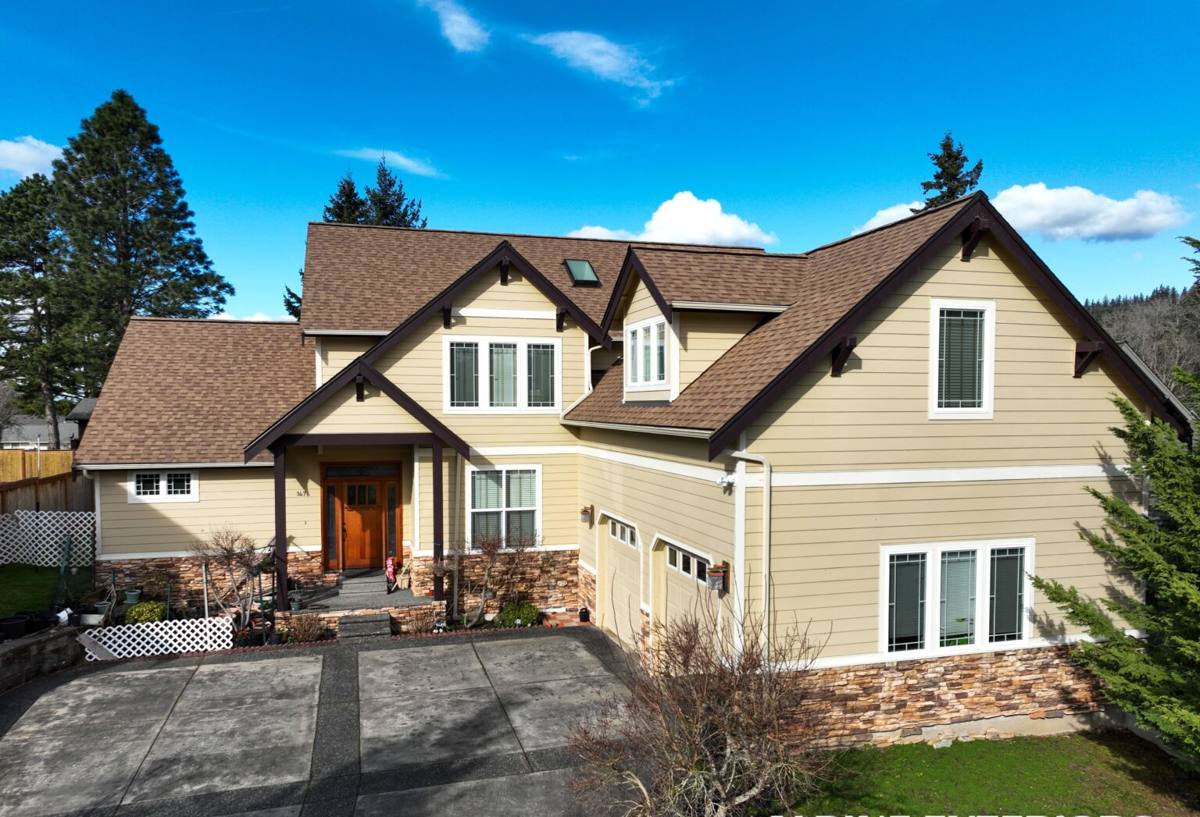
Why Salt Air, Rain, and Moss Change the Job
Salt air
Airborne salt from the surrounding water settles on every exposed surface — decking, railings, fasteners, and the framing hardware underneath. It speeds up corrosion in anything short of a truly corrosion-rated metal, and it can chalk or dull some finishes faster than the same product would age even a short distance inland. This is the main reason we treat hardware selection as carefully as we treat the decking material itself.
Driving rain
Rain in this part of Whatcom County doesn't just fall straight down; a good share of the year it comes in sideways, pushed by wind off the water. That drives moisture into board joints, under railing base plates, and against the house at the ledger connection in ways a calmer climate never would. Flashing and drainage details that might be optional elsewhere are not optional here.
A long moss season
Shade, moisture, and mild temperatures are exactly what moss needs, and Point Roberts supplies all three for most of the year. Moss on a deck isn't only a cosmetic issue — it holds water against the board surface, and on smooth or low-traction decking it turns stairs and landings into a genuine slip hazard, especially on the north or shaded side of a house.
What a Correctly Built Deck Needs in This Environment
None of this requires exotic materials, but it does require choosing the right materials and details for a marine climate rather than defaulting to whatever is cheapest or fastest to install. A deck that's going to hold up in Point Roberts generally needs:
- Fasteners and structural hardware rated for coastal or high-corrosion exposure, not standard interior-grade galvanized
- Decking material chosen for how it handles constant moisture cycling, not just for looks
- Proper ledger flashing where the deck meets the house, since that's the single most common source of hidden rot
- Airflow underneath the deck so framing can dry out between rain events instead of staying damp
- A drainage plan that moves water off the deck surface and away from the house, not toward it
- Surface texture or grooved boards on stairs and high-shade areas to cut down on moss-related slipping
Choosing Decking Material for Salt Air and Moss
Every decking material has trade-offs, and the right answer depends on your budget, how much upkeep you want to do, and how exposed the deck is to sun, shade, and salt spray. Here's how the common options generally compare in a climate like this one:
| Material | How it handles salt air | Moss/moisture resistance | Upkeep |
|---|---|---|---|
| Pressure-treated wood | Fine with proper fasteners; the wood itself is not the weak point, the hardware is | Needs regular cleaning and re-sealing to shed moisture well | Highest — cleaning, sealing, occasional board replacement |
| Cedar | Naturally decent rot resistance, but surface finish weathers faster near salt air | Moderate; still needs periodic cleaning in shaded areas | Moderate to high — finish maintenance to keep look and protection |
| Composite decking | Handles salt exposure well; no bare wood surface to corrode or absorb moisture | Good, though algae/moss can still grow on the surface film in deep shade | Low — periodic washing, no sealing or staining |
| PVC/cellular decking | Very good; fully synthetic surface is largely indifferent to salt | Best of the group for moisture resistance | Lowest — occasional cleaning only |
We're not going to tell a homeowner that one of these is objectively "the" answer — we install all of them, and each is a reasonable choice under the right circumstances. What we will do honestly is walk through where your deck sits relative to the water, how much direct sun it gets, and what kind of maintenance schedule you actually want to keep, and let that steer the recommendation rather than steering you toward whatever's easiest for us to install.
Framing and Substructure: The Part Nobody Sees
The decking boards get all the attention, but the framing underneath is what actually determines how long a deck lasts in this climate. A few details matter more here than they would in a drier inland location:
Ledger attachment. Where the deck ties into the house is the most common point of hidden water intrusion on any deck, and driving rain makes it worse. Proper flashing, correct fastener spacing, and a small gap or flashing detail that keeps water from wicking behind the ledger board are not optional steps — they're the difference between a deck that lasts decades and one that causes a rot problem behind the siding that nobody notices until it's expensive.
Footings in wet ground. Point Roberts soil, like much of this coastal area, can stay saturated for long stretches during the wet season. Footings need to be set to the correct depth and on stable, well-drained bearing, not just poured wherever is convenient.
Joist hardware. Every hanger, screw, and structural connector should be rated for the exposure it will actually see — under a deck near salt water, that means coastal-grade or better, every time, not just on the parts that are easy to reach later.
Railings, Fasteners, and Hardware: Where Corrosion Starts First
If a deck in this environment is going to fail early, it usually starts at the hardware, not the decking boards. Standard galvanized screws and brackets can start showing rust streaks within a year or two of exposure to salt air; the boards around them still look fine while the connection underneath is quietly weakening. We spec fasteners and railing hardware rated for the exposure level a given deck actually faces — which, this close to open water, usually means treating the whole structure as coastal-grade rather than cutting corners on the parts that are hardest to inspect later.
Railing posts and baseplates deserve the same attention. Water that collects at a post base and can't drain will sit there through the wet season, and that's exactly where hardware corrosion and wood rot both tend to start first.
Designing to Shed Water, Not Trap It
A lot of moss and moisture problems on decks come down to design decisions made before a single board was installed. Small slopes, gaps, and drainage paths that seem minor on paper make a real difference over years of Whatcom County rain:
- A slight slope away from the house so water runs off rather than pooling near the ledger
- Consistent board spacing so water and debris can pass through instead of collecting
- Clear airflow under the deck, especially on low-to-grade builds, so framing can actually dry out
- Gutters or drip edges positioned so roof runoff isn't dumping directly onto the deck surface
- Planting and landscaping kept back enough that shade and moisture don't sit directly on the deck year-round
None of these are expensive add-ons — they're planning decisions made during design, which is why we walk the site and talk through sun, shade, and drainage before we finalize a layout rather than after.
Our Process for a Point Roberts Deck Project
Building here has one added wrinkle that doesn't come up elsewhere in Whatcom County: Point Roberts is separated from the rest of the county by water and international border, so getting there means crossing through Canada. That affects scheduling and material delivery for any contractor who doesn't already build in the area regularly — it's part of why we plan Point Roberts projects the way we do:
- An on-site walkthrough to look at sun exposure, shade patterns, drainage, and how the deck will tie into the house
- A straightforward conversation about material options and trade-offs for your specific site, budget, and maintenance preference
- Material and delivery planning ahead of time, since travel logistics here mean we don't want to be making extra trips mid-project for something that should have been ordered up front
- Permitting through Whatcom County, since Point Roberts falls under the same county building jurisdiction as the rest of unincorporated Whatcom County
- Framing built to coastal-grade hardware standards, with ledger flashing and drainage handled as core steps, not afterthoughts
- A final walkthrough with you before we consider the job finished
Maintenance: What to Expect Season to Season
Even a well-built deck needs some seasonal attention in this climate — the goal of a good build is to make that maintenance light, not to eliminate it entirely.
| Season | What to check or do |
|---|---|
| Spring | Clear winter moss and debris from boards and stair treads; check railing connections after winter storms |
| Summer | Light wash to keep salt residue from building up; re-seal wood decking if it's due |
| Fall | Clear leaves and debris before they trap moisture against the surface for the winter |
| Winter | Keep drainage paths clear so standing water doesn't sit against the deck or the house |
If you're seeing moss coming back within weeks of clearing it, persistent dark staining near the house, or soft spots anywhere in the decking, those are signs worth having looked at rather than waiting on.
Why Local Experience with Point Roberts Matters
Point Roberts is a unique piece of geography — cut off from the rest of Washington by land, reachable only by crossing through Canada or by water — and that isolation shapes how a deck project has to be planned. Contractors who don't regularly work out here often underestimate lead times, under-order materials, or simply aren't available for the follow-up trips a build sometimes needs. We already build in Birch Bay and along this stretch of Whatcom County's coastline, so Point Roberts logistics, permitting, and the realities of this specific marine climate aren't something we're learning on your project.
If you're planning a new deck or replacing one that's showing its age, we're happy to take a look and talk through what makes sense for your site. There's no pressure and no charge for an estimate — just a straightforward look at what your deck needs and what it would take to get there. Use the form below to get started.