 Birch Bay
 Building Decks for Point Roberts' Marine Climate
Point Roberts sits on its own little peninsula, surrounded on three sides by water, which means every deck built out there deals with a harder version of the weather the rest of Whatcom County gets. Salt-laden wind comes off the water almost constantly, rain drives in sideways for weeks at a stretch in fall and winter, and the shoulder seasons stay damp long enough for moss and algae to take hold on any surface that doesn't dry out fast. A deck built to a generic spec — the kind you'd see in a catalog or a big-box how-to guide — will show its age here in a few years instead of a couple decades. A deck built for this specific exposure holds up.
This page covers what we actually do differently for a Point Roberts deck: material choices, fastener and framing details, drainage and moss prevention, and the process we follow from first walk-through to final sign-off.
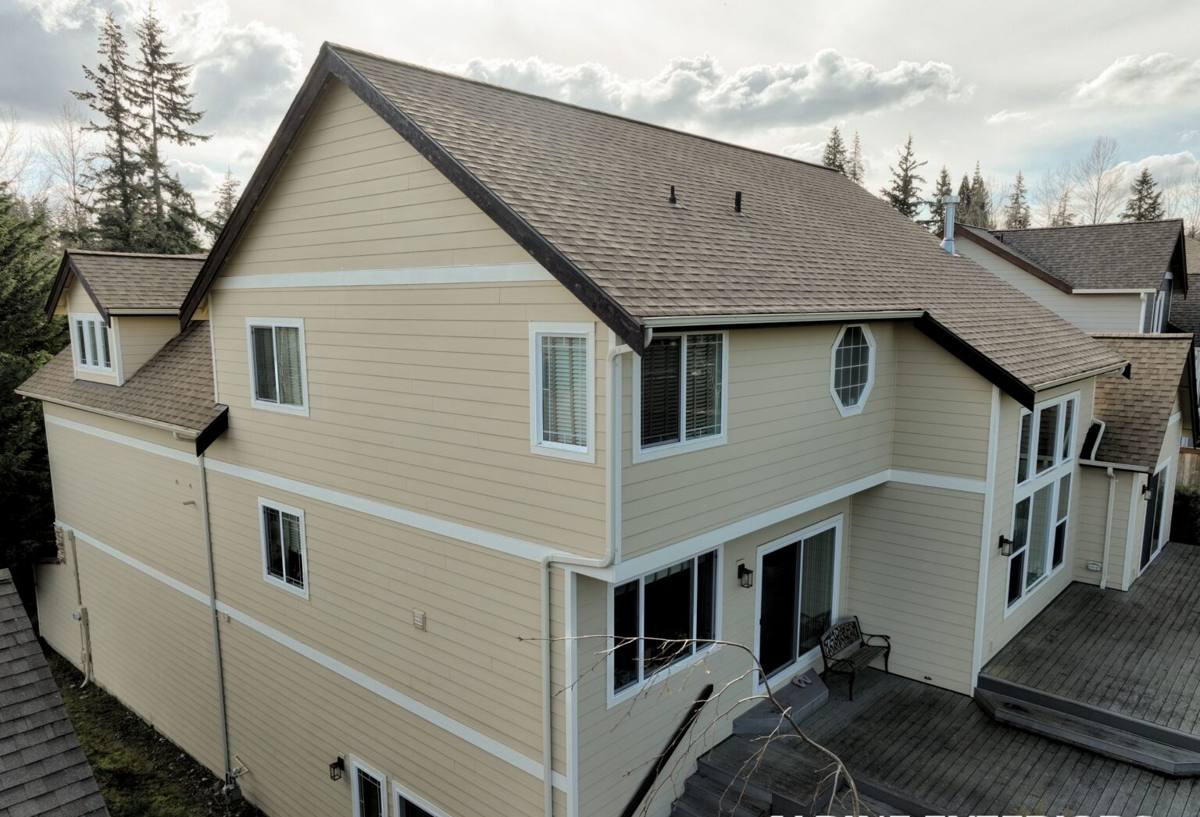
What Makes Point Roberts Tough on Decks
Three things stack on top of each other out here, and it's the combination that causes problems, not any one of them alone.
Salt Air
Airborne salt accelerates corrosion on anything metal — fasteners, brackets, hangers, railing hardware. A screw or hanger rated for general outdoor use inland can start rusting within a few seasons this close to the water. Once a fastener corrodes, it loses holding strength long before it looks obviously bad, which is part of why hidden structural failures catch homeowners off guard.
Driving Rain
Wind-driven rain doesn't just fall on a deck, it gets pushed sideways into ledger connections, under railing posts, and into any gap that isn't properly flashed or sealed. Water that gets behind a ledger board or into a post base and can't get back out is the single most common cause of hidden rot we find on older decks in this area.
A Long Moss Season
Cool, damp conditions here stretch from roughly October through April, sometimes longer. Any decking surface that stays shaded or holds moisture — north-facing decks, areas under overhangs, boards installed with tight gaps — will grow moss and algae during that stretch. Beyond looking bad, a mossy surface is a slip hazard and it holds moisture against the board itself, which shortens its life.
Choosing the Right Decking Material for This Climate
There's no single "best" decking material for every budget and every home — the right call depends on how much maintenance you want to do and how long you want the surface to last before it needs attention. Here's how the common options actually perform in a marine climate like Point Roberts, not just in general.
| Material | Moisture/Salt Performance | Maintenance | Typical Lifespan |
|---|---|---|---|
| Pressure-treated wood | Good if properly sealed and re-coated; end grain and cut edges are the weak point | Annual cleaning, re-sealing every 1-2 years | 10-15 years with upkeep |
| Cedar | Naturally rot-resistant but softer; needs sealing to resist moss and graying | Cleaning and sealing every 1-2 years | 15-20 years with upkeep |
| Composite decking | Excellent moisture resistance, won't rot; some early-generation boards can still grow surface algae if not cleaned | Periodic washing, no sealing/staining | 25-30+ years |
| PVC/capped polymer | Best moisture and salt resistance of the common options; fully sealed surface | Occasional washing | 25-30+ years |
For a lot of Point Roberts homeowners, composite or capped polymer decking is worth the higher upfront cost specifically because it removes moss and rot from the maintenance equation. If you prefer real wood for the look and feel, that's a legitimate choice too — it just means committing to a sealing schedule, and we'll tell you honestly what that upkeep looks like before you decide.
Fasteners, Framing, and Substructure: Where Decks Actually Fail
Homeowners tend to focus on the decking boards because that's what they see, but the structure underneath is what actually determines how long a deck lasts and how safe it stays. This is the part of the job that matters most in a salt-air environment.
- Stainless steel or hot-dip galvanized fasteners throughout — standard coated screws corrode faster this close to the water and can stain the decking around them
- Ledger board flashing installed correctly, with a drainage gap and proper water-shedding detail where the deck meets the house
- Post bases that hold posts off the concrete or ground surface, so end grain isn't sitting in standing water
- Joist tape or another flashing membrane on top of framing lumber, so fastener penetrations don't become entry points for water
- Proper joist spacing and blocking sized for the decking material chosen, not just the minimum code spacing
We've opened up older decks in this area where the boards on top still looked fine, but the framing underneath was soft from years of trapped moisture. That's a structural and safety issue, and it's almost always preventable with the right details at the framing stage — it's much cheaper to get right the first time than to rebuild.
Moss, Algae, and Drainage: Designing for Long-Term Dryness
A deck's biggest enemy out here isn't a single storm, it's water that has nowhere to go. Good design gets water off the deck surface and out from underneath it as fast as possible.
Board spacing matters more than most people realize. Gaps that are too tight trap debris and moisture between boards, which is exactly where moss starts. Proper spacing, consistent throughout the deck, lets air and water move through instead of pooling. Slope matters too — a deck surface built with a slight pitch away from the house sheds rainwater instead of holding it in low spots.
Underneath the deck, ventilation and drainage keep the substructure dry between storms. On lower decks or those built close to grade, that can mean a drainage system beneath the joists, gravel or hardscape underneath instead of bare soil, and enough clearance for air to actually circulate. Shaded, low-clearance decks are consistently the ones we see with the worst moss buildup, because they simply don't get the airflow to dry out between rain events.
Our Deck Building Process in Point Roberts
Site Assessment & Design
We walk the site, look at sun and wind exposure, note where the deck will be most shaded or most exposed to driving rain, and design around those conditions — not a generic layout. Material recommendations come after this assessment, not before it.
Permitting
New decks and significant rebuilds typically require a permit in Whatcom County, and requirements can vary depending on the deck's height, size, and attachment to the structure. We handle that process as part of the job so you're not chasing paperwork or guessing at code requirements.
Construction
Framing goes in with corrosion-resistant hardware and proper flashing before a single decking board is installed. We check ledger connections, post bases, and joist spacing at each stage rather than covering them up and moving fast.
Final Walkthrough
Before we call the job done, we walk it with you — railing security, board spacing and fastening, drainage details, and any finish or sealing work if you've chosen a wood decking material.
Maintenance Checklist for Point Roberts Decks
Whatever material you choose, a few habits go a long way toward getting the full lifespan out of a deck in this climate:
- Sweep off standing debris and leaves regularly, especially in fall — trapped organic material is what feeds moss growth
- Rinse the deck surface a few times a year, more often in shaded areas, to keep algae and moss from getting established
- Check railing posts and stair connections annually for movement or looseness
- For wood decking, inspect the sealer or stain coating each spring and re-apply before the next wet season if it's worn through
- Keep gutters and downspouts near the deck clear so runoff isn't dumping directly onto or under the structure
- Look underneath the deck once a year if you can access it — the substructure is where problems start long before they show up on the surface
Cost Factors for a New Deck in Point Roberts
We don't quote decks without seeing the site, since size, height, access, and material choice all move the number significantly. What we can tell you honestly is what drives cost up or down:
- Decking material — composite and PVC cost more upfront than pressure-treated wood but need far less ongoing maintenance
- Height and railing requirements — a deck more than a few feet off grade needs a code-compliant railing system, which adds material and labor
- Access and site conditions — decks on slopes or with limited equipment access take longer to build
- Substructure work — if drainage or extra ventilation is needed underneath, that adds to the framing stage
- Size and layout complexity — multiple levels, built-in seating, or custom railing details all add time
A straightforward, single-level deck sits at the lower end of typical residential pricing; multi-level decks with premium decking and custom railings run well above that. We'll walk your site and give you real numbers, not a phone estimate.
Why Hire a Crew That Already Works in Point Roberts
Point Roberts is geographically separated from the rest of Whatcom County — getting crews, materials, and equipment there takes planning that a contractor unfamiliar with the area won't have dialed in. A crew that regularly works Point Roberts already knows the logistics, has a feel for how exposed a given lot is to wind and salt spray based on its position, and isn't learning the local permitting process on your job. That familiarity shows up in fewer surprises and a tighter timeline.
It also shows up in the details that don't get skipped — the right fastener spec, the right flashing detail, the right slope — because those details are exactly what separates a deck that needs to be rebuilt in eight years from one that's still solid in twenty-five.
If you're planning a new deck or need to replace one that's showing its age, we'll come take a look and give you a straightforward, no-pressure estimate — just fill out the form below.