 Birch Bay
 Windows Built for a Border Peninsula's Weather
Point Roberts sits on its own peninsula at the southern tip of the Tsawwassen lands, bordered by Boundary Bay and the Strait of Georgia on three sides. That location is part of what makes it a wonderful place to live, and it's also exactly why windows here fail faster than they do a few miles inland. Salt-laden air moves off the water and settles into hardware, weep holes, and frame seams. Driving rain off the Strait finds any gap in flashing or sealant. And the long stretch of grey, damp months every year — Whatcom County's moss season — keeps wood trim, sills, and shaded north-facing walls wet for weeks at a time.
None of that is a reason to avoid good windows. It's a reason to be specific about which windows, which frame materials, and which installation details actually hold up in this exact environment, rather than installing whatever moves fastest off a big-box shelf.
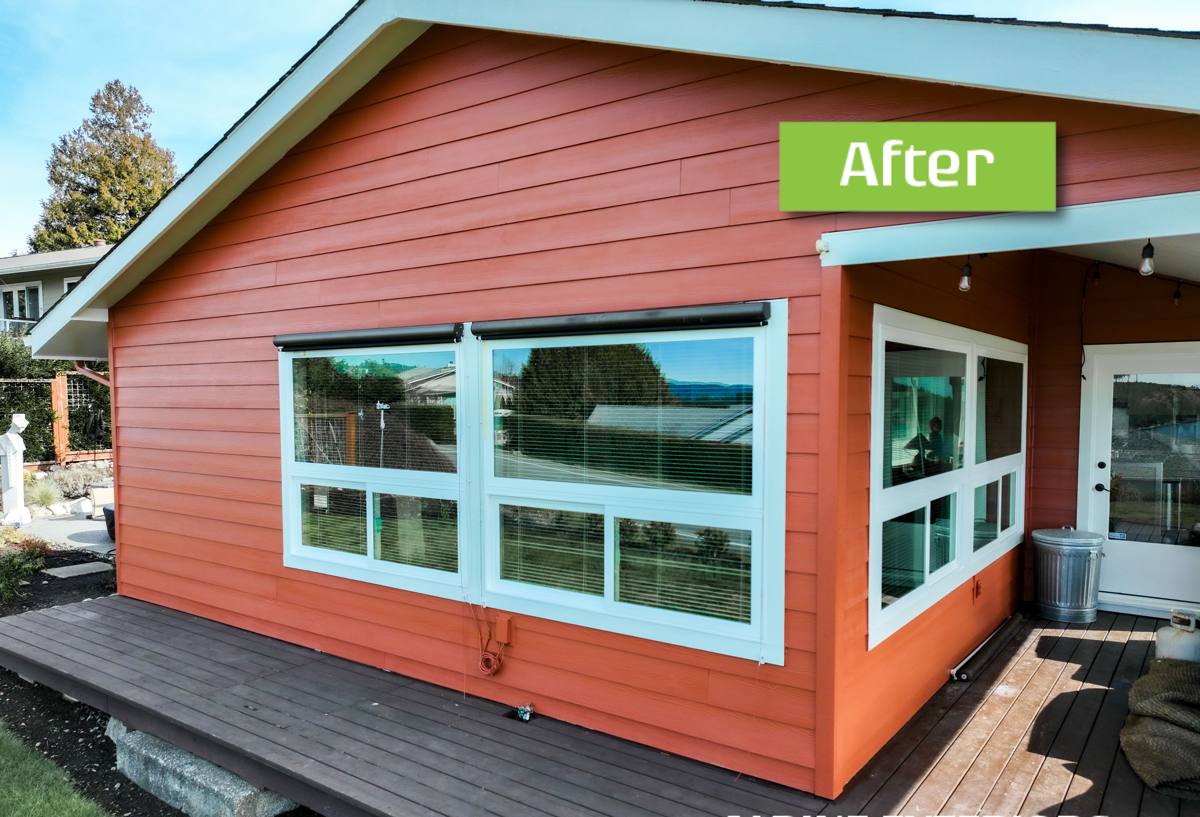
What Point Roberts Homes Actually Need From a Window
Salt Air and Corrosion
Metal hardware — hinges, locks, balance springs, and especially aluminum frames or aluminum cladding — corrodes noticeably faster this close to salt water. Once corrosion starts on a lock mechanism or a balance, the window stops closing tight, and a window that doesn't close tight stops being energy efficient no matter how good the glass package is. We favor frame materials and hardware finishes that are rated for coastal exposure, not just standard residential exposure.
Driving Rain and Wind-Driven Water
Storms coming off the Strait of Georgia don't fall straight down — they hit siding and window openings at an angle, with real force behind them. A window can have excellent glass and still leak if the flashing, sill pan, and sealant details around it weren't built for wind-driven rain. This is a water-management problem as much as a window problem, and it's the single most common source of the "new windows are still drafty" complaints we hear.
Moss Season and Sustained Moisture
Whatcom County's damp season isn't just rain events — it's weeks of ambient moisture that keeps shaded surfaces wet and lets moss and mildew get a foothold on sills, trim, and cladding. Wood components that aren't properly sealed or clad will soften and rot from the outside in, often years before the glass unit itself fails. Frame material choice and trim detailing matter as much as the window unit itself.
What a Correct Installation Actually Involves
A window is only as good as its installation. In a marine climate, the details that get skipped on a rushed job are exactly the ones that matter most.
- Full removal of old flashing and inspection of the rough opening framing for hidden rot before anything new goes in
- A properly lapped, sloped sill pan so any water that gets past the window sheds outward, not into the wall cavity
- Self-adhered flashing membrane integrated with the house wrap or weather barrier in the correct shingle-lap order — not just caulk over the gap
- Backer rod and a compatible, UV- and salt-stable sealant at the exterior joint, not a generic caulk that chalks and cracks within a couple of seasons
- Shimming and fastening per the manufacturer's instructions so the frame doesn't rack, bow, or bind over time
- Insulation (not just gap-fill foam sprayed heavy) in the space between the frame and rough opening
- Interior air sealing and trim reinstalled so the assembly is airtight from both sides, not just weathertight from outside
Skip any one of these steps and you can end up with a window that has a great energy rating on paper but still lets in cold air, fogs between panes within a few years, or lets water track down into the wall where you won't see it until there's damage.
Choosing the Right Glass and Frame Package
For this climate, we generally steer homeowners toward double or triple-pane units with low-E coatings and argon or krypton gas fill, matched to the orientation of each wall. A south-facing window and a north-facing window in the same house often benefit from different glass packages — one for solar gain, one for pure heat retention.
| Frame Material | Salt Air / Moisture Behavior | Maintenance | Typical Fit for Point Roberts |
|---|---|---|---|
| Vinyl | Does not corrode; no paint to fail | Low — occasional cleaning | Strong all-around choice for coastal exposure |
| Fiberglass | Excellent moisture and salt resistance; very stable | Low | Good upgrade where budget allows, especially larger openings |
| Wood / Wood-clad | Vulnerable if cladding or seals fail; needs vigilant upkeep | High | Only where appearance requirements make it worth the extra maintenance |
| Aluminum | Prone to corrosion and condensation in this climate; poor thermal performance | Moderate | Not our first recommendation for this location |
We're not telling homeowners a given product line is "bad" — every material has legitimate uses. Our standard is simply that in a salt-air, high-rain environment, some materials require more upkeep than most homeowners want to sign up for, so we lead with options that hold their performance with minimal maintenance.
U-Factor and Solar Heat Gain
In the Pacific Northwest, U-factor (how well the window resists heat loss) usually matters more than solar heat gain coefficient, since we get more overcast, heat-loss days than blazing sun days. We'll walk through the numbers on a proposed window's label and explain what they actually mean for your specific walls and orientation rather than just quoting a generic energy-star sticker.
Our Process for a Point Roberts Window Project
- On-site assessment — we look at every existing window's condition, check for rot or water intrusion in the surrounding wall, and note orientation and exposure to prevailing weather.
- Product selection — we recommend frame material and glass package per opening, not a single blanket spec for the whole house, and explain the trade-offs in plain terms.
- Accurate measurement and ordering — because of Point Roberts' logistics, we measure carefully and order with buffer time built in; a missed measurement here isn't a quick same-day fix.
- Removal and opening inspection — we don't install over hidden problems. If we find soft framing or old water damage, we address it before the new window goes in.
- Installation with full flashing and air-sealing detail — the water-management and sealing steps outlined above, done the same way on every window, not just the ones that are easy to reach.
- Exterior tie-in with siding and trim — window and siding work need to integrate as one weatherproofing system, not two separate jobs that happen to sit next to each other.
- Final walkthrough — we check operation, seals, and finish with you before we call it done.
Why the Border Location Changes How This Job Should Be Run
Point Roberts is a U.S. exclave reached by crossing into and back out of Canada. That's a fact of life for anyone who lives there, and it's just as real for the contractor doing the work. A crew that hasn't planned for it will lose a day to a forgotten fastener, a wrong-size flashing roll, or a border-crossing wait that eats into a work window. A crew that already works this area builds the schedule and the materials list around that reality from the start — full material lists confirmed before crossing, extra flashing and sealant on the truck rather than a "just one more trip" mentality, and a realistic timeline set with the homeowner up front instead of discovered halfway through the job.
That same border geography is also why a slow-to-respond installer is a bigger problem here than elsewhere. If a window leaks or a seal fails six months after installation, you want a crew that can get back out to Point Roberts without treating it as a special-case hassle.
Signs Your Current Windows Are Costing You Money
- Visible condensation or fog trapped between the panes (a failed seal, not a cleaning issue)
- Noticeable draft or cold spot near the window frame on windy days
- Wood sill or frame that feels soft, spongy, or shows dark staining
- Difficulty opening, closing, or locking the window smoothly
- Visible corrosion on hinges, locks, or metal cladding
- A heating bill that's climbed without a clear reason, especially in rooms with older windows
- Moss or persistent green growth on the sill, trim, or nearby siding
Any one of these on its own might not mean full replacement is urgent. Several of them together, especially on the walls that take the worst weather, usually mean it's time for a real assessment rather than another round of caulk.
What Realistic Cost Factors Look Like
| Factor | Why It Moves the Price |
|---|---|
| Frame material | Vinyl is typically the most budget-friendly; fiberglass and wood-clad cost more upfront but differ in upkeep |
| Glass package | Double vs. triple pane, and low-E/gas-fill options, change both price and long-term energy performance |
| Opening condition | Hidden rot or water damage found during removal adds repair scope before the new window can go in |
| Number and size of openings | Larger picture windows and multi-unit assemblies cost more than standard single units |
| Access and logistics | Delivery and scheduling around the border crossing is a real, planned-for factor for Point Roberts jobs |
We'd rather walk your specific house and give you real numbers than throw out a broad range that doesn't mean much for your situation.
Get a Straightforward Estimate
If your windows are past due for a look — fogged glass, stubborn locks, drafts, or just age — we're happy to come out, assess what's actually going on, and give you an honest read on what it would take to fix it right for a Point Roberts home. No pressure, no upsell script. Use the form below to request a free estimate.