 Birch Bay
 New-Construction Windows Built for Point Roberts' Exposure
Point Roberts sits on its own peninsula, surrounded on three sides by the Strait of Georgia, with nothing between most homes and open water but a stretch of shoreline. That makes new-construction window installation here a different job than it is a few miles inland. The windows themselves might be the same products you'd see on a build in Ferndale or Lynden, but how they're flashed, sealed, and fastened has to account for salt-laden wind, sustained driving rain, and a moss season that runs longer than almost anywhere else in Whatcom County. Get that wrong at the framing stage and you're not looking at a cosmetic problem — you're looking at water intrusion behind the wall assembly that can take years to show up and a lot more to fix than it would have cost to do right the first time.
This page covers what we look at specifically for new-construction window work in Point Roberts: the site conditions, what a correct install actually involves, how we sequence it with the rest of the building envelope, and what to ask any contractor before they touch your window openings.
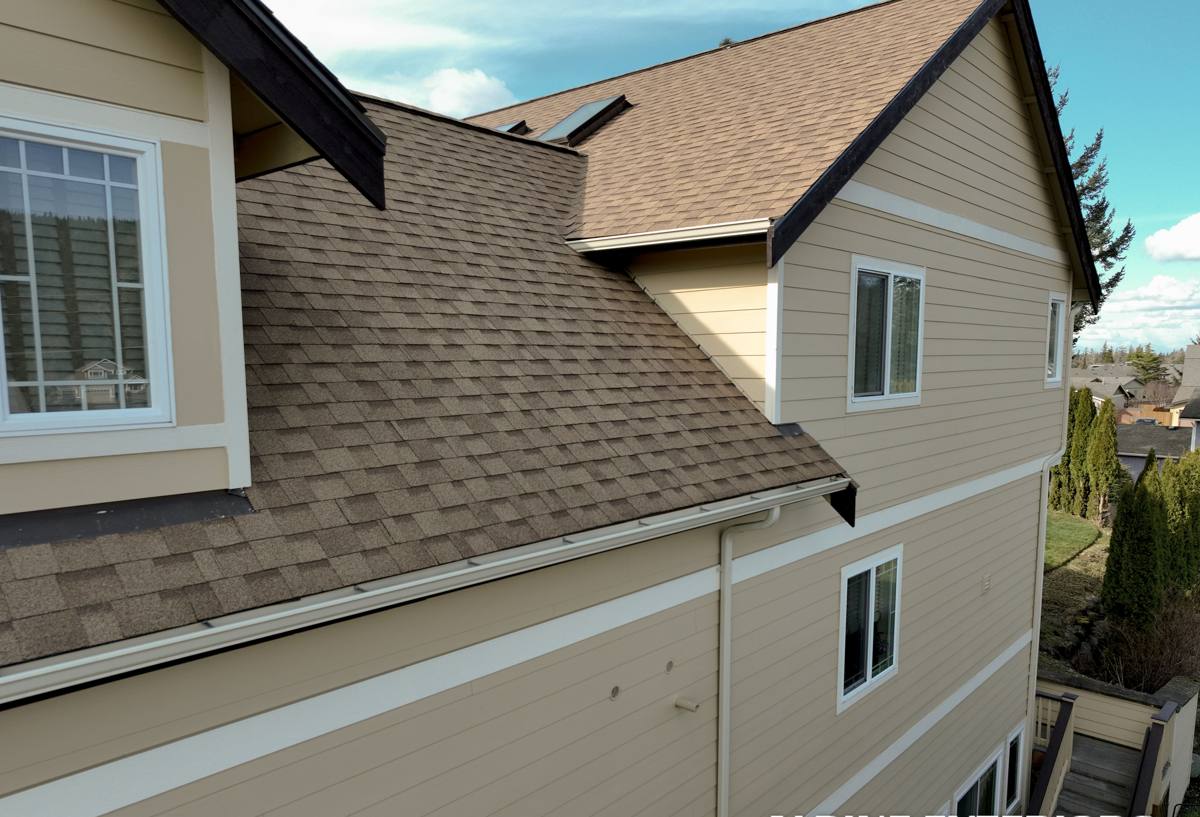
What Makes Point Roberts Different From a Typical Whatcom County Build
Salt Air and Corrosion
Homes within a mile or two of the shoreline take on salt-laden air almost year-round, and Point Roberts is essentially all shoreline. Salt exposure accelerates corrosion on window hardware, fasteners, and flashing metal faster than it will on a comparable inland site. It doesn't ruin every product, but it does mean hardware and fastener choices that would be fine forty miles inland aren't automatically fine here, and it's worth asking about upfront rather than finding out in five years.
Driving Rain and Wind Load
Open water exposure means wind-driven rain hits window openings at an angle, not straight down. A window that's properly flashed for a sheltered lot can still leak on an exposed one if the flashing details and sealant joints weren't built to shed water moving sideways and upward, not just downward. Wind load also matters for how the window unit itself is anchored into the rough opening — this isn't a place to skimp on fastening schedule.
Moss Season and Moisture
Whatcom County's wet season runs long, and Point Roberts' marine climate keeps humidity and moss growth going for a good chunk of the year. Moss and organic buildup around window trim and sills hold moisture against the building longer than a dry surface would. That doesn't affect the window itself much, but it affects how sills, trim, and adjacent siding are detailed so water and organic debris don't sit there.
What a Correct New-Construction Window Install Involves
"New construction" window installation is different from a replacement install. On a new build, the window goes in before the exterior finish, which means it's installed directly into the rough opening and integrated with the weather-resistive barrier (WRB) and flashing system as part of the wall assembly — not retrofitted around existing siding. Done right, the window becomes one continuous, layered water-management system with the wall around it.
Flashing and WRB Integration
The sill pan goes in first, sloped to drain outward, then the window, then jamb and head flashing that laps correctly with the WRB above and below — always shingle-style, so water moving down the wall is directed over each layer, never trapped behind it. This sequencing is where most future leaks start if it's rushed or done out of order.
Fastening and Shimming
Windows need to be shimmed square and plumb at every fastening point specified by the manufacturer, not just at the corners. On an exposed site like this, we don't cut corners on fastener count or type — under-fastened units can rack or flex under sustained wind load over time.
Sealant and Backer Rod
Exterior sealant joints need backer rod behind them for proper joint depth and movement capacity, and the sealant itself has to be rated for the temperature range and UV exposure it'll actually see. A skipped backer rod or the wrong sealant is a common, avoidable cause of early joint failure in marine climates.
Choosing the Right Window Product for This Site
There's no single "correct" window brand or frame material for every Point Roberts build — it depends on budget, style, and how exposed the specific elevation is. What we do is walk owners and builders through the honest trade-offs for a marine-exposed site rather than defaulting to whatever's cheapest to install.
| Frame Material | Salt-Air / Corrosion Behavior | Maintenance | Typical Cost Position |
|---|---|---|---|
| Vinyl | Doesn't corrode; UV and heat cycling can stress welded corners over decades | Low — occasional cleaning | Lower |
| Fiberglass | Very stable in salt air and temperature swings; dimensionally consistent | Low | Mid to upper |
| Aluminum-clad wood | Good exterior corrosion resistance if hardware and cladding seams are quality; interior wood needs protection from any water intrusion | Moderate | Upper |
| Bare aluminum | More prone to corrosion and pitting in sustained salt exposure unless properly finished/anodized | Higher over time | Varies |
Whatever frame material an owner picks, we pay close attention to hardware — hinges, locks, and fasteners — since that's often where salt exposure shows up first, well before the frame itself has any issues.
Coordinating Windows With New Siding — Why Sequencing Matters
Because we do both siding and window installation, we control the full sequence on new-construction jobs: WRB, window, flashing, then siding, with each layer lapped correctly into the next. When window installation and siding are handled by separate crews who don't coordinate, the handoff points — where flashing tape meets siding trim, where a sill flashing needs to extend under the first course of siding — are exactly where problems show up later. On an exposed site like Point Roberts, that handoff has to be right the first time, because there's no siding installed yet to hide a bad flashing detail behind.
Our Process for New-Construction Window Installs in Point Roberts
Every new-construction window job we take on in Point Roberts follows the same sequence, adjusted for the specific elevation's wind and rain exposure:
- Review rough openings against window schedule and manufacturer specs before any unit arrives on site
- Confirm WRB is installed and lapped correctly before window-specific flashing begins
- Install sloped sill pan flashing at every opening
- Set and shim each window square, level, and plumb at all required fastening points
- Apply head, jamb, and sill flashing in correct shingle-lap order
- Install backer rod and manufacturer-approved sealant at all exterior joints
- Photograph flashing details before siding covers them, for the owner's and builder's records
- Coordinate directly with the siding crew (often us) so trim and cladding tie into window flashing without gaps
Energy Code and Permitting Notes
New-construction windows in Whatcom County have to meet current Washington State Energy Code requirements for U-factor and, depending on the project, solar heat gain coefficient — these apply regardless of how remote the site is. Point Roberts' status as a U.S. exclave, reached primarily through Canada, doesn't change the code requirements, but it does affect logistics: material lead times, delivery scheduling, and coordinating trades all need a bit more lead time than a job in Blaine or Ferndale. We build that into scheduling up front rather than discovering it mid-project.
Why Hire a Crew That Already Works Point Roberts
A lot of contractors are willing to make the trip out to Point Roberts once. Fewer have actually done the flashing details, sequencing, and logistics planning enough times to know where the exposure-related problems tend to show up. We work Birch Bay and the surrounding Whatcom County coastline regularly, so we're not learning the site conditions on your job — we already know what driving rain off the Strait does to a poorly flashed opening, and we build accordingly. That matters more on new construction than almost anywhere else, because these details get covered up by siding and trim and aren't something you can easily inspect again once the house is closed in.
Get a Free, No-Pressure Estimate
If you're planning a new build or an addition in Point Roberts and want window installation done right the first time — properly flashed, correctly sequenced with your siding, and built for what this coastline actually throws at a house — we're glad to take a look at your plans and walk the site. Use the form below to request a free estimate; there's no pressure and no obligation.