 Birch Bay
 Why Point Whitehorn Roofs Wear Differently
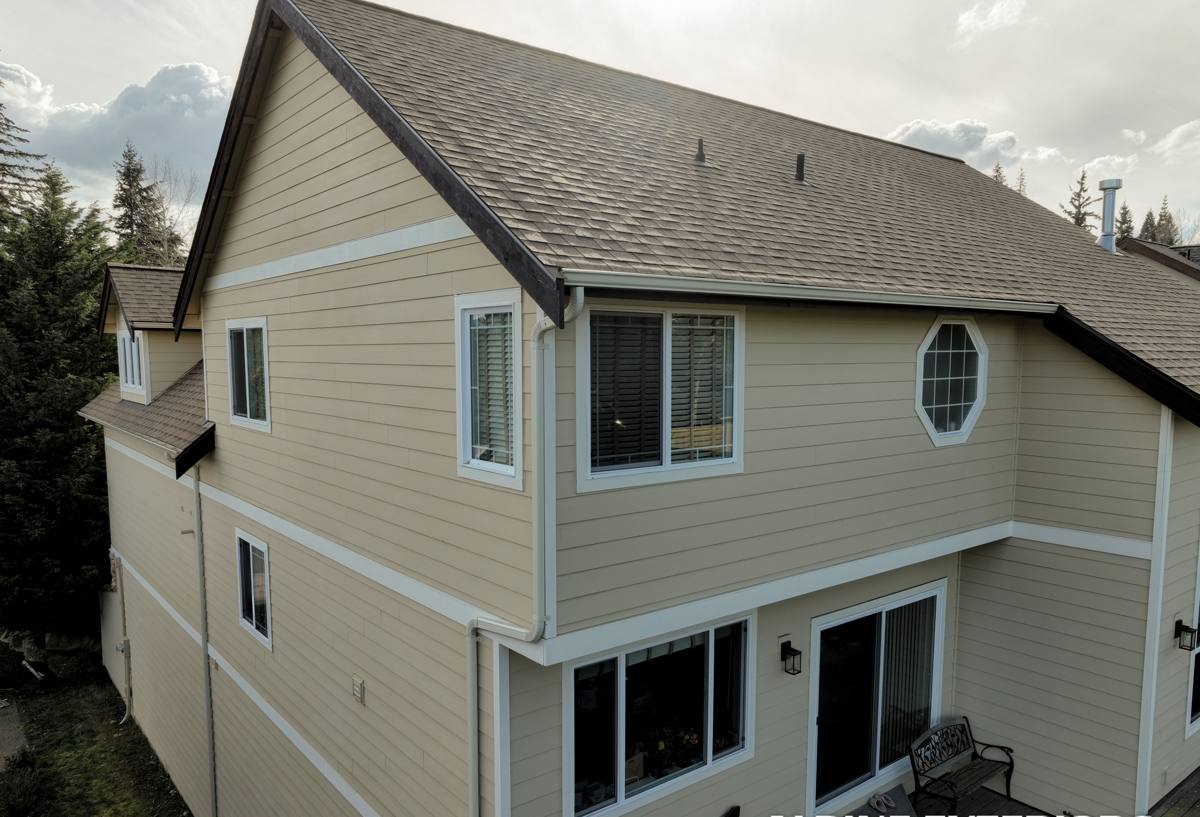
Point Whitehorn sits close enough to the water that salt-laden air is a constant factor, not an occasional one. Add Whatcom County's long wet season, driving rain off the Strait, and the shade from mature evergreen canopy that covers a lot of wooded lots out here, and you get a roofing environment that's tougher on materials than most inland parts of Whatcom County. Asphalt shingles in this kind of exposure tend to show granule loss, curling, and moss colonization years before they would in a drier, sunnier location. Metal roofing handles this environment better than almost any other option, but only when it's specified and installed with this specific climate in mind.
We work throughout Birch Bay and the surrounding coastal pockets, including Point Whitehorn, so we're not guessing at what holds up out here. We're describing what we actually see when we're called out to look at a failing roof, and what we build instead.
What Salt Air and Driving Rain Actually Do to a Roof
Two separate stresses are at work on a Point Whitehorn roof, and a correct installation has to answer both.
Salt Air and Corrosion
Airborne salt accelerates corrosion on any exposed metal — fasteners, flashing edges, cut panel ends, and lower-grade coatings. It doesn't take direct ocean spray to matter; consistent onshore air movement is enough over years. This is why fastener choice and coating quality matter more here than they would on a roof twenty miles inland.
Driving, Wind-Driven Rain
Rain that comes in at an angle, pushed by wind off the water, finds weaknesses that vertical rain never would — lapped seams facing the wrong direction, undersized flashing, fastener penetrations without proper sealing. A roof that would keep a home dry in a calmer inland setting can leak in Point Whitehorn if the panel laps and flashing details aren't oriented and sized for wind-driven weather.
Panel and Fastener Choices That Hold Up Here
Not every metal roofing system is built the same, and the differences matter more in a salt-air coastal setting than they do elsewhere. The table below reflects how we evaluate options for homes in this area.
| Panel Type | Fastener Exposure | Coastal Durability | Maintenance Needs |
|---|---|---|---|
| Standing seam (concealed fastener) | Fasteners hidden under the seam, not exposed to weather | Best option for salt air and driving rain; long service life | Low — occasional inspection, no fastener re-tightening |
| Exposed-fastener corrugated/ribbed panel | Screws penetrate the panel face directly | Workable, but fastener washers and heads are the first failure point in salt air | Moderate — fasteners and washers need periodic checking and eventual replacement |
| Stone-coated steel shingle panels | Mostly concealed, some exposed at edges | Good, but coating and cut-edge protection quality varies by product line | Low to moderate depending on product |
For most Point Whitehorn homes we recommend standing seam. The concealed-fastener design removes the single most common failure point in coastal metal roofing — corroding exposed screws — and its raised seams shed wind-driven rain more reliably than lapped exposed-fastener panels. Where budget or roof style calls for an exposed-fastener panel instead, we use coastal-rated fasteners with EPDM-backed washers and we plan on periodic maintenance visits to check them, rather than treating the install as maintenance-free.
Coatings and Metal Gauge
Steel panels need a coating system rated for coastal or marine exposure — this is a spec question you should ask any contractor directly, not something to assume. Thicker-gauge steel and aluminum both resist the dings and long-term fatigue that come from decades of wind and debris better than the thinnest panels on the market, which are priced to compete but not built for this exposure.
Moss Season and Tree Canopy: The Other Half of the Problem
Salt air gets the attention, but the wooded, shaded lots common around Point Whitehorn create a second, longer-running problem: moss. Whatcom County's wet season runs long, and shaded roof sections that stay damp for extended stretches are exactly where moss and organic buildup take hold. On asphalt roofing, moss roots into the shingle surface and holds moisture against it. On metal roofing, moss doesn't root into the panel the same way, but it can still build up in valleys, at panel laps, and around penetrations if debris isn't cleared — and trapped organic matter against any roofing material eventually causes problems, including staining and accelerated wear at contact points.
A correct metal roof installation in this setting accounts for drainage as much as it does the panel itself: valleys sized to move volume, not just water; underlayment that manages the moisture that does get trapped seasonally; and edge details that don't give debris a place to collect.
What a Correct Installation Involves
A metal roof is only as good as the assembly underneath it. For Point Whitehorn homes, we build the whole system around this climate, not just the visible panel layer.
- Underlayment rated for extended wet exposure, not a minimal-code product, since panels can sit over damp decking for long stretches during the wet season
- Flashing sized and lapped to handle wind-driven rain at valleys, walls, and penetrations — this is where most leaks actually originate, not in the field of the panel
- Fasteners and hardware rated for coastal/marine corrosion resistance, not standard-grade hardware
- Ventilation that lets the roof deck dry out between wet stretches instead of holding moisture
- Panel orientation and seam direction set to shed the prevailing wind-driven rain pattern for the specific roof geometry, not just laid out for speed
Skipping any one of these to save time or cost is how a metal roof that should last decades starts leaking or corroding at year eight or ten instead.
Our Process on a Point Whitehorn Metal Roofing Job
1. On-Site Assessment
We look at roof geometry, tree cover, prevailing wind and rain exposure for that specific lot, and the condition of the existing deck and flashing before recommending a panel type or spec.
2. Written Estimate and Spec
You get a clear breakdown of panel type, gauge, coating, underlayment, and fastener hardware — not just a total price. If we're recommending standing seam over an exposed-fastener option, or a heavier gauge than the cheapest available product, we'll explain why in terms of this specific site.
3. Deck and Flashing Prep
Any deck damage from prior moisture intrusion gets addressed before panels go on. New metal over a compromised deck just hides a problem instead of fixing it.
4. Installation
Panels, underlayment, and flashing go in as a coordinated system, with seam and lap direction set for the roof's actual wind and rain exposure.
5. Walkthrough
We walk the finished roof with you, explain what maintenance (if any) the specific system needs, and answer questions before we consider the job done.
Maintenance: What Point Whitehorn Homeowners Should Actually Do
Metal roofing is low-maintenance compared to shingles, but "low" isn't "none," especially in this exposure. A simple seasonal routine catches most issues before they become expensive.
- Clear needles, leaves, and debris from valleys and gutters at least twice a year, more often on heavily wooded lots
- Visually check for moss or organic buildup in shaded valleys and around penetrations, particularly after the wet season
- Have exposed fasteners (if that's your panel type) checked periodically for corrosion at the washer and head
- Keep overhanging branches trimmed back so they're not depositing constant debris or scraping the finish
- After any major windstorm off the water, do a quick visual check for lifted panels, dented flashing, or displaced ridge caps
Why It Matters That We Already Work This Area
A contractor who mainly works inland, sunnier parts of Whatcom County may spec a roof correctly for that environment and get it wrong for Point Whitehorn without realizing it — under-rating the fasteners, skipping coastal-grade coatings, or not accounting for how much longer a shaded valley stays wet here. We work Birch Bay and the surrounding coastal areas regularly, which means we've seen how roofs installed to inland standards actually perform out here over time, and we spec accordingly from the start rather than learning from a callback.
It also means we're a known, reachable local crew if a warranty question or maintenance need comes up years down the road — not a company that did one job in the area and moved on.
Get a Straightforward Estimate
If you're planning a new metal roof or replacing a roof that's struggling with moss, corrosion, or leaks in Point Whitehorn, we're happy to come take a look and give you a clear, no-pressure estimate with the panel and hardware spec explained in plain terms. Use the form below to get started.