 Birch Bay
 Roof Repair in Point Roberts: A Different Kind of Wear
Point Roberts sits on its own peninsula at the southern tip of the Tsawwassen headland, cut off from the rest of Whatcom County by water and by the international border. That geography is part of what makes it a beautiful place to own a home — and part of why the roofs out here wear differently than roofs twenty miles inland. Marine air, wind that comes straight off the water with nothing to slow it down, and shade from mature evergreens all combine to age a roof faster than most homeowners expect. A roof repair here isn't just patching a leak; it's addressing the specific combination of salt, moisture, and organic growth that caused the problem in the first place.
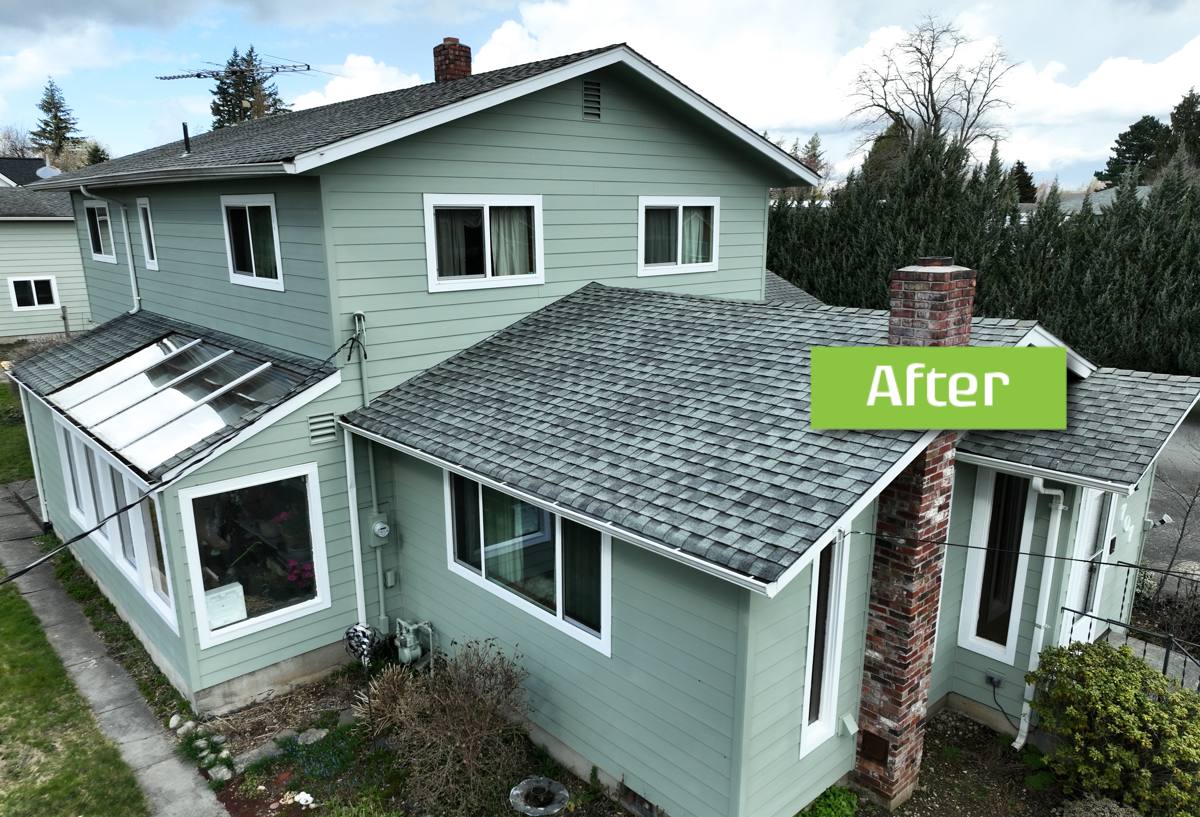
What the Climate Actually Does to a Point Roberts Roof
We don't need to guess at what's aging a roof in this area — the same three factors show up on almost every job.
Salt Air and Metal Fatigue
Being surrounded by water on three sides means airborne salt is a constant presence, even on properties that aren't right on the waterfront. Salt-laden air accelerates corrosion on exposed fasteners, drip edge, flashing, and any unprotected metal components. Galvanized materials that would last decades further inland can show rust and pitting much sooner out here. This is one of the main reasons we pay close attention to metal selection and coating quality on every repair, not just the shingles or panels themselves.
Wind-Driven Rain and Flashing Failure
Driving rain off the Strait of Georgia doesn't just fall — it gets pushed sideways into every gap, lap, and seam. Roofing that would shed a normal vertical rain just fine can still leak under wind-driven conditions if flashing, step flashing, or valley details aren't installed with that in mind. Most of the "mystery leaks" we get called out for in this area trace back to flashing that was adequate for average weather but not for how rain actually behaves here.
Moss, Shade, and Slow Rot
Whatcom County's long, damp season gives moss and algae a wide window to establish themselves, and shaded roof sections — north-facing slopes, areas under overhanging trees — rarely dry out completely between rain events. Moss holds moisture directly against the roofing surface, which speeds up granule loss on composition shingles and can trap rot-causing dampness against wood decking and trim over time. A roof that looks "just cosmetically mossy" from the ground can be holding water against the substrate in ways that aren't obvious until there's a leak.
Signs a Point Roberts Roof Needs Repair
Most roof problems out here give some warning before they turn into an active leak. Worth checking for:
- Moss or dark algae streaking concentrated on shaded or north-facing slopes
- Rust staining below metal flashing, vents, or fasteners
- Granules collecting in gutters or at downspout outlets
- Soft or discolored ceiling patches, especially near chimneys, skylights, or valleys
- Curling, lifting, or cracked shingle edges, particularly on wind-exposed slopes
- Visible gaps or lifted metal at flashing joints and roof penetrations
- Daylight visible through the roof deck from inside an attic
What a Correct Roof Repair Actually Involves
Diagnosing the Real Cause
A leak rarely shows up directly above where it starts — water travels along the underside of decking or down a rafter before it appears on a ceiling. A proper repair starts with tracing the water back to its actual entry point, not just patching where the stain is. That usually means getting on the roof, checking flashing, checking the surrounding shingle or panel condition, and confirming there isn't a second, unrelated issue nearby.
Flashing and Penetrations
Given how much of the local leak activity traces back to wind-driven rain, we treat flashing as the priority, not an afterthought. That means proper step flashing at wall intersections, correctly lapped valley metal, and penetrations (vents, pipes, skylights) sealed and flashed to shed water even when it's coming in sideways.
Matching Materials Correctly
A patch that doesn't match the existing roofing in material, weight, or profile tends to fail faster and stands out visually. On composition shingle roofs we match style and, where possible, color as closely as the existing product allows. On metal roofing, matching panel profile and using corrosion-appropriate fasteners matters more here than in drier inland climates, given the salt exposure.
Addressing Moss, Not Just Removing It
Scraping moss off without addressing the underlying shade and moisture pattern means it comes back. Where it makes sense, we'll talk through moss treatment and prevention as part of the repair, along with realistic expectations about how often a shaded roof in this area will need maintenance compared to a full-sun roof.
Repair or Replace? How We Help You Decide
Not every damaged area needs a full roof replacement, but not every problem should be patched indefinitely either. We look at age, extent of damage, and how many separate issues are showing up before making a recommendation.
| Situation | Repair usually makes sense | Replacement usually makes sense |
|---|---|---|
| Roof age | Under 15–20 years, otherwise sound | Nearing or past expected lifespan |
| Damage pattern | Isolated to one area or slope | Spread across multiple slopes |
| Moss/algae condition | Surface growth, decking still sound | Long-term moisture damage to decking |
| Flashing condition | Localized failure at one detail | Widespread rust or repeated flashing failures |
| History of repairs | First or second repair on the roof | Recurring leaks despite past repairs |
If a repair is the right call, we'll say so plainly. If the roof is past the point where another patch makes sense, we'll explain why rather than just recommending the bigger job by default.
Our Roof Repair Process
- Inspection and diagnosis — We get on the roof (weather permitting) and trace the actual source of the leak or damage, checking flashing, penetrations, and surrounding material condition.
- Honest assessment — We explain what we found, what's causing it, and whether a repair or a larger scope of work is the right fit — including what happens if it's left alone.
- Written estimate — A clear scope of work and price before anything is scheduled, no surprise add-ons once we're on the roof.
- The repair itself — Correct flashing, matched materials, and attention to the details that matter most in this climate: salt-resistant fasteners, proper laps, and sealing that accounts for wind-driven rain.
- Cleanup and walkthrough — Job site cleaned up, and we'll walk you through what was done and what to keep an eye on going forward.
What Affects the Cost of a Point Roberts Roof Repair
| Factor | Why it matters here |
|---|---|
| Roofing material | Composition, metal, and cedar shake all require different repair techniques and materials |
| Extent of moss/water damage | Surface treatment costs less than replacing rotted decking underneath |
| Flashing complexity | Valleys, chimneys, and multiple roof penetrations take more time to do correctly |
| Roof pitch and access | Steeper slopes and difficult access affect labor time and safety setup |
| Number of separate repair areas | Multiple unrelated problem spots take longer to diagnose and fix properly |
We're not going to publish a flat price list here, because the honest answer is that it depends on what we actually find once we're on the roof. What we can promise is a clear, itemized estimate before any work starts.
A Simple Maintenance Checklist Between Repairs
- Clear gutters and downspouts at least twice a year, especially after fall leaf drop
- Keep overhanging tree limbs trimmed back to reduce shade and debris buildup
- Look for moss starting on shaded slopes before it spreads across the roof
- Check flashing around chimneys and vents visually from the ground after major storms
- Have any staining or ceiling discoloration checked promptly rather than waiting for an active drip
Why Local Experience in Point Roberts Matters
Point Roberts is unusual to work in logistically — it's part of Washington State, but it's separated from the rest of Whatcom County by the border, which means scheduling, material delivery, and timing all need to account for that in a way that doesn't apply almost anywhere else we work. A crew that hasn't dealt with that before can end up costing you time on delays they didn't plan for. Beyond logistics, familiarity with how homes here actually fail — the specific flashing details that give out first, which slopes hold moss the longest, how salt exposure shows up on metal — means less time spent re-learning the basics and more time spent fixing the actual problem correctly the first time.
If you've got a leak, staining, or a roof that's showing its age out in Point Roberts, we're happy to take a look and give you a straight answer — no pressure, no upsell. Reach out below for a free estimate and we'll walk you through exactly what we see and what we'd recommend.