 Birch Bay
 Why Terrell Creek Roofs Wear Differently Than Roofs Inland
Homes near Terrell Creek sit close enough to the Salish Sea that salt-laden marine air is a constant, low-grade stressor on every exposed surface — including the roof. Add Whatcom County's heavy driving rain and the long, shaded, damp stretches of the year that let moss take hold, and you get a roofing environment that behaves nothing like a roof forty miles inland. The low-lying terrain and mature tree cover common around the Terrell Creek drainage compound the problem: shade keeps roof decks damp longer after storms, and falling needles and leaves collect in valleys and gutters where they hold moisture against shingles and flashing.
None of this means a roof here needs to fail early. It means a repair has to account for what's actually attacking the roof, not just patch the visible symptom. A lot of the callbacks we see on other contractors' work trace back to a repair that fixed the leak but ignored the salt corrosion, trapped moisture, or moss growth that caused it.
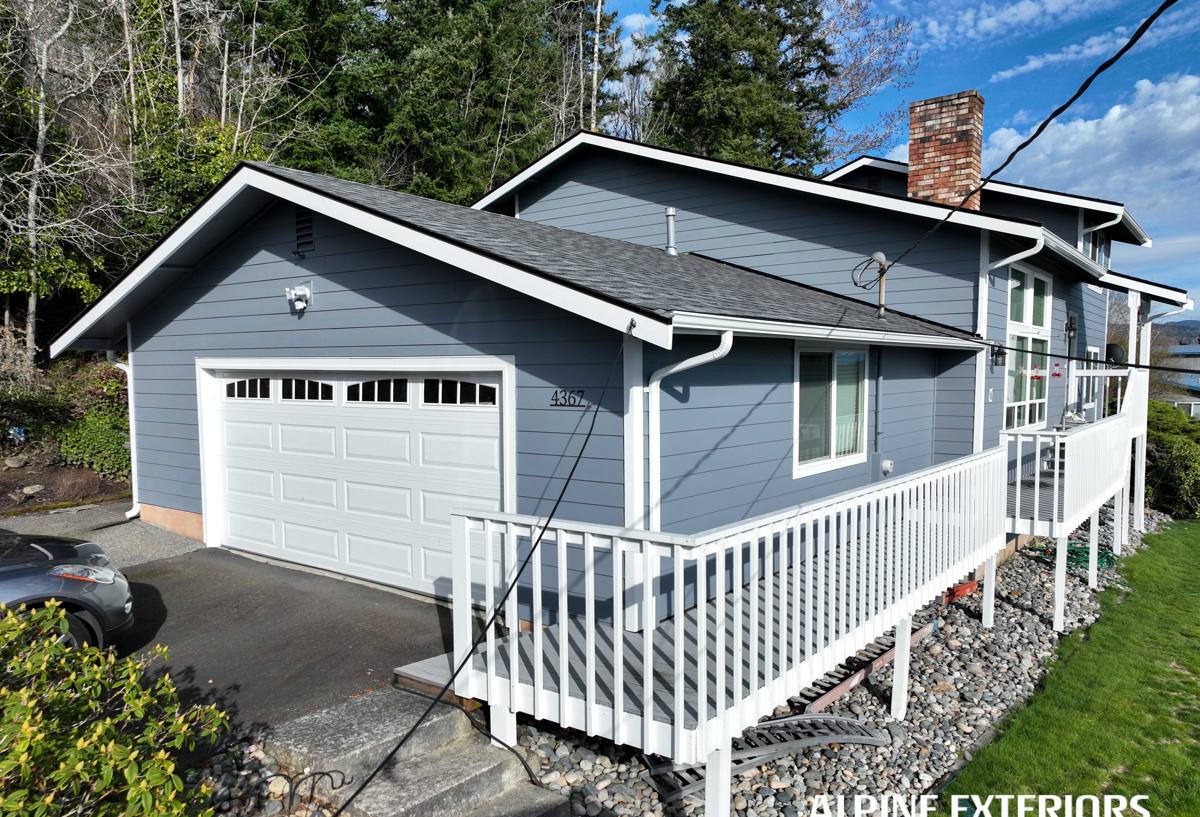
What Salt Air and Coastal Moisture Actually Do Over Time
Salt air doesn't just sit on a roof — it works its way into metal fasteners, flashing, and vent boots, accelerating corrosion well before it's visible from the ground. On a Terrell Creek roof, this shows up first in a handful of predictable spots:
- Galvanized nail heads and flashing edges rusting and lifting years ahead of a comparable inland roof
- Metal roof vents and pipe boots corroding at the seams, opening tiny gaps that let water in during driving rain
- Chimney and skylight flashing losing its seal as caulking dries out faster in salt-exposed, wind-driven conditions
- Underlayment breaking down prematurely where trapped moisture from moss or shade never fully dries
Driving rain adds a second layer of risk: wind-driven water doesn't just run downhill off a roof, it gets pushed sideways and even slightly uphill under lifted shingles, loose flashing, or gaps that would never leak in calm weather. A repair that doesn't seal against wind-driven rain — not just gravity-fed runoff — will leak again the next big storm off the water.
Moss: The Slow Damage Most Homeowners Underestimate
Whatcom County's long, wet, mild winters give moss months to establish itself, and the shade around Terrell Creek's tree-lined lots makes it worse than in more open parts of Birch Bay. Moss isn't just cosmetic. As it spreads across a roof it:
- Holds water against the shingle surface long after the rest of the roof has dried
- Lifts shingle edges as its root structures grow underneath them, creating entry points for water
- Breaks down the granule surface that protects asphalt shingles from UV and weather
- Clogs valleys and gutters with debris that traps even more moisture
By the time moss is visibly thick, it's usually already lifted shingles in a few spots — which is exactly where leaks start. Catching and treating moss early is one of the cheapest things a homeowner near Terrell Creek can do to avoid a full repair bill later.
Why We Don't Just Pressure-Wash It Off
Pressure washing strips granules along with the moss, which shortens the life of otherwise sound shingles. Our standard is a gentler treatment approach paired with physical removal by hand or soft brush, followed by prevention measures — because the goal is a roof that stays clean, not one that gets damaged in the process of cleaning it.
Signs a Terrell Creek Roof Needs Repair Now
Some warning signs are obvious; others show up as small clues that are easy to write off as normal weathering. Watch for:
- Water stains on interior ceilings or upper walls, especially after a windy rainstorm
- Shingles that look curled, cupped, or lifted at the edges, particularly on the side facing prevailing wind and rain
- Visible moss or dark streaking concentrated in shaded areas or north-facing slopes
- Granules collecting in gutters or at downspout outlets
- Rusted or visibly corroded flashing around chimneys, vents, or skylights
- Daylight visible through the roof deck from inside an attic
- Sagging or soft spots when walked on (a sign of deck damage, not just surface wear)
Any one of these on its own may not mean a full roof replacement — most are repairable if caught before they lead to deck rot. That's the real value of catching problems early: a $400–$1,200 flashing or shingle repair now versus a multi-thousand-dollar deck replacement later.
What a Correct Roof Repair Actually Involves
Diagnosis Before Any Work Starts
A repair that just patches where water is dripping inside often misses where it's actually entering — wind-driven rain can travel several feet under shingles before finding a gap in the interior finish. We trace the leak path from the interior stain or drip point back along the roof deck to the true entry point before doing any repair work.
Flashing and Fastener Replacement
Given how much salt air accelerates corrosion here, we don't just re-caulk failing flashing — caulk is a short-term fix on metal that's already corroding. Compromised flashing gets replaced, and fasteners in salt-exposed areas get upgraded where the original hardware wasn't built for this environment.
Matching Materials, Not Just Colors
Shingle repairs on an older roof need shingles that match not just in color but in profile and granule type, or the patch stands out and can behave differently in wind and rain than the surrounding roof. When an exact match isn't available, we're upfront about it and discuss options rather than installing a mismatched patch and hoping it blends in.
Moss and Debris Removal as Part of the Job
Any repair near moss growth includes clearing it from the work area and treating it, not just working around it. Leaving moss in place next to a fresh repair undermines the new work almost immediately.
Ventilation Check
Poor attic ventilation traps moisture that speeds up deck rot and shortens shingle life — a bigger issue in a shaded, damp microclimate like Terrell Creek's. We check soffit and ridge ventilation as part of any repair, because a leak repair on a poorly ventilated roof is treating one symptom while ignoring another.
Repair vs. Replacement: How We Help You Decide
Not every roof problem near Terrell Creek calls for the same fix. Here's how we weigh the decision:
| Factor | Favors Repair | Favors Replacement |
|---|---|---|
| Roof age | Under 15–18 years (asphalt) | Approaching or past expected lifespan |
| Extent of damage | Isolated to one section or feature (flashing, one slope) | Widespread across multiple slopes |
| Deck condition | Solid, no soft spots or rot | Soft decking or visible rot found during inspection |
| Moss/algae history | Recent onset, surface-level | Long-term moss damage with granule loss throughout |
| Shingle availability | Matching shingles still obtainable | Discontinued style, poor match likely |
| Number of past repairs | First or second repair on this roof | Repeated repairs in the same areas |
We'll always tell you honestly which side of that table your roof falls on. A roof that just needs a section re-flashed doesn't need a full tear-off, and we're not going to recommend one.
Our Process for Terrell Creek Repairs
- Inspection: We walk the roof (weather permitting) and check the attic from inside, tracing any leak to its actual source rather than just its symptom.
- Written scope and estimate: You get a clear explanation of what's failing, why, and what the repair involves — no vague line items.
- Repair: Flashing, shingles, underlayment, and fasteners are addressed as needed, matched to the existing roof where possible.
- Moss and debris cleanup: Any moss or organic buildup in the work area is cleared and treated as part of the job, not billed as an afterthought.
- Final check and cleanup: We confirm the repair holds under close inspection and leave the property free of debris, old materials, and stray fasteners.
Why Local Experience with This Area Matters
A roofer who mostly works drier, inland areas may not think twice about wind-driven rain finding its way sideways under a lifted shingle, or about how fast galvanized fasteners corrode this close to salt water. Crews who regularly work Birch Bay and the Terrell Creek area already know which flashing details tend to fail first in this microclimate, which slopes hold moss longest given the tree cover, and how to sequence a repair around Whatcom County's rain windows so new work isn't compromised by weather before it's fully sealed. That familiarity shows up as fewer callbacks and repairs that actually hold through the next wet season.
Maintenance That Extends the Life of a Repair
A good repair buys you time, but a few habits stretch that further given the local conditions:
- Clear gutters and valleys of needles and leaves at least twice a year, more often under heavy tree cover
- Have moss treated at the first sign of growth rather than waiting for visible patches
- Trim back overhanging branches where practical to reduce shade and debris on the roof
- Schedule a roof check after any major windstorm off the water, since wind-driven rain damage isn't always visible from the ground
- Keep an eye on attic ventilation, especially if you've added insulation or done other work that could block soffit vents
If you're noticing water stains, lifted shingles, or heavier-than-usual moss on a home near Terrell Creek, it's worth having it looked at before the next stretch of driving rain. We're happy to walk the roof, explain honestly what we find, and put together a free, no-pressure estimate for whatever repair actually makes sense for your home.