 Birch Bay
 Why Sandy Point Decks Wear Out Faster Than Homes Inland
Sandy Point sits close to the water, and that proximity is exactly what makes deck replacement here a different job than it is a few miles inland in Whatcom County. Salt-laden air off the Salish Sea works on fasteners, flashing, and any exposed metal year-round, not just during storms. Add in driving rain that comes sideways off the water during fall and winter systems, and you've got moisture finding its way into joints, ledger connections, and end grain that a deck built for a drier climate was never designed to handle. Then there's the shade. Mature trees and close-set lots around Birch Bay keep a lot of decking damp long after a storm has passed, which is exactly the environment moss and algae need to take hold.
None of this means a deck is doomed — it means the materials, fasteners, and details matter more here than they would somewhere drier. A deck built or replaced without accounting for salt air and prolonged dampness will show problems years before it should.
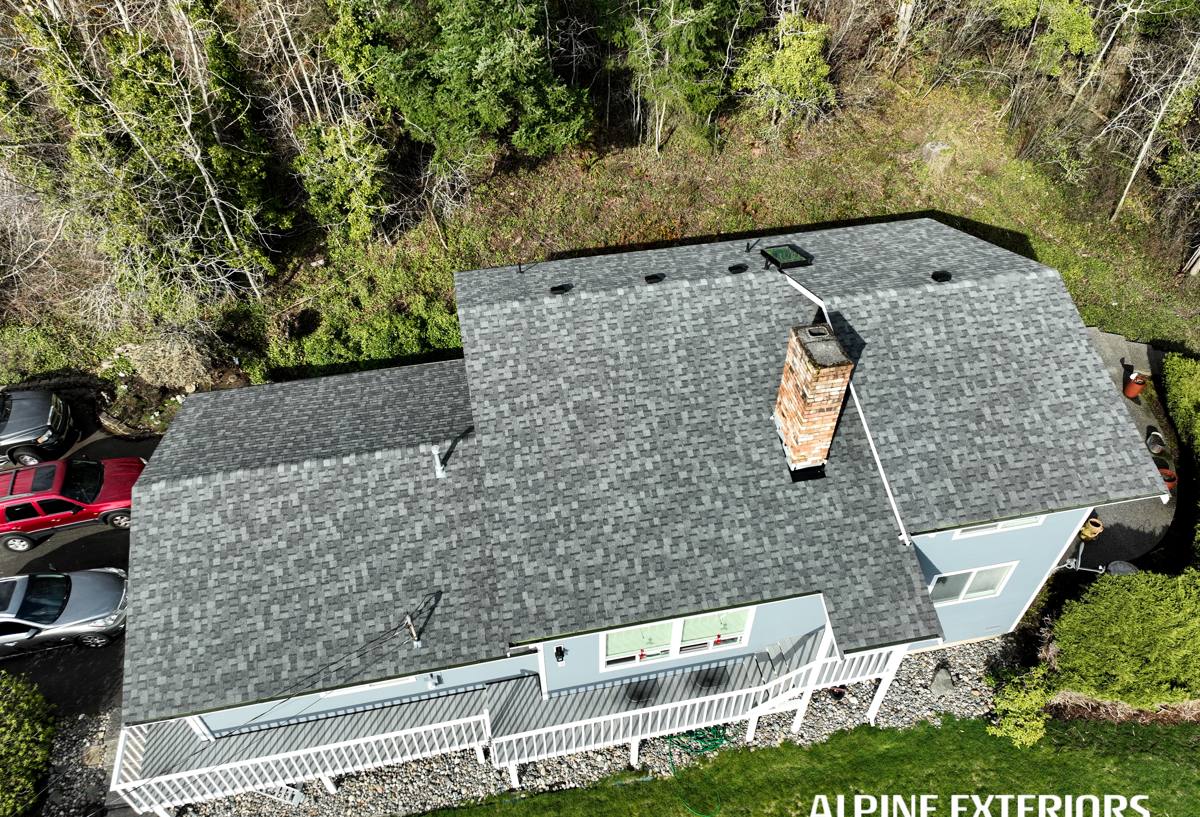
Signs a Sandy Point Deck Needs Replacement, Not Just Repair
Homeowners often ask us to look at a soft board or two and end up finding out the problem runs deeper. A few boards being swapped is a repair. Once the structure itself is compromised, replacement is the honest answer. Here's what tips it from one to the other:
- Soft, spongy, or bouncy decking across more than a board or two, especially near the house
- Rust staining or crumbling around fasteners, joist hangers, or post bases
- Any separation or gap where the deck ledger meets the house — a common entry point for water
- Railings or posts that wobble when pushed, not just cosmetically loose
- Footings that have sunk, heaved, or shifted, changing the deck's level
- Moss or black algae that returns within weeks of cleaning, even in dry spells
- Visible rot or delamination in support beams, not just surface decking
If you're only seeing one or two of these, a repair may genuinely be the right call, and we'll tell you that. If you're seeing several, the framing underneath has usually been absorbing moisture for longer than the surface let on.
Why "It Looks Fine From the Top" Isn't Enough
Decking boards are the part you see, but the framing, ledger connection, and hardware underneath do the structural work. In a marine climate, the underside of a deck — shaded, damp, and less exposed to drying wind — often deteriorates faster than the top surface. A proper inspection means getting underneath and checking joist hangers, ledger flashing, and post bases, not just walking the surface and looking for obvious soft spots.
What a Correct Deck Replacement Actually Involves
Ledger and Framing
The ledger board — where the deck attaches to your house — is the single most important connection on the structure and the most common source of hidden rot. A correct replacement means proper flashing between the ledger and the house siding or sheathing, not just caulk, and structural fasteners rated for the load and for exterior exposure. Joists get sized and spaced for the actual span and load, with hardware rated for outdoor and coastal use.
Footings and Posts
Footings need to sit below frost depth and bear on undisturbed or properly compacted soil. In areas with poor drainage or a high water table — not uncommon this close to the water — footing depth and drainage around posts deserve extra attention so they don't shift over time.
Decking Material
This is where salt air and moss exposure should directly shape the decision, covered in detail below.
Fasteners and Hardware
Standard galvanized fasteners can corrode faster than expected in salt air. Stainless steel or high-grade coated fasteners cost more up front but avoid the rust streaking and eventual fastener failure that plain galvanized hardware can develop in a coastal environment over years of exposure.
Railings and Guards
Railing systems get replaced to current code height and baluster spacing requirements, not just rebuilt to match what was there — an old deck is often grandfathered in, but a full replacement is a chance to bring it up to current safety standards.
Choosing Decking Material for Salt Air and Moss
There's no single "best" decking material for every home — it depends on budget, how much upkeep you want to do, and how much shade and moisture exposure the specific deck gets. Here's how the common options actually compare in this climate:
| Material | Salt Air / Moisture Behavior | Moss & Algae Resistance | Maintenance | Typical Lifespan |
|---|---|---|---|---|
| Pressure-treated wood | Resists rot when properly sealed; end cuts need re-treating | Low — needs regular cleaning and re-sealing | Annual cleaning, periodic re-staining/sealing | 10–15 years with upkeep |
| Cedar | Naturally moisture-resistant, but softer surface | Moderate — still needs cleaning in shaded spots | Regular sealing to hold appearance and durability | 15–20 years with upkeep |
| Composite decking | Doesn't absorb moisture or rot | Higher, but can still stain in constant shade/damp | Occasional washing, no staining or sealing | 25–30+ years, manufacturer-dependent |
| PVC decking | Fully moisture-resistant, no wood fiber to rot | Highest of common options | Lowest — washing only | 25–30+ years, manufacturer-dependent |
For a deck that gets heavy shade or sits close to the water, we generally steer homeowners toward composite or PVC decking, not because wood is a bad product, but because the maintenance burden of keeping real wood sealed and moss-free in a shaded, salt-exposed spot is significant. If you love the look and feel of real wood and are willing to stay on top of sealing and cleaning, cedar or treated wood is still a legitimate choice — it's a trade-off between upfront cost, appearance, and ongoing work, not a right-or-wrong decision.
Our Process for a Sandy Point Deck Replacement
1. On-Site Assessment
We get underneath the existing deck to check framing, ledger condition, and footings before quoting anything. This is what tells us honestly whether you need a full replacement or whether targeted repairs would hold up.
2. Permitting
Deck replacements typically require a permit through the applicable local building department, especially when framing, footings, or railings are being redone. We handle that process so you're not the one tracking down requirements.
3. Demolition and Disposal
The old deck comes out, including any compromised framing and footings that don't meet current code or aren't structurally sound — not just the surface boards.
4. Rebuild
Framing, ledger flashing, footings, decking, and railings go in to current code, with hardware and fasteners chosen for this climate, not a generic spec sheet.
5. Final Walkthrough
We walk the finished deck with you, cover basic care for whatever material you chose, and make sure you know what to expect from it in year one versus year ten.
Permits and Local Code Considerations
Most deck replacements involving structural framing, footings, or railings require a permit, and inspections typically check footing depth, ledger attachment, and railing/guard specifications. Requirements can vary by jurisdiction and by the specifics of your property, so we pull the correct permit for your situation rather than assuming one deck's requirements match another's. Skipping this step might save time upfront, but it can cost you at resale or insurance time if the work was never signed off.
Why a Crew That Already Works Sandy Point Matters
A deck built to a generic regional spec and a deck built for this specific stretch of Birch Bay coastline aren't the same project, even if they look identical from the street. A crew that regularly works Sandy Point already knows to spec stainless or coated fasteners without being asked, already accounts for shaded, damp microclimates on wooded lots, and already has a working relationship with the permitting process for this area. That familiarity shows up in fewer surprises mid-project and a deck that's actually built for the conditions it'll sit in, not just the conditions a standard build assumes.
It also means faster, more accurate estimates. We're not guessing at local soil conditions, typical footing depth, or how exposed a given lot is to wind-driven rain — we've seen it firsthand on other decks in the neighborhood.
Keeping Your New Deck in Good Shape
Whatever material you choose, a few habits extend the life of a deck in this climate significantly:
- Sweep debris and standing water off the deck regularly, especially under furniture and planters
- Clean moss and algae as soon as it appears rather than waiting for it to spread
- Check railings and stair connections once a year for looseness
- Re-seal wood decking on the manufacturer's recommended schedule, not just when it looks faded
- Keep gutters and downspouts clear so runoff isn't draining directly onto or under the deck
These are small tasks, but skipping them is how a well-built deck ends up needing early repairs anyway.
If your deck is showing any of the signs above, or you just want an honest read on whether repair or replacement makes more sense for your situation, we're glad to take a look. The estimate is free, there's no pressure, and you'll get a straight answer about what your deck actually needs.