 Birch Bay
 Sandy Point Roofs Take a Different Kind of Beating
Sandy Point sits close enough to the water that its roofs live a harder life than a roof ten miles inland in Whatcom County. The combination of salt-laden air off the bay, wind-driven rain that comes in sideways during winter storms, and a moss season that can run most of the year in the Pacific Northwest means roofing materials here age differently than they do in a drier, more sheltered part of the county. A roof that would go fifteen years without a callback somewhere inland might need attention on a five- or seven-year cycle out here, simply because of what it's exposed to every day.
That doesn't mean Sandy Point roofs are doomed to constant repair. It means they need to be built, patched, and maintained with that exposure in mind. A repair that doesn't account for salt air and driving rain is a repair that fails again in a season or two — and that's the pattern we're called out to fix more than almost anything else.
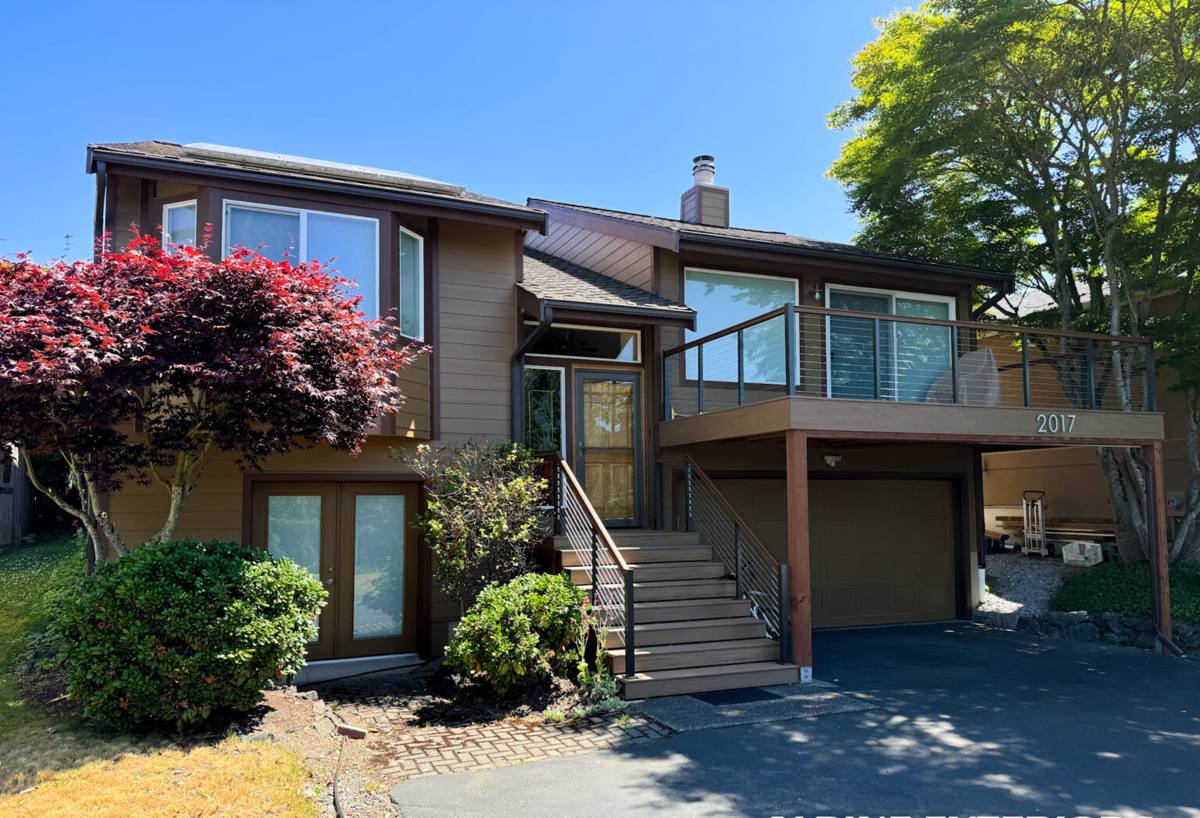
What Salt Air and Moss Actually Do to a Roof
Salt-Laden Wind and Fasteners
Airborne salt doesn't just sit on the surface of shingles or metal — it works into fastener heads, flashing seams, and any exposed metal edge. Over time it accelerates corrosion on galvanized nails, drip edge, and vent flashing far faster than the same materials would corrode inland. When we open up a roof section for repair near the water, it's common to find rusted-through fasteners or flashing that's thinned out well before the shingles themselves are due for replacement. That corrosion is often the real cause of a leak, even when the visible damage looks like it's "just" a few missing shingles.
Moss and Trapped Moisture
Whatcom County's long wet season gives moss plenty of time to establish itself on north-facing slopes and shaded roof sections. Moss isn't just cosmetic — its root structure holds moisture directly against the shingle surface and can lift shingle edges as it grows, giving wind-driven rain a place to get underneath. Left long enough, moss growth accelerates granule loss on asphalt shingles and can rot the wood decking underneath in isolated spots, which turns what would have been a straightforward shingle repair into a decking repair as well.
Wind-Driven Rain and Flashing
Rain that falls straight down mostly runs off. Rain that's being pushed sideways by wind off the water finds every weak point in a roof system — step flashing at wall intersections, valley metal, pipe boots, and the transitions around chimneys or skylights. Most of the leak calls we get in this area trace back to one of these transition points rather than the open field of the roof itself.
Signs a Sandy Point Roof Needs Repair
Most roof problems announce themselves gradually. Catching them at the repair stage — before they become a full deck or replacement job — comes down to knowing what to look for and checking a few times a year, especially after a hard winter storm.
- Granules collecting in gutters or at downspout outlets, a sign of accelerated shingle wear
- Dark streaking or thick moss patches on shaded or north-facing roof planes
- Curling, cupping, or lifted shingle edges, particularly near valleys and eaves
- Rust staining below metal flashing, vents, or pipe boots
- Soft or discolored ceiling spots inside the home, especially near exterior walls or chimneys
- Daylight visible through the roof deck from inside an attic space
- Flashing that looks loose, bent, or separated from the surface it's sealing against
Any one of these on its own might be minor. Two or three together, especially after a windy winter, usually mean it's worth having someone look before the next storm season.
What a Correct Repair Actually Involves
Diagnosing the Real Cause, Not Just the Symptom
A leak stain on a ceiling doesn't always show up directly below the roof failure — water travels along rafters and decking before it drips. A correct repair starts by tracing the water back to its actual entry point, which often means opening up more of the roof section than the visible damage suggests. Patching only the spot where water appeared inside the house, without finding where it got in, is the single most common reason a "repaired" roof leaks again the next winter.
Matching Materials and Weathering
New shingles next to old ones will always look slightly different, but a good repair minimizes that mismatch by matching shingle profile, color family, and exposure as closely as possible, and by blending repair sections along natural roof lines like ridges or valleys rather than in the middle of an open plane. For metal flashing, that means matching gauge and finish, not just shape.
Flashing and Transition Points First
Because wind-driven rain concentrates at transitions, any repair near a wall, chimney, skylight, or valley gets flashing replaced or resealed as part of the job — not just the shingles around it. Reusing old, salt-corroded flashing under new shingles is a shortcut that shows up as a callback within a year or two near the water.
Deck Inspection Where Moisture Has Been Present
Anywhere we find evidence of a long-standing leak or trapped moss moisture, we check the wood decking underneath before closing the roof back up. Soft or delaminated decking gets replaced in that section rather than shingled over, since covering compromised decking just hides the problem for a while.
Repair or Replacement? How We Help You Decide
Not every roof issue near the water needs a full replacement, and not every roof is a good candidate for another round of patching. The honest answer usually comes down to age, how widespread the damage is, and how many previous repairs the roof has already had.
| Factor | Leans Toward Repair | Leans Toward Replacement |
|---|---|---|
| Roof age | Under 12-15 years, materials still flexible | Near or past manufacturer's expected service life |
| Extent of damage | Isolated to one section, valley, or flashing point | Widespread granule loss, curling, or moss across multiple slopes |
| Decking condition | Solid, no soft spots found | Rot or delamination found in more than one area |
| Repair history | First or second repair on this roof | Third-plus repair, or recurring leaks in different spots |
| Underlayment | Newer synthetic or felt underlayment still intact | Original underlayment brittle, torn, or unknown age |
We'll walk you through where your roof falls on each of these before recommending a direction — our job is to give you a straight answer, not to steer every call toward the bigger job.
Our Process for Sandy Point Repairs
1. On-Site Inspection
We start by physically getting on the roof, not just looking from the ground. We check the reported problem area, but also the flashing, valleys, and any shaded sections where moss tends to build up, since those are the areas most likely to be hiding a second issue.
2. A Plain-English Explanation
Before any work starts, we explain what we found, what's causing it, and what the repair will involve — including whether we found anything at the decking level that changes the scope. No surprise add-ons after the fact.
3. The Repair Itself
Work is done to match the existing roof system as closely as possible, with flashing and fastener choices suited to a salt-air environment rather than generic hardware that will corrode again in a few seasons.
4. Cleanup and Walkthrough
We clear the work area of old material and debris and walk the repair with you before we consider the job done, so you know exactly what was done and where.
Materials and Methods We Use — and Why
For fasteners and flashing on repairs near the water, we favor corrosion-resistant options over standard galvanized hardware, since the cost difference is small relative to how much longer it holds up against salt exposure. For underlayment in repaired sections, we use products rated for the wet, wind-driven conditions typical of this stretch of Whatcom County rather than a basic felt that offers less protection if a future shingle gets damaged. These aren't upsells — they're the standard we hold repairs to because we've seen what happens when a repair is done with materials suited for a drier climate.
Why a Crew That Already Works Sandy Point Matters
A roofer who mostly works farther inland may not immediately think to check flashing corrosion or moss-related decking damage, because it's simply less common where they usually work. A crew that's already familiar with Sandy Point and the broader Birch Bay area knows to look for those specific failure points first, which means fewer surprises mid-repair and a more accurate estimate up front. It also means we're not learning the quirks of this microclimate on your roof — we already know what salt air and a long moss season do to a roof out here, and we plan the repair accordingly.
Maintenance That Extends the Life of a Repair
A good repair lasts longer with a small amount of upkeep in between. Keeping gutters and downspouts clear prevents water from backing up under the lower courses of shingles, and having moss treated or removed before it spreads keeps trapped moisture from undoing flashing work. A quick visual check after any major windstorm — looking for lifted shingles or displaced flashing from the ground with binoculars — catches new damage while it's still a small, inexpensive fix rather than a bigger job later.
If you're seeing any of the warning signs above, or just want an honest read on where your roof stands, we're happy to take a look. Estimates are free, there's no pressure to commit to anything, and you'll get a straight answer about whether you need a repair, a bigger fix, or nothing at all right now — just fill out the form below.