 Birch Bay
 Roofing on a Semiahmoo Waterfront Lot Is Not the Same Job as Roofing Inland
Semiahmoo sits right up against the water, and that changes what a roof has to survive. Homes here take on salt-laden air, wind-driven rain off the bay, and long stretches of gray, damp weather that never quite lets a roof dry out. An asphalt shingle roof built for a typical inland Whatcom County lot won't always hold up the same way on a property that's catching wind straight off the water. The materials, the flashing details, and the ventilation all need to account for that exposure from day one.
We've worked enough roofs along this stretch of coastline to know where shingle roofs actually fail here, and it's rarely the field of the roof itself. It's almost always the details — the valleys, the edges, the penetrations, and the places where moss and moisture get a foothold and don't leave.
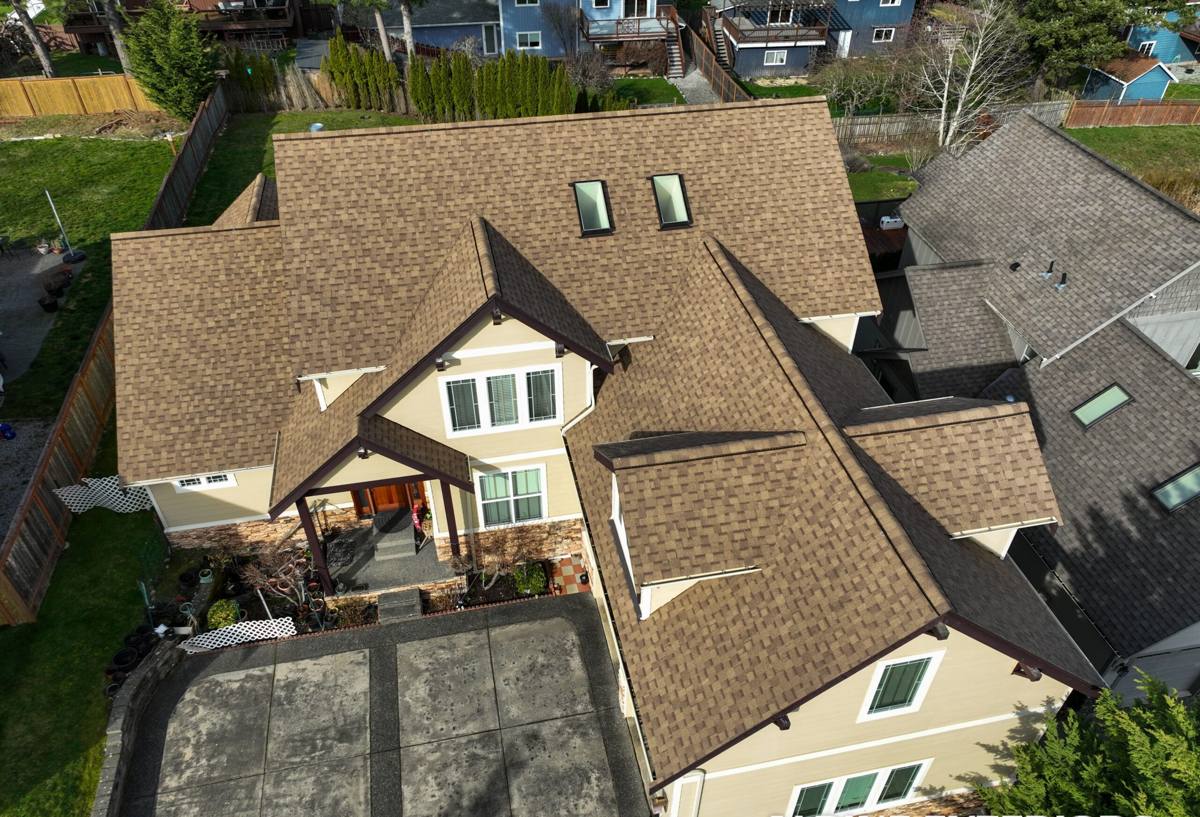
What Semiahmoo's Climate Actually Does to a Shingle Roof
Salt Air and Corrosion
Airborne salt from the bay settles on every exterior surface, including your roof. It doesn't damage the asphalt shingles directly, but it accelerates corrosion on anything metal — nails, flashing, drip edge, vent stacks, and gutter hardware. Once a fastener or flashing seam starts to corrode, water finds a way in long before the shingles themselves show any wear.
Driving Rain and Wind
Storms coming off the water tend to push rain sideways rather than straight down. That matters because shingle roofing is designed to shed water moving downhill — not water being driven up and under the shingle edges by wind. Roofs on exposed, waterfront-facing slopes need tighter sealing, proper fastener patterns, and underlayment that can handle wind-driven moisture at the laps.
A Long, Stubborn Moss Season
Whatcom County's wet season runs long, and shaded, north-facing or tree-covered roof sections in Semiahmoo often stay damp for months at a time. That's exactly what moss and algae need to take hold. Once moss establishes itself under shingle tabs, it lifts them slightly, holds moisture against the roof deck, and shortens the life of the roofing system well ahead of schedule.
Signs a Semiahmoo Roof Needs a Closer Look
Most shingle roof failures near the water give warning signs well before there's an active leak. Worth checking for:
- Granules collecting in gutters or at downspout outlets — a sign shingles are wearing faster than normal
- Dark streaking or green-black patches, especially on shaded or north-facing slopes
- Curling, cupping, or lifted shingle edges, particularly along the roof's water-facing side
- Rust staining around vent stacks, flashing, or exposed fasteners
- Soft or spongy spots when walked on, which usually mean deck moisture underneath
- Moss growth in valleys or along the ridge, where debris and moisture collect
- Daylight or water staining in the attic near roof penetrations or the eaves
Any one of these on its own isn't necessarily an emergency, but on a waterfront property they tend to progress faster than they would further inland, simply because the roof never fully dries between rain events.
What a Correct Asphalt Shingle Job Involves Here
Deck and Underlayment
Before any shingles go down, the roof deck gets inspected for soft spots, delamination, or existing moisture damage — common on older Semiahmoo homes that have had one or two re-roofs over the years without a full tear-off. We use a synthetic underlayment rated for the wind and moisture exposure this area sees, with self-adhering ice-and-water membrane at eaves, valleys, and around penetrations, where wind-driven rain is most likely to find a way in.
Flashing That's Built for Salt Exposure
Flashing around chimneys, skylights, sidewalls, and vent stacks is where most leaks actually start, and it's also where salt air does the most damage over time. We use corrosion-resistant flashing materials and fastening hardware suited to a marine-influenced environment, rather than standard-grade material that's fine inland but corrodes early this close to the water.
Fastening and Wind Resistance
Shingles are only as wind-resistant as their installation. That means correct nail placement, nail count matched to the shingle manufacturer's high-wind specification, and attention to starter courses and hip and ridge caps — the areas most exposed to uplift during a coastal storm.
Ventilation
A shingle roof that isn't ventilated properly traps moisture in the attic, which works against the roof from underneath no matter how good the shingles are. We check intake at the eaves and exhaust at the ridge or roof vents to make sure air is actually moving, not just present.
Comparing Asphalt Shingle Options for a Waterfront Property
| Shingle Type | Typical Wind Rating | Best Fit for Semiahmoo | Trade-Offs |
|---|---|---|---|
| 3-Tab Shingles | Lower (60-70 mph typical) | Budget re-roofs, less exposed slopes | Thinner profile, shorter lifespan in high-moisture, high-wind conditions |
| Architectural / Laminate Shingles | Higher (110-130 mph common) | Most Semiahmoo homes, especially water-facing slopes | Higher upfront cost, but better wind and weather performance over time |
| Impact-Resistant Shingles | High, plus impact rating | Homes wanting extra durability and possible insurance benefit | Higher material cost; benefit is durability, not moss/algae resistance |
| Algae-Resistant Shingles | Varies by line | Shaded or north-facing roof sections | Copper or zinc granules resist algae staining, but won't stop moss growth in debris-holding areas |
For most Semiahmoo homes, especially anything with direct water exposure, we recommend architectural shingles with algae-resistant granules as the baseline, then adjust up to impact-rated products for clients who want the added durability. We'll walk through what's actually appropriate for your roof's exposure rather than defaulting to the most expensive option.
Our Process for a Semiahmoo Re-Roof or Repair
1. On-Site Inspection
We walk the roof and the attic, not just look from the ground. That's the only way to catch deck moisture, ventilation gaps, or flashing issues that don't show from the driveway.
2. Honest Scope and Written Estimate
You get a clear breakdown of what needs to happen — full replacement, partial repair, or targeted flashing and ventilation fixes — with no pressure to buy more than the roof actually needs.
3. Tear-Off and Deck Repair
For replacements, old roofing comes off down to the deck so we can address any rot or soft sheathing before new material goes down. Covering damage with a new layer of shingles just hides a problem that gets worse.
4. Underlayment, Flashing, and Shingle Installation
Installed in the sequence and detail level described above, matched to your roof's specific exposure to wind and water.
5. Cleanup and Final Walkthrough
Magnetic sweep for stray fasteners, full debris cleanup, and a walkthrough so you know exactly what was done and what to watch for going forward.
Keeping Moss and Algae Under Control
Even a correctly installed roof needs some ongoing attention in this climate. A few things that make a real difference:
- Keep overhanging branches trimmed back so shaded roof sections get more light and air movement
- Clean gutters and valleys at least twice a year so debris doesn't hold moisture against the shingles
- Avoid pressure washing shingles directly — it strips granules and shortens shingle life
- Have moss physically and gently removed rather than left to spread under shingle tabs
- Consider zinc or copper strips at the ridge on shaded slopes to reduce future moss regrowth
Why Local Experience on Semiahmoo Roofs Matters
A roofing crew that mostly works drier, inland areas will size up materials and details differently than a crew that works this exposure regularly. We know which slopes on a Semiahmoo lot take the worst of the wind off the water, which roof sections stay damp longest through the wet season, and which flashing and fastener grades hold up versus which corrode early. That local pattern recognition is the difference between a roof that's technically installed to code and one that's actually built for where it sits.
We also understand that waterfront and near-waterfront properties in Whatcom County often have specific considerations around access, staging, and weather windows for the work itself — something a crew unfamiliar with the area has to learn on your project instead of already knowing.
What Affects the Cost of a Semiahmoo Shingle Roof
| Factor | Why It Matters |
|---|---|
| Roof size and pitch | Steeper or larger roofs take more time, material, and safety setup |
| Number of existing layers | Tear-off of multiple old layers adds labor and disposal cost |
| Deck condition | Rot or soft sheathing found during tear-off requires repair before shingles go on |
| Shingle grade selected | 3-tab, architectural, and impact-rated products carry different material costs |
| Flashing and ventilation upgrades | Corrosion-resistant flashing and added ventilation cost more upfront but reduce future repairs |
| Access and staging | Waterfront lots can have tighter access or weather-dependent scheduling |
We'll break all of this down in plain terms during your estimate, so you understand what you're paying for and why — not just a bottom-line number.
If your Semiahmoo roof is showing wear, due for replacement, or you just want an honest read on its condition, we're happy to take a look. Reach out using the form below for a free, no-pressure estimate.