 Birch Bay
 Semiahmoo sits out on a narrow spit between Semiahmoo Bay and Drayton Harbor, near the Whatcom County line with Blaine. It's one of the more exposed residential settings in this part of Washington — water pressing in from more than one side, open wind with little to break it, and a marine climate that stays wet and mild for most of the year. When it comes time to re-side a home out here, that setting changes what "correct installation" actually means. A siding job that would hold up fine on a sheltered inland lot can start failing within a few years on a property this exposed if it isn't built for the conditions.
Why Siding Installation in Semiahmoo Is Different
Most siding failures aren't about the material being bad — they're about a mismatch between the material, the installation detailing, and the site. Semiahmoo's combination of salt air, wind-driven rain, and a long moss season puts more stress on an exterior wall assembly than the average Whatcom County lot sees, which means the margin for error during installation is smaller. Gaps, under-flashed joints, or the wrong fastener that would go unnoticed for a decade somewhere calmer tend to show up here in a fraction of that time.
That's why siding installation on Semiahmoo properties isn't just about hanging boards. It's about understanding how water moves across this specific coastline, what salt does to unprotected fasteners and trim, and where moss and mildew tend to take hold first — and then building the installation around those realities from the first course to the last.
What Salt Air, Driving Rain, and Moss Actually Do to Siding
Salt Air From More Than One Direction
Because Semiahmoo has water on multiple sides, homes here catch salt-laden air from more than one prevailing direction instead of a single exposure most inland properties deal with. Salt accelerates corrosion in fasteners, flashing, and trim, and it breaks down lower-grade paints and finishes faster than a drier site would. Any siding system installed here needs corrosion-resistant hardware and a factory finish that can stand up to that exposure — field-applied paint alone tends to chalk and fade faster in this kind of environment.
Wind-Driven Rain, Not Just Rainfall
With little to break the wind off the water, rain on the spit often doesn't fall straight down — it gets pushed sideways into siding joints, window and door trim, and roof-to-wall transitions with more force than a typical sheltered lot experiences. That's a heavier moisture load than the region's annual rainfall totals alone would suggest. Lap joints, butt seams, and trim details that hold up fine in calmer settings can leak specifically because water is being driven into them horizontally rather than draining off vertically.
A Moss and Mildew Season That Runs Most of the Year
Mild temperatures, near-constant humidity, and shaded north-facing walls add up to a moss and mildew season that stretches across most of the year in this part of Whatcom County. Siding that holds moisture at the surface — or that has cupped, warped, or lost its seal at the joints — gives moss and mildew a foothold that's hard to fully clean off once established. The siding material and the way it's installed both play a role in whether a wall stays clean or turns into a recurring maintenance problem.
Why We Install Only James Hardie Fiber Cement
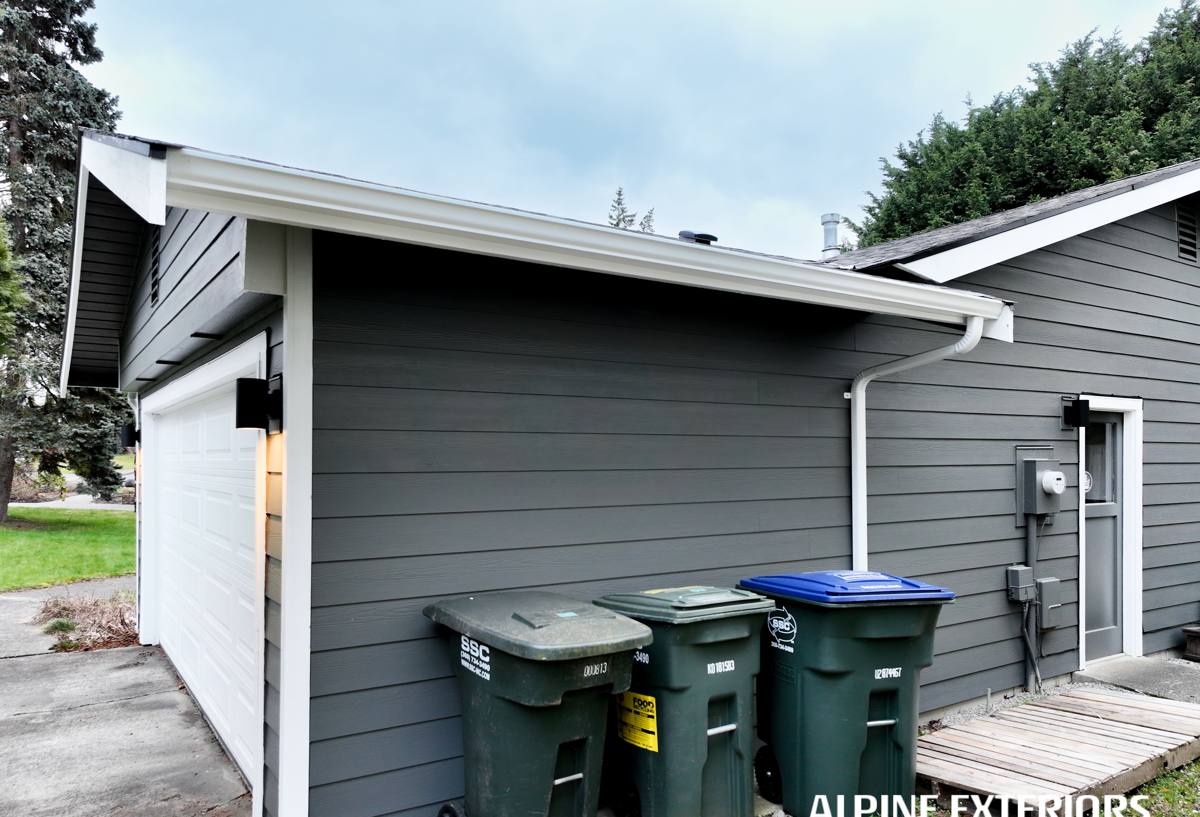
We install one siding system in Semiahmoo: James Hardie fiber cement. We don't offer vinyl, LP SmartSide, Cemplank, Allura, primed spruce, or cedar, and that's a deliberate professional standard, not a limitation in what we're capable of installing. Each of those other products has a legitimate place in the broader siding market — but on an exposed, salt-air, high-moisture property like this, we've made the call that we'd rather stand fully behind one system than offer a cheaper alternative that quietly shifts long-term maintenance risk onto the homeowner.
- Non-combustible core: Fiber cement doesn't feed a fire the way wood-based or wood-fiber siding products can, which matters for both safety and, in many cases, insurance considerations.
- Factory-applied ColorPlus finish: The color is baked on under controlled factory conditions rather than brushed on in the field, and it holds up far longer against fading, chalking, and moisture intrusion in salt air than site-applied paint.
- Climate-engineered HZ formulation: Hardie's HZ5 product line is engineered for regions with heavy moisture exposure and freeze-thaw cycling, which describes waterfront Whatcom County well.
- Dimensional stability: Fiber cement doesn't swell, cup, or warp the way engineered wood siding can after repeated wetting during a long wet season.
- Strong transferable warranty: Hardie backs its products with a substantial warranty structure, provided the installation follows their published specifications.
None of that means other products are junk — plenty of homeowners elsewhere are satisfied with vinyl or engineered wood siding. But we've watched what happens to those materials on exposed coastal properties over years of service calls and tear-offs, and we'd rather install one system correctly than several systems with an asterisk.
What a Correct Siding Installation Actually Involves
Fiber cement only performs the way it's engineered to when it goes on according to spec. On a Semiahmoo property, that means paying close attention to details that matter less on a sheltered inland lot:
Weather-Resistive Barrier and Drainage
A properly lapped weather-resistive barrier behind the siding, with drainage detailing where the wall assembly calls for it, gives any water that does get past the siding a way out instead of a place to sit against the sheathing. On a property that takes wind-driven rain from multiple directions, this layer isn't optional — it's the backup system for when the outer layer gets tested hard.
Flashing at Every Penetration
Windows, doors, hose bibs, vents, and roof-to-wall transitions are the places siding installations most commonly fail, because each one is a break in the water-resistive plane. Correct flashing at every one of those points — installed in the right shingle-lap order so water sheds outward and downward — is what keeps driving rain from finding its way behind the siding.
Fastener Type, Spacing, and Clearance
Hardie specifies fastener type and spacing for a reason, and using the wrong nail or screw, or spacing them incorrectly, undermines the panel's performance even if the material itself is right. Correct clearance from grade, roof lines, and decks also matters more here, since standing water and prolonged dampness at those transitions are common in this climate.
Joint and Seam Detailing
Factory-mitered corners and properly caulked or capped joints reduce the number of places water can work its way in. On a wind-exposed property, loose or poorly sealed joints are exactly where driving rain finds an opening.
Our Siding Installation Process
We start with an on-site assessment of the existing exterior, looking specifically at how the current siding has handled salt exposure, moisture, and moss over time. That tells us as much about what the replacement needs as a measurement does. From there, we put together a clear written scope covering the siding system, trim, flashing details, and any repairs needed to the underlying sheathing or weather barrier before new siding goes on — problems found underneath old siding are far cheaper to fix before the wall is closed up again than after.
Once work begins, we remove the old siding and inspect the sheathing and framing for hidden moisture damage, which is common on older siding in this climate even when the surface looked fine. We repair or replace anything compromised, install or correct the weather-resistive barrier, then install the new Hardie siding to manufacturer specification — correct fasteners, correct spacing, correct flashing at every penetration. We finish with a walkthrough so you know exactly what was found, what was done, and what maintenance to expect going forward.
Signs Your Semiahmoo Home's Siding Needs Replacing
- Persistent moss or mildew staining that keeps returning shortly after cleaning
- Cupping, warping, or visible swelling in boards, especially on north-facing or shaded walls
- Cracking or chalking paint that exposes bare material underneath
- Soft spots when pressed, which often indicate moisture has reached the sheathing behind the siding
- Visible gaps at joints, corners, or trim that weren't there when the siding was newer
- Rust staining running down from fasteners or metal trim
- Rising energy bills that suggest the wall assembly is no longer keeping conditioned air where it belongs
Cost Factors for Siding Installation in Semiahmoo
Every project is different, but the same handful of factors tend to drive cost on siding installations in this area. We give a firm, written estimate after walking the property — the table below is meant to explain what shapes that number, not to replace it.
| Factor | Why It Matters Here |
|---|---|
| Extent of tear-off and sheathing repair | Hidden moisture damage behind old siding is more common on exposed, salt-air properties and adds labor once discovered |
| Wall complexity and trim detail | More corners, penetrations, and transitions mean more flashing work, which matters more under wind-driven rain |
| Siding profile and accessories chosen | Hardie offers several plank widths, textures, and trim options, each priced slightly differently |
| Site access and staging | Waterfront and spit-adjacent lots can have tighter access or landscaping constraints that affect labor time |
| Scope of weather barrier or drainage upgrades | Older homes here often need the water-resistive barrier brought up to current standards, which adds material and labor |
Comparing Siding Options for a Coastal Climate
| Material | Moisture Behavior | Maintenance in Salt Air | Typical Longevity Here |
|---|---|---|---|
| James Hardie fiber cement | Dimensionally stable; resists swelling and warping | Low; factory ColorPlus finish resists fading and chalking | 30+ years with correct installation |
| Vinyl siding | Can distort or warp under heat and wind pressure over time | Low upfront, but seams and fastener points remain exposure risks | Variable; often shorter on exposed, high-wind waterfront lots |
| LP SmartSide / engineered wood | Wood-based core is sensitive to moisture at cut edges and joints | Moderate; edge sealing and caulk maintenance are ongoing needs | Depends heavily on installation quality and upkeep |
| Cedar or primed spruce | Absorbs and releases moisture readily with grain movement | High; regular refinishing needed in sustained wet, salty air | Shorter without consistent, disciplined maintenance |
Why Hiring a Crew That Already Works Semiahmoo Matters
A crew that regularly installs siding on this stretch of coastline already knows how salt air, open wind, and prolonged moisture behave differently here than they do even a few miles inland. That familiarity shows up in small decisions that aren't visible once the job is finished — how flashing gets lapped at each penetration, which fastener grade gets specified, where extra drainage detailing gets added around a north-facing wall that never fully dries out. Those choices are exactly what determines whether a siding installation lasts a decade or three.
Before hiring anyone for siding work on a Semiahmoo property, a few questions are worth asking directly:
- What siding material do they install, and are they willing to explain why, in plain terms?
- Do they carry current Washington contractor licensing and active liability insurance?
- How do they detail flashing at windows, doors, and roof-to-wall transitions for wind-driven rain?
- What fastener and hardware corrosion resistance do they use for a salt-air property?
- Will you get a clear, written scope of work before any contract is signed?
A contractor who can answer those questions specifically, rather than in general terms, has usually done the work here before.
Maintenance After Installation
Correctly installed Hardie siding is low-maintenance, but low-maintenance isn't the same as no-maintenance, especially in this climate. An occasional gentle wash removes salt residue and slows moss growth before it takes hold, and a yearly walk-around to check caulking at trim and penetrations catches small issues before they become water intrusion problems. Because the ColorPlus finish is factory-applied, repainting isn't part of the normal maintenance cycle the way it is with field-finished wood siding — that's one of the ongoing cost differences that adds up over the life of the siding.
If you're weighing siding options for a home in Semiahmoo, we're glad to walk the exterior with you and give an honest read on what it actually needs. Reach out below for a free, no-pressure estimate.