 Birch Bay
 Siding Repair on the Semiahmoo Spit: A Different Kind of Wear
Semiahmoo sits out on a narrow spit between Semiahmoo Bay and Drayton Harbor, right at the edge of Blaine and the Canadian border. It's one of the most exposed residential settings in Whatcom County — water on more than one side, almost no windbreak, and a marine climate that stays wet and mild for most of the year. Siding out here doesn't fail the same way it does a few miles inland. It fails faster, in different places, and often for reasons that aren't obvious from the ground.
Siding repair on a property like this is its own specialty, separate from a routine repaint or a full re-side. It means knowing which symptoms are cosmetic, which ones point to moisture already working behind the surface, and which panels or sections can be fixed cleanly versus which ones are signaling that the whole wall assembly needs a closer look. This page is about that specific job — siding repair for Semiahmoo homes — not roofing, windows, or decks, and not a full replacement pitch dressed up as a repair page.
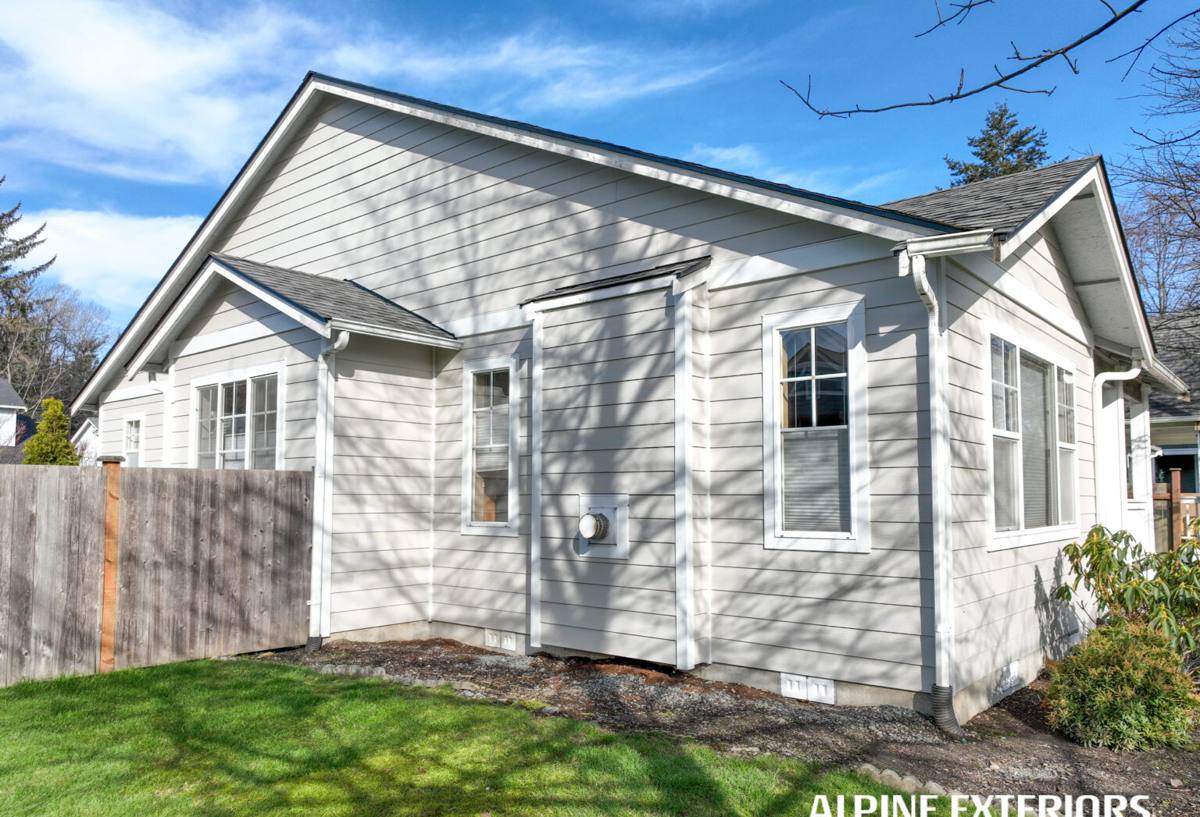
What Actually Wears Out Siding on the Spit
Salt Air From More Than One Direction
Because Semiahmoo has water bordering it on multiple sides, homes here take on salt-laden air from more than one prevailing direction instead of just one. Salt accelerates corrosion in fasteners and trim, and it breaks down lower-grade finishes and caulking faster than a drier, more sheltered lot would. On a repair job, that shows up as fastener heads that have rusted and backed out, trim that's corroded before the siding field itself looks bad, and caulk joints that have failed years ahead of schedule.
Driving Rain Pushed Sideways
With almost nothing to break the wind, rain on the spit gets driven sideways into wall assemblies rather than falling straight down. That pushes water into joints, laps, and penetrations that were never built to handle that kind of pressure, especially around window and door trim, outside corners, and anywhere siding meets a roofline. A lot of the repair calls we get on Semiahmoo properties trace back to one of those transition points rather than a flaw in the siding material itself.
A Long Moss and Mildew Season
Mild temperatures, near-constant humidity, and shaded north-facing walls add up to a moss and mildew season that runs most of the year in this part of Whatcom County. Moss and mildew growth on siding is often treated as a cosmetic nuisance, but on porous or moisture-holding materials it can also be a sign that the surface is staying wet longer than it should, which is worth checking rather than just pressure-washing away.
Signs a Semiahmoo Home Needs Siding Repair
Some of these are things a homeowner can spot from the yard. Others only show up once a section of siding comes off.
- Soft or spongy spots when you press on the siding, especially near the bottom courses or around window trim
- Visible gaps, cracking, or separation at butt joints and corners
- Paint or finish that's peeling or bubbling in one specific area rather than uniformly across the wall
- Staining or discoloration that keeps reappearing in the same spot after cleaning
- Moss or mildew that returns quickly on one wall while other walls stay relatively clean
- Interior signs — a musty smell, a soft spot on interior drywall, or visible staining near an exterior wall
- Fastener heads that are rusted, popped, or backed out of the surface
Any one of these can be minor on its own. Several showing up in the same area, or any of them paired with an interior sign, usually means it's time for a closer look rather than another round of cleaning.
Cosmetic Wear vs. Something Deeper
Not every mark on a wall means the same thing, and telling the difference correctly is the actual job of a repair estimate — not just eyeballing the outside of the siding.
| Symptom | Usually Cosmetic | Often Points Deeper |
|---|---|---|
| Surface fading or chalking on the finish | Yes — sun and weathering | Rarely, unless paired with other symptoms |
| Moss or algae film on the surface | Often, if the substrate is still firm | Yes, if the panel is soft underneath the growth |
| Soft or spongy panel when pressed | No | Yes — moisture has likely reached the substrate |
| Cracking at a single butt joint or corner | Sometimes, if isolated and dry behind it | Yes, if water is tracking behind the joint |
| Rust streaking from fastener heads | Cosmetic if isolated and fastener is still tight | Yes, if the fastener has lost holding strength |
| Interior staining or musty smell near a wall | No | Yes — treat as active moisture intrusion |
Cosmetic issues can usually be addressed on a normal maintenance schedule. Anything in the "often points deeper" column deserves an actual inspection before it's patched over, because covering a moisture problem with new caulk or paint just hides it for another season.
How We Diagnose Before We Recommend Anything
A useful repair estimate starts with figuring out how far a problem actually extends, not just patching what's visible. On a Semiahmoo property, that typically means:
- Pressing and probing suspect panels to find soft spots that aren't visible from a few feet away
- Pulling a section of siding, when warranted, to check the water-resistive barrier and framing behind it for moisture damage
- Checking flashing at windows, doors, and any roof-to-wall transition near the affected area, since that's where wind-driven rain most often finds a way in on this exposure
- Inspecting fastener condition and trim for corrosion, especially on walls facing open water
- Looking at drainage and clearance from grade, since siding installed too close to the ground stays wet longer
We walk through what we actually find — what's cosmetic, what's structural, and what's simply been made worse by being ignored — before we put together a scope of work.
Repair vs. Replace: An Honest Answer
Homeowners calling about siding repair on the spit sometimes expect a patch, and sometimes expect to hear it's time for a full re-side no matter what. Neither assumption holds up on its own. What actually drives the decision:
- How far the moisture damage extends. A section or two with isolated rot behind it is a reasonable repair. Moisture damage tracking across multiple wall sections usually isn't worth chasing panel by panel.
- What's causing the damage. If the cause is a single bad flashing detail or a caulk failure, fixing that cause plus the affected section is often enough. If the underlying material itself is the problem — swelling, absorbing water, breaking down at cut edges — repairing around it just delays the same failure showing up nearby.
- Age and condition of the rest of the siding. Siding near the end of its practical life may only have limited repair cycles left before a full re-side is the more sensible option, cost for cost.
- Material match. On some products, matching an existing discontinued color or profile for a repair section isn't realistic, which shifts the math toward a fuller replacement of at least that elevation.
We'll give a straight read on which category a given repair falls into, including when a smaller, targeted fix is genuinely the right call rather than defaulting to the bigger job.
What a Correct Repair Involves
Fixing the Cause, Not Just the Symptom
A soft panel is a symptom. A failed flashing detail, a gap at a trim joint, or siding installed too close to grade is usually the cause. A repair that swaps in new material without correcting what let water in behind it tends to fail again in the same spot — often sooner the second time, because the underlying issue was never addressed.
Correct Flashing and Drainage at Every Repair
Any repair that opens up a section of wall is a chance to correct flashing and drainage details that weren't right the first time, particularly around windows, doors, and outside corners. On an exposed property like Semiahmoo, skipping that step on a repair means the same failure returns within a season or two.
Why We Only Install James Hardie Fiber Cement in the Repair
When a repair calls for new siding material, we install James Hardie fiber cement — the same standard we hold on every full installation. We don't install LP SmartSide, vinyl, Cemplank, Allura, primed spruce, or cedar, including for patch and repair sections. That's a professional call, not a sales pitch: Hardie's fiber cement resists the swelling, warping, and edge deterioration that repeatedly bring us back out to other materials in this exact climate, and its factory-applied ColorPlus finish holds color and resists moisture longer than field-applied paint. Hardie's HZ5 formulation is built specifically for regions with heavy moisture exposure and freeze-thaw cycling, which describes waterfront Whatcom County well.
If your existing siding is a different material — vinyl, cedar, engineered wood — we'll still repair what can reasonably be repaired using compatible material and honest expectations about matching. But where a section needs full replacement, we won't quietly substitute in more of a product we don't stand behind just to match what's already there. We'll tell you plainly if that means a broader scope than you were expecting, and why.
Our Siding Repair Process
We start with an on-site inspection focused specifically on the affected area and how it's likely connected to flashing, drainage, and moisture exposure elsewhere on the wall. From there we put together a clear, written scope — what's being repaired, what material is going in, and what flashing or drainage corrections are included — before any work begins. On the job, we treat correct fastening, flashing, and clearance from grade as standard practice for a Semiahmoo property, not an upgrade you have to ask for.
Why Hiring a Crew That Already Works Semiahmoo Matters
A contractor who regularly works this specific stretch of coastline already knows how salt air, open wind, and prolonged moisture behave differently here than they do even a few miles inland in Blaine. That shows up directly in a repair estimate — recognizing which symptoms on a spit property are routine and which ones mean water has been getting in for a while, knowing which fastener grade actually holds up out here, and catching flashing problems that a crew unfamiliar with this exposure might patch over instead of fixing at the source. That familiarity also means a more accurate estimate the first time, with less back-and-forth once the wall is actually opened up.
A Simple Checklist Before Hiring for Siding Repair on the Spit
- Ask whether the estimate includes probing or opening the wall to check for hidden moisture damage, not just a visual look from the ground
- Confirm they carry current Washington contractor licensing and active liability insurance
- Ask what material they'll use for the repair section and why, and whether it's backed by a written warranty
- Ask specifically how they'll address flashing and drainage at the repair, not just the visible siding
- Get a clear, written scope of work — including what's repair and what's replacement — before signing anything
If you've got a soft spot, a recurring stain, or siding that just doesn't look right on a Semiahmoo property, we're glad to come take an honest look and tell you plainly what it needs — repair, replacement, or nothing at all yet. Reach out below for a free, no-pressure estimate.