 Birch Bay
 Why Semiahmoo Homes Wear Out Siding Faster
Homes along the Semiahmoo shoreline sit in one of the toughest exposure zones in Whatcom County. The combination of salt-laden air off the water, wind-driven rain that hits walls at an angle instead of falling straight down, and a moss season that can stretch from fall through spring puts a level of stress on exterior siding that inland homes simply don't face. Siding here isn't just decorative — it's the first and most important line of defense against moisture intrusion, and it needs to be treated that way.
Salt air is corrosive to fasteners and trim metal, and it accelerates the breakdown of paint film on wood-based products. Driving rain finds its way into laps, seams, and butt joints that would stay dry on a more sheltered lot. And the near-constant damp shade that many waterfront and tree-lined properties get for months at a time means moss, algae, and mildew get a real foothold on any surface that holds moisture. If your siding is original to the house or was installed decades ago, there's a good chance it's already showing the effects — even if the damage isn't obvious from the street.
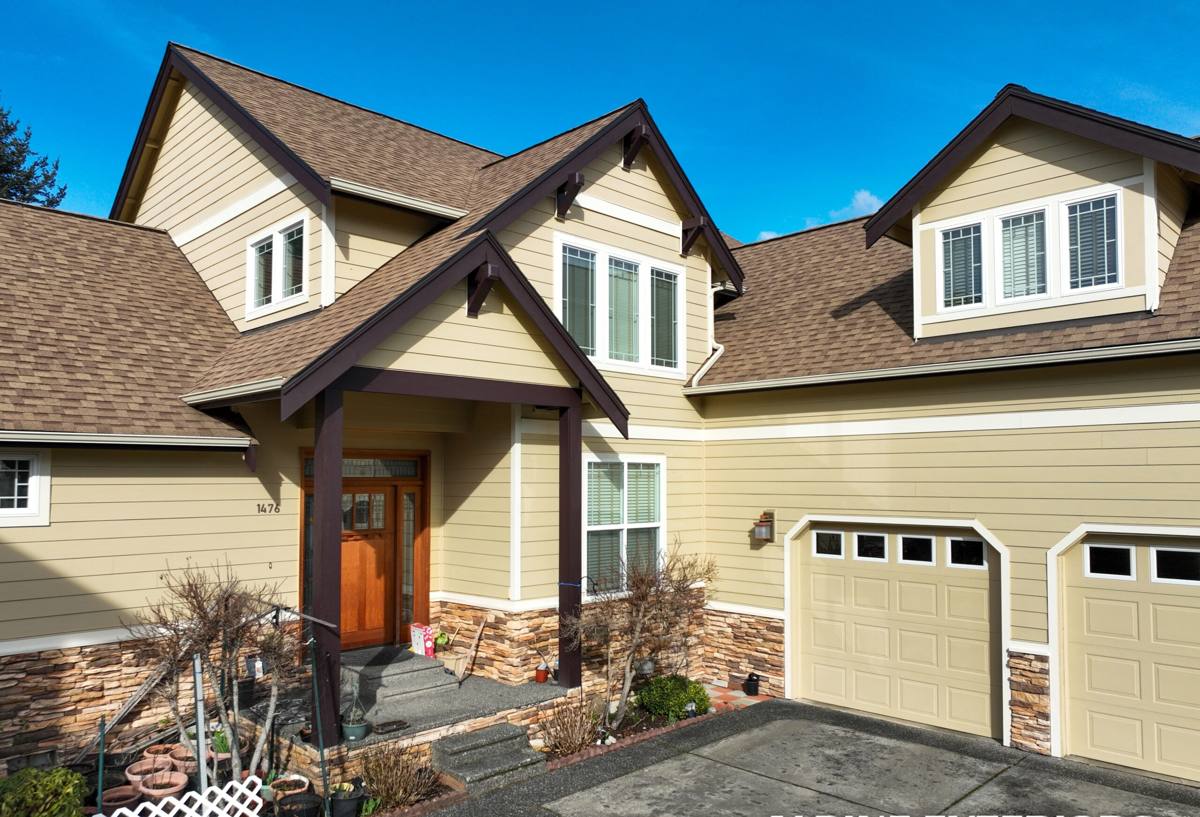
Signs It's Time for Replacement, Not Another Repair
Patching individual boards can make sense for isolated damage, but on a home that's taken years of coastal exposure, spot repairs often just delay a bigger problem. Here's what tells us a full replacement is the right call rather than another round of caulk and paint.
Visible Warning Signs
- Soft or spongy spots when you press on the siding, especially near the bottom courses and around window trim
- Paint that's peeling, bubbling, or needs repainting more often than every few years
- Visible cracking, warping, or delamination on wood-based or engineered wood siding
- Persistent moss or dark streaking that returns quickly after cleaning
- Gaps opening up at seams, corners, or where siding meets trim and flashing
What You Can't See
The damage that matters most is often behind the siding, not on it. Trapped moisture can rot sheathing, degrade the weather-resistive barrier, and invite mold growth long before it shows up as a visible symptom on the exterior. On a coastal property, we treat any sign of moisture intrusion as a reason to open the wall and look, not just repaint over it.
Why We Only Install James Hardie Fiber Cement Here
We standardized on James Hardie fiber cement for every home we side, and waterfront properties like the ones around Semiahmoo are exactly why. Fiber cement doesn't absorb water the way wood-based products do, it won't warp or delaminate from repeated wet-dry cycles, and it's non-combustible. James Hardie's ColorPlus factory finish is baked on and formulated to hold color and resist the fading and chalking that salt air and UV exposure cause faster here than in drier inland climates.
| Material | Moisture Behavior in Coastal Exposure | Maintenance Burden |
|---|---|---|
| James Hardie fiber cement | Engineered for moisture resistance; does not swell, rot, or delaminate | Low — factory finish holds up for years between recoats |
| Vinyl siding | Doesn't absorb water itself, but seams and panels can allow wind-driven rain behind the cladding; can warp or crack in temperature swings | Low upfront, but hard to repair invisibly and prone to fading |
| Primed wood or LP-style engineered wood | Vulnerable to edge swelling, delamination, and rot if the factory finish or caulking fails | High — regular repainting and caulk maintenance required |
| Cedar | Naturally moisture-tolerant when maintained, but requires ongoing sealing to perform in salt air and driving rain | High — periodic refinishing is non-negotiable |
We're not going to tell you those other products are junk — they have real uses, and plenty of homes are sided in them. But for the specific conditions a Semiahmoo-area home deals with, we've made a professional decision to put our name behind the product that holds up best with the least ongoing maintenance: James Hardie.
What a Correct Siding Replacement Actually Involves
Full Tear-Off and Inspection
We remove the old siding down to the sheathing rather than installing over it. That's the only way to actually see what's happening underneath — soft sheathing, compromised framing, or a failed weather barrier all need to be addressed before a single new board goes up, not covered over.
Moisture Barrier and Flashing
This is the step that matters most in a wind-driven rain climate. A properly lapped weather-resistive barrier, correctly integrated window and door flashing, and properly detailed penetrations for vents, hose bibs, and light fixtures are what actually keep water out — the siding itself is the second line of defense, not the first.
Installation to Manufacturer Spec
James Hardie publishes specific fastening patterns, clearances, and gapping requirements, and they exist for a reason — proper clearance at grade, decks, and roof lines keeps water from wicking up into the bottom of the siding, which is one of the most common failure points we see on homes that were sided by crews cutting corners.
Trim, Caulking, and Finish Detail
Corner boards, trim, and caulking joints are where a lot of installs go wrong. We use compatible trim systems and correct sealant products at every joint that's actually supposed to be sealed — and we leave the joints that are designed to drain, alone, rather than caulking them shut and trapping moisture behind the wall.
Our Process for a Semiahmoo Siding Replacement Project
1. On-Site Assessment
We walk the exterior with you, look at problem areas you've already noticed, and check the spots that tend to fail first on coastal homes — bottom courses, trim returns, and anywhere siding meets a roof, deck, or chimney.
2. Written Scope and Product Selection
You get a clear, written scope covering tear-off, any sheathing or framing repair, the specific James Hardie product line and profile, trim details, and color. No vague allowances — you know what you're getting before work starts.
3. Tear-Off and Sheathing Repair
Old siding comes off, damaged sheathing gets replaced, and the weather barrier goes on correctly the first time.
4. Installation and Flashing
Siding, trim, and flashing go in to spec, with attention to the clearances and drainage details that matter most in driving rain.
5. Final Walkthrough
We go around the house with you before calling the job done, so nothing gets left as a surprise later.
Why Local Experience in This Area Matters
A crew that regularly works homes along the Whatcom County coastline knows which details actually matter here versus in a typical inland job. That means knowing where wind-driven rain tends to concentrate on a given exposure, understanding how quickly moss and algae take hold in the shaded, damp conditions common near the water, and building in the clearances and drainage paths that keep a marine climate from winning over time. It also means we're not learning on your house — we've already made the adjustments that a coastal Whatcom County property demands.
Color and Product Selection for Salt Air Exposure
James Hardie's ColorPlus finish is factory-applied and cured under controlled conditions, which gives it better long-term color retention than field-applied paint — a real advantage when UV and salt exposure are working against a finish year-round. For homes closer to open water and heavier wind exposure, we'll talk with you about the right Hardie product line and panel profile for the specific conditions on your lot, rather than defaulting to a one-size-fits-all recommendation.
Planning Your Project: What Affects Cost
Every home is different, but a few factors consistently move the price of a siding replacement up or down. Knowing them ahead of time makes for a more useful first conversation.
- Total square footage and the complexity of the roofline and wall planes
- Condition of the sheathing and framing once the old siding comes off
- Number of stories and accessibility for scaffolding or lifts
- Trim complexity — corner boards, window and door surrounds, fascia
- Product line and profile selected within the James Hardie system
- Whether existing paint, caulk, or old siding contains materials requiring special handling
We won't know your real number until we've actually looked at the house, but we'll walk you through these factors honestly during the estimate so there are no surprises.
If your Semiahmoo-area home is showing signs of wear from salt air, driving rain, or moss, we're happy to take a look and give you a straightforward, no-pressure estimate — just fill out the form below to get started.