 Birch Bay
 Cherry Point Is Its Own Kind of Exposure
Cherry Point sits on the open shoreline north of Birch Bay, and that location changes what siding has to survive here compared to homes even a mile or two inland. Wind comes straight off the Strait of Georgia with nothing to slow it down, and it carries salt spray with it. Add Whatcom County's long, wet fall-through-spring stretch and the shaded, slow-drying conditions that come with tree cover and marine cloud, and you get a siding environment that's genuinely harder on materials than the regional average. We've done repair work up and down this stretch of coastline long enough to know which failure patterns show up here specifically, and that's the difference between a repair that lasts and one that's patching a symptom.
This page is about one job in one place: fixing siding on Cherry Point homes. Not a general repair primer, not a sales pitch for a full re-side — just what actually needs attention here, how a repair should be done so it holds, and why the crew doing it matters as much as the material.
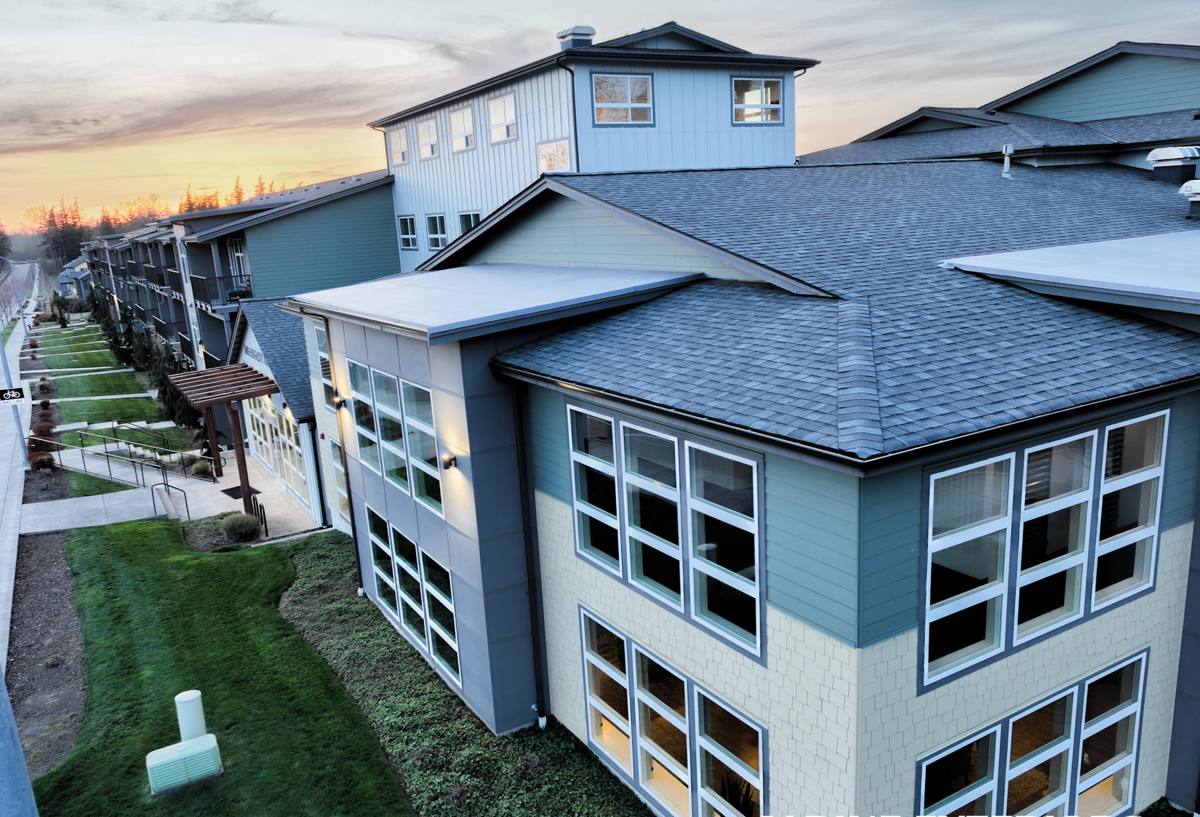
What Salt Air, Wind-Driven Rain, and Moss Actually Do to Siding
Salt air is slow, quiet corrosion
Salt-laden wind doesn't announce itself the way a storm does. It settles on siding, trim, and especially fasteners day after day, and over years it accelerates the breakdown of finishes and the corrosion of anything metal that isn't rated for a marine-adjacent environment — nail heads, flashing, trim fasteners, and hardware. On siding with a weak or thin factory finish, salt exposure shows up as chalking, fading, and finish failure well ahead of schedule. On fasteners, it shows up as rust streaking, bleeding through paint, and eventually a fastener that no longer holds.
Wind-driven rain finds every gap
Rain that falls straight down is one problem. Rain that's being pushed sideways by open shoreline wind is a different one — it gets forced up under laps, into butt joints, and behind trim in ways vertical rain never would. Siding systems are designed to shed water moving downward with the help of gravity and properly lapped joints. Wind-driven rain tests every seam, every piece of flashing, and every caulk joint that was cut corners on. Cherry Point gets more of this than sites farther from open water.
Moss season is a long, low-grade moisture problem
Whatcom County's moss season isn't a few weeks — it's most of the year in shaded, north-facing, and tree-covered spots, which describes a lot of Cherry Point lots. Moss and algae hold moisture against the siding surface far longer than open, sun-exposed walls ever experience. That extended dampness is what actually causes damage: it softens caulk, keeps wood-based substrates wet enough to rot, and creates the acidic, moisture-retentive layer that eats through weak finishes faster than plain weather would on its own.
How each factor shows up on the wall
| Climate factor | What it does to siding | Where it shows up first |
|---|---|---|
| Salt-laden wind | Corrodes exposed fasteners and hardware; accelerates finish breakdown | Nail heads, trim fasteners, flashing edges |
| Wind-driven rain | Pushes water into laps, joints, and gaps that vertical rain wouldn't reach | Butt joints, window and door trim, inside corners |
| Long moss season | Keeps surfaces damp for extended periods, softening caulk and feeding rot in weak substrates | North-facing walls, shaded lower courses, under eaves |
| Marine humidity swings | Repeated wet-dry cycling stresses caulk joints and finish adhesion | Seams, trim-to-siding transitions |
Common Cherry Point Repair Calls We See
Repair requests on this stretch of coastline tend to cluster around a handful of patterns:
- Soft or crumbling siding low on the wall, usually where moss or standing debris has kept a section wet for a long stretch
- Rust streaking below fastener heads, especially on older siding installed with fasteners that weren't corrosion-rated for a coastal setting
- Failed caulk at butt joints and trim that's let wind-driven rain track behind the siding rather than off of it
- Moss and algae buildup on north- or shade-facing sections that's holding moisture against the surface year-round
- Finish chalking or fading well ahead of what the product's warranty period would suggest is normal
- Damage clustered near ground level or below downspouts, where splash-back adds a second moisture source on top of the marine climate
Almost none of these are cosmetic-only problems. Rust at a fastener means water has a path in. Soft siding near grade means moisture has been sitting there for a while, not just for a season. Treating any of these as a surface fix — caulk over it, paint over it, call it done — is how a small repair turns into a much bigger one two winters later.
What a Correct Repair Actually Involves
Diagnosing past the visible damage
The first thing we do on any Cherry Point repair call is figure out how far the moisture has actually traveled, not just where it's visible. A soft or discolored board is often the edge of the damage, not the center of it. That means checking behind and around the affected area — the sheathing, the house wrap, the flashing details at windows and penetrations — before deciding how much needs to come off and how much can stay.
Matching material and finish, not just color
A patch that's the wrong material or the wrong finish system creates a new weak point right next to the old one. If the surrounding siding is factory-finished fiber cement, the repair section needs to be the same product line and finish process, not a field-painted substitute that will age differently and telegraph the repair over time. This is where a lot of quick, cheap repairs go wrong — they solve today's problem and create a visible, uneven-aging patch that becomes its own maintenance issue.
Getting the flashing and water path right
Siding repair on a wind-exposed, wet-climate site isn't just about the board itself — it's about restoring the water-shedding path the whole wall depends on. That means correct laps, proper flashing at any trim or penetration in the repair area, and fastener placement and type that won't become tomorrow's rust streak. A repair that looks right but ignores the water path underneath is a repair that fails again, usually in the same spot.
Dealing with moss and biological growth properly
Where moss or algae contributed to the damage, we address the growth and the moisture source, not just the stain. Pressure-washing over rot doesn't fix rot, and painting over active moss growth just traps it. Removing damaged material, treating the area appropriately, and addressing whatever's keeping that section perpetually shaded and damp — overhanging vegetation, poor drainage, missing gutter coverage — is part of doing the repair once instead of every couple of years.
Repair vs. Replacement: How We Make the Call
Not every damaged section needs a full re-side, and not every repair is worth doing on its own. We look at scope, age, and cause before recommending either direction.
| Factor | Leans toward repair | Leans toward replacement |
|---|---|---|
| Extent of damage | Isolated to one or two sections or elevations | Recurring across multiple walls or the whole exposed side |
| Age of existing siding | Siding is mid-life and otherwise sound | Siding is near or past its expected service life |
| Underlying cause | A specific, fixable source (one bad flashing detail, one shaded low spot) | A systemic issue — original installation errors, wrong product for the site |
| Material match | Matching product and finish are still available | Original product is discontinued or was never a good fit for this climate |
We'll tell you honestly which side of that table your home falls on. If a targeted repair will hold, that's what we recommend — there's no reason to sell a full re-side when a section of correctly matched, correctly installed siding will do the job.
Our Process for Cherry Point Repairs
- On-site assessment. We look at the damage, the surrounding wall, and the likely moisture source — not just the spot that was reported.
- Honest scope and estimate. You get a clear picture of what needs to be replaced, what's driving the damage, and what it will cost — no upsell to a full re-side unless the wall genuinely calls for it.
- Removal and inspection behind the siding. Damaged material comes off, and we check the sheathing, wrap, and flashing underneath before closing anything back up.
- Correct water management first. Flashing, laps, and fastener details are corrected as part of the repair, not left as-is.
- Material match and installation to spec. Replacement sections are installed to the manufacturer's fastening and clearance requirements, which matter more on a wind-exposed site than most homeowners realize.
- Final check and cleanup. We confirm the repair sits flush, sheds water correctly, and blends with the surrounding wall before we call it finished.
Why We Only Repair With James Hardie Fiber Cement
When a repair section needs new material, or when a damaged area is bad enough that patching isn't the honest answer, we use James Hardie fiber cement — and that's the only siding product we install, period. It's a deliberate standard, not a default. Fiber cement doesn't absorb water and swell or rot the way wood-based and some engineered wood siding products can, which matters directly on a site where moss and prolonged dampness are part of the yearly cycle. It's non-combustible, which is a real consideration anywhere on the Washington coast. And Hardie's ColorPlus factory finish is baked on and warrantied against fading and chipping in a way field-applied paint jobs on other materials generally aren't — which matters on a site getting steady salt exposure and UV off open water.
We've looked at the alternatives — vinyl, LP SmartSide and other engineered wood products, cedar, primed spruce, Cemplank and Allura fiber cement. Some of them are reasonable products in the right setting. But for a wind-exposed, salt-air, high-moisture site like Cherry Point, the trade-offs on moisture tolerance, finish durability, and long-term maintenance consistently point back to Hardie's climate-engineered HZ product lines and factory finish. That's why repairs and full installs both go back to the same material: it's what we're willing to warranty our work on, in this specific climate.
Why Hiring a Crew That Already Works This Shoreline Matters
A repair crew that's never worked a wind-exposed Whatcom County shoreline will diagnose Cherry Point damage the way they'd diagnose it anywhere — and that's exactly how a repair ends up failing again in a year or two. Knowing that fastener rust here usually means an under-rated fastener, that a soft section on a north wall usually traces back to moss holding moisture in place, and that wind-driven rain gets into gaps that vertical rain never would — that's not generic siding knowledge, it's specific to sites like this one. A crew that's done this work up and down this coastline brings that pattern recognition to your estimate before a single board comes off the wall, which means fewer surprises and a repair that's sized correctly the first time.
Before You Call: A Quick Homeowner Checklist
- Note where the damage is on the house — which elevation, how high off the ground, whether it's shaded or sun-exposed
- Check whether the area stays damp or mossy longer than the rest of the house
- Look for rust streaking below nail heads or trim fasteners nearby
- Check gutters and downspouts near the damaged area for splash-back or overflow onto the wall below
- Note whether the damage is new this year or has been slowly getting worse — that timeline helps with diagnosis
- Avoid painting or caulking over the area before it's inspected — it can hide the extent of the problem
If you're seeing soft siding, rust streaks, persistent moss, or finish that's aged faster than it should on a Cherry Point home, we're glad to take a look. The estimate is free, there's no pressure to turn a repair into a full re-side, and you'll get a straight answer about what your siding actually needs.