 Birch Bay
 Siding Repair for Sumas Homes
Sumas sits out toward the eastern edge of Whatcom County, near the international border, in flatter farm country than the immediate waterfront around Birch Bay. It's not oceanfront, but it isn't sheltered either. The same weather systems that move salt-tinged marine air and driving rain across the county from the Salish Sea still reach Sumas, and the moss and mildew season that plagues shaded walls closer to the water runs just as long out here. We repair siding for homeowners in Sumas regularly, and the approach we bring is shaped by what that combination of moisture, wind, and long wet stretches actually does to a wall assembly over years, not just what a patch looks like from the curb.
We install and repair James Hardie fiber cement siding exclusively. When we're called out to fix a section of siding in Sumas, whatever is currently on the house, the goal is the same: find out why it failed, fix the actual cause, and leave the wall in a condition that won't need the same repair again in two years.
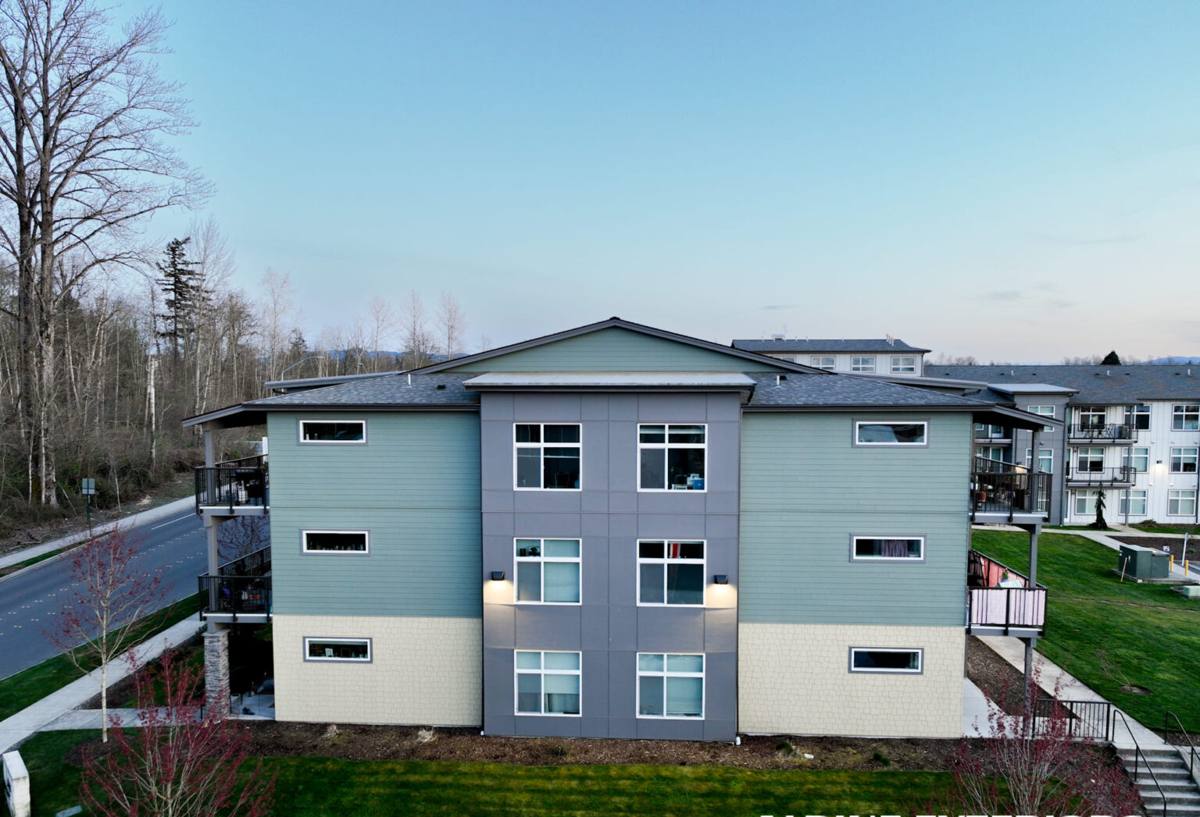
What This Climate Does to Siding Out Here
Driving Rain
Rain in this part of Whatcom County rarely just falls straight down. Storms push it sideways into walls, trim, and window flashing, and siding that isn't lapped, sealed, and flashed correctly lets that wind-driven moisture track behind it instead of shedding it. On a Sumas property, that usually shows up first at butt joints, corners, and anywhere trim meets siding, since those are the spots where a gap or a failed seal gives water a direct path inward.
Salt-Tinged Marine Air and Regional Moisture
Sumas isn't sitting on the water the way Birch Bay is, but the marine air that moves off the Salish Sea and Puget Sound sweeps across the whole county during storm systems, carrying moisture and a measure of salt with it. That regional dampness accelerates corrosion on fasteners and metal flashing and breaks down lower-quality finishes faster than a dry inland climate would, even on a property that isn't within sight of the water.
A Long Moss and Mildew Season
Mild temperatures, shade, and near-constant regional moisture add up to a moss and mildew season that stretches across most of the year on north-facing and tree-shaded walls. It starts as staining or a faint green tint and, left alone, holds moisture directly against the siding surface — which is exactly the condition that turns a cosmetic problem into hidden rot underneath.
Common Siding Repair Issues We See in Sumas
Most repair calls in this area fall into a handful of recurring categories. Recognizing which one you're dealing with matters, because the fix — and the cost — is different for each:
- Failed caulk and sealant joints around trim, corners, and butt joints that let wind-driven rain track behind the siding
- Impact damage from storm debris, a fallen branch, or routine yard work that cracks or dislodges a section of siding
- Moisture staining and soft spots where water has been getting behind the wall for a while, often discovered only once the siding is pulled back
- Moss and mildew buildup on shaded walls that's gone past a simple cleaning and started holding moisture against the surface
- Warped, cupped, or delaminating panels on older non-Hardie products — engineered wood and some composite sidings absorb moisture and swell in a way fiber cement doesn't
- Flashing failures around windows, doors, and roof-to-wall transitions that let water in even though the siding itself looks fine
What a Correct Repair Actually Involves
A siding repair that only replaces the visible damaged piece and stops there is a cosmetic fix, not a real one. In a climate that pushes this much moisture into a wall assembly, the visible damage is usually a symptom, and the actual cause is behind it.
Finding the Real Cause First
Before we replace anything, we pull back enough of the surrounding siding to see what's underneath — house wrap, flashing, sheathing — and check whether the damage is isolated or whether moisture has already spread past the section that's visibly failing. A cracked board next to a window is sometimes just a cracked board. Other times it's the first visible sign that flashing behind it has been letting water in for a season or two.
Matching Material and Finish
When the existing siding is James Hardie, matching a repair is straightforward — the ColorPlus factory finish is manufactured to a consistent standard, so a properly sourced replacement board blends in rather than standing out as an obvious patch. When the existing siding is a different product, we'll talk through honestly whether a like-for-like patch makes sense or whether the repair is a good opportunity to convert that section, or eventually the whole elevation, to fiber cement.
Correcting the Detail, Not Just the Board
If a joint failed because it wasn't lapped correctly, or a section rotted because flashing was missing behind it, replacing the board without correcting that underlying detail just resets the clock on the same failure. Every repair we do addresses the installation detail that let water in, not only the piece of siding that shows the damage.
Repair vs. Full Replacement
Not every siding problem in Sumas calls for a full re-side, and not every problem should be patched. The honest answer depends on how far the damage has spread and what condition the rest of the siding is in.
| Situation | Usually a Repair | Usually a Replacement |
|---|---|---|
| Damage extent | Isolated to one section, panel, or trim run | Recurring across multiple walls or elevations |
| Underlying moisture | Localized and caught early | Widespread rot in sheathing or framing |
| Siding age and material | Existing Hardie siding still within its service life | Older non-Hardie product nearing end of life |
| Cause of failure | A single flashing or caulk failure, corrected during repair | Systemic installation issues across the whole house |
| Cost over time | Lower upfront cost, addresses the immediate problem | Higher upfront cost, resets the clock on the whole exterior |
We'll tell you plainly which category your home falls into. If a repair genuinely solves the problem, that's what we'll recommend — there's no reason to sell a Sumas homeowner a full re-side when a properly diagnosed repair does the job.
Our Repair Process
- Inspection: We walk the affected area and the surrounding walls, checking not just the visible damage but nearby trim, corners, and any wall section with similar sun and moisture exposure.
- Diagnosis: We pull back siding as needed to see what's actually happening underneath before quoting a fix, rather than guessing from the outside.
- Honest scope: We explain what we found, whether it's a straightforward repair or something bigger, and why — in plain language, not a sales pitch.
- The repair itself: Damaged material comes out, the underlying cause gets corrected, and new material goes in matched to the existing siding wherever that's possible.
- Follow-up: We stand behind the work and are glad to take a look if anything doesn't hold up the way it should.
Why James Hardie Holds Up Better in Repair Work Too
We don't install LP SmartSide, vinyl siding, Cemplank, Allura, primed spruce, or cedar, and that standard applies to repair work as much as full replacements. Each of those products has homeowners who are satisfied with it elsewhere, but in our experience across this climate, they tend to generate more repeat repair calls than fiber cement does.
- Non-combustible core: Fiber cement doesn't feed a fire the way wood-based siding can, which matters for safety on any repair or partial re-side.
- Factory-applied ColorPlus finish: Baked-on color resists fading and moisture intrusion far longer than field-applied paint, which is part of why Hardie repairs blend in rather than sticking out as a mismatched patch.
- Climate-engineered HZ product lines: Hardie's HZ formulations are built for regions with sustained moisture exposure, which describes this part of Whatcom County whether a home sits on the water or further inland.
- Dimensional stability: Fiber cement doesn't swell, cup, or warp the way engineered wood does after repeated wet-season moisture cycles — one of the most common reasons we get called to repair non-Hardie siding in the first place.
- Strong transferable warranty: When installation follows Hardie's spec, the warranty backing it is real protection, not a marketing line.
Signs Your Sumas Home May Need a Siding Repair
- Cracked, warped, or missing sections of siding, especially after a storm
- Soft spots when you press gently on the siding near the bottom of a wall
- Peeling paint or bubbling on the interior side of an exterior wall
- Persistent moss or dark staining on shaded or north-facing walls that keeps returning after cleaning
- Gaps, cracking, or missing caulk at trim, corners, and butt joints
- A noticeable rise in heating costs that could point to a wall assembly that's no longer sealing properly
Why a Local Crew Matters for Sumas Repair Work
A crew that works this part of Whatcom County regularly knows which wall orientations in Sumas stay wet longest through the winter, how far marine moisture and wind-driven rain reach out from the coast during a real storm system, and which flashing and caulking details are most likely to be the actual point of failure rather than the symptom. That local pattern recognition is what separates a repair that solves the problem from one that just covers it up until the next wet season. We treat every repair call in Sumas the same way we'd treat one on the waterfront — find the real cause, fix it correctly, and use a material system built for this region's demands.
If you're noticing damage, staining, or soft spots on your Sumas home's siding, we're glad to take a look and give you an honest read on what's actually going on. Reach out using the form below to schedule a free, no-pressure estimate.