 Birch Bay
 Siding Replacement Built for Sumas, Washington
Sumas sits at the northern edge of Whatcom County, close enough to the border and the foothills that homes here take on a different weather pattern than folks closer to the water assume. That doesn't mean the siding gets an easier ride. Whatcom County as a whole deals with long stretches of driving rain, moisture-laden marine air that moves inland off the Sound, and a moss season that can run from late fall clear into spring. Any siding that isn't built and installed for that reality starts failing years before it should.
We install James Hardie fiber cement siding exclusively, and we specifically install it in Sumas and the surrounding Whatcom County towns on a regular basis. This page covers what that actually means for a Sumas home: what the climate does to siding here, what a correct replacement job looks like, and why the crew doing the work matters as much as the product itself.
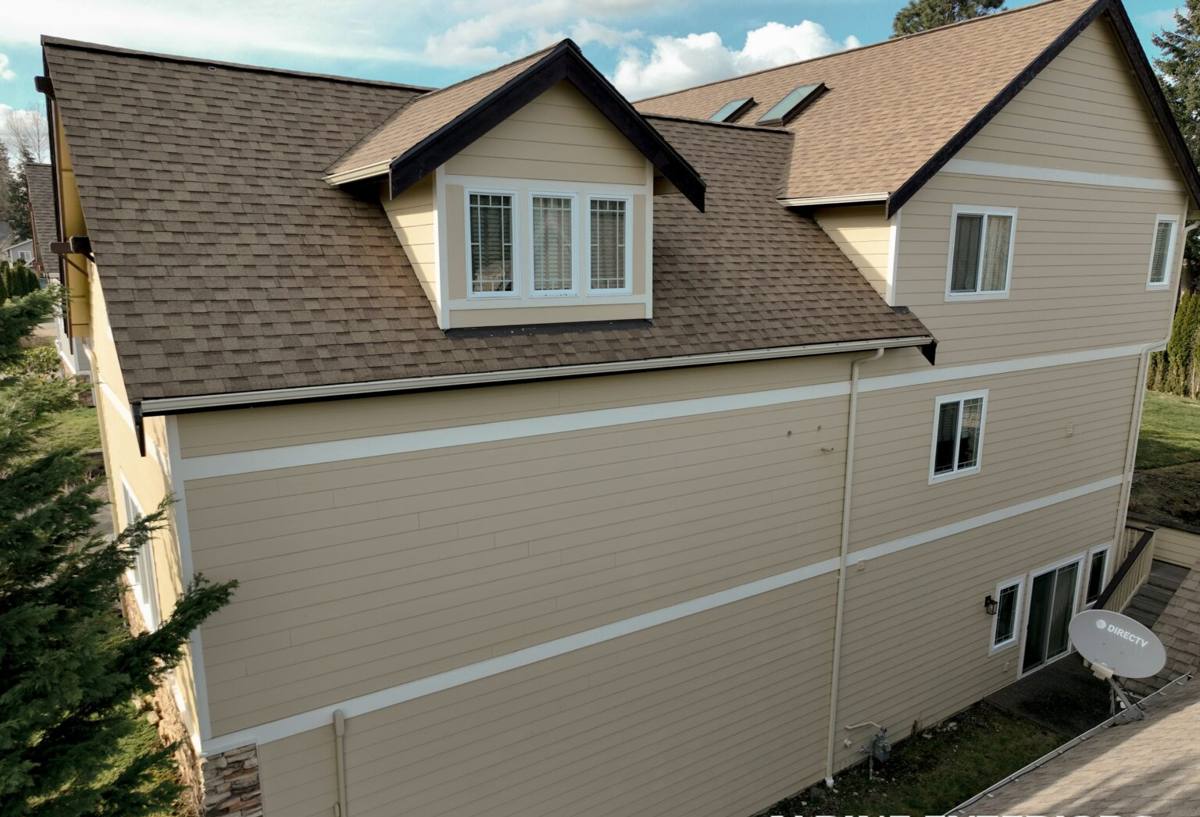
What Whatcom County's Climate Does to Siding
Every siding material reacts to sustained moisture and cool, shaded conditions differently. In Sumas, homes deal with a combination of factors that compound each other over a full year rather than hitting hard in one season and easing off in another.
Driving Rain and Wind-Driven Moisture
Rain in this part of Washington rarely falls straight down. Wind pushes it sideways into wall assemblies, which means siding seams, laps, and butt joints take on more water exposure than the manufacturer's baseline testing often assumes. Materials that swell, wick, or delaminate at the edges show it first at these joints.
Moss, Algae, and Shade
Mature trees, fence lines, and the general cloud cover common to this part of the county keep exterior walls damp for long stretches, especially on north-facing elevations. Moss and algae don't just look bad — on porous or wood-based siding, they hold moisture against the surface and accelerate rot from the outside in.
Freeze-Thaw Cycling
Sumas sees more cold snaps than the immediate coastline, and freeze-thaw cycling is hard on any siding material that has already absorbed water. Wood fibers expand, contract, and eventually crack or delaminate. Fiber cement engineered for moisture resistance handles this cycling far better because it isn't taking on water in the first place.
Signs a Sumas Home Needs Siding Replacement
Not every siding problem calls for a full tear-off. But in a climate like this, certain signs point to a system that's failed rather than one that needs a patch.
- Soft or spongy spots when you press on the siding, especially near the bottom courses and around window trim
- Persistent moss or algae growth that returns within a season of cleaning
- Visible cupping, warping, or buckling panels, particularly on shaded or north-facing walls
- Paint that's failing every few years instead of holding for a decade or more
- Cracked or delaminating panel edges, especially around butt joints and corners
- Rising energy bills that suggest the wall assembly behind the siding is no longer doing its job
- Visible daylight, drafts, or water staining on interior walls near exterior siding
If you're seeing two or more of these, it's worth having a crew look at the wall assembly, not just the surface.
Why We Only Install James Hardie in Sumas
We don't install vinyl, LP SmartSide, primed spruce, cedar, or other fiber cement brands like Cemplank or Allura. That's a deliberate standard, not a sales pitch, and it comes down to how each of those products performs under exactly the conditions Sumas homes deal with.
Vinyl expands and contracts with temperature swings and can crack in sustained cold snaps. Engineered wood products like LP SmartSide perform well when detailed and maintained precisely, but they're wood-based at the core, which means moisture intrusion at a compromised seam or cut edge is a real long-term risk in a climate this wet. Cedar and primed spruce require ongoing maintenance — refinishing, caulking, moisture monitoring — that most homeowners don't sign up for and don't keep up with over a 20-year span.
James Hardie fiber cement is non-combustible, doesn't swell or rot the way wood-based products can, and holds its factory-applied ColorPlus finish far longer than field-applied paint. Hardie also engineers specific product lines (HZ5 and HZ10) for different climate zones, which matters in a county that sees both coastal moisture and inland cold snaps. It's a system built for the conditions we actually work in, not a generic product we're defaulting to.
What a Correct Siding Replacement Involves
The siding panel itself is only part of the system. A siding replacement that's actually built to last in this climate has to get the layers behind the panel right, too.
Tear-Off and Substrate Inspection
We remove the old siding down to the sheathing and inspect for rot, soft spots, or prior water damage. This is the point where hidden problems — often the reason siding failed in the first place — get found and fixed instead of covered back up.
Water-Resistive Barrier and Flashing
A correctly installed weather-resistive barrier, properly lapped and taped, along with correct flashing at windows, doors, and penetrations, is what actually keeps driving rain out of the wall assembly. Siding sheds most of the water; the barrier behind it handles what gets through.
Proper Fastening and Clearances
James Hardie panels have specific nailing patterns, fastener types, and clearance requirements from grade, roofing, and other transitions. Installed to spec, these details are what keep the manufacturer's warranty valid and keep water from finding a way behind the panel over time.
Caulking and Joint Detailing
Butt joints, corners, and trim intersections are where a rushed install shows up first. Correct detailing here is the difference between a wall that sheds water for decades and one that starts absorbing it within a few winters.
Comparing Siding Options for a Sumas Home
| Material | Moisture Performance | Maintenance | Typical Lifespan |
|---|---|---|---|
| James Hardie Fiber Cement | Engineered for wet, cold climates; doesn't rot or swell | Low — factory finish holds color for years | 30+ years |
| Vinyl | Doesn't absorb water but can crack in cold, warp in heat | Low, but limited repair options once damaged | 15-25 years |
| Engineered Wood (LP SmartSide) | Good if details stay intact; vulnerable at compromised seams | Moderate — seam and cut-edge sealing matters | 20-30 years with upkeep |
| Cedar | Attractive but absorbs moisture without diligent upkeep | High — refinishing and sealing on a recurring cycle | Varies widely with maintenance |
Our Process for a Sumas Siding Replacement
The process is the same whether the home is in Sumas, closer to Birch Bay, or elsewhere in Whatcom County — but the details we pay closest attention to shift based on the specific site: how shaded the lot is, which walls take the most wind-driven rain, and what the existing wall assembly looks like once we open it up.
- Free on-site estimate and visual assessment of current siding and trim condition
- Discussion of James Hardie product line, profile, and color options that fit the home
- Written scope covering tear-off, substrate repair allowances, and installation details
- Tear-off, substrate inspection, and repair of any rot or damage found underneath
- Installation of water-resistive barrier, flashing, and James Hardie siding to manufacturer spec
- Final walkthrough and warranty documentation
Why the Installing Crew Matters
James Hardie's product performance and its warranty both depend on correct installation — clearances, fastening patterns, flashing, and joint treatment all have to be right. A crew that installs Hardie regularly in Whatcom County has already worked through how local conditions affect those details: how much clearance to leave given the rain exposure here, where extra flashing attention pays off on a shaded wall, and how to sequence a tear-off around unpredictable weather without leaving a wall assembly exposed longer than it should be.
That local, repeated experience is different from a crew installing Hardie for the first time or splitting their work across a dozen different siding brands. We install one product system, in this region, consistently — and it shows in how the details get handled.
What This Means for Your Home
A siding replacement in Sumas isn't just a cosmetic project. Done right, it's a wall assembly upgrade that keeps driving rain, moss, and freeze-thaw cycling from working their way into your home's structure for decades. Done poorly, or with the wrong material for this climate, it's a problem you'll be dealing with again well before you should have to.
If your siding is showing signs of wear, or you're planning ahead for a replacement, we're happy to take a look and walk you through what we'd recommend for your specific home. There's no pressure and no obligation — just a straightforward assessment and a free estimate.