 Birch Bay
 A bad storm off the water doesn't treat every roof in Whatcom County the same. Blaine sits close enough to Semiahmoo Bay, Drayton Harbor, and the open water toward the Strait of Georgia that wind gets a running start before it hits a roofline here, and the rain that comes with it rarely falls straight down. When a storm damages a Blaine roof, the repair has to account for that exposure directly — not just patch the visible hole and hope the next windstorm doesn't find the same weak point. This page covers what storm damage actually looks like on a Blaine roof, how we decide what a proper repair involves, and what our process looks like from the first call to the final walk-through.
Why Storm Damage Hits Blaine Roofs Differently
Three things about this stretch of Whatcom County shape how storm damage happens and how it needs to get fixed.
Wind Off the Bay
Blaine's exposure to open water means less tree cover and fewer buildings to slow wind down before it reaches a roof, compared to towns set further inland. That open exposure is what lifts shingle edges, peels back ridge cap, and tears loose flashing that a calmer inland storm might not touch. Once wind gets under one lifted shingle or a loose flashing edge, the next gust has more to grab onto, which is why storm damage here tends to spread fast if it isn't caught early.
Driving Rain That Finds Weak Points
Rain during a Blaine storm usually isn't falling straight down — it's being pushed sideways, which means it gets driven up under lifted shingles, into open nail holes, and behind flashing that's pulled even slightly away from the surface it's supposed to seal. A repair that just re-seats a shingle without addressing the underlayment or flashing underneath it can look fine from the ground and still leak the next time wind direction lines up with that spot again.
A Moss Season That Never Fully Stops
The salt air and near-constant moisture here support moss and algae growth most of the year, and storm damage makes that worse in a specific way: a shingle edge lifted or cracked by wind gives moss a foothold it wouldn't otherwise have, and moss growing under a damaged shingle holds water against the roof deck long after the storm has passed. A roof that had moss creeping in before the storm is usually the one that leaks first after it.
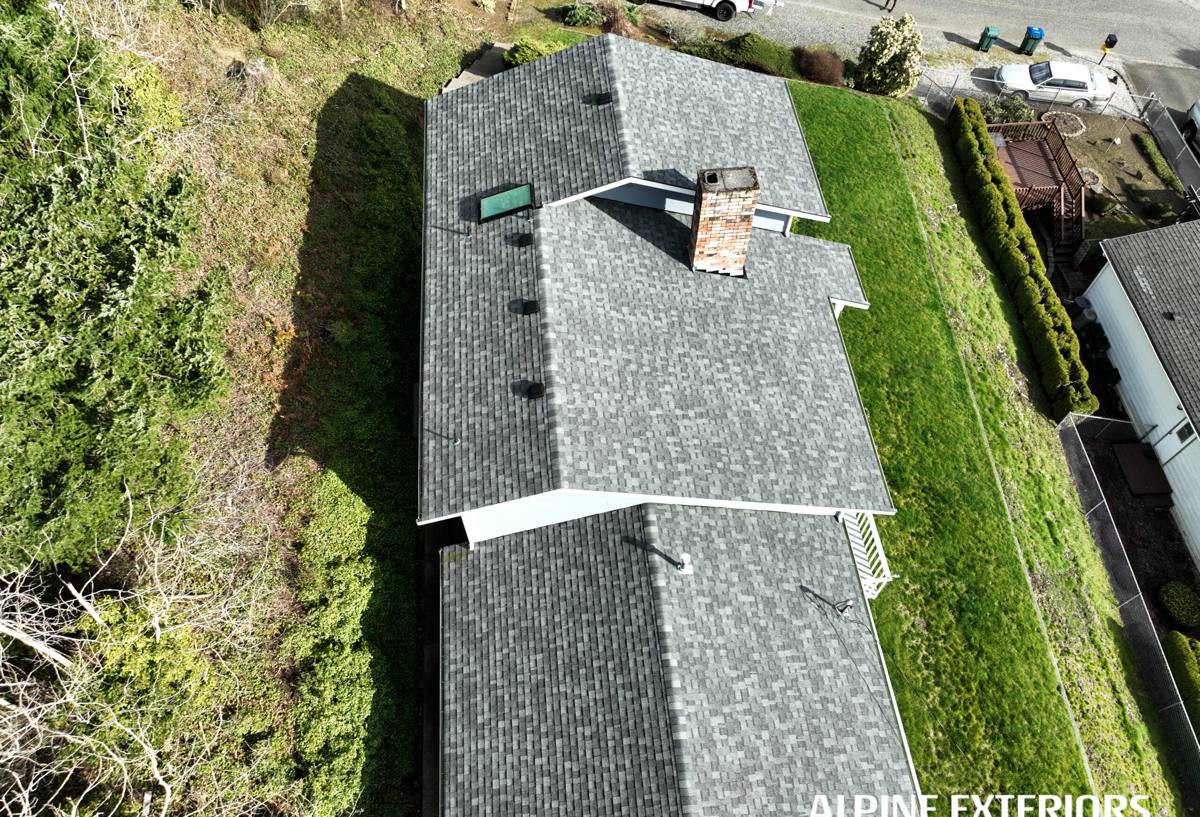
What Storm Damage Actually Looks Like
Not all storm damage is obvious from the ground, and some of the most serious problems show up as smaller signs rather than an obvious hole. Signs worth checking after any significant wind or rain event include:
- Shingles that are lifted, cracked, creased, or missing outright, especially along ridges and roof edges
- Granules collecting in gutters or at downspout outlets in noticeably higher amounts than usual
- Flashing pulled away from chimneys, vent stacks, skylights, or roof-to-wall transitions
- Dents or damage to gutters, vents, or roof-mounted fixtures from wind-thrown debris
- Water stains on interior ceilings or walls that appeared during or shortly after a storm
- Branch or debris impact marks, even where the surface material looks intact
- Soft spots or sagging in the roof deck felt underfoot during inspection
- Moss or dark staining concentrated around a specific damaged area rather than spread evenly
Some of these are visible without getting on the roof, but several aren't — which is part of why a proper post-storm inspection matters more than a quick look from the driveway.
Repair or Replace? How We Make That Call
Storm damage doesn't automatically mean a full roof replacement, and it doesn't automatically mean a quick patch is enough either. The right call depends on how contained the damage is and what condition the rest of the roof was in before the storm hit.
| Situation | Usually Points Toward | Why |
|---|---|---|
| Isolated wind damage on an otherwise sound, newer roof | Targeted repair | Surrounding material is still in good condition and can be matched and integrated cleanly |
| Storm damage on a roof already near the end of its service life | Replacement | Repairing an old roof often just delays the next failure rather than preventing it |
| Widespread shingle loss across multiple slopes | Replacement, or a case-by-case discussion | Extensive damage can compromise more of the roof system than a patch can reasonably restore |
| Single leak with a clear, contained source | Targeted repair | No need to replace a functioning roof over one identifiable failure point |
| Underlying moss damage discovered during storm repair | Depends on extent | Moss found under lifted shingles may point to deck or underlayment damage that changes the scope |
We don't default to recommending replacement just because a homeowner's roof was already older when the storm hit, and we don't talk anyone into an expensive repair on a roof that's genuinely due for replacement. We look at the actual condition and give an honest read on which option makes sense.
What a Correct Storm Repair Actually Involves
Emergency Tarping
When a storm leaves a roof actively letting water in, the first priority is stopping further water intrusion, not doing the permanent repair on the spot. A proper temporary tarp is secured well enough to hold through follow-up weather, not just draped over the damaged area, while the permanent repair gets scheduled and materials are matched.
Matching Materials, Not Just Filling Gaps
A repair that uses a mismatched shingle or a different material weight than what's already on the roof can create a new weak point instead of fixing the old one — different materials expand, contract, and shed water slightly differently, and a poor match is often visible from the street. We match shingle type, weight, and where possible color as closely as the existing roof allows.
Flashing and Underlayment, Not Just the Surface Layer
Most storm leaks that come back after a first repair trace to flashing or underlayment that wasn't actually addressed, only the visible shingle on top of it. A correct repair checks and re-seals the flashing at the damage site and replaces any underlayment that got wet or torn, since covering compromised underlayment with a new shingle just hides the problem instead of solving it.
Fasteners Rated for This Air
Standard fasteners corrode faster in Blaine's salt-carrying air than they would further inland, and a corroding fastener loses holding strength well before it looks obviously rusted. We use corrosion-resistant fasteners on storm repairs for the same reason we use them on full installs — a repair fastened with standard hardware is a repair that's more likely to need doing again.
Working With Insurance After a Storm
Most storm damage claims go through homeowners insurance, and the process goes smoother when the documentation is thorough from the start. We take photos of the damage before any repair work begins, provide a clear written scope of the repair, and can walk an adjuster through what we found if that's useful to your claim. We're not a public adjuster and we don't handle the claim itself — that's between you and your insurance company — but we give you the documentation and honest assessment you need to have that conversation from an informed position rather than a guess.
Our Storm Repair Process
- Initial call and priority assessment. If water is actively getting in, we talk through emergency tarping first and get that scheduled quickly.
- On-site inspection. We check the storm-damaged area and the rest of the roof, since a full inspection sometimes finds a second problem the homeowner didn't know about yet.
- Documentation. Photos and a written scope of damage, useful for both our own repair plan and any insurance claim you're filing.
- Honest repair-or-replace recommendation. We explain what we found and why we're recommending what we're recommending, in plain terms.
- Material matching and scheduling. We source matching materials and schedule the repair, factoring in weather windows given Blaine's storm patterns.
- Repair work. Flashing, underlayment, and surface material are addressed together, not just the visible damage.
- Final walk-through. We review the completed repair and flag anything else on the roof worth keeping an eye on going forward.
Reducing Storm Damage Risk Going Forward
A storm repair is a good moment to address a few things that reduce the odds of the next storm causing the same kind of damage:
- Have loose or aging flashing re-secured before it becomes a full failure during the next windstorm
- Clear moss buildup that's holding moisture against shingle edges, since it weakens the material's grip well before a storm arrives
- Keep gutters and downspouts clear so wind-driven rain during a storm has somewhere to go instead of backing up under roof edges
- Trim back tree limbs close enough to the roof to cause impact damage in high wind
- Ask about ridge cap and fastener condition specifically, since these are common first-failure points in Blaine's wind exposure
Why It Matters That We Already Work Blaine
A roofer who mostly works further inland in Whatcom County isn't wrong about roofing in general, but a Blaine storm repair has specifics that don't come up as often elsewhere — corrosion-grade fastener needs from sustained salt exposure, wind-driven rain patterns tied to open exposure near the bay and harbor, and a moss season long enough that storm damage and moss damage often show up tangled together on the same roof. Working this area regularly means we're not guessing at those conditions when we're up on your roof after a storm. We've seen which repairs hold up against the next Blaine storm and which ones are just a shingle nailed back down until the wind finds it again.
That local familiarity also means a faster, more realistic response after a storm hits — we know this area's weather patterns and aren't scheduling a Blaine emergency tarp job around a route built for a different part of the county.
If a recent storm left your roof damaged, or you just want an honest inspection to check for damage you can't see from the ground, we're happy to take a look. Reach out below for a free, no-pressure estimate.