 Birch Bay
 Storm Damage Repair Built for the Nooksack Area's Weather, Not a Generic Checklist
Homes in the Nooksack area of Whatcom County take a different kind of beating than roofs a few hundred miles inland. You're dealing with salt-laden air rolling off the water near Birch Bay, wind-driven rain that finds its way sideways under flashing, and a moss season that runs longer here than almost anywhere else in the state. A storm-damage repair that doesn't account for those three things isn't really a repair — it's a temporary patch that fails again at the next atmospheric river.
This page is about one job: fixing storm damage on Nooksack-area roofs correctly, the first time, using a process built around what this specific stretch of Whatcom County actually does to a roof over a year.
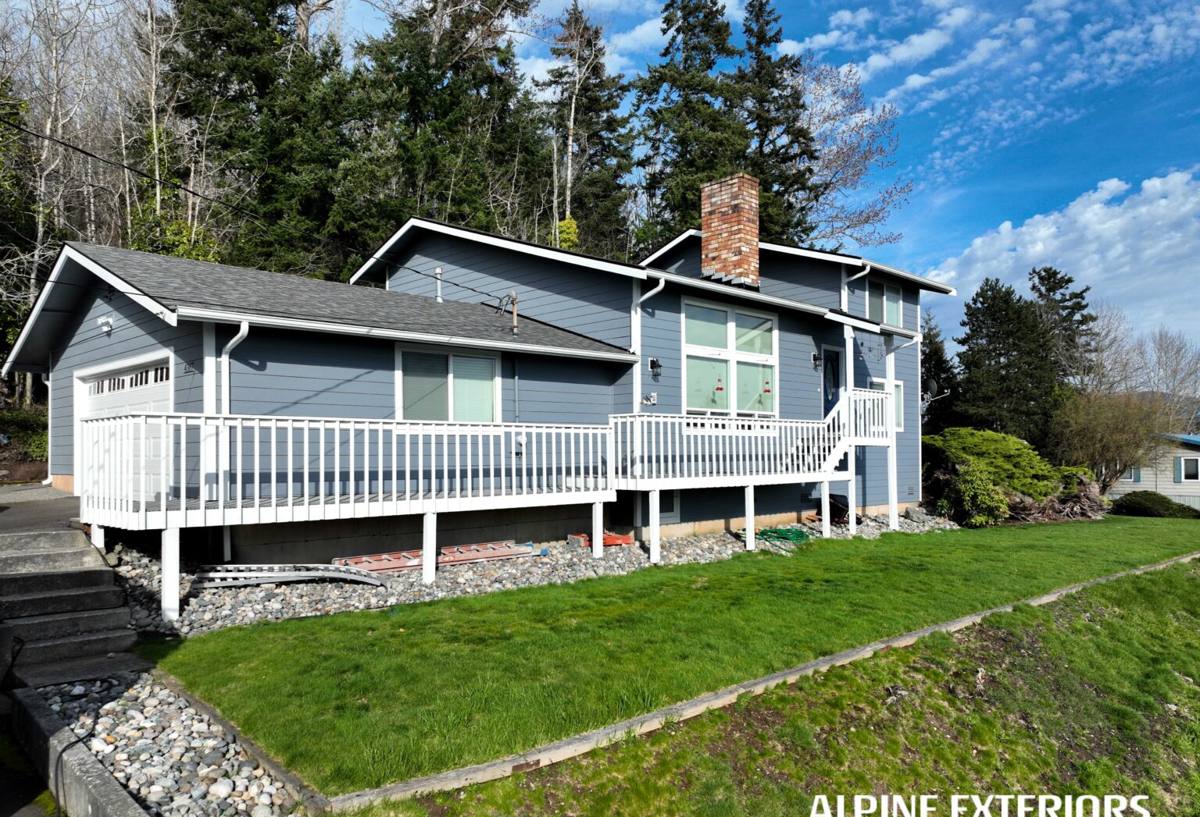
What Whatcom County Storms Do to a Roof Over Time
Storm damage rarely shows up as a single dramatic event. Most of what we find on Nooksack-area roofs is the result of repeated exposure that finally crosses a threshold — a fastener that's been loosening for two winters, or a shingle edge that's been curling since last spring's wind event.
Salt Air and Metal Fasteners, Flashing, and Vents
Proximity to the water means salt content in the air, and salt accelerates corrosion on exposed metal — nail heads, drip edge, step flashing, and roof vents all corrode faster here than they would 30 miles inland. Corroded fasteners back out or lose their grip on the decking, and that's often the actual root cause behind a leak that looks like it came from "the storm" when the storm just finished off metal that had already been weakening for years.
Wind-Driven Rain and Underlayment Failure
Rain that comes in mostly straight down is a much easier problem than rain that's being pushed sideways by wind off the strait. Driving rain gets pushed up under shingle tabs, into nail penetrations, and along ridge and hip lines that would stay dry in a calmer climate. When underlayment is aging or was installed with the wrong lap sequence, that's exactly where water finds its way into the decking.
Moss, Debris, and Shingle Lift
Whatcom County's damp shoulder seasons mean moss gets a long runway to establish itself, especially on north-facing slopes and anywhere shaded by trees. Moss holds moisture against the shingle surface, works into the granule layer, and physically lifts shingle edges over time — which means a wind event that a healthy roof would shrug off can tear loose shingles that moss has already been prying at for a season or two.
Signs Your Roof Took Storm Damage
Some storm damage is obvious from the ground. Some isn't visible until you're actually on the roof or in the attic. Here's what we tell Nooksack-area homeowners to watch for after any significant wind or rain event:
- Shingles that are cracked, curled at the edges, or missing entirely
- Granules collecting in gutters or at downspout discharge points
- Soft spots or discoloration on ceilings, especially near exterior walls or chimneys
- Flashing that's visibly bent, lifted, or separated from a chimney, skylight, or wall intersection
- Daylight visible through the roof deck from inside the attic
- Debris accumulation (branches, moss clumps) concentrated in valleys or behind ridge lines
- Gutters pulling away from the fascia or sagging under storm debris weight
- A musty smell in upper rooms that wasn't there before the storm
Any one of these on its own might be minor. Two or three together usually means water has already found a way in, even if you haven't seen a ceiling stain yet.
What a Correct Storm-Damage Repair Actually Involves
A rushed storm repair — a bead of sealant over a visible tear, a few replacement shingles nailed over old underlayment — will often hold through summer and fail the following winter. A correct repair is slower up front because it treats the visible damage as a symptom, not the whole problem.
Tear-Back and Inspection First
Before we replace anything, we pull back shingles around the damaged area to check the decking and underlayment underneath. Storm damage almost always extends further than what's visible from the roof surface — a torn shingle tells you where the wind got a grip, not how far the water traveled once it got under the material.
Matching Materials, Not Just Colors
Patching in the wrong shingle profile, weight, or underlayment type creates a weak seam even if the color matches reasonably well. We match the existing roofing system's specifications where possible, and when an exact match isn't available (common on older roofs), we explain the trade-off honestly rather than gluing on whatever's closest.
Flashing and Fastener Upgrades Where It Matters
Given how hard salt air is on exposed metal here, a storm repair is often the right moment to upgrade corroded flashing or fasteners in the repair zone to better-rated hardware, rather than reinstalling the same metal that was already failing before the storm hit.
Sealing and Water-Testing the Repair
Once the repair is in place, we check the transitions — where new material meets old — since that seam is the most common failure point on a re-repaired roof. A repair that looks finished from the ground can still leak at a poorly sealed transition line.
Repair vs. Replace: What Actually Drives the Decision
Not every storm-damaged roof needs a full replacement, and not every roof that "just needs a patch" should get one. The honest answer depends on a handful of factors we walk through on-site:
| Factor | Favors Repair | Favors Replacement |
|---|---|---|
| Age of existing roof | Under roughly 10-12 years, in otherwise good condition | Nearing or past its rated lifespan |
| Extent of damage | Localized to one slope or section | Spread across multiple slopes or recurring in the same spots |
| Decking condition | Solid, dry decking under the damaged area | Soft, rotted, or repeatedly wet decking |
| Material availability | Close match to existing shingle available | Discontinued or badly mismatched product |
| History of prior repairs | First significant repair on this roof | Multiple past patches already failing |
We'll never push a full replacement when a proper repair will genuinely hold, and we'll tell you plainly if a repair is just going to be a short-term fix on a roof that's reaching the end of its service life anyway.
Our Process, Start to Finish
- Inspection. We assess the roof from the surface and, where accessible, from the attic side, and document what we find.
- Honest assessment. We walk you through what's actually damaged, what's aging normally, and what your realistic options are — no upsell to a full tear-off unless the roof genuinely needs it.
- Written scope and estimate. You get a clear description of the work and materials before anything is touched.
- Repair execution. Tear-back, decking check, matched materials, proper flashing and fastening, and sealed transitions.
- Final walkthrough. We confirm the repair with you before we consider the job done.
Insurance and Storm Claims: What We Can and Can't Do
Many storm-damage repairs in this area involve a homeowner's insurance claim, and we're glad to provide the documentation, photos, and written scope your adjuster will need. What we won't do is inflate a scope to hit a deductible number or claim damage that isn't there — that's a decision that should always be based on what's actually wrong with your roof, not what maximizes a claim. We'll give you a straight assessment either way and let you and your insurer work from accurate information.
Why a Crew That Already Works Nooksack Matters
A roofer who mostly works drier, inland climates will often under-spec a repair for this area — using standard-grade fasteners where corrosion-resistant hardware is worth the small upcharge, or skipping a moss-prevention step because it's not part of their usual routine somewhere it doesn't matter as much. Working regularly in the Birch Bay and greater Whatcom County area means we're used to designing repairs around salt exposure, wind-driven rain, and moss pressure as the baseline, not the exception.
It also means faster response after a storm. When a wind event hits the coast, roofs across the area tend to need attention at the same time — having a crew that's local and already scheduling in the neighborhood gets your repair done before a temporary leak becomes a bigger problem.
Get a Straightforward Roof Assessment
If your roof took damage in a recent storm — or you're just not sure whether what you're seeing is cosmetic or something that needs attention now — we're happy to take a look and give you an honest read on it. Fill out the form below for a free, no-pressure estimate.