 Birch Bay
 Siding Installation Built for Sumas, Not Just Sold There
Sumas sits at the edge of Whatcom County, tucked into the Nooksack Valley near the Canadian border, and it gets its own version of Pacific Northwest weather: low-lying fog that sits in the valley for days, long stretches of driving rain through fall and winter, and humidity that never fully lets go even in the drier months. Add in the moisture-laden air that moves through the whole county off the coast, and you have a climate that is hard on exterior building materials in ways that don't show up right away. Siding here doesn't just need to look good on installation day — it needs to hold up through years of damp cycles without trapping water, feeding moss, or letting rot start behind the surface.
That's the lens we use for every siding installation job in Sumas. This page covers what local homes actually need from their siding, what a correct installation involves, how our process works, and why it matters to hire a crew that already understands this specific stretch of Whatcom County.
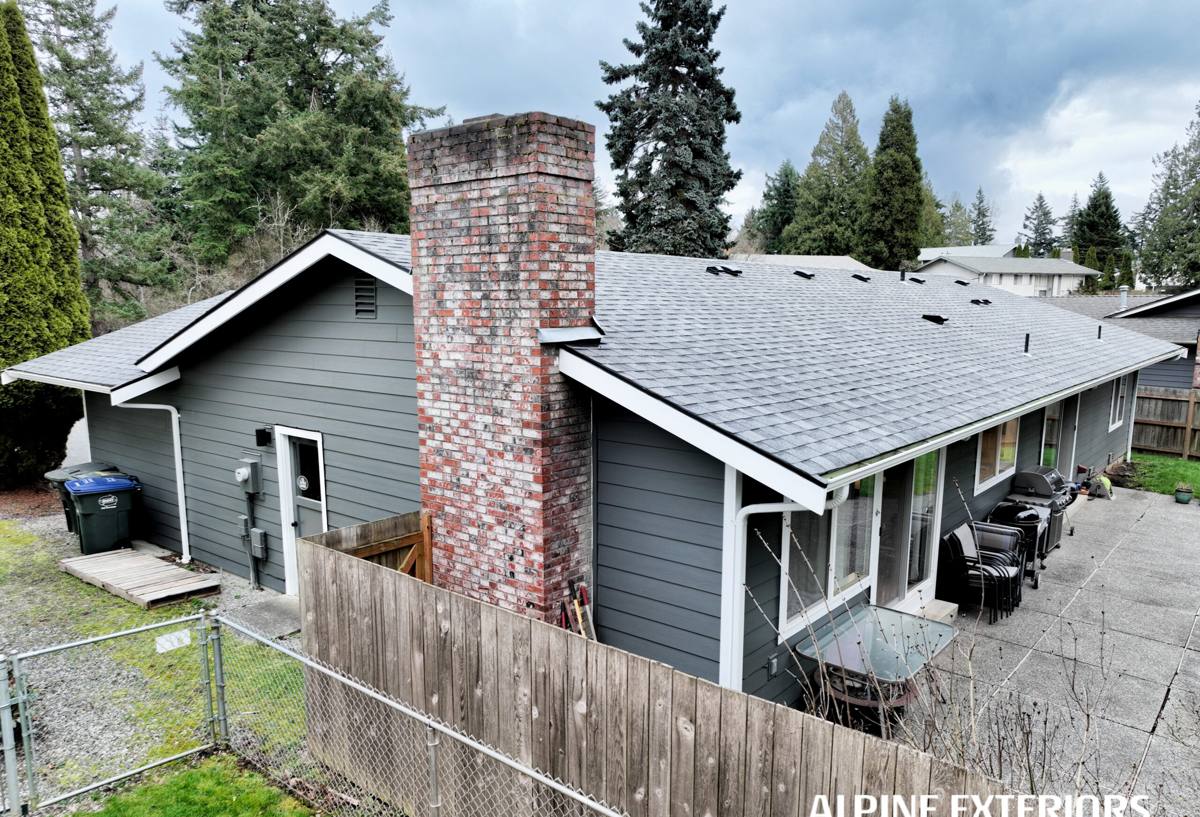
What Whatcom County's Climate Does to Siding Over Time
Most siding failures aren't dramatic. They're slow. Water gets behind a panel through a bad seam or missing flashing, and nothing looks wrong for a year or two — until paint starts bubbling, a soft spot shows up near a window, or moss takes hold in a shaded corner and holds moisture against the wall long after the rain has stopped.
The specific stressors in this area
- Driving rain: Wind-driven rain pushes water sideways into laps, seams, and trim joints, not just straight down — a detail that matters for how siding is lapped and caulked.
- Long moss season: Shaded north and east walls, tree cover, and valley humidity give moss and algae months to establish themselves on any surface that stays damp.
- Humidity and condensation: Even without direct rain, persistent moisture in the air keeps wood-based products damp longer than they were designed to tolerate.
- Freeze-thaw swings: Sumas sees colder winter nights than coastal towns, and trapped moisture that freezes and expands can crack caulking, primer, and weak seams.
None of this is unique to Sumas — it's the reality across Whatcom County — but valley towns tend to hold fog and humidity longer than open, wind-exposed areas, which is exactly the condition that lets moss and moisture problems build quietly behind the wrong siding.
Why We Only Install James Hardie Fiber Cement
We install one siding system: James Hardie fiber cement. Not because it's the only decent product on the market, but because it's the one we can stand behind fully in this climate, and we'd rather do one thing right than offer several products with different long-term risks.
What matters for a climate like ours
- Non-combustible material: Fiber cement doesn't burn, rot, or feed insects the way wood-based siding can.
- Engineered for moisture: James Hardie's HZ5 product line is engineered specifically for climates with sustained moisture exposure, which describes the Pacific Northwest well.
- Factory-applied ColorPlus finish: The finish is baked on at the factory under controlled conditions, which holds up to UV and moisture far more consistently than field-applied paint.
- Dimensional stability: Fiber cement doesn't swell and shrink with humidity the way wood and wood-composite products do, which means fewer open joints for water to find.
We get asked why we don't also offer vinyl, LP SmartSide, or cedar. The honest answer is that each of those products has real trade-offs in a wet climate — vinyl can warp and doesn't stop moisture at the seams the way a properly installed fiber cement system does, wood-based composites are more sensitive to installation quality and ongoing maintenance, and natural wood requires a maintenance schedule most homeowners don't keep up with. We'd rather install one product correctly than offer several and hope the maintenance gets done.
What a Correct Siding Installation Actually Involves
Siding installation is mostly about what's underneath the finished surface. The parts nobody sees are the parts that determine whether the job lasts fifteen years or fifty.
The details that separate a correct install from a fast one
- Weather-resistive barrier: A properly lapped and sealed moisture barrier goes on before any siding, giving water a path to drain out instead of soaking into the wall assembly.
- Flashing at every penetration: Windows, doors, hose bibs, vents, and light fixtures all need proper flashing so water is directed out and away, not funneled behind the siding.
- Correct fastening: James Hardie specifies fastener type, spacing, and placement for a reason — under-fastened or over-driven siding is one of the most common causes of early failure.
- Proper clearances: Siding needs to sit above grade, roofing, decks, and other surfaces by a minimum distance so it never sits in standing water or gets buried by mulch and landscaping.
- Caulking and sealant at joints only where specified: Sealing the wrong joints can trap moisture instead of releasing it — more sealant is not always better.
Any one of these done wrong can undercut an otherwise good product. This is why installation quality matters as much as the material choice itself.
Our Installation Process
- On-site assessment: We look at your home's current siding, trim, flashing, and any signs of existing moisture damage before quoting anything.
- Tear-off and inspection: Once old siding comes off, we check the sheathing underneath for rot or soft spots that need to be addressed before new siding goes on — this step catches problems that were invisible from the outside.
- Weather barrier and flashing: We install and lap the moisture barrier correctly and flash every window, door, and penetration before a single piece of siding is hung.
- Siding installation: James Hardie panels or lap siding go on per manufacturer specification for fastening, spacing, and clearance.
- Trim, caulking, and finish details: Trim is fitted, joints are sealed where appropriate, and the job is cleaned up.
- Final walkthrough: We walk the finished job with you so you know what was done and what to expect from the material going forward.
What Affects the Cost of a Sumas Siding Installation
Every home is different, and we won't quote a number without seeing the house, but these are the factors that most often move a bid up or down.
| Factor | Why It Affects Cost |
|---|---|
| Tear-off vs. install over existing siding | Removing old siding adds labor but is often necessary to check sheathing condition and address hidden moisture damage |
| Sheathing repair | Rot or damage found underneath old siding must be repaired before new siding can go on correctly |
| Home height and access | Two-story sections, steep grades, or limited access add setup time and equipment needs |
| Trim and detail complexity | Homes with more windows, dormers, or architectural detail take more time to flash and trim correctly |
| Panel vs. lap siding | HardiePanel and HardiePlank lap siding have different material and labor costs depending on the look you want |
Why Hiring a Crew That Already Works Sumas Matters
Sumas is a small city, and it doesn't get the same volume of contractor traffic that larger Whatcom County towns do. That can mean fewer crews are familiar with the specific building patterns in the area — older farmhouses, homes built for the valley's damp winters, and additions done over the years without always accounting for moisture management.
A crew that already works this area knows what to look for when tear-off exposes old sheathing, understands local permitting expectations, and isn't learning the region's climate behavior on your house for the first time. That familiarity translates into fewer surprises mid-project and a better sense of what's actually needed versus what's optional.
Signs your current siding is telling you it's time
- Visible moss or algae buildup that returns shortly after cleaning
- Soft spots, bubbling paint, or discoloration near window and door trim
- Warping, buckling, or gaps at seams and corners
- Rising heating bills that suggest the wall assembly is no longer performing
- Siding that's original to a home built more than 20-25 years ago and hasn't been reassessed
Maintenance After Installation
James Hardie siding is low-maintenance compared to wood or wood-composite alternatives, but "low-maintenance" doesn't mean "no maintenance," especially in a climate that grows moss as readily as this one does.
- Rinse siding periodically to keep moss and algae from establishing, particularly on shaded walls
- Keep gutters clear so overflow doesn't run directly down siding surfaces
- Keep landscaping and mulch pulled back from the bottom edge of siding to maintain proper clearance
- Have caulking and trim joints checked periodically, since sealant is the one component that does wear over time
Done right, a James Hardie installation is built to handle what Whatcom County's weather does year after year, not just look good the day it goes up.
If your Sumas home needs new siding, or you're not sure whether repair or full replacement makes more sense, we're happy to take a look and give you a straight answer. Use the form below to request a free, no-pressure estimate.