 Birch Bay
 Sumas sits at the far edge of Whatcom County, tucked against the Canadian border where the Nooksack River valley opens into flat, low-lying farmland known locally as the Sumas Prairie. It's a different setting than the coastal towns closer to the water, but windows here take on their own version of the same problem every exterior surface in this county deals with: driving rain that comes in sideways more than it falls straight down, and a damp, shaded climate that gives moss and mildew a long season to work with. Add a valley floor that holds fog and dampness longer than higher ground, plus cold outflow wind that funnels down from the Fraser Valley in winter, and a window installation that would be fine on a calmer, drier lot can start failing years early here.
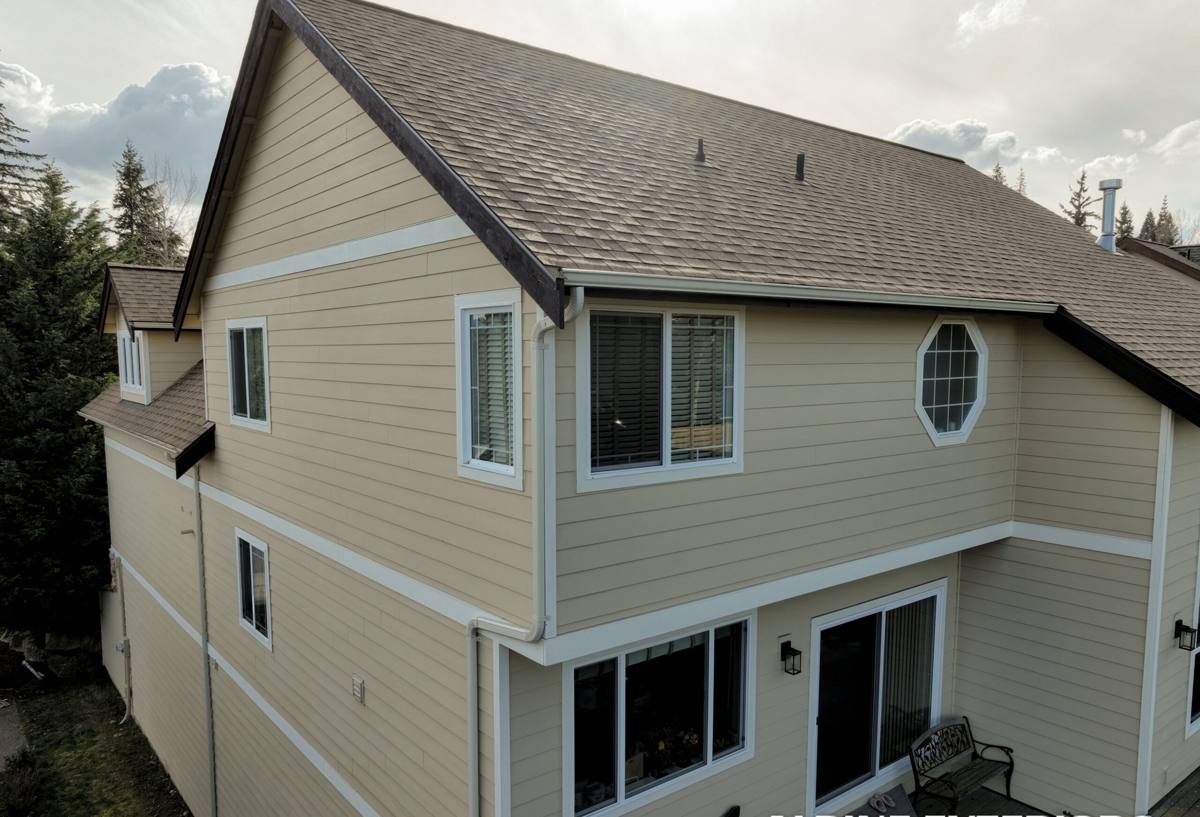
We replace windows in Sumas and across Whatcom County regularly, and we treat it as its own trade with its own failure points — not a quick swap where the main job is picking a style out of a catalog. Most of what actually determines whether a window performs for twenty years or starts leaking in five happens at the flashing and the seal, not at the glass.
What Sumas's Climate Puts Windows Through
Wind-Driven Rain at the Flashing
A window doesn't fail because rain hits the glass — it fails because rain gets pushed sideways by wind into the gap between the window frame and the wall, and finds a path around flashing that wasn't lapped or sealed correctly. On a flat valley property with open exposure, that sideways push happens more often and with more force than it would on a sheltered, tree-lined inland lot. The flashing detail around a Sumas window has less margin for error than the same detail would need somewhere calmer.
Valley Damp and Condensation
Low ground holds moisture and fog longer than higher terrain, and that extra dwell time shows up on windows two ways: condensation building up between panes or on interior glass when a unit's seal has started to fail, and slow moisture creep into wood trim and sills that stay damp for days after a storm instead of drying out in a few hours. A window that would read as "fine" on a quick glance can already be losing its seal integrity from sustained valley humidity.
Cold Outflow Wind and Freeze-Thaw
Because Sumas sits near the head of the corridor that funnels cold air down from the Fraser Valley in British Columbia, winter cold snaps here often arrive with more wind behind them than towns farther from the border see. That combination stresses hardware, weatherstripping, and seals harder than cold alone would, and it adds real freeze-thaw cycling to any water that's already worked its way into a sill or frame — water that soaks in and then freezes expands, which speeds up cracking and rot in a way a milder, steadier climate wouldn't produce.
Signs a Window Needs Replacing, Not Just Recaulking
Not every draft or foggy pane means a full replacement. But in a climate that pushes moisture and wind at windows this consistently, a few signs are worth taking seriously rather than patching over:
- Fogging or a permanent haze between panes of a double-pane unit — the seal has failed and the gas fill is gone, and no amount of cleaning fixes it
- Soft, discolored, or spongy wood at the sill or lower frame corners, which usually means water has already been getting in for a while
- Visible daylight or a noticeable draft around the frame when the window is closed and latched
- Difficulty opening, closing, or latching that's gotten worse over a year or two, often a sign the frame has warped or shifted
- Paint or finish that keeps failing on the interior sill no matter how often it's touched up
- Moss, dark staining, or persistent dampness on the exterior trim directly around the window, especially on north-facing walls
- A noticeably colder spot near the window in winter compared to the rest of the room
One or two of these on their own might mean a repair. Several together, especially soft wood or failed seals, usually mean the window and the flashing behind it both need to come out.
Full-Frame vs. Insert Replacement
This is one of the first real decisions on a Sumas window job, and it depends on what's actually happening behind the old window, not just what's cheaper. An insert (or "pocket") replacement keeps the existing frame in the wall and sets a new window inside it — faster and less invasive, but it only works if the old frame and the flashing behind it are still sound. A full-frame replacement removes everything down to the rough opening, which costs more and takes longer, but it's the only way to actually inspect and correct flashing or framing that's already been compromised by water.
| Factor | Insert Replacement | Full-Frame Replacement |
|---|---|---|
| What it addresses | The window unit itself, glass, and seals | The window, the flashing, and the framing and sheathing behind it |
| Best fit | Sound frame and flashing, failure limited to the window unit | Any sign of water damage, soft wood, or old or missing flashing |
| Labor and cost | Lower — less demolition and exterior disruption | Higher — trim, siding, and flashing all get opened up and redone |
| Sizing | Slightly smaller glass area since it fits inside the old frame | Full original opening size, or corrected if it wasn't right to begin with |
| Risk if wrong choice | Sealing a new window over hidden rot or bad flashing | None specific — it's the more thorough option by design |
We won't recommend an insert replacement without opening things up enough to confirm the frame and flashing are actually sound. On an older Sumas home that's taken decades of driving rain and valley damp, that's a real possibility worth checking rather than assuming.
What a Correct Window Replacement Job Involves
Assessment and Measuring
We start by looking at each opening individually rather than assuming every window on the house is in the same condition. That includes checking for soft wood, testing whether the frame is still square, and field-measuring rather than working off old plans or estimated sizes, since older Sumas homes don't always match what's on paper.
Removal and Opening Inspection
Once the old window comes out, the opening gets a real look — sheathing, framing, and old flashing all get checked for hidden water damage before anything new goes in. This is where a rushed job cuts corners, and it's also where problems that have been building for years actually get caught and fixed instead of sealed over.
Flashing and Weatherproofing
This is the step that matters most given how this climate pushes water sideways. Flashing gets sequenced so each layer laps over the one below it, sill pans direct any water that does get past the window back out rather than letting it pool, and the housewrap or weather barrier ties in cleanly at the top, sides, and bottom of the opening. None of this is visible once the trim goes back on, which is exactly why it's the part most worth getting right the first time.
Installation, Shimming, and Air-Sealing
The new window gets set plumb, level, and square, shimmed at the right points to support its weight without distorting the frame, and sealed with the correct combination of flashing tape, sealant, and low-expansion foam around the perimeter — not sealant alone, which tends to be the first thing that fails under sustained wind-driven rain.
Trim and Finish
Exterior trim gets reinstalled or replaced to match the surrounding siding, with attention to how it sheds water rather than trapping it against the wall. On an older home, this is also a natural point to address any siding or trim damage the old window's failure may have caused nearby.
Frame Material and Glass Choices for This Climate
Vinyl and fiberglass frames are what we lead with on most Sumas replacements, since both shed sustained moisture and freeze-thaw cycling with less ongoing maintenance than an unclad wood exterior finish. Fiberglass generally holds up to temperature swings with less expansion and contraction than vinyl, which can matter on a property that sees real cold outflow wind events, but it also costs more. Wood-clad units — wood on the interior, a low-maintenance material on the exterior — can still be the right call when the interior look matters and the exterior cladding is genuinely weather-rated, but we won't put bare exterior wood on a window in this climate without a strong reason.
On glass, a double-pane low-E unit with argon fill and a warm-edge spacer is enough window for most Sumas homes — this part of Washington doesn't see the extreme cold that makes triple-pane's added cost and weight worth it for most homeowners, though we'll walk through it if a specific room or exposure calls for it. What matters more than the glass package is that the seal and gas fill are actually rated for sustained regional humidity, since that's what determines whether the unit still performs in ten years or starts fogging early.
Our Process, Start to Finish
- On-site assessment — every opening gets checked individually for frame condition, square, and signs of past water intrusion
- Honest recommendation — insert or full-frame replacement, explained with the reasoning specific to that window, not a blanket answer for the whole house
- Material and glass selection — frame material and glass package matched to the window's exposure and your budget
- Removal and opening inspection — old units come out carefully, and any hidden framing or flashing damage gets addressed before the new window goes in
- Installation and flashing — the new window is set, shimmed, and flashed in a sequence built to shed wind-driven rain, not just block rain falling straight down
- Trim and cleanup — exterior trim is matched to the surrounding siding and the site is left clean
Why a Local Sumas Crew Matters
A window manufacturer's installation guide is written for average conditions — it doesn't know your specific opening sits on a flat valley lot that catches cold outflow wind off the Fraser Valley corridor, or that the north wall has been holding moss and dampness for months at a time. A crew that works this part of Whatcom County regularly has actually seen what that exposure does to flashing, sills, and seals over real winters, and knows which parts of a standard install are worth extra time here even when they'd be optional somewhere calmer.
That's the difference between a window that's still performing cleanly in fifteen years and one that's showing soft trim and drafts in five — and it's rarely something you can tell from a sales conversation before the work starts.
What to Ask Before You Hire
- Ask whether they'll recommend insert or full-frame replacement, and why — and be wary of anyone who defaults to the cheaper option without inspecting the opening
- Ask how they sequence flashing and whether sill pans are standard on their installs
- Confirm current Washington state contractor licensing and insurance
- Ask what's covered separately under warranty — the window unit itself versus the installation labor
- Get a written scope of work before anything is signed
If windows on your Sumas home are fogging, drafting, sticking, or showing soft trim, it's worth having someone look at the actual openings before you decide between a repair and a full replacement. We offer free, no-pressure estimates for window replacement in Sumas and the surrounding area — use the form below to get a time on the schedule.