 Birch Bay
 Building Decks for Terrell Creek's Coastal Conditions
Terrell Creek sits close enough to Birch Bay and the Strait of Georgia that homes here deal with a different set of conditions than a deck built twenty miles inland in Whatcom County. Salt-laden air moves through the trees and settles on every exposed surface. Rain doesn't just fall here, it drives sideways during winter storms, working its way into joints, fastener heads, and anywhere end grain is left uncovered. And because so much of the neighborhood sits under a mature tree canopy near the creek corridor, decks spend a long stretch of the year shaded, damp, and hosting a healthy crop of moss and algae. None of that makes a deck impossible to build well here. It just means the deck has to be built for these specific conditions, not for a generic weather pattern that doesn't match what actually happens in this part of the county.
We build and repair decks throughout the Birch Bay area, and Terrell Creek comes with its own quirks worth planning for before the first post hole goes in.
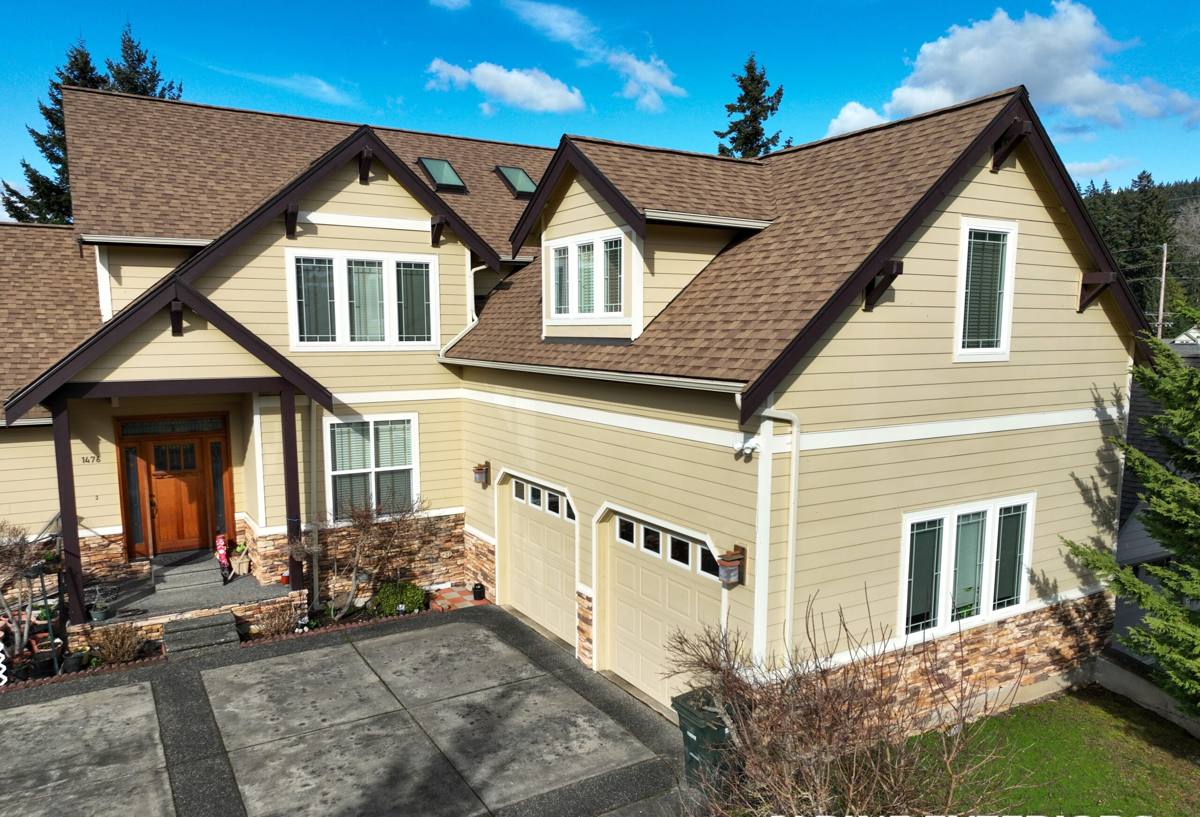
What a Terrell Creek Deck Actually Needs
Sun exposure and drainage vary lot to lot
Some Terrell Creek lots are open and get a fair amount of direct sun, which helps a deck dry out between storms. Others sit under fir and cedar canopy close to the creek, where a deck can stay damp for days after a rain event. A deck design that ignores this — flat boards laid tight with no airflow underneath, a footprint that traps runoff, or a low deck sitting close to grade — will hold moisture and moss longer than it should, no matter what material sits on top.
Wind and driving rain from the water side
Decks facing open water or an unobstructed sightline toward the bay take rain at an angle, not straight down. That matters for how railings, fascia boards, and any built-in seating or planters are flashed and sealed. It also affects where we recommend gaps, drainage paths, and ledger board attachment so wind-driven water doesn't get trapped against the house.
Salt air accelerates corrosion, quietly
Salt air doesn't announce itself the way a coastal storm does. It just sits on metal, day after day, and over a few seasons it can start pitting fasteners, hinges, and hardware that weren't rated for it. A deck that looks fine on the surface can have compromised connections underneath if the wrong hardware went in during the build.
Where Decks Actually Fail Around Here
In our experience working this area, deck problems rarely start with the decking boards themselves — they start underneath, where nobody's looking.
- Ledger boards attached to the house without proper flashing, letting water track behind the siding
- Standard exterior-grade fasteners used instead of hardware rated for coastal or treated-lumber contact
- Joists and beams with no gap for airflow, so moisture sits against the wood long after a storm passes
- Post bases set directly in soil or concrete without a stand-off, wicking moisture into end grain
- Deck footprints with no slope or drainage plan, so water pools instead of shedding
Any one of these will shorten the life of an otherwise well-built deck. Fixing them costs far more once decking, railing, and finish work are already in place, which is why we treat the substructure as the part of the job that actually determines how long a deck lasts.
Framing and Substructure Done Right
A correct Terrell Creek deck build starts below the surface. That means ledger flashing that actually sheds water away from the house rather than trapping it, joist spacing sized for the decking material chosen (composite and PVC often need tighter spacing than wood), and post bases set on proper footings with a stand-off from grade so end grain isn't sitting in standing water. We also leave real airflow gaps between joists and any solid skirting, since a sealed-up understructure in a shaded, damp lot is exactly the environment moss and mildew prefer.
For fasteners and structural hardware, we use products rated for treated lumber and coastal exposure — typically hot-dip galvanized or stainless connectors, not the mill-grade coated screws that work fine inland but corrode faster this close to the water. It costs a bit more up front and saves a full hardware replacement a decade in.
Choosing the Right Decking Material
There's no single "best" decking material — there's a best fit for how the deck is used, how much shade it gets, and how much upkeep the homeowner wants to do. Here's how the common options actually perform in Terrell Creek's shaded, damp, salt-air conditions:
| Material | Moss/Algae Resistance | Maintenance | Notes for This Area |
|---|---|---|---|
| Pressure-treated wood | Low — needs regular cleaning and sealing | Annual cleaning, periodic staining/sealing | Lowest upfront cost; performs worst in shaded, damp spots without upkeep |
| Cedar | Moderate — natural oils help but fade over time | Periodic cleaning and oiling to maintain color and resistance | Attractive, locally familiar look; still needs real maintenance near the creek's shade |
| Composite decking | Good — resists rot, but surface moss can still grow in deep shade | Occasional washing; no sealing or staining | Strong fit for shaded lots; check the board's specific moisture and mold rating |
| PVC/capped composite | Very good — fully capped surface sheds moisture | Low; occasional washing | Best option for heavy shade near the creek, at a higher material cost |
We'll walk through this trade-off in person, on your actual lot, since sun exposure varies so much block to block in this neighborhood. A deck tucked under fir canopy calls for a different recommendation than one with an open water view.
Railings and hardware in salt air
Railing systems take the same salt exposure as the deck frame, often worse since they're fully exposed on all sides. We favor powder-coated aluminum or properly rated stainless components for railings on lots with any water exposure, and we avoid mixing metals that can set up galvanic corrosion between dissimilar hardware. Cable rail systems look great but need tensioning hardware rated for the environment — the wrong grade will show rust streaks within a couple of seasons.
Our Process for a Terrell Creek Deck Build
- On-site walkthrough. We look at sun exposure, drainage, existing structure (for a replacement), and how the deck will actually be used before we talk materials.
- Design and material selection. We recommend framing, decking, and railing options based on that specific lot — not a one-size answer.
- Permitting. Deck projects in Whatcom County typically require a permit depending on height and footprint; we handle that process as part of the job.
- Framing and structural work. Proper flashing, footings, airflow gaps, and coastal-rated hardware go in before anything decorative.
- Decking, railing, and finish work. Installed to the manufacturer's spacing and fastening specs for the material chosen.
- Final walkthrough. We go over the finished deck and what maintenance it actually needs — no vague "take care of it" advice.
Living With a Deck Through Moss Season
Even a well-built deck in Terrell Creek needs some seasonal attention, especially on shaded portions near the creek. A short, honest maintenance routine goes a long way toward avoiding slick surfaces and premature wear:
- Sweep debris and needles off the deck regularly through fall — trapped organic matter feeds moss growth
- Rinse or lightly scrub shaded areas before moss gets a foothold, rather than waiting until it's established
- Check that drainage gaps between boards stay clear of debris so water keeps shedding properly
- Inspect visible hardware once a year for early signs of rust or corrosion
- Re-seal or re-stain wood decking on the schedule the product actually calls for, not "whenever it looks dry"
None of this is complicated, but skipping it in a shaded, damp spot near the creek is how a deck that should last two decades starts needing real repairs in half that time.
Why a Local Crew Matters for This Job
A deck built by a crew that hasn't worked this specific stretch of Birch Bay will often default to generic specs — standard hardware, standard spacing, standard drainage assumptions. That's not wrong everywhere, but it's not right for a lot sitting in creek-side shade with salt air rolling through most of the year. We've built and repaired decks throughout this area long enough to know which details actually matter here: where moss takes hold first, which fastener grades hold up, and how drainage needs to be planned around the tree cover that makes so many Terrell Creek lots shady in the first place. That local pattern recognition is the difference between a deck that just meets code and one that's actually built for where it sits.
Get a Straightforward Estimate
If you're planning a new deck or replacing one that's showing its age in Terrell Creek, we're happy to take a look and give you an honest assessment — what your lot's conditions call for, what materials make sense for your budget and shade level, and what the project would actually involve. Reach out using the form below for a free, no-pressure estimate.