 Birch Bay
 Storm Damage Roof Repair Built for Terrell Creek
Terrell Creek sits close enough to the water that homes here take a different kind of beating than roofs further inland. Winter storms roll off the Strait of Georgia with wind-driven rain, salt-laden air moves through the trees year-round, and the creek corridor's tree cover keeps roof surfaces shaded and damp long after a storm passes. That combination is hard on roofing, and it means storm damage here often isn't a single dramatic event — it's a slow accumulation that gets exposed all at once when a bigger blow comes through.
We repair storm-damaged roofs for homes in and around Terrell Creek and elsewhere in Birch Bay. This page covers what we actually look for, how we approach a repair versus a replacement, and why local experience matters more than most homeowners expect when it comes to getting this right the first time.
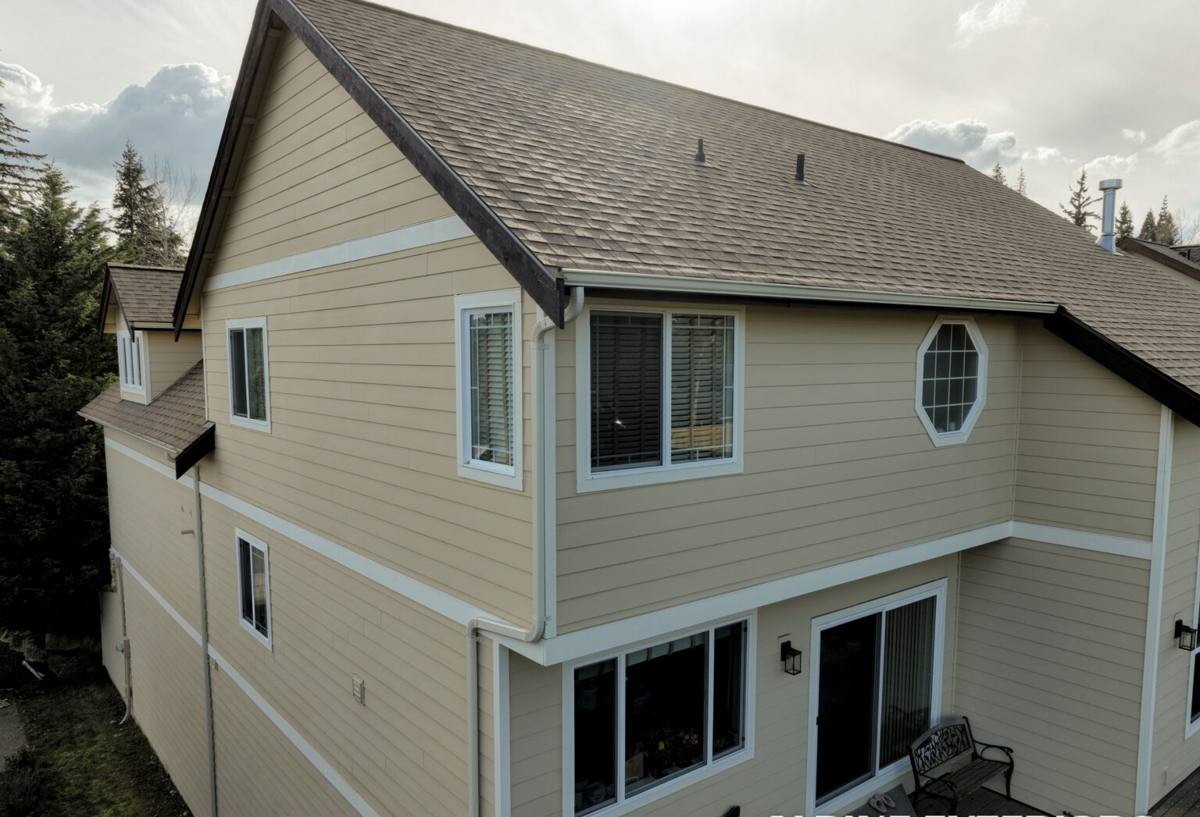
Why Terrell Creek Roofs Take a Different Kind of Damage
Whatcom County storms aren't the most violent in the state, but they're persistent, and persistence is what wears down a roof system. A few local factors matter more here than they would on a roof twenty miles inland:
Salt Air and Metal Fatigue
Proximity to Birch Bay and the Strait means airborne salt reaches roof flashing, fasteners, and any exposed metal. Salt accelerates corrosion on unprotected steel fasteners and can pit galvanized flashing over years, which is exactly the kind of slow damage that turns a minor storm into a leak once the metal finally gives out.
Wind-Driven Rain
Storms coming off the water tend to drive rain sideways, not straight down. That matters because it pushes water up under shingle tabs, into ridge caps, and around chimney and vent flashing in ways that a roof designed only to shed vertical rain won't handle well. A lot of "mystery leaks" homeowners report after a storm trace back to wind-driven rain finding a weak point that never mattered in calm weather.
Moss and Shade From the Creek Corridor
Tree cover along Terrell Creek keeps sections of roof shaded for much of the day, which is good for the trees and bad for shingles. Moss and algae hold moisture against the roof surface, and moss growing under shingle tabs physically lifts them, creating an entry point for wind and rain that wasn't there when the roof was new. Combined with our long, damp shoulder seasons, moss season here effectively runs most of the year.
What "Storm Damage" Actually Looks Like
Homeowners often expect storm damage to be obvious — missing shingles, a visible hole. Sometimes it is. More often, it's subtle enough that it goes unnoticed until a leak shows up inside the house, weeks or months later. What we check for on a storm damage inspection:
- Lifted, cracked, or torn shingle tabs, especially on the windward slopes
- Bent, loosened, or missing roofing nails and fasteners
- Flashing pulled away from chimneys, vents, skylights, or wall intersections
- Granule loss on asphalt shingles, which signals accelerated wear even without visible tears
- Moss colonies at ridges and valleys that may be trapping moisture under the surface
- Soft spots or discoloration on roof sheathing visible from the attic
- Gutter and downspout damage that's redirecting water back toward the roof edge or fascia
- Debris impact marks from branches or wind-blown material
Any one of these on its own might not be urgent. Several together, especially after a named storm event, usually mean it's time for a closer look before the next system comes through.
Repair or Replace: How We Make That Call
Not every storm-damaged roof needs a full replacement, and we don't push one unless the roof actually needs it. The decision comes down to a few honest factors:
| Factor | Favors Repair | Favors Replacement |
|---|---|---|
| Age of roof | Under 10-12 years, otherwise sound | Nearing or past expected lifespan |
| Extent of damage | Isolated to one slope or section | Widespread across multiple slopes |
| Underlying decking | Solid, no rot found | Soft, water-stained, or delaminating |
| Granule loss / wear | Localized, rest of roof intact | Uniform thinning across the whole surface |
| Prior repair history | First significant issue | Repeated patch jobs, recurring leaks |
We'll always tell you plainly which category your roof falls into and why, including if the honest answer is "this repair will hold for several more years" rather than recommending a bigger job than the roof needs.
Our Storm Damage Repair Process
1. Inspection and Documentation
We walk the roof (or use a ladder and camera where a walk-on inspection isn't safe or appropriate) and document every area of concern — not just the obvious damage but the smaller issues that tend to cause the next leak. This includes checking the attic from inside where accessible, since sheathing and insulation damage often tells a more complete story than the exterior alone.
2. Straight Answers Before Any Work Starts
You get a clear rundown of what we found, what caused it, and what we recommend — with the reasoning behind it, not just a line item. If insurance is involved, we can provide documentation formatted to support a claim, though the claim itself is between you and your insurer.
3. Repair or Replacement, Done to Match
For repairs, we match shingle type, color, and exposure as closely as possible so the fix doesn't stand out as a patch. We replace damaged decking rather than roofing over it, reseal and re-flash any penetrations that were compromised, and secure fasteners to hold up against the next wind-driven storm — not just the last one.
4. Cleanup and Final Check
We clear debris, check gutters and downspouts are clear and properly directing water off the roof, and do a final walk-through so you know exactly what was done and what to watch for going forward.
Cost Factors for Terrell Creek Storm Repairs
There's no honest flat number for storm repair — the range depends on the specifics. What actually drives cost on a job like this:
- Size and pitch of the affected roof area
- Whether decking needs to be replaced or just the surface layer
- Number and condition of flashing points (chimneys, vents, skylights)
- Roof accessibility, including tree cover and steepness
- Extent of moss removal and treatment needed before repair
- Whether matching materials are readily available for older roofs
Small, isolated repairs are often a modest job measured in a few hundred to low thousands of dollars. Anything involving significant decking replacement or multi-slope damage moves into a different bracket entirely. We won't guess at your number over the phone — an on-site look is what makes the estimate accurate.
Preventing the Next Storm From Doing the Same Damage
A repair that only addresses the symptom tends to fail again in the next storm. Part of doing this right is fixing the condition that let the damage happen in the first place:
- Removing moss and treating the roof to slow regrowth, especially on shaded slopes
- Upgrading corroded fasteners and flashing to materials better suited to salt air exposure
- Trimming back overhanging branches that shade the roof or drop debris during wind events
- Confirming attic ventilation is adequate, since trapped moisture accelerates decking and shingle wear from underneath
- Checking that gutters can handle the volume of a heavy coastal storm without backing up under the roof edge
Why It Matters That We Already Work Terrell Creek
A crew that's worked this specific stretch of Birch Bay knows what to check first — because they've already seen what fails first on these roofs. That's not a generic Whatcom County claim; it's the difference between an inspection that catches a corroded flashing seam before it leaks and one that only spots the damage after water's already in the attic. We know the moss patterns this tree cover produces, the flashing points that take the worst of the wind-driven rain off the water, and the difference between a roof that needs a targeted repair and one where a patch is just delaying the inevitable. That local knowledge shortens the inspection, sharpens the estimate, and means less guesswork for you.
Get a Straight Answer on Your Roof
If your Terrell Creek home has taken storm damage — or you're not sure whether recent weather left something behind that needs attention — we're glad to take a look. Request a free, no-pressure estimate using the form below, and we'll give you an honest read on what your roof needs and what it doesn't.