 Birch Bay
 Why Bellingham and Birch Bay Roofs Take a Beating
A roof in the Bellingham area works harder than a roof almost anywhere inland. This stretch of Whatcom County sits right up against the Salish Sea, and that proximity to open water shapes everything about how a roof ages here. Salt-laden air drifts inland off Birch Bay and Bellingham Bay and settles on shingles, flashing, and fasteners year-round. Add in driving, wind-blown rain that comes at roofs sideways rather than straight down, and a wet season that can stretch from October through May with barely a dry week in between, and you have a climate that punishes any shortcut in materials or installation.
Then there's moss. The combination of shade from mature evergreens, near-constant moisture, and mild temperatures gives moss and algae an unusually long growing season on this part of the coast. A roof that would stay clean for years in a drier climate can develop moss colonies within a couple of seasons here if it isn't installed and maintained with that reality in mind. None of this means asphalt shingle roofing is a poor fit for Bellingham or Birch Bay — it's one of the most practical, cost-effective roofing choices available, but only when the installation accounts for what this specific coastline does to a roof.
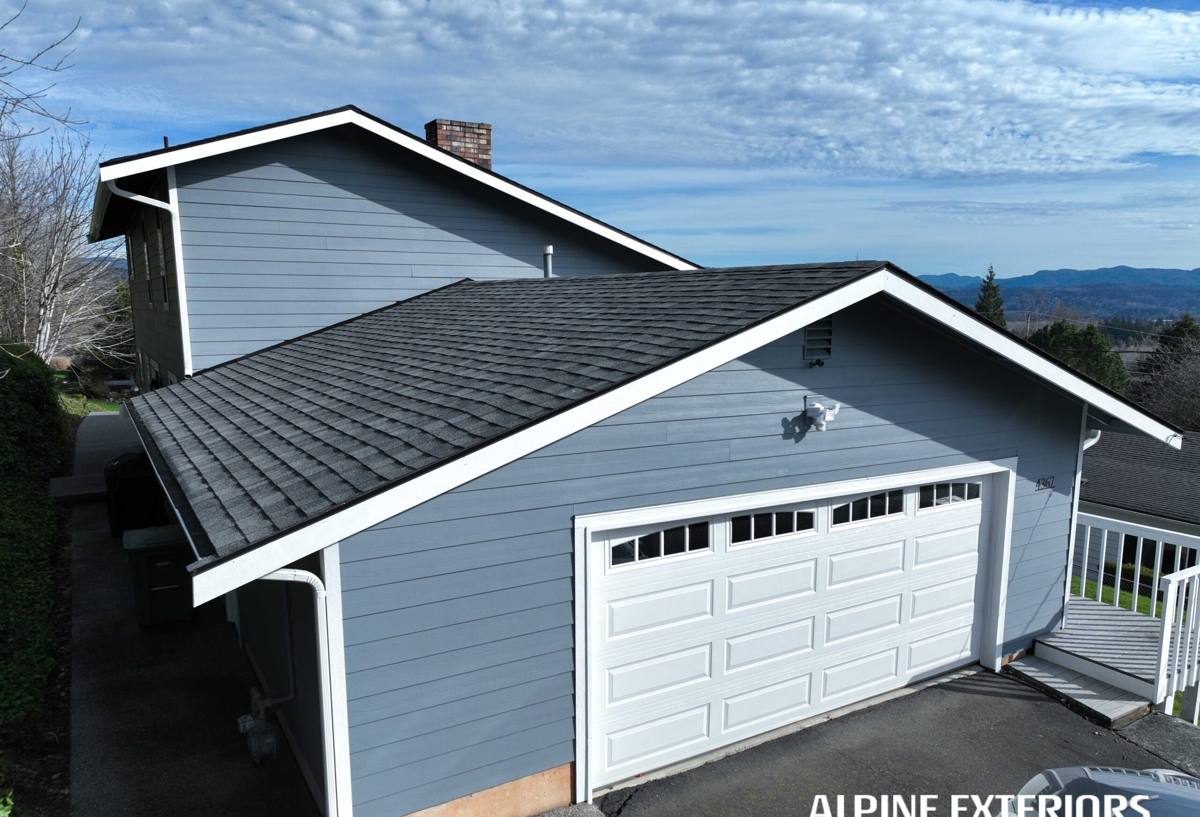
What a Correct Asphalt Shingle Installation Involves Here
Asphalt shingles look like a simple product, but the system underneath the visible shingle layer is what actually determines whether a roof holds up to Bellingham's weather. Cutting corners on the parts you can't see is the single biggest reason roofs in this region fail early.
Deck and Underlayment
Before any shingle goes down, the roof deck needs to be inspected for soft spots, delamination, or water staining from a prior roof's slow leaks — common on older homes in this area that have seen decades of wet winters. A synthetic underlayment is laid over the full deck, with self-adhering ice-and-water shield installed at the eaves, valleys, and around every penetration. Ice dams themselves are rare this close to the water, but wind-driven rain that gets pushed up and under shingle edges is a real and regular problem, and the same membrane that stops ice dams elsewhere also stops that kind of wind-forced moisture intrusion here.
Flashing and Wind-Driven Rain Details
Flashing at chimneys, skylights, sidewalls, and roof-to-wall transitions is where most leaks start, not in the open field of shingles. In a climate with sustained wind off the water, flashing needs to be formed and layered correctly, not just caulked and hoped for. Drip edge along the eaves and rakes, correctly lapped step flashing on sidewalls, and properly sealed valleys all matter more here than in a climate with calmer weather.
Attic Ventilation and Moisture Control
A shingle roof doesn't just shed water from above — it also needs to release moisture from below. Balanced ventilation, meaning enough intake at the soffits and enough exhaust at the ridge, keeps warm, moist attic air from condensing against the underside of the deck. In a climate this damp, an under-ventilated attic can quietly rot sheathing and shorten shingle life from the inside, even while the roof looks fine from the ground.
Moss, Algae, and the Long Wet Season
Moss doesn't grow because a roof is old or poorly built — it grows wherever shade, organic debris, and moisture linger long enough, and Bellingham's tree cover and rainfall give it plenty of opportunity. Left unaddressed, moss lifts shingle edges, holds water against the roof surface, and accelerates granule loss. Blue-green algae, which shows up as dark streaking rather than raised growth, is a separate but related issue tied to the same damp conditions.
A few practical measures make a real difference over the life of the roof:
- Zinc or copper strips installed near the ridge, which release trace metal ions with each rain that inhibit moss and algae growth down the slope
- Algae-resistant shingle granules, now standard on most quality shingle lines, which slow discoloration but don't eliminate the need for maintenance
- Keeping overhanging branches trimmed back to reduce shade and debris buildup on the roof surface
- Clearing valleys and gutters of needles and leaf litter before they compost in place and hold moisture against the shingles
- Gentle, low-pressure moss removal rather than pressure washing, which strips protective granules and shortens shingle life
Salt Air, Wind Exposure, and Fastener Choices
Salt air is corrosive to standard metal, and homes closer to the Birch Bay shoreline feel this more than homes further inland in Bellingham proper. Roofing nails, flashing, and any exposed metal components should be rated for coastal exposure — hot-dip galvanized or stainless steel rather than basic electro-galvanized fasteners, which can start rusting and staining shingles within a few years this close to salt water.
Wind is the other factor tied to that same water exposure. Open stretches along the bay see gustier, more sustained wind than sheltered inland lots. Shingles here should be installed with the nailing pattern rated for higher wind exposure — typically six nails per shingle instead of four — and starter strips and hip/ridge caps sealed properly so wind can't get a grip on an edge and start peeling the roof from the perimeter inward.
Choosing the Right Shingle for This Coastline
Not every asphalt shingle product is built the same, and the right choice depends on how exposed the home is to wind, how much shade and moss pressure the roof faces, and the homeowner's budget and appearance preferences. The table below outlines how the common shingle tiers generally compare for a coastal Whatcom County property.
| Shingle Type | Typical Wind Rating | Moss/Algae Resistance | Expected Lifespan Here |
|---|---|---|---|
| 3-Tab (economy) | Lower, more prone to edge lift in sustained wind | Minimal unless upgraded | Shorter in this climate, often 12-18 years |
| Architectural / Dimensional | Higher, better suited to coastal gusts | Algae-resistant granules standard on most lines | Longest practical value, often 20-25+ years with maintenance |
| Premium / Designer | High, heavier mat construction | Enhanced algae-resistant coatings | Comparable to architectural, with a heavier, dimensional look |
For most homes in Bellingham and Birch Bay, an architectural shingle with algae-resistant granules and a wind rating suited to open exposure is the practical sweet spot — enough durability for the climate without paying for features a given roof doesn't need.
Our Installation Process
The steps that go into a roof replacement don't change much from job to job, but the attention paid to each one is what separates a roof that lasts from one that doesn't.
- On-site assessment of the existing roof, deck condition, ventilation, and any moss or moisture damage
- Full tear-off of the old roofing material down to the deck, rather than layering over existing shingles
- Deck inspection and repair or replacement of any damaged sheathing before anything new goes down
- Installation of synthetic underlayment and ice-and-water shield at eaves, valleys, and penetrations
- Flashing installed or replaced at chimneys, skylights, sidewalls, and valleys
- Shingle installation with a nailing pattern and starter strip suited to local wind exposure
- Ridge vent and any remaining ventilation components installed to balance the attic system
- Final walk-through, cleanup, and magnetic sweep of the property for stray fasteners
Repair or Replace? What to Look For
Not every roofing issue means a full replacement. A localized leak, a section of storm-damaged shingles, or flashing that's failed at one penetration can often be repaired on its own, especially on a roof that's otherwise in good shape. Full replacement makes more sense once the roof is showing widespread granule loss, curling or cupping shingles across multiple slopes, soft or spongy decking, or repeated leaks in different spots rather than one recurring source. Asphalt shingle roofs in this climate typically run somewhat shorter than their rated lifespan on paper, simply because of the added moisture and moss exposure — which is exactly why the underlayment, ventilation, and moss-prevention details described above matter as much as the shingle itself.
Maintenance Checklist for Coastal Whatcom County Homes
A well-installed roof still needs periodic attention in this climate. Homeowners in Bellingham and Birch Bay get the most life out of a shingle roof by staying ahead of a short, manageable list:
- Clear gutters and valleys of debris at least twice a year, more often under heavy tree cover
- Inspect for moss growth each spring and treat early before it spreads or lifts shingle edges
- Trim back branches that overhang the roofline to reduce shade and debris accumulation
- Check flashing around chimneys, skylights, and vents for cracked sealant or lifted edges
- Confirm attic ventilation isn't blocked by insulation, and watch for signs of trapped moisture
- Have the roof inspected after any major windstorm off the bay, even if no leak is visible yet
Why Hire a Crew That Already Works Bellingham and Birch Bay
Roofing crews unfamiliar with this coastline tend to install roofs the way they would inland — standard fasteners, standard nailing patterns, underlayment chosen for a drier climate. Those roofs often perform fine for a couple of years before the salt air, wind, and moss catch up to them. A crew that already works this specific area knows which slopes take the worst of the wind off the water, which properties see heavier moss pressure from tree cover, and which fastener and flashing upgrades are worth the small added cost given what the climate actually does to a roof here. That local knowledge, combined with straightforward correct installation practices, is what keeps a roof performing well past the point where a generic install would start showing problems.
If you're weighing a shingle roof repair or full replacement in Bellingham or Birch Bay, we're glad to take a look and give you a straightforward, no-pressure estimate — just fill out the form below to get started.