 Birch Bay
 Board & Batten Siding in Birch Bay Village
Birch Bay Village sits close enough to the water that its homes deal with a different set of exterior stresses than houses ten miles inland in Whatcom County. Salt-laden air off Birch Bay and the Strait of Georgia, wind-driven rain that comes in sideways off the water, and long stretches of shaded, damp weather that keep moss and algae established for most of the year all work against exterior materials that aren't built for it. Board and batten siding is a great fit for the community's mix of coastal cottage and craftsman-style homes, but only when it's built and installed with this specific climate in mind.
This page covers what board and batten siding actually needs to hold up in Birch Bay Village, what a correct installation involves, and why we only install it in James Hardie fiber cement rather than wood, vinyl, or engineered wood alternatives.
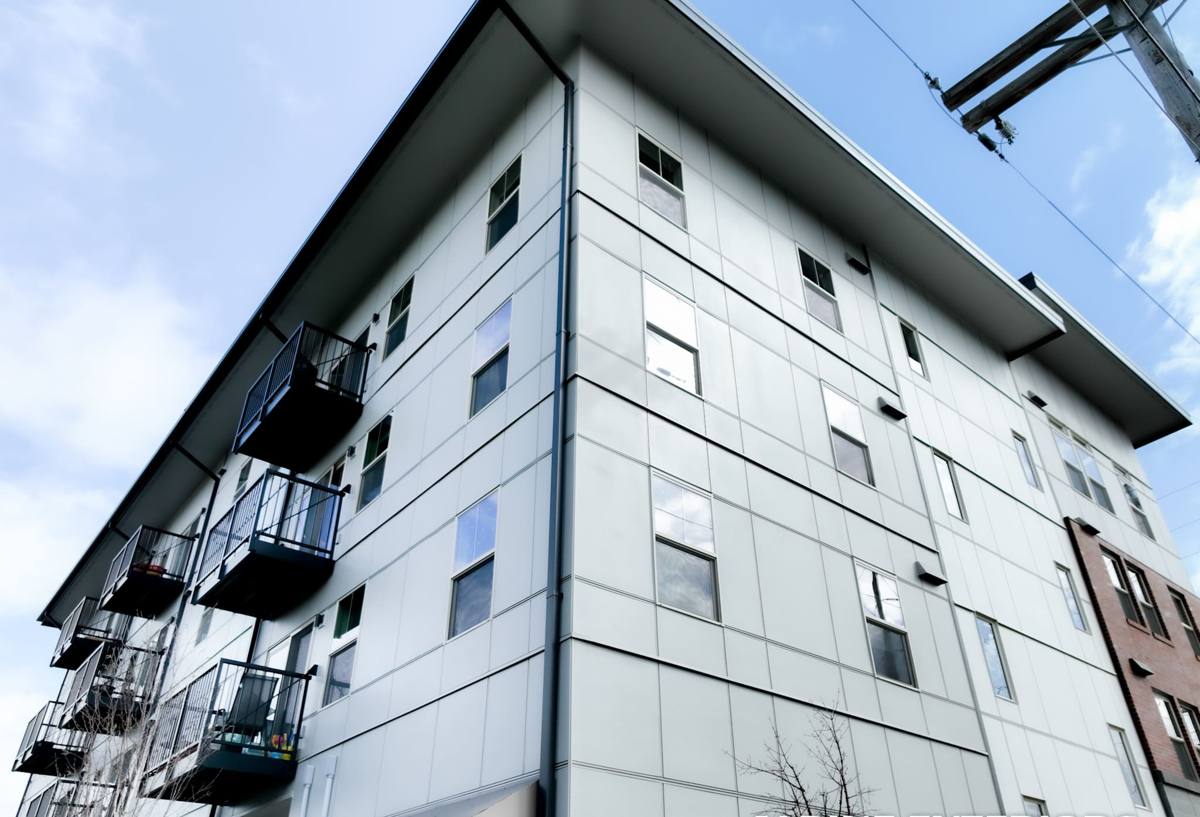
Why Board & Batten Works for This Neighborhood
Board and batten is a vertical siding profile — wide boards with narrow battens covering the seams (or the reverse, wide battens over narrow boards) — that reads as clean, linear, and a little more custom than standard lap siding. It pairs well with the cottage, cabin, and craftsman architecture common around Birch Bay, and it works nicely as an accent on gables, dormers, and entry features even on homes that use horizontal lap siding elsewhere.
The style choice is straightforward. The material choice is where most of the long-term performance — or long-term problems — actually gets decided.
What Vertical Siding Has to Deal With
- More seams per square foot than horizontal lap siding, each one a potential water entry point
- Battens that sit directly in the path of driving rain coming off the water
- Shaded north- and west-facing walls that stay damp longer and grow moss faster
- Salt air that accelerates corrosion on any fastener or hardware that isn't rated for it
What Birch Bay's Climate Does to Board & Batten Siding
Three conditions define what board and batten siding needs to survive here.
Salt Air
Homes closer to the shoreline take on a fine salt mist that settles on every exterior surface. Over time, salt exposure corrodes unprotected metal fasteners and hardware, and it can degrade paint finishes that aren't formulated to resist it. Any nail, screw, or flashing detail used in a board and batten install in Birch Bay Village needs to be corrosion-resistant by design, not by luck.
Driving Rain
Wind off the water doesn't just fall — it pushes rain sideways and up under laps, battens, and trim. Board and batten's vertical seams and batten joints are more exposed to this than a shingle-style lap profile, which is exactly why the assembly behind the boards (drainage plane, flashing, gap) matters as much as the boards themselves.
Long Moss Season
Whatcom County's wet season stretches long, and shaded lots with mature tree cover hold moisture even longer. Moss and algae take hold fastest on porous materials and on any siding that stays damp because it can't drain or dry properly. A finish that resists organic growth, combined with a wall assembly that actually dries out between storms, is the difference between siding that stays clean and siding that turns green within a couple of years.
Why We Only Install James Hardie for This Application
Board and batten's extra seams make material choice matter more here than on almost any other siding profile. We get asked regularly about wood, vinyl, and engineered wood board and batten options, and we don't install any of them. Here's the honest reasoning, not a sales pitch.
| Material | Where it struggles in board and batten, specifically |
|---|---|
| Cedar or primed wood | Absorbs moisture at every batten seam and cut end; needs repainting and caulk maintenance on a tight cycle to keep pace with driving rain and salt exposure |
| Vinyl | Vertical vinyl profiles rely on loose-fit installation to allow for expansion, which is harder to keep watertight at battens; can warp or fade under sun and salt exposure over time |
| LP SmartSide / engineered wood | Wood-strand core is more vulnerable at cut edges and seams if moisture gets behind the panel — a real risk on a profile with this many seams in a wet, salty climate |
| James Hardie fiber cement | Non-combustible, dimensionally stable, factory-applied ColorPlus finish resists moss, algae, and salt-driven fading; engineered for Pacific Northwest moisture exposure |
We're not saying wood or engineered wood siding can't be installed well — they can, on the right project, by the right crew. We're saying that for board and batten specifically, in a shoreline-adjacent, high-moisture, high-salt environment like Birch Bay Village, the seam-heavy profile magnifies exactly the weaknesses those materials have. That's a real-world trade-off, not a knock on anyone else's product line. James Hardie's fiber cement holds its shape, holds its finish, and doesn't feed the moss and rot cycle the way porous or wood-core materials can. That's why it's the only thing we put on a wall.
What a Correct Board & Batten Installation Involves
The boards themselves are the least of it. Most board and batten failures we see on inspection calls trace back to what's happening (or not happening) behind the siding, not the siding material itself.
The Assembly, Layer by Layer
- Weather-resistant barrier installed and lapped correctly, with all penetrations properly flashed
- Drainage gap (rainscreen) behind the siding so any water that gets past the boards can drain and the wall can actually dry out — critical in a climate with this much sustained moisture
- Flashing at every horizontal transition — window and door heads, trim boards, roof-to-wall intersections — sequenced so water sheds outward, not into the wall
- James Hardie panel or plank boards installed to manufacturer fastening specs, with corrosion-resistant fasteners appropriate for coastal exposure
- Battens set and fastened to cover seams cleanly while allowing the wall to drain, not trap water against the sheathing
- Caulking and sealant used only where specified — over-caulking a board and batten wall can trap moisture instead of keeping it out
Skip the drainage gap or get the flashing sequence wrong, and it doesn't matter how good the boards are — water finds a way behind them, and in a climate that stays wet as long as Birch Bay's does, that moisture doesn't get a chance to dry out before the next system rolls through.
Our Process
We start with a walk of the home to look at existing siding condition, moisture damage, trim, and any problem areas — often the north and west-facing walls that take the worst of the salt and rain exposure. From there:
- Removal of old siding and inspection of the sheathing underneath for hidden moisture damage
- Repair of any compromised sheathing before anything new goes up — no siding job should ever cover up a wet wall
- Installation of weather-resistant barrier, flashing, and drainage gap per manufacturer specification
- Installation of James Hardie boards and battens with corrosion-resistant fasteners
- Final detail work — trim, caulking where appropriate, cleanup
Because the boards arrive with a factory-applied ColorPlus finish, there's no field-painting step where weather timing becomes a problem — which matters on a stretch of coastline where a dry, calm installation window isn't guaranteed.
Cost Factors for Board & Batten in Birch Bay Village
| Factor | Why it affects the project |
|---|---|
| Wall condition underneath | Hidden moisture damage or rot found during tear-off adds repair scope before new siding goes on |
| Home size and wall complexity | More corners, gables, and trim details mean more cuts, more battens, and more labor |
| Existing siding removal | Full tear-off versus siding over an already-sound assembly changes both cost and timeline |
| Exposure and elevation | Walls facing prevailing wind and rain off the water may need extra flashing detail |
| Trim and accent scope | Board and batten used as a full-house profile costs differently than as a gable or entry accent |
We give a real, itemized number after seeing the home in person — we don't quote board and batten off a photo or a square footage guess, because the condition of what's underneath the old siding is usually the biggest variable.
Maintenance Once It's Installed
- Rinse the siding once or twice a year to keep salt residue and organic buildup from settling in, especially on shaded walls
- Keep gutters and downspouts clear so runoff isn't sheeting down the wall face
- Trim back vegetation and tree cover that keeps a wall section shaded and damp longer than the rest of the house
- Check caulking at trim and penetrations periodically — not to over-caulk, but to catch any gaps before driving rain finds them
- Watch for moss starting at the base of walls or under eaves and address it early rather than letting it establish
Why Hiring Local Experience Matters
A crew that already works in Birch Bay Village knows which walls in this community take the worst of the wind and salt exposure, how far moss creeps up a shaded wall before it's noticeable from the street, and how the local weather patterns affect installation timing and sequencing. Some properties in the area are part of community associations with their own exterior guidelines, so it's worth checking on that before finalizing a color or profile choice. None of that is complicated, but it's the difference between a board and batten installation that's built for this specific stretch of Whatcom County and one that's built for siding in general and hoping it holds up.
If you're weighing board and batten siding for a home in Birch Bay Village, we're happy to come take a look, walk you through what we see, and put together a free, no-pressure estimate — no obligation, just a straight answer on what your home actually needs.