 Birch Bay
 Why Window Installation Is Different in a Coastal Blaine Climate
Blaine sits close to open water in Whatcom County, which means homes here take on a steady diet of salt-laden air, wind-driven rain, and a long stretch of the year when moss and mildew have every opportunity to take hold. Windows are one of the first places that shows up. Hardware corrodes faster near the water. Wood-frame windows and trim stay damp longer because the region rarely gets the dry, sunny stretches that let materials fully dry out between storms. And driving rain — rain that comes in sideways instead of straight down — finds any weak point in a window's flashing or seal and pushes water in behind the frame, not just against the glass.
That's a different set of demands than a window installer in a drier climate deals with. A window that's a perfectly good product on paper can still fail early in Blaine if it's installed without the right flashing detail, the right sealant choice, or the right attention to how water moves around a window opening during a real coastal storm. Correct installation matters here as much as the window itself.
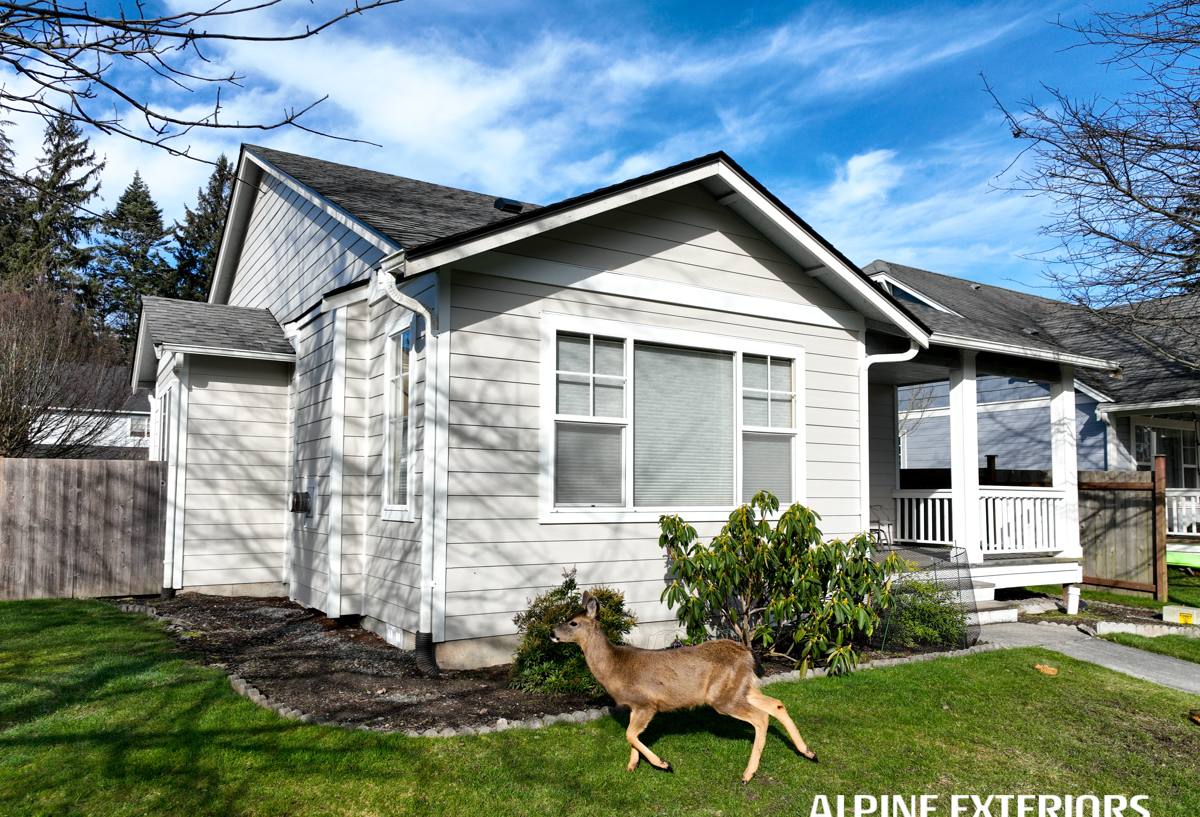
Signs Your Blaine Home's Windows Are Failing
Windows rarely fail all at once. Usually there are warning signs for months or years before a window becomes a real problem. Homeowners in Birch Bay and Blaine should watch for:
- Fogging or a hazy film between panes of double- or triple-pane glass — a sign the seal has failed and the gas fill has escaped
- Drafts you can feel near the frame, even with the window fully closed and locked
- Hardware that's stiff, corroded, or won't latch tightly anymore
- Soft, discolored, or bubbling paint on wood trim around the window
- Persistent condensation on the inside of the glass, especially in cooler months
- Visible gaps, cracked caulk, or daylight showing around the exterior frame
- A musty smell or soft drywall near the window that suggests moisture is getting behind the frame
Any one of these on its own isn't necessarily an emergency, but on a home this close to the water, they tend to compound quickly if left alone.
What a Correct Window Installation Actually Involves
Removal and Inspection
Pulling the old window is also the moment to check what's underneath it. In coastal Whatcom County homes, it's common to find some degree of rot, rust, or moisture damage in the framing around older windows, especially on walls that face prevailing wind and rain. That damage needs to be addressed before a new window goes in — installing a new window over a compromised opening just hides the problem for a few more years.
Flashing and Weatherproofing
This is the step that determines whether a window will hold up against driving rain. Proper flashing directs water that reaches the window opening back out and away from the wall assembly, using a specific layered order — sill pan, side flashing, head flashing — so water always sheds downward and outward rather than pooling or being trapped. Skipping or shortcutting this step is one of the most common causes of hidden water damage behind window openings.
Air Sealing and Insulation
The gap between the window frame and the rough opening needs to be sealed and insulated correctly — not overpacked, not left loose. Done right, it stops drafts and keeps moist air from condensing inside the wall cavity.
Interior and Exterior Finish Work
Trim, caulk, and paint or stain aren't cosmetic afterthoughts — they're part of the weatherproofing system. Exterior caulk joints in particular need to be done with a sealant rated for exposed, wet climates, and applied in a way that leaves water paths open rather than sealed shut where they shouldn't be.
Choosing Window Materials for Salt Air and Moisture
Frame material matters more here than in a drier inland climate. Here's how the common options generally compare for a home exposed to salt air and frequent rain:
| Frame Material | Salt Air / Moisture Behavior | Maintenance | General Cost Tier |
|---|---|---|---|
| Vinyl | Doesn't rust or corrode; performs consistently in damp, salty air | Low — occasional cleaning | Lower |
| Fiberglass | Very stable in moisture and temperature swings; strong resistance to warping | Low | Mid to higher |
| Aluminum-clad wood | Good exterior protection from the cladding, but any breach exposes wood underneath to rot | Moderate — cladding seams need periodic checking | Higher |
| Solid wood | Attractive but the most vulnerable to prolonged damp and salt exposure without diligent upkeep | High — regular painting/sealing required | Higher |
We don't rule out any of these outright — the right choice depends on your home's style, your budget, and how much upkeep you want to take on. But we're upfront with Blaine homeowners: a material that needs frequent repainting or resealing is a bigger commitment in a climate that gives you fewer dry days to do that work. For most homes exposed directly to weather off the water, vinyl or fiberglass tends to require the least ongoing attention.
Our Window Installation Process
- Free on-site estimate. We look at your existing windows, note problem areas, and measure openings.
- Product selection. We walk through frame material, glass packages, and options that fit your home and budget — no pressure toward the most expensive option.
- Scheduling around the weather. Window openings are exposed during installation, so we plan around forecasted rain where possible.
- Careful removal. Old windows come out and we inspect the framing for hidden rot or moisture damage before anything new goes in.
- Installation and flashing. New windows are set level and plumb, with proper sill pan and flashing sequencing to manage water correctly.
- Air sealing and insulation. The gap around the frame is sealed and insulated to the right density — not too loose, not overpacked.
- Trim, caulk, and finish work. Interior and exterior finishing is completed with weather-rated materials.
- Final walkthrough. We test operation, check the seal, and clean up the work area before we consider the job done.
Cost Factors for Window Installation in Blaine
Every home is different, so we avoid quoting numbers before we've actually seen your windows — but a few factors consistently drive the cost up or down:
| Factor | How It Affects Cost |
|---|---|
| Insert vs. full-frame replacement | Insert replacement (new window into the existing frame) is generally less expensive; full-frame replacement costs more but is often necessary where there's rot or the old frame is failing |
| Frame material | Vinyl is typically the most budget-friendly; fiberglass and clad-wood cost more |
| Glass package | Double-pane vs. triple-pane, and Low-E coatings, add cost but improve energy performance and comfort |
| Window size and count | Larger windows and whole-house projects have more material and labor cost, though per-window pricing often improves with volume |
| Access and height | Second-story or hard-to-access windows take more time and equipment |
As a broad range, homeowners in this area typically see costs anywhere from a few hundred dollars per window for straightforward vinyl inserts up to several thousand dollars for larger, full-frame, higher-performance installations. The only way to know what your project actually costs is a real, on-site look at your windows.
Why Hiring a Crew That Already Works Blaine Homes Matters
Window installation isn't a one-size-fits-all job. A crew that regularly works in Blaine and the surrounding Birch Bay area already understands how the local climate behaves — how prevailing wind and rain hit different sides of a house, how much moss and organic buildup collects around window sills and trim over a wet season, and how salt exposure affects hardware and fasteners over time. That experience shapes decisions during installation that a generic, one-time crew might not think to make — like which sealant holds up in this kind of prolonged dampness, or where extra flashing attention pays off on a wall that takes the brunt of winter storms.
It also means we're set up to service what we install. If a question comes up a year or two after the job, you're calling a local crew that knows your home and your climate, not chasing down a company that's moved on to other regions.
Caring for New Windows After Installation
New windows installed correctly need relatively little upkeep, but a few habits extend their life significantly in this climate:
- Rinse accumulated salt film off exterior glass and frames periodically, especially after storms
- Keep weep holes (small drainage openings along the bottom of the frame) clear of debris and moss
- Check exterior caulk lines once a year for cracking or separation
- Clean interior tracks so hardware doesn't seize up from grit or corrosion
- Address any new drafts or moisture signs early rather than waiting
If you're noticing drafts, fogged glass, or trim damage on your Blaine home, or you're simply ready to plan ahead before the next wet season sets in, we're happy to take a look. Request a free, no-pressure estimate using the form below and we'll walk your home with you.