 Birch Bay
 Why Siding Repair in California Creek Isn't a One-Size-Fits-All Job
California Creek sits close enough to the water that homes here take on a different kind of weathering than siding a few miles inland. Salt-laden air off the Salish Sea works its way into seams, fasteners, and any spot where paint has thinned. Driving rain off Birch Bay hits walls at an angle, not straight down, which pushes water into laps and joints that were never designed to hold standing moisture. And Whatcom County's long, wet shoulder seasons give moss and algae months at a time to take hold on shaded, north-facing walls before a homeowner ever notices a problem. Any siding repair that doesn't account for those three things — salt, wind-driven rain, and moss — is a repair that's likely to fail again within a few years.
That's the lens we bring to every California Creek repair call: not just "what's broken," but "why did it break here, and what will keep it from breaking again."
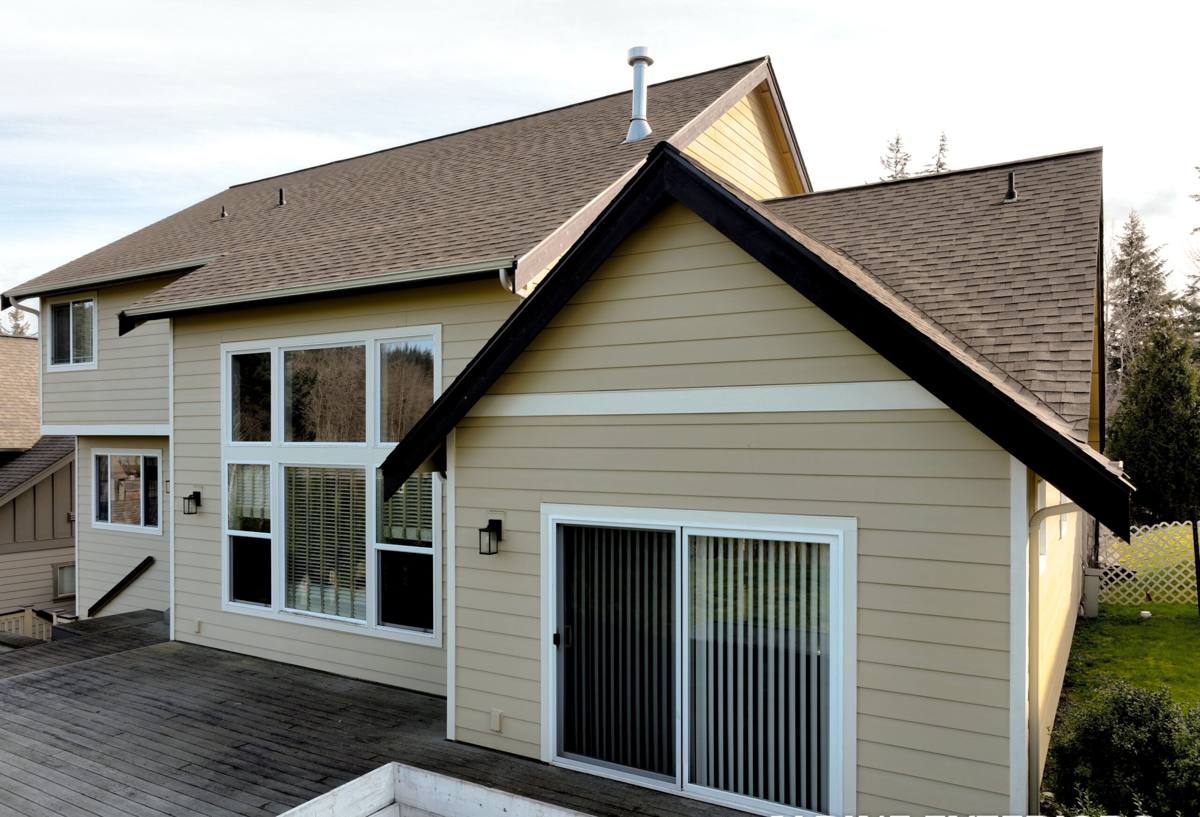
Signs Your California Creek Home Needs Siding Repair
Some siding damage is obvious. A lot of it isn't — it hides behind a coat of paint or a shaded corner until it's much further along than it looks. Homeowners in this area should watch for:
- Soft, spongy, or bubbling spots when you press on the siding, especially near the bottom courses or window trim
- Dark streaking or green-black growth on north- and west-facing walls, particularly under eaves or tree cover
- Paint that's peeling, chalking, or bubbling in a localized area rather than evenly across the wall
- Gaps opening up at butt joints, corner boards, or where siding meets trim, flashing, or the foundation
- Visible warping, cupping, or delamination in the siding panels themselves
- Musty odor or discoloration on interior walls that share a wall line with damaged exterior siding
- Rust streaks below fasteners, which often means the fastener or the material around it is failing
Any one of these on its own might be minor. Several together, especially clustered on the side of the house that faces prevailing wind and rain, usually means moisture has been getting behind the cladding for a while.
What a Correct Siding Repair Actually Involves
Beyond the Patch
The fastest way to do a siding repair wrong is to treat it as a cosmetic fix — cut out the visibly damaged board, nail in a new piece, caulk the edges, and repaint. That approach hides the symptom without addressing why the damage happened in the first place. In a marine climate like this one, water rarely enters where it's most visible; it usually finds its way in through a compromised seal somewhere nearby and travels before it shows itself.
Checking What's Behind the Siding
A correct repair starts by removing enough surrounding material to see the water-resistive barrier, flashing, and sheathing underneath. If that layer is compromised — torn housewrap, missing flashing at a window head, a butt joint that was never properly lapped — replacing the siding alone just resets the clock on the same failure. We look at:
- Condition of the sheathing and framing behind the damaged area
- Whether flashing at windows, doors, and horizontal trim is intact and properly lapped
- Whether the water-resistive barrier is continuous or has gaps, tears, or improper overlaps
- Fastener pattern and whether the original installation followed manufacturer spacing and clearance requirements
- Ventilation behind the cladding, which matters for how quickly any incidental moisture dries out
Only after that inspection do we know whether the job is a true repair or whether it's uncovered something larger.
Repair or Replace? How We Help You Decide
Not every damaged section needs a full re-side, and not every "small patch" request should stay small once we've looked behind the wall. The honest answer depends on a handful of factors:
| Factor | Leans Toward Repair | Leans Toward Replacement |
|---|---|---|
| Extent of damage | Isolated to one or two wall sections | Spread across multiple elevations |
| Underlying sheathing | Sound, no rot found | Soft, delaminated, or rotted framing |
| Age and material of existing siding | Relatively recent, matchable material | Aging original siding near end of service life |
| Cause of failure | One-time or localized flashing failure | Systemic issue — poor original install or drainage plane |
| Cost over time | Repair cost is a small fraction of full replacement | Repeated repairs are adding up to near replacement cost |
We'll walk you through where your home falls on that spectrum before we recommend anything. If a repair is the right call, we say so — a full re-side isn't automatically the "safer" recommendation, it's the right one only when the facts support it.
Our Siding Repair Process in California Creek
Every repair follows the same sequence, whether it's one damaged board or a full wall section:
- Inspection and diagnosis — we assess the visible damage, then open up the area to check what's happening behind the siding.
- Moisture and rot assessment — any compromised sheathing or framing gets identified and priced separately, with photos, before we move forward.
- Repair scope proposal — a clear, written explanation of what needs to happen and why, including repair-versus-replace guidance if it applies.
- Flashing and drainage correction — we fix the underlying cause, not just the surface symptom, so the same spot doesn't fail again next winter.
- Siding replacement and finish matching — new material is installed to manufacturer spec, with fastening, clearances, and sealant details done correctly the first time.
- Final walkthrough — we show you what was found, what was fixed, and what to keep an eye on going forward.
Why We Repair — and Recommend — James Hardie Fiber Cement
We install James Hardie fiber cement siding exclusively, and that standard carries through to repair work as well. When we're patching or replacing a damaged section, we're not improvising with whatever material is closest at hand — we're matching into a product system engineered specifically for climates like this one.
Fiber cement doesn't absorb and swell with moisture the way wood-based products can, which matters directly in a location where driving rain and salt air keep siding damp longer than it would be a few miles inland. It's non-combustible, holds paint and factory finish far longer than wood-based alternatives, and James Hardie's HZ product lines are specifically engineered for wet, moderate coastal climates rather than a one-size-fits-all national spec. The factory-applied ColorPlus finish also matters for repairs in particular: a properly matched Hardie repair blends into existing siding in a way that field-painted patch materials often don't, especially after a few seasons of UV and salt exposure start to shift the color of older paint.
We don't install LP SmartSide, vinyl, Cemplank, Allura, primed spruce, or cedar, and we won't patch a Hardie wall with any of those either. Mixing materials in a repair usually means mixing failure points — different expansion rates, different moisture behavior, different paint adhesion — which defeats the purpose of doing the repair correctly in the first place.
Why Local Experience in California Creek Matters
A siding repair crew that only works a few days a year on the water sees this kind of damage as unusual. A crew that regularly works Birch Bay and the surrounding Whatcom County shoreline sees it as routine — and knows where to look first. That familiarity shows up in small but real ways: knowing which elevations typically take the worst of the wind-driven rain, recognizing early-stage moss growth before it's visibly widespread, and understanding how salt exposure changes fastener and flashing choices compared to an inland job.
It also means we're not guessing at what "normal" looks like for a house in this specific environment. A drainage detail or flashing lap that would be adequate on a sheltered inland lot isn't always enough a few blocks from open water, and that difference is exactly what separates a repair that lasts from one that reopens in two or three years.
After the Repair: Keeping Moss and Moisture From Coming Back
A correct repair should hold up on its own, but a little homeowner attention extends the life of any siding in this climate. After a repair, we recommend:
- Rinsing shaded, north-facing walls once or twice a year to knock back early moss and algae growth before it establishes
- Keeping gutters clear so overflow doesn't run down the wall face during heavy rain events
- Trimming back vegetation and tree limbs that keep a wall section shaded and slow to dry
- Doing a quick visual check of caulking and joints each fall, before the wet season sets in
- Flagging any new soft spots, discoloration, or peeling paint early rather than waiting for it to spread
None of this requires special equipment or a maintenance contract — it's the same kind of periodic attention most homeowners already give their roof and gutters.
If you're seeing damage, staining, or soft spots on your California Creek home, we're happy to take a look and give you a straight answer — repair or replace, no pressure either way. Reach out for a free estimate and we'll walk the property with you.