 Birch Bay
 Why Cherry Point Windows Wear Out Differently
Homes in the Cherry Point area near Birch Bay sit close enough to the water that windows take a beating most inland Washington houses never see. Salt-laden air off the Strait of Georgia works its way into aluminum hardware, screen frames, and exposed fasteners over the years, causing corrosion and pitting that inland homeowners rarely have to think about. Add in wind-driven rain that comes sideways off the water during winter storms, and you've got moisture pushed into places a window was never designed to handle it — around the frame, under the sill, and behind trim that looks fine from the outside.
Then there's moss season, which in this part of Whatcom County runs long. Persistent damp and shade off tree lines keeps moisture sitting against wood trim, siding, and window sills for months at a stretch. A window that would dry out in a day somewhere drier can stay wet for a week here, and that's exactly the kind of exposure that breaks down old glazing putty, swells wood sashes, and eventually rots sill framing from the inside out.
None of this means Cherry Point homes need exotic solutions. It means the replacement has to be sized and installed for the actual conditions on that specific wall — which side takes the weather, how exposed the house is to wind off the water, and how the existing water management around that opening is already performing.
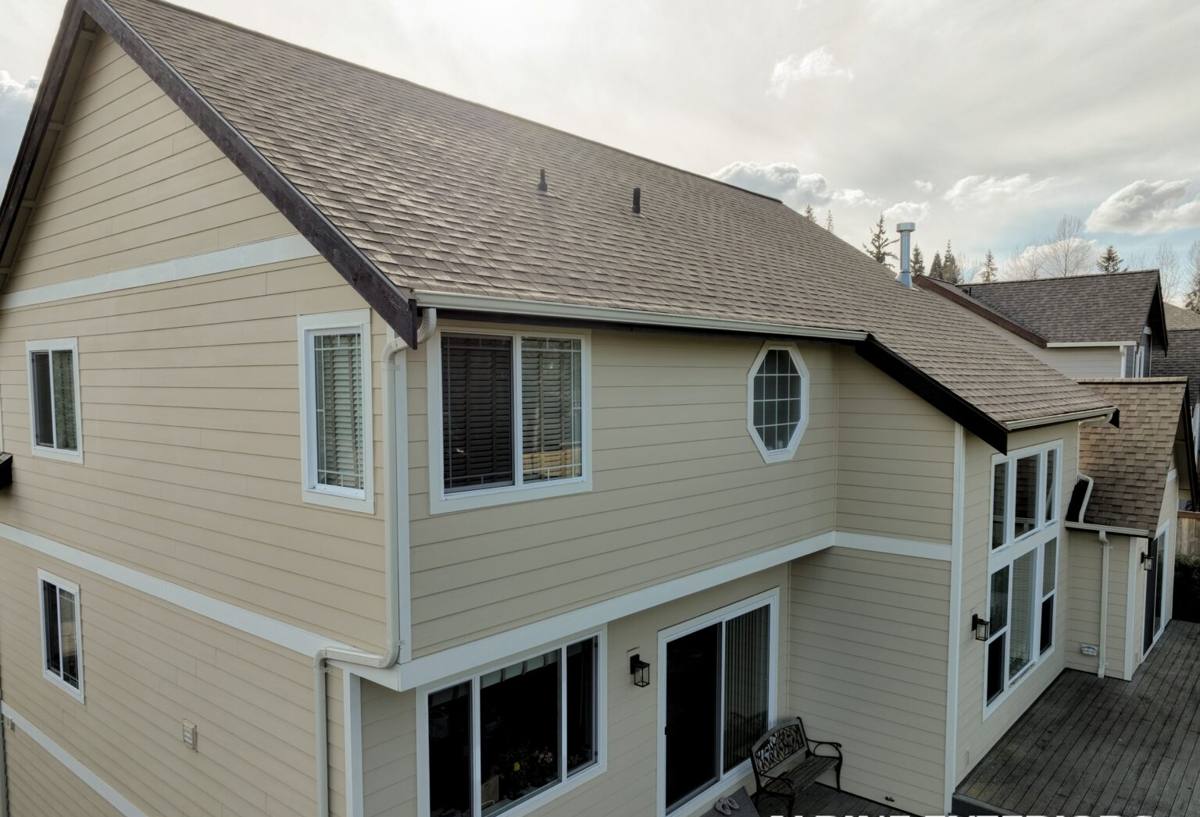
Signs Your Windows Are Actually Ready for Replacement
Not every window problem calls for full replacement. Some are fixable with re-caulking, hardware repair, or a new sash. But certain signs point to the frame and seal system being past the point of a reasonable repair.
- Fogging or a permanent haze between the panes — the seal has failed and the gas fill or air gap is gone
- Soft or spongy wood at the sill, corners, or the trim directly below the window
- Visible daylight or a draft you can feel with your hand along the frame on a windy day
- Hardware that's corroded, seized, or won't latch tight anymore
- Paint or finish that keeps failing in the same spot no matter how often it's redone
- A noticeable difference in that room's comfort compared to the rest of the house in winter or during a windstorm
If you're only seeing one of these on one window, it may not mean the whole house needs new windows. If you're seeing several of these across multiple windows on the weather-facing side of the house, that's usually a sign the original installation or flashing detail is letting moisture in consistently, and replacement is the more honest fix than another round of caulk.
Condensation Inside the Glass vs. Condensation on the Glass
Homeowners often confuse two different problems. Condensation that forms on the inside surface of the glass on a cold morning is usually a humidity and ventilation issue inside the house, not a window failure. Condensation or fogging trapped between the panes, where you can't wipe it away, means the seal itself has failed and the insulated glass unit needs to be replaced — which in most cases means replacing the window.
What a Correct Window Replacement Actually Involves
The window itself is only part of the job. In an area with this much wind-driven rain, how the opening is sealed and flashed matters as much as the product going into it. A window that's simply caulked around the edges and called done is the single most common cause of the slow, hidden rot that homeowners don't discover until years later.
Flashing and Water Management
A correct install builds in redundancy against water intrusion rather than relying on a single bead of caulk. That means properly lapped flashing at the head, jambs, and sill so that any water that does get behind the surface is directed back out rather than into the wall cavity. On a home exposed to salt air and driving rain, this detail is what separates a window that lasts decades from one that causes a rot problem in five years.
Insulation and Air Sealing
The gap between the new window frame and the rough opening needs to be filled with the right material — not stuffed with excess fiberglass, and not left as a straight air gap. Done correctly, this step also cuts down on drafts and the cold-spot feeling that older, poorly-sealed windows are known for.
Matching the Opening, Not Forcing the Window
Older Pacific Northwest homes often have openings that have shifted slightly with age and moisture cycling. A correct replacement accounts for that instead of forcing an off-the-shelf size into an opening that isn't quite square, which is how gaps and future leaks get built into a "new" window from day one.
Choosing a Frame Material for Salt Air and Coastal Wind
There's no single "best" window material for every home — it depends on exposure, budget, and how much upkeep you want to take on. For a Cherry Point-area home, the frame material decision should weigh salt air resistance and moisture behavior more heavily than it might for a home further inland.
| Frame Material | Salt Air / Coastal Wind Behavior | Maintenance |
|---|---|---|
| Vinyl | Doesn't corrode; performs well in salt air; can be more flexible in high, sustained wind loads depending on reinforcement | Low — occasional cleaning, no repainting |
| Fiberglass | Very stable in temperature swings and wind; strong resistance to moisture-driven warping | Low — durable finish, minimal upkeep |
| Wood-clad | Attractive interior wood look, but the exterior cladding and any exposed wood joints need to be well-sealed and watched in a wet, salty climate | Higher — periodic inspection and sealant maintenance |
| Aluminum | Prone to corrosion and pitting in direct salt air exposure over time; conducts cold, which shows up as condensation risk | Moderate to high — hardware and finish need monitoring |
We don't push one brand or product line. What we do is steer homeowners away from frame and hardware choices that we know create maintenance headaches in this specific climate, and toward options with a track record of holding up to wind-driven rain and salt exposure without a lot of babysitting.
Double-Pane vs. Triple-Pane: What Actually Makes Sense Here
Triple-pane windows get marketed heavily, but they're not automatically the right call for every Whatcom County home. In our marine climate, temperatures rarely swing to the extremes where triple-pane's extra insulation value pays for itself quickly. A quality double-pane window with a good low-E coating and proper argon fill performs well here for most homes, at a lower cost than triple-pane.
Where triple-pane can make sense is a room with unusual exposure — a lot of glass facing straight into prevailing wind and weather, or a home where noise from wind is a specific complaint. We'll tell you honestly when we think the upgrade is worth it and when it isn't, rather than defaulting to the higher-margin option.
Our Process, Start to Finish
- On-site assessment — we look at each window individually, not just the house as a whole, since exposure varies wall to wall
- Honest scope — we tell you which windows genuinely need replacement now, which can wait, and which just need repair
- Written estimate — clear pricing, no vague allowances buried in the fine print
- Removal and inspection — once the old window is out, we check the rough opening and framing for hidden rot or moisture damage before anything new goes in
- Correct install — proper flashing, sealing, and insulation, not just a window dropped into the hole and caulked
- Cleanup and walkthrough — we show you the finished work and explain anything you should keep an eye on
Cost Factors for Cherry Point Window Replacement
Every home is different, so we won't quote a number without seeing the job — but these are the factors that actually move the price up or down.
| Factor | Why It Affects Cost |
|---|---|
| Number and size of windows | More openings and larger glass mean more material and labor |
| Frame material | Vinyl is generally the most budget-friendly; fiberglass and wood-clad cost more upfront |
| Hidden rot or framing damage | Found once the old window is out; adds repair time before the new window goes in |
| Access and height | Second-story or hard-to-reach windows take more time and equipment |
| Trim and siding tie-in | Matching existing trim or coordinating with siding work adds labor |
| Full-frame vs. insert replacement | Full-frame replacement (removing down to the studs) costs more than an insert but gives better access to fix flashing issues |
Why a Crew That Already Works Cherry Point Matters
Window replacement done right depends on reading the specific conditions of a house, and that's easier for a crew that already spends time working homes in this immediate area. We know how driving rain off the water behaves against a west- or north-facing wall here, and we plan install-day timing and temporary weatherproofing around it rather than getting caught off guard mid-job. We're used to the pace of moss season and how it affects trim and sill condition on homes that haven't had recent maintenance.
Working locally also means we're not guessing at permitting or code questions specific to Whatcom County — we handle that conversation with the local building department as part of the job when a permit applies, rather than leaving it for the homeowner to sort out after the fact.
Keeping New Windows Performing After Installation
A correctly installed window still benefits from a little seasonal attention in this climate.
- Rinse salt residue off exterior frames and hardware periodically, especially after winter storms
- Check weep holes on vinyl and fiberglass frames to make sure they're not clogged with debris or moss
- Inspect exterior caulk lines once a year and touch up any that have cracked or pulled away
- Keep nearby vegetation and moss buildup off sills and trim so moisture doesn't sit against the frame
- Operate hardware a few times each season, especially on windows that don't get opened often, so mechanisms don't seize
If you're weighing window replacement for a home in the Cherry Point area, we're happy to take a look and give you a straight answer about what your windows actually need — no pressure, no inflated scope. Use the form below to request a free estimate and we'll get back to you to schedule a time to come out.