 Birch Bay
 Composite Decking Built for the Nooksack Climate
Nooksack sits inland from Birch Bay along the Nooksack River valley, but "inland" doesn't mean dry. Whatcom County's marine-influenced weather pushes moisture up the valley for most of the year, and low-lying river-adjacent lots hold fog, dew, and shade longer than open ground. That combination of driving rain, long damp stretches, and shaded tree cover is exactly the environment that wears out a poorly built deck — and it's exactly what a correctly built composite deck is designed to shrug off.
We install composite decking with this specific climate in mind, not a generic install pulled from a manufacturer's brochure. That means the framing, flashing, drainage, and fastening choices all account for what a deck actually faces here: months of rain, moss and algae pressure, and the freeze-thaw cycles that hit the region a handful of times each winter.
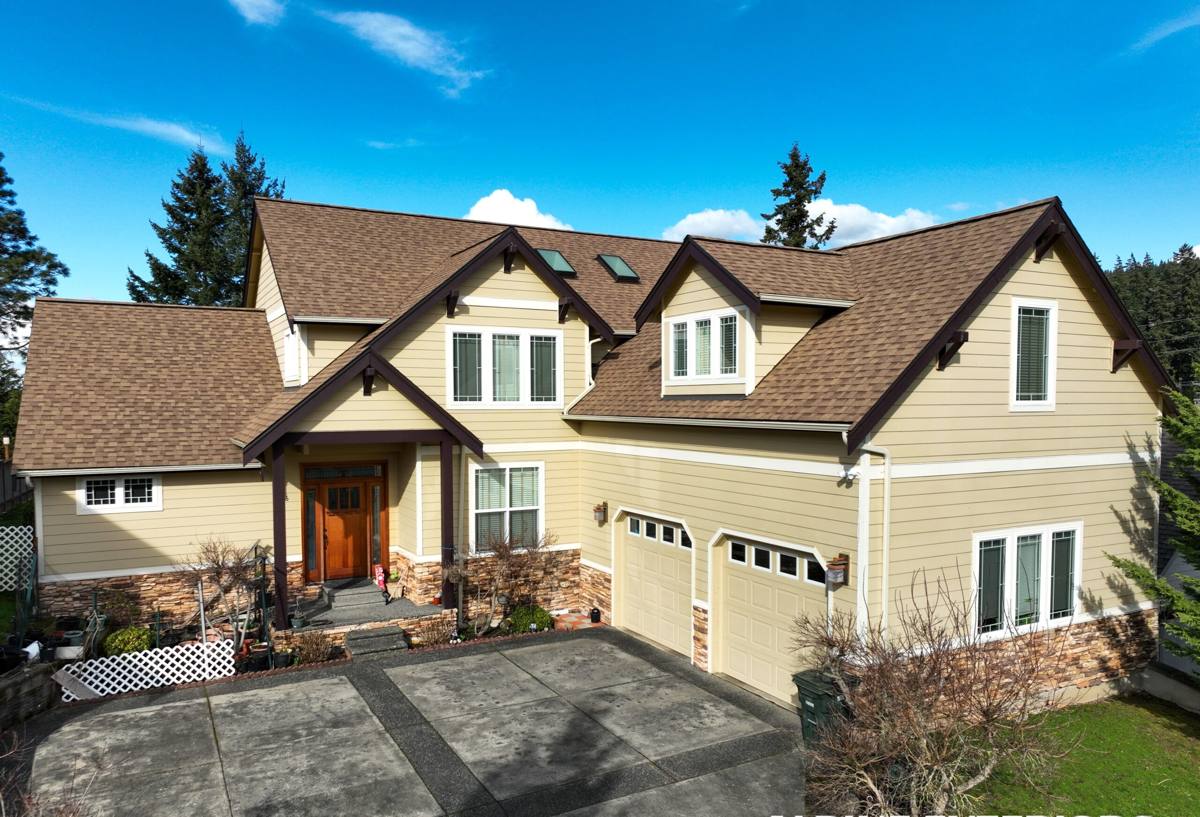
What Nooksack's Weather Actually Does to a Deck
Before talking about materials, it helps to understand the failure points we see most often on decks in this part of Whatcom County:
- Moss and algae growth on shaded or north-facing deck sections that stay damp for days between dry spells
- Trapped moisture under the deck surface where boards sit tight to joists with no airflow, leading to soft spots or mold on the underside
- Rot at the ledger board where the deck attaches to the house, if flashing wasn't properly integrated with the siding and wall assembly
- Slick, algae-coated boards that become a slip hazard, especially on stairs and shaded landings
- Fastener and hardware corrosion from prolonged moisture exposure when the wrong grade of hardware was used
None of these are unique to any one product — wood or composite. They're the result of decks built without accounting for how much water this region deals with and how long it takes surfaces to dry out under tree cover or on a shaded elevation.
Why Composite Handles It Better
Composite decking doesn't absorb water the way wood does, so it doesn't swell, cup, or splinter as moisture cycles through wet and dry periods. It also won't rot. That doesn't mean it's maintenance-free — algae and mildew can still grow on any exterior surface that stays damp — but composite gives you a board that holds its shape and structural integrity through a Whatcom County winter in a way that untreated or even pressure-treated wood struggles to match over time.
Wood vs. Composite for a Nooksack Deck
We install both, and honest tradeoffs matter more than brand loyalty. Here's how the two compare specifically for this climate:
| Factor | Pressure-Treated Wood | Composite Decking |
|---|---|---|
| Moisture behavior | Absorbs water; swells, cups, and checks over repeated wet/dry cycles | Doesn't absorb water into the board itself; dimensionally stable |
| Moss/algae resistance | Rougher grain holds spores and moisture longer | Smoother or capped surface sheds water faster, though buildup still needs washing |
| Maintenance | Annual cleaning, sealing/staining every 1-3 years | Periodic washing; no staining or sealing required |
| Upfront cost | Lower material cost | Higher material cost |
| Long-term cost | Ongoing sealant, repair, and eventual board replacement | Higher upfront, lower ongoing maintenance spend |
| Typical lifespan here | 10-15 years before major repair, shorter on shaded sections | 25-30+ years with a quality capped product |
Wood is still a reasonable choice for some homeowners, particularly on a budget or a smaller structure. But for a deck that's going to sit under tree cover or take direct weather off the valley for two-plus decades, composite is the lower-hassle option — provided it's installed correctly, which is where most of the actual risk lives.
What a Correct Composite Install Actually Involves
Composite decking fails early almost exclusively because of installation shortcuts, not the material itself. A correct build for this climate includes:
Ledger Flashing Tied Into the Wall Assembly
The point where the deck attaches to the house is the single most common source of hidden water damage. We flash the ledger board so water sheds out and away from the wall — integrated with the siding, not just caulked over it. As a siding contractor first, this is the step we see skipped most often by deck-only crews, and it's the one most likely to cause a rot problem you won't see until it's expensive.
Framing That Can Actually Dry Out
Joists and beams get sized and spaced to code, treated appropriately for ground or moisture contact, and gapped enough for airflow underneath the finished surface. A deck built tight with no ventilation traps moisture regardless of what decking material sits on top.
Joist Protection Tape
We tape the tops of joists before decking goes down. It's a small material cost that keeps water from sitting directly on cut, fastener-punctured wood — one of the more common causes of premature joist rot under composite boards.
Proper Drainage and Slope
The deck surface needs a slight slope away from the house so water runs off instead of pooling. On a river-valley lot where the ground itself can stay saturated longer, getting this detail right matters more than it does on a well-drained hillside site.
Hidden Fasteners and Correct Board Spacing
Gapping between boards allows for expansion and drainage. Hidden fastener systems, installed to the manufacturer's spec, keep the surface clean and reduce the exposed metal points where corrosion and staining start.
Our Process for a Nooksack Deck Project
- On-site assessment — we look at sun exposure, tree cover, drainage patterns, and the condition of any existing structure or ledger connection
- Framing evaluation — existing substructures get inspected for rot or undersizing before we build on top of them; new builds get framed to current code
- Flashing and wall tie-in — handled as part of the exterior envelope, not as an afterthought
- Decking installation — board layout planned for drainage and appearance, fastened per manufacturer spec to protect the warranty
- Railing and stair work — built to current code requirements for height and spacing
- Final walkthrough — we go over care and cleaning specific to your site's sun and shade conditions
Living With a Composite Deck Here
Composite is low-maintenance, not no-maintenance. In a climate that gives moss and algae a long season to establish, a bit of routine care goes a long way:
- Wash the deck surface once or twice a year with a soft-bristle brush and a mild deck cleaner — a pressure washer on the wrong setting can damage the surface, so keep it on a low setting and wide fan tip if used at all
- Keep gutters and downspouts on the adjacent roofline clear so runoff isn't dumping directly onto or near the deck
- Trim back overhanging branches and nearby brush to let sun and air reach shaded sections
- Sweep off fallen leaves and needles promptly — they hold moisture against the board surface and accelerate algae growth
- Check railing posts and stair connections annually for any movement, especially after a hard winter
What Affects the Cost
Every deck project is priced around the specifics of the site and the scope of work, but these are the main variables that move the number:
| Cost Factor | Why It Matters |
|---|---|
| Deck size and shape | More square footage and complex angles mean more material and labor |
| Existing framing condition | Rebuilding a rotted substructure adds cost beyond a straightforward re-deck |
| Height and stairs | Elevated decks need more substantial framing, railing, and stair construction |
| Composite product tier | Capped composite costs more than uncapped but resists staining and fading longer |
| Railing style | Composite or metal railing systems cost more than basic options |
| Ledger and flashing work | Proper wall tie-in work adds labor but is not optional for a durable build |
| Permitting | Most attached or elevated decks require a permit; this is a pass-through cost, not markup |
Whether your property falls inside Nooksack's city limits or in the surrounding unincorporated Whatcom County area, permit requirements can differ slightly, so we confirm what applies to your specific lot before work begins rather than assuming.
What to Check When Hiring a Deck Contractor Here
A deck that looks fine on install day can still fail in three years if the fundamentals were skipped. Before hiring anyone for a composite deck in this area, it's worth asking:
- Do they flash the ledger board into the wall assembly, or just caulk and bolt it?
- Do they use joist tape or another protective barrier on framing before decking goes down?
- Are they pulling the required permit, or suggesting you skip it?
- Do they install to the composite manufacturer's fastening spec, which affects your product warranty?
- Have they built decks in this specific area and dealt with its shade, drainage, and moisture patterns before?
- Will they walk you through basic care specific to your site's sun exposure before they leave?
Why a Crew That Already Works This Area Matters
We come to composite decking as an exterior contractor, not a deck-only shop bolting a platform onto the side of a house. That matters most exactly where decks fail most: the connection to the wall. Because we handle siding and exterior envelope work across Whatcom County, we build the deck-to-house flashing as part of a continuous water-management system, not as an isolated task handed to whoever's cheapest that month.
We've also seen firsthand how differently a shaded, low-lying Nooksack lot behaves compared to an open, wind-exposed site closer to the water in Birch Bay. That local pattern recognition — where moss sets in first, which elevations dry out slowest, how far runoff travels from a roofline — shapes decisions on your project before the first board goes down.
Get a Straightforward Estimate
If you're planning a new composite deck or replacing an aging wood deck in Nooksack, we're happy to take a look and give you an honest read on scope, framing condition, and cost — no pressure, no inflated upsells. Use the form below to request a free estimate.