 Birch Bay
 Why Cottonwood Beach Homes Need a Different Approach to Windows
Cottonwood Beach sits close enough to the water that its homes take a different kind of weather beating than houses even a mile or two inland in Birch Bay. Salt-laden air moves through window hardware and finishes year-round, wind-driven rain gets pushed sideways into siding and trim during winter storms off the water, and the long stretch of overcast, damp months keeps north-facing walls and shaded corners wet enough, long enough, for moss and algae to take hold. None of that is unique to any one house on the beach — it's the baseline every window on this stretch of Whatcom County has to survive, year after year.
Stock, big-box replacement windows are engineered for average conditions in an average climate. Cottonwood Beach isn't average. A window that's a decent fit for a subdivision forty miles inland can start showing seal failure, hardware corrosion, or water staining here in a fraction of the time, simply because the exposure is more aggressive. That's the case for treating window replacement on the beach as a custom job, not a catalog order.
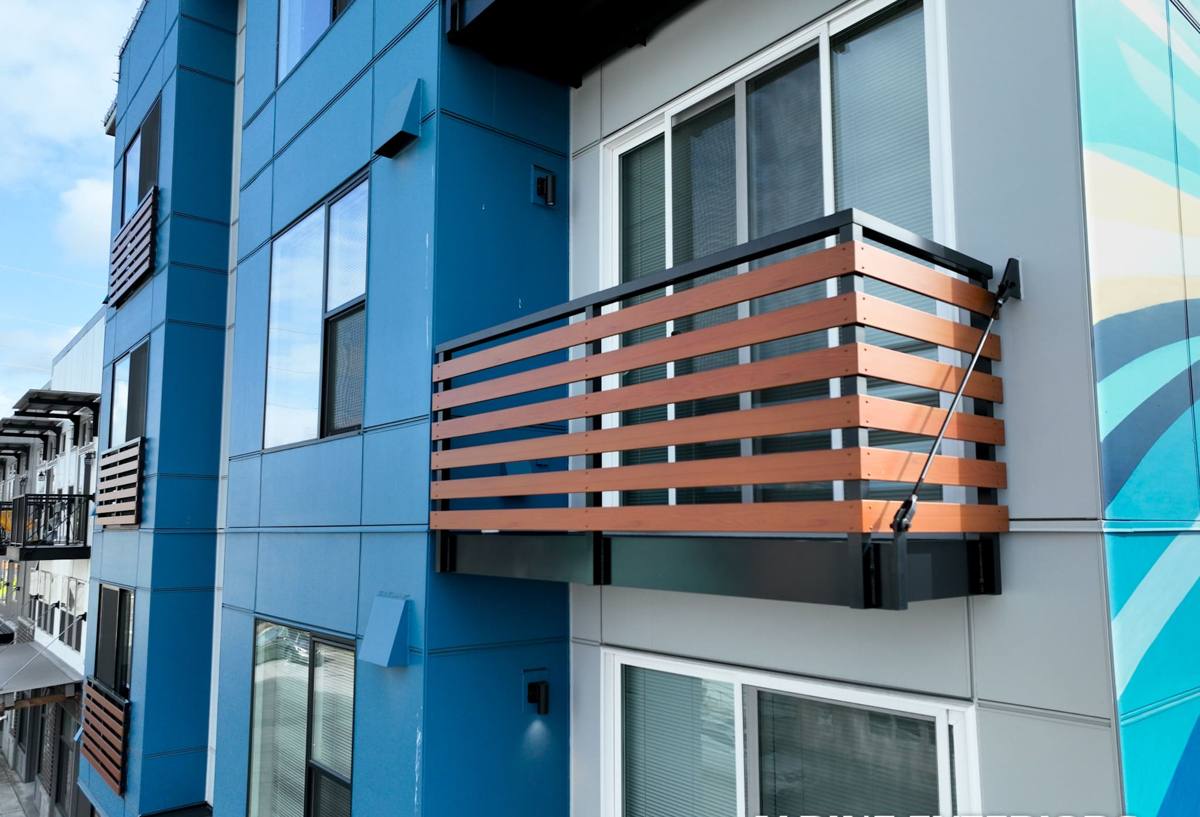
What Salt Air, Driving Rain, and Moss Season Actually Do to Windows
Salt and Corrosion
Airborne salt is a slow, steady attacker. It settles into hinges, cranks, balance systems, and screen frames, and it accelerates corrosion on any hardware that isn't rated for coastal exposure. Cheaper coated or painted steel hardware will pit and seize years before it should. Aluminum frames without the right anodizing or powder-coat finish can pit and chalk. Even good vinyl isn't immune — the fasteners and reinforcement inside the frame matter as much as the vinyl shell itself.
Wind-Driven Rain and Water Intrusion
Rain that falls straight down is easy to shed. Rain that's being pushed sideways by wind off the water is a different problem — it finds every gap in flashing, every shortcut in a sill pan, and every place where sealant was asked to do a job that flashing should have done. On exposed elevations facing the water, that pressure is more or less constant through the wet season, which means a marginal installation shows its weakness a lot faster on Cottonwood Beach than it would on a sheltered inland lot.
Moss Season and Shade Moisture
Whatcom County's long wet season keeps shaded walls, north-facing trim, and tree-covered lots damp for months at a stretch. That's exactly the environment moss and algae need to establish on wood trim, sills, and even window screens. Once moss gets a foothold around a window opening, it holds moisture directly against wood and finish, which is how a small cosmetic issue turns into a rot problem if it's ignored for a season or two.
What "Custom" Actually Means for a Waterfront Property
Custom doesn't have to mean unusual shapes or high-end architectural glass, although we do that too. For most Cottonwood Beach homes, custom means the window is built to the exact opening — not a nominal stock size with shims and extra caulk making up the difference — and specified with the frame material, hardware finish, and glass package that actually make sense for a beachfront exposure.
Frame Material Selection
We walk every job through the trade-offs between vinyl, fiberglass, aluminum, and wood-clad frames honestly, because each one behaves differently in salt air and constant damp. There's no single "best" material for every house — it depends on your exposure, your home's style, and how much upkeep you actually want to do.
Sizing and Openings
Older Cottonwood Beach homes often have openings that have shifted slightly over decades of settling, moisture cycling, and prior repairs. We measure each opening individually rather than assuming uniform sizes across a wall, which avoids the gaps and packing-material fixes that turn into future leak points.
Glass Packages
Insulated glass units with the right coatings and gas fill cut down on condensation, which matters in a climate where humidity sits high for months at a time. On homes with a direct water view or exposure, we also talk through impact considerations and UV control, since afternoon glare off the water can fade interior finishes faster than homeowners expect.
Frame Material Comparison for a Salt-Air Exposure
| Material | Upfront Cost | Coastal Durability | Maintenance | Best Fit |
|---|---|---|---|---|
| Vinyl | Lower | Good, if reinforced hardware is coastal-rated | Low | Budget-conscious replacements, rentals |
| Fiberglass | Mid to higher | Excellent — very stable in temperature and moisture swings | Low | Long-term owners wanting minimal upkeep |
| Aluminum | Mid | Good with proper anodized or powder-coat finish; weaker without it | Moderate | Modern styling, larger sightline needs |
| Wood-clad | Higher | Fair — clad exterior protects wood, but seams need monitoring | Higher | Historic character, interior wood finish wanted |
We're straightforward about why we steer most direct-exposure Cottonwood Beach jobs toward fiberglass or well-specified vinyl over bare aluminum or exposed wood: it's not that the other materials can't work, it's that they demand more attention to finish quality and upkeep to perform the same way in this specific environment. That's a maintenance-and-longevity conversation, not a brand argument.
Our Installation Process, Step by Step
- On-site assessment. We look at every opening individually, check existing flashing and sill condition, and note exposure direction relative to the water and prevailing wind.
- Custom measurement and specification. Each window is ordered to the actual opening, with frame material, hardware, and glass chosen for that wall's exposure — not a one-size spec for the whole house.
- Removal and opening inspection. Once the old window is out, we inspect the rough opening, sill, and surrounding framing for hidden moisture damage before anything new goes in.
- Flashing and sill pan work. This is where most coastal window failures actually start, so we treat it as its own step, not an afterthought to the install.
- Setting and sealing the window. Proper shimming, fastening, and a sealant approach that works with the flashing system rather than substituting for it.
- Interior and exterior finish. Trim, caulking, and paint or stain matched to the surrounding finish so the new window doesn't look bolted on.
- Final check and walkthrough. We test operation, check for square and smooth function, and walk the homeowner through what to expect during the break-in period and beyond.
Flashing and Water Management: The Part That Matters Most Near the Water
On an inland home, a mediocre flashing job might go unnoticed for years. On a Cottonwood Beach home facing the water, wind-driven rain finds those weaknesses fast. We treat sill pans, head flashing, and the integration between window and wall water-resistive barrier as the most important part of the job — more important, honestly, than the window unit itself, because even a premium window will leak if it's set into an opening that wasn't properly prepared and flashed.
This is also where a lot of corner-cutting happens industry-wide, because flashing work is slower, less visible once the trim goes back on, and easy to shortcut without the homeowner ever knowing until a leak shows up two or three winters later. It's worth asking any contractor directly how they handle sill pans and flashing integration before you hire them, not just what brand of window they sell.
Signs Your Current Windows Are Already Struggling
- Fogging or moisture between panes of double- or triple-glazed windows — a failed seal that can't be fixed, only replaced
- Hardware that's stiff, sticking, or visibly corroded — cranks, locks, or hinges that show pitting or rust bleed
- Soft or discolored trim and sill wood, especially on walls facing the water or shaded, damp corners of the house
- Moss or dark staining building up on sills, trim, or screens that keeps returning after cleaning
- Drafts or a cold feeling near the frame in winter, even with the window fully closed and latched
- Visible daylight or gaps around the frame where caulking has cracked, shrunk, or pulled away
- Water staining on interior drywall or trim below or beside a window after a heavy wind-driven rain event
Any one of these on its own might be minor. Several showing up together, especially on a wall that faces the water directly, usually means it's time to have the opening looked at rather than just recaulking and hoping.
Why a Crew That Already Works Cottonwood Beach Matters
Window replacement done right on the beach isn't the same job as window replacement done right three miles inland, even though the materials and tools look identical. A crew that already works this specific stretch of Birch Bay knows which elevations take the worst of the wind-driven rain, how fast moss reestablishes on shaded trim here, and what level of hardware and finish actually holds up rather than looking good on a spec sheet and failing in year three. That local pattern recognition is hard to replace with a generic install crew that treats every job the same regardless of exposure.
It also matters for the practical side of the job — knowing how to sequence work around this area's weather windows, what Whatcom County's permitting and code requirements look like for window replacement, and how to protect landscaping and access on tighter beachfront lots during the work. None of that shows up in a sales brochure, but it shows up in how smoothly the job goes and how the finished work holds up.
Maintenance That Actually Extends the Life of Coastal Windows
Even the right window, correctly installed, still needs a bit of seasonal attention in this environment. Rinsing salt residue off frames and hardware a few times a year — especially after storms — cuts down on the slow corrosion that shortens hardware life. Keeping gutters and nearby drainage clear reduces the amount of standing moisture that reaches sills and trim. And catching moss early, before it builds a mat that holds water against wood or finish, is far easier than dealing with rot repair later. None of this is complicated, but it's the kind of low-effort habit that makes a real difference in how long a custom window installation performs on a beachfront lot.
Getting Started
If you're noticing drafts, fogged glass, sticking hardware, or moss creeping back around your windows no matter how often you clean it off, it's worth having someone look at the actual openings rather than guessing from the symptoms. We're happy to walk your Cottonwood Beach property, point out what we see, and put together a free, no-pressure estimate using the form below — no obligation, just a straight assessment of what your windows actually need.