 Birch Bay
 Why Cottonwood Beach Puts Siding to a Tougher Test
Cottonwood Beach sits close enough to the water that homes here deal with a different set of conditions than siding a few miles inland. Salt-laden air moves through year-round, wind-driven rain comes in sideways off the water during winter storms, and the damp, shaded months that stretch from fall through spring keep exterior walls wet longer than homeowners further from the shoreline ever have to think about. Add in the moss and algae that thrive in Whatcom County's long gray season, and you have a combination that punishes any siding product installed without the coastal environment specifically in mind.
None of this means Cottonwood Beach is a bad place to build or re-side a home. It means the siding system and the installation details matter more here than they do in a drier, more sheltered part of Birch Bay. A wall assembly that would perform fine on a protected inland lot can fail early on a waterfront exposure if it isn't detailed for wind-driven moisture and salt exposure from the start.
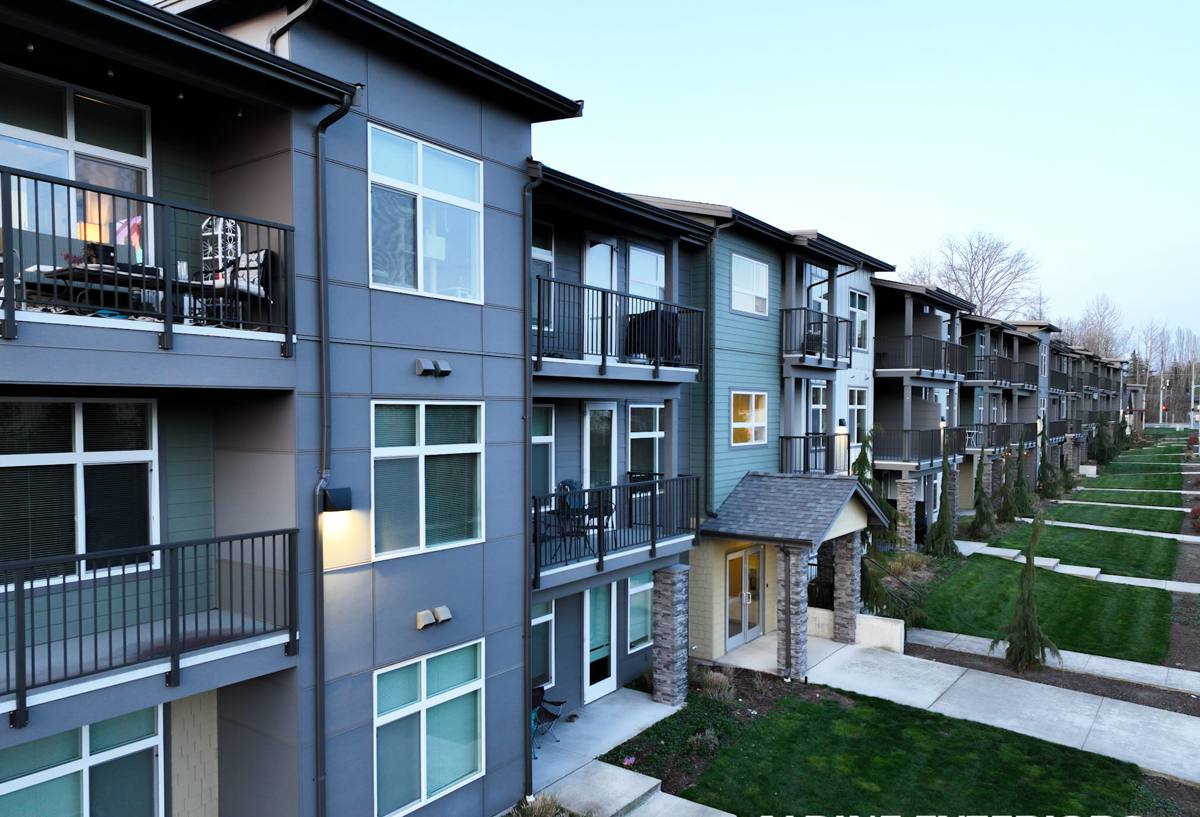
What Salt Air, Driving Rain, and Moss Actually Do to a Wall
Each of these factors attacks a home in a slightly different way, and understanding them is the first step to understanding why the fix isn't just "pick a tougher-looking material."
Salt Air
Airborne salt is corrosive to exposed metal fasteners, flashing, and trim, and it accelerates the breakdown of finishes that weren't engineered to resist it. Paint applied on-site in a field environment tends to chalk and fade faster near the water than it does even a short distance inland.
Driving Rain
Wind-driven rain doesn't just wet the face of a wall — it gets pushed into laps, joints, and any gap in the water-resistive barrier behind the siding. A wall system that relies purely on caulk and paint to keep water out, with no drainage plane behind it, is working against gravity and wind pressure at the same time.
Moss and Algae
Whatcom County's long wet season keeps shaded and north-facing walls damp for extended stretches, which is exactly what moss, mildew, and algae need to establish. Porous or unsealed siding surfaces give these organisms something to grip onto, and once established, they hold additional moisture against the wall — a cycle that keeps getting worse the longer it's ignored.
Why We Only Install James Hardie Fiber Cement Here
We install James Hardie fiber cement siding exclusively — not vinyl, not LP SmartSide, not primed cedar or spruce, not other fiber cement brands. That's a deliberate standard, not a sales preference, and on a Cottonwood Beach lot it's easy to explain why.
Fiber cement is a blend of cement, sand, and cellulose fiber, which makes it non-combustible and dimensionally stable in a way wood-based and vinyl products can't match. It doesn't rot the way engineered wood siding can if moisture gets behind it, and it doesn't soften, warp, or become brittle with UV and temperature swings the way vinyl does over time. James Hardie backs its siding with ColorPlus factory-applied finish technology, which cures under controlled conditions and holds color and adhesion far more consistently in a harsh coastal environment than a field-applied paint job can. For a home absorbing salt air and driving rain on a regular basis, that difference compounds year after year.
We've also seen firsthand what happens when the wrong product goes on a waterfront lot and moisture finds a way in anyway — swollen edges, soft trim, peeling paint within a few seasons. Standardizing on one manufacturer we trust, installed to that manufacturer's own coastal specifications, is how we keep that from happening on the homes we're responsible for.
The James Hardie Product Lines That Make Sense Near the Water
James Hardie builds region-specific engineering into its HZ5 product line for wetter climates like ours, and offers several siding profiles that give Cottonwood Beach homeowners real design flexibility without stepping outside a proven coastal-rated system.
- HardiePlank lap siding — the most common choice for a classic Pacific Northwest look, available in several exposure widths and textures.
- HardieShingle — for homes going for a shingle-style or cottage look common along this stretch of coastline, without the moisture sensitivity of real wood shingles.
- HardiePanel — vertical panel siding, often used for board-and-batten accents or modern facades.
- HardieTrim — matching trim boards that hold paint and dimension as well as the field siding, instead of a softer trim material undermining an otherwise solid siding job.
- ColorPlus finishes — factory-baked color coats in a range of tones, plus color-matched caulk and touch-up, which matters more on a home taking direct salt exposure than it does further inland.
Every one of these products is manufactured to the same HZ5 specification for high-moisture climates, which is the right engineering baseline for anything sitting this close to the water in Whatcom County.
What a Correct Fiber Cement Installation Involves
Fiber cement siding is only as good as the wall assembly underneath it. On a coastal lot, the details that get skipped on an easier inland job are exactly the ones that matter most.
Drainage Plane and Rainscreen
Behind the siding, we install a weather-resistive barrier and, on exposures that call for it, a rainscreen gap that lets any moisture that does get past the siding drain and dry out instead of sitting against the sheathing. This is the single biggest factor in how a wall handles driving rain over decades, not just its first few winters.
Flashing and Clearances
Every window, door, and roofline intersection needs flashing detailed to shed water outward, not just caulked and hoped for. James Hardie's own installation instructions specify minimum clearances — siding held up off roof lines, decks, and grade — so that splashback and standing water don't sit against the bottom edge of the siding. Skipping these clearances is one of the most common causes of early siding failure we see on homes near the water.
Fasteners and Joints
In a salt-air environment, fastener choice matters. We use corrosion-resistant fasteners at the manufacturer-specified spacing and pattern, and we treat butt joints and panel seams the way James Hardie's coastal guidance calls for — properly gapped, backed, and sealed rather than simply butted tight and caulked over.
Caulking and Sealant
Sealant is a backup to good flashing, not a substitute for it. We use sealants rated for the movement and exposure a Cottonwood Beach wall actually sees, at the joints where they're doing real work, and we don't rely on caulk to do a flashing detail's job.
Our Process, Start to Finish
- On-site assessment. We walk the exterior, check the current siding and sheathing condition, and look specifically at wind and rain exposure on each elevation — a wall facing the water gets treated differently than a sheltered one.
- Tear-off and sheathing check. We remove the existing siding and inspect the sheathing underneath for moisture damage before anything new goes on. Hidden rot doesn't get covered up — it gets addressed.
- Weather-resistive barrier and drainage detailing. House wrap or building paper goes on correctly lapped, with a rainscreen gap where the exposure calls for it, before any siding is hung.
- Flashing at every penetration. Windows, doors, hose bibs, vents, and roof intersections all get properly detailed flashing before siding closes around them.
- Siding installation to Hardie's coastal specification. Proper fastener type, spacing, clearances, and joint treatment — installed the same way regardless of whether it's a wall someone will inspect closely or one that's hard to see.
- Trim, caulking, and touch-up. Color-matched trim and sealant go in last, so the finished wall looks uniform and every seam is properly closed.
- Final walkthrough. We go over the finished job with the homeowner before calling it done.
Cost Factors on a Cottonwood Beach Project
Every home is different, and we don't quote a job without seeing it, but these are the factors that most often move the price on a fiber cement project in this area.
| Factor | Why It Matters Here |
|---|---|
| Wall exposure and elevation | Walls facing direct wind and rain off the water often need more rigorous flashing and drainage detail than sheltered elevations. |
| Existing wall condition | Sheathing repair or rot remediation found during tear-off adds scope, but it's cheaper to fix now than to cover over. |
| Siding profile chosen | Lap, shingle, and panel products carry different material and labor costs; more intricate profiles take more time to install correctly. |
| Trim and detail complexity | Homes with more corners, window trim, and architectural detail take more precision work per square foot. |
| Access and site conditions | Lot slope, landscaping, and proximity to neighboring structures can affect staging and labor time. |
| Finish and color selection | Factory ColorPlus finishes vs. field-applied paint carry different cost and long-term maintenance tradeoffs. |
Living With Fiber Cement Through a Moss Season
Fiber cement siding installed correctly needs far less upkeep than wood-based alternatives, but "less" isn't "none," especially in a climate that stays damp for months at a stretch. A little seasonal attention keeps a Cottonwood Beach home looking the way it did the day it was finished.
- Rinse the exterior periodically to clear salt residue and organic buildup, especially on north-facing and shaded walls where moss takes hold fastest.
- Keep gutters clear so overflow doesn't run down the face of the siding during heavy rain events.
- Trim back landscaping that shades walls and keeps them damp longer than the surrounding exposure.
- Check caulking at trim and penetrations every year or two, and have any gaps resealed before they become a moisture path.
- Watch for moss or algae starting on a wall and address it early, before it has time to hold moisture against the surface for an entire wet season.
- Have any impact damage — from debris, equipment, or storms — repaired promptly so the drainage plane behind it isn't compromised for months at a time.
Why Hiring a Crew That Already Works Cottonwood Beach Matters
Siding installation instructions look the same on paper everywhere. What changes is how they get applied to a specific lot's wind exposure, sun and shade pattern, and prevailing storm direction — and that's something a crew learns by working this exact stretch of Whatcom County coastline, not by reading a manual once.
A crew that already works in and around Birch Bay knows which elevations on a Cottonwood Beach lot typically take the worst of the winter weather, which existing wall conditions tend to show up under old siding in this area, and how to sequence a job around the wet-season weather window instead of fighting it. That local pattern recognition is what turns a correct installation on paper into siding that actually performs on this specific shoreline for decades.
It also means straightforward communication and accountability — a crew that's going to keep working in this neighborhood has every reason to get the details right the first time.
If you're planning a siding project on a Cottonwood Beach home, we're happy to walk the exterior with you, look at what your specific exposure is dealing with, and put together a straightforward, no-pressure estimate using James Hardie fiber cement siding built for this climate.