 Birch Bay
 Siding Built for Custer's Corner of Whatcom County
Custer sits close enough to Birch Bay and the Strait of Georgia that homes here deal with a specific combination of weather most siding products were never engineered for: salt-laden air rolling in off the water, long stretches of driving rain, and a wet season that can stretch for months at a time. Add in the shade from mature evergreens that many Custer properties are built around, and you get ideal conditions for moss, algae, and slow moisture intrusion to take hold on the wrong exterior material.
We install James Hardie fiber cement siding exclusively, and Custer is a neighborhood where that decision matters in very practical ways. This page covers what a correct siding installation looks like for homes in this specific area — not a generic overview, but what we actually pay attention to when we're working a job on this stretch of the county.
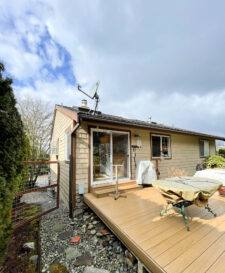
What Custer's Climate Does to Siding Over Time
Whatcom County's marine climate is mild compared to a lot of the country, but "mild" doesn't mean easy on a house. Three things stand out for homes in and around Custer:
- Salt air: Proximity to Birch Bay and the Strait means airborne salt is a real factor, particularly on siding facing the water side of a property. Salt accelerates corrosion of fasteners and trim metal, and it degrades cheaper paint films faster than inland weathering alone would.
- Driving rain: Wind-driven rain off the water doesn't just wet a wall surface — it pushes moisture up under laps, into seams, and behind poorly flashed trim. Siding systems and installation details that aren't built for wind-driven exposure will eventually let water in, even if the material itself looks fine from the curb.
- Moss and algae season: Shaded lots, tree cover, and long damp stretches mean moss and algae growth is a near-constant maintenance issue for many Custer homes. Some siding materials absorb moisture and organic growth into the surface itself; others just need periodic cleaning of what's sitting on top.
None of this is unique to Custer specifically, but it's more pronounced here than it would be for a home fifteen miles inland with more sun exposure and less salt influence.
Why We Install James Hardie for This Exposure
James Hardie fiber cement is engineered from cement, sand, and cellulose fibers — it doesn't rot, it isn't a food source for moss or algae the way wood-based products can be, and it holds up structurally in damp, shaded conditions that would slowly break down wood or wood-composite siding. The ColorPlus factory finish is baked on under controlled conditions, which gives it better resistance to fading and coastal weathering than field-applied paint, and it means touch-ups are rare if the installation is done correctly.
Hardie's HZ5 product line in particular is engineered for harsher climate zones, which fits the Pacific Northwest's combination of moisture, wind, and temperature swings better than a siding line designed for a drier, milder region. For a property exposed to salt air and driving rain, that engineering difference is not marketing — it shows up in how the siding performs ten and twenty years out.
We don't install vinyl, LP SmartSide, Cemplank, Allura, primed spruce, or cedar. Some of those are reasonable products in the right setting. But given what we see repeatedly in this specific climate — moisture-sensitive substrates, maintenance-heavy finishes, or seam and expansion behavior that doesn't hold up to sustained wind-driven rain — we standardized on one system we can install to spec and stand behind, rather than offering several products with very different long-term outcomes.
What a Correct Installation Actually Involves
The material is only half the equation. A huge share of siding failures we get called out to inspect — regardless of brand — trace back to installation shortcuts, not the product itself. For a Custer property, the details below are non-negotiable:
Weather barrier and flashing first
Before a single piece of siding goes up, the house needs a continuous, properly lapped weather-resistant barrier, with flashing integrated at every window, door, and penetration. Given the wind-driven rain exposure here, sloppy flashing work is where water gets behind the wall — and it can go undetected for years before it shows up as rot in the sheathing.
Correct fastening and clearances
James Hardie specifies exact nailing patterns, fastener types, and minimum clearances from grade, roof lines, and decks. In a salt-air environment, using the wrong fastener material or spacing accelerates corrosion and can compromise the siding's hold over time. We follow Hardie's published installation instructions to the letter — it's also what keeps the manufacturer's warranty valid.
Proper joint and butt-seam treatment
Butt joints and panel seams are the most common entry point for wind-driven moisture if they're not caulked, flashed, or backed correctly. On a home taking direct exposure off the water, this detail gets extra attention.
Ventilation behind the cladding
A rainscreen or properly vented assembly lets any moisture that does get past the outer layer dry out instead of sitting against the sheathing. This matters more in a shaded, damp environment like a lot of Custer lots than it would in a drier climate.
Our Process for a Custer Siding Job
- On-site assessment: We walk the property, check existing siding and sheathing condition, note sun/shade exposure and water direction, and identify any moisture damage that needs to be addressed before new siding goes up.
- Scope and product selection: We recommend the Hardie product line, plank profile, and color that fits the home and its exposure — HZ5 is typically the right call for the more exposed sides of a property in this area.
- Prep and repair: Any compromised sheathing, framing, or trim is repaired before the weather barrier goes on. We don't cover up existing damage.
- Weather barrier and flashing installation: Full building wrap and flashing detail at every opening and penetration, sequenced correctly (upper layers over lower layers, always).
- Siding installation to manufacturer spec: Correct fasteners, clearances, joint treatment, and reveal consistency throughout.
- Final walkthrough: We inspect the completed work with the homeowner and go over basic care and what to watch for.
Maintenance Realities for Custer Homes
No siding is maintenance-free, but the maintenance burden is very different depending on what's on the wall. Here's a straightforward comparison for the conditions Custer homes actually face:
| Concern | James Hardie Fiber Cement | Wood-Based Products (Cedar, Primed Spruce, LP-Type) |
|---|---|---|
| Moss/algae growth | Grows on the surface only; periodic gentle washing removes it | Can be absorbed into the material, promoting rot underneath growth |
| Salt air exposure | Factory finish resists fading and coastal weathering | Field-applied finishes weather and need more frequent repainting |
| Wind-driven rain | Non-combustible, dimensionally stable, doesn't swell with moisture | Prone to swelling, cupping, and seam movement with repeated wetting |
| Long-term rot risk | Not a rot risk — it's not an organic material | Ongoing risk, especially in shaded, damp locations |
| Repainting cycle | Rarely needed if ColorPlus finish is intact | Typically every 5-10 years depending on exposure |
Even with Hardie siding, a Custer home benefits from an annual rinse-down to keep moss and algae from building up on the surface, and an occasional check of caulking at trim joints and penetrations — routine upkeep, not remediation.
What to Check Before Hiring Anyone for This Job
Siding installation is one of those projects where the workmanship matters as much as the material, and it's hard for a homeowner to evaluate from the outside once the wall is closed up. A few things worth asking any contractor, including us:
- Are they a certified or factory-trained James Hardie installer, and can they explain their flashing and weather-barrier sequencing in plain terms?
- Do they inspect and repair sheathing before installing new siding, or just cover what's there?
- What warranty applies — both the manufacturer's product warranty and their own labor warranty — and is it transferable if you sell the home?
- Have they worked in this specific area, and do they understand the exposure differences between a shaded inland lot and a water-facing one?
- Will they put the product line, fastening spec, and scope of work in writing before starting?
Why Local Experience with This Area Matters
A crew that regularly works Birch Bay and Custer already knows which sides of a house tend to take the worst of the wind-driven rain, where moss builds up fastest, and how much clearance to leave given the drainage and grading common to lots out here. That's not something you get from a general installation manual — it comes from doing the work in this specific stretch of Whatcom County repeatedly and paying attention to how houses actually perform afterward.
It also means a faster, more accurate estimate. We're not guessing at regional exposure or trying to apply a one-size-fits-all spec — we're accounting for the same salt air, rain patterns, and moss conditions your neighbors' homes are already dealing with.
Get a Straight Answer on Your Siding
If your Custer home has siding that's showing moss buildup, paint failure, soft spots, or visible seam gaps, it's worth a look before those issues turn into structural repairs. We offer a free, no-pressure estimate — we'll walk the property, tell you honestly what we see, and lay out what a correct James Hardie installation would involve for your home. Use the form below to get started.