 Birch Bay
 Why Windows Wear Out Faster in Custer Than in a Lot of Places
Custer sits close enough to Birch Bay and the Strait of Georgia that homes here deal with a combination most inland Washington towns don't: salt-laden air off the water, long stretches of driving rain, and a moss season that can run from late fall well into spring. None of that is dramatic on its own, but stacked together year after year, it's hard on window frames, seals, and the wood or trim around them. A window that would last three decades in a drier climate can start failing at the seals or sills a lot sooner out here.
Salt Air and Hardware Fatigue
Salt in the air doesn't just affect houses right on the water. It travels on wind and settles on anything exposed, including window hardware, screens, and metal flashing. Over time it accelerates corrosion on lower-grade fasteners, hinges, and cranks, and it can pit aluminum components that aren't rated for coastal exposure. This is one reason we pay attention to hardware specs, not just glass and frame, when we quote a job in this area.
Driving Rain and Water Intrusion
Whatcom County storms often come in sideways, not straight down. Wind-driven rain finds any weakness at the window perimeter — a gap in flashing, a caulk line that's shrunk and cracked, a sill that was never properly pitched to drain. Once water gets behind the trim, it doesn't dry out quickly in our climate, and that's when you start seeing soft wood, stained drywall, or a musty smell near the window that wasn't there before.
Moss and Constant Dampness
A long moss season means a long stretch where exterior wood trim, sills, and even window screens stay damp more often than they get a chance to fully dry. Moss and algae hold moisture against the surface, which speeds up rot in wood components and can degrade cheaper caulks and sealants faster than the manufacturer's stated lifespan would suggest.
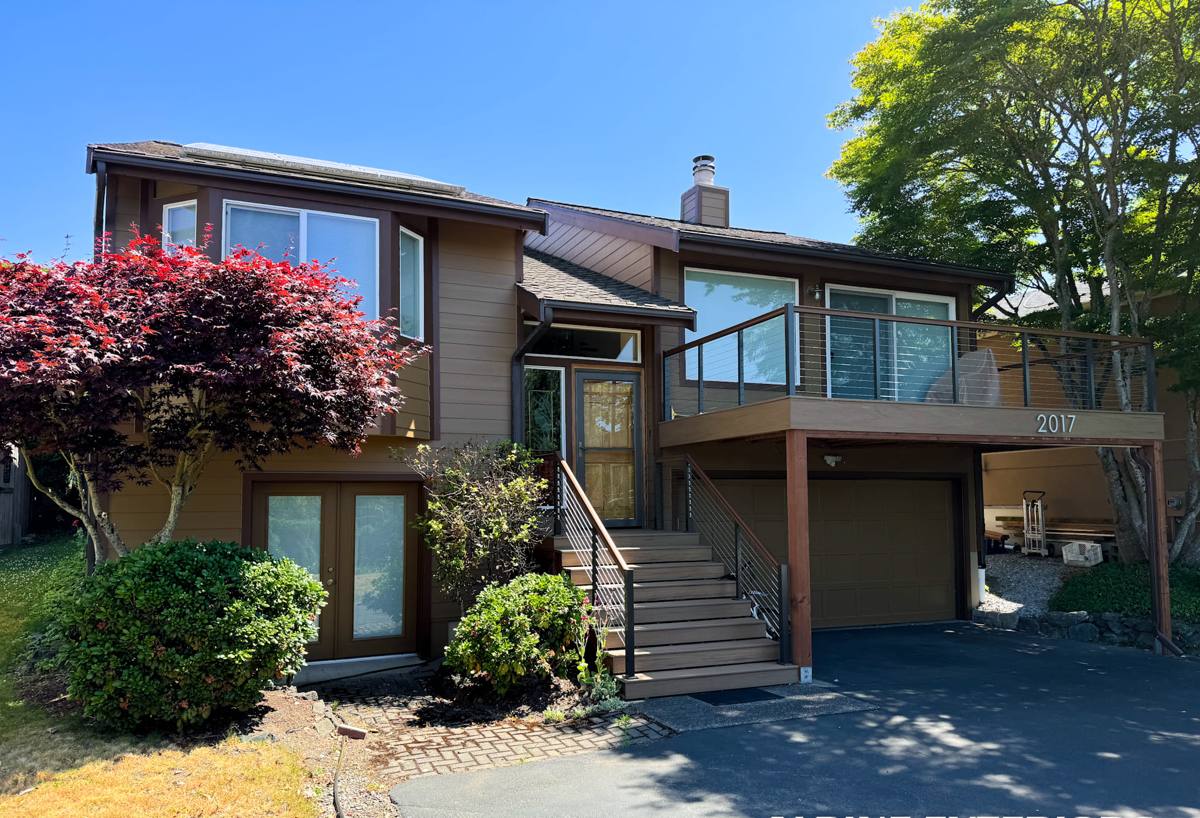
Signs a Custer Home Needs Replacement, Not Just a Repair
Not every window problem means a full replacement. But in this climate, some symptoms are worth taking seriously before they turn into a bigger repair.
- Fogging or a permanent haze between panes — the seal has failed and the insulated glass unit can't be repaired, only replaced
- Soft, spongy, or discolored wood at the sill or lower corners of the frame
- Windows that are noticeably harder to open, close, or lock than they used to be
- Visible daylight or a draft you can feel around the frame on a windy day
- Condensation forming on the inside of the glass regularly, even in mild weather
- Paint or caulk that's cracked and pulling away from the frame year after year despite touch-ups
- A noticeable jump in heating costs with no other explanation
If you're seeing two or more of these on the same window, it's usually cheaper in the long run to replace than to keep patching.
What a Correct Window Replacement Job Actually Involves Here
The window itself is only part of the job. In a climate like Custer's, how the window is installed matters as much as which window you buy.
Flashing and Weather Barrier Integration
The flashing around a new window has to tie into the existing weather-resistive barrier correctly, with proper overlap so water sheds outward and down, not behind the siding. This is where a lot of problems start on jobs done in a hurry — the window looks fine from the outside, but the flashing detail underneath was never done right, and it doesn't show up until a hard rain finds the gap.
Sill Pans and Drainage
A sill pan under the window gives any water that does get past the exterior seal somewhere to go besides into the wall cavity. This is a small, inexpensive detail that makes a real difference in a wet climate, and it's one we don't skip, even though it adds a bit of time to the install.
Frame Material for This Climate
Frame choice affects how the window handles years of damp air and temperature swings. We generally steer clients toward vinyl or fiberglass frames for this area over bare wood, because they don't absorb moisture or need repainting to stay protected. If a homeowner wants the look of wood on the interior, wood-clad options with a durable exterior cladding give that appearance without exposing bare wood to the weather side.
Sealing and Caulking
We use exterior-grade sealants rated for sustained UV and moisture exposure, not general-purpose caulk. In a climate with this much sustained dampness, the difference in service life between a quality sealant and a cheap one is measured in years, not months.
Comparing Frame Materials for Custer's Climate
| Frame Material | How It Handles Salt Air & Moisture | Maintenance | Typical Fit for This Area |
|---|---|---|---|
| Vinyl | Won't corrode or absorb moisture; performs consistently in damp coastal air | Low — occasional cleaning, no repainting | Good all-around choice for most Custer homes |
| Fiberglass | Very stable in moisture and temperature swings; strong resistance to warping | Low | Good for larger openings or homes wanting a longer-term investment |
| Wood-clad | Exterior cladding protects the wood, but any breach in the cladding exposes wood to rot risk | Moderate — cladding needs to stay sealed and intact | Best when the homeowner wants a wood interior look and understands the tradeoff |
| Bare wood | Absorbs moisture and is prone to rot without diligent upkeep in this climate | High — regular repainting and sealing | Generally not our recommendation for this area's weather |
| Aluminum | Conducts cold and can corrode over time without marine-grade coatings | Moderate | Occasionally used for specific architectural needs, not a default choice here |
Full-Frame Replacement vs. Insert Replacement
There are two basic approaches to replacing a window, and which one makes sense depends on the condition of what's already there.
Insert (Pocket) Replacement
This method installs a new window inside the existing frame, leaving the surrounding trim and siding untouched. It's faster and less invasive, and it works well when the existing frame is still structurally sound and dry. The tradeoff is that it doesn't let us inspect or address hidden rot or old flashing problems underneath.
Full-Frame Replacement
This removes the window down to the rough opening, including the old frame, so we can check the sheathing and framing underneath for water damage and correct any flashing issues before the new window goes in. Given how much wind-driven rain this area sees over the decades, we often find at least some hidden moisture damage on older homes once we open things up — which is exactly why full-frame is worth considering on a home that's had window problems before, even if it costs more upfront.
Our Process, Start to Finish
- On-site assessment — we look at each window individually, not just from the curb. Sills, corners, and interior trim tell us more than the glass does.
- Honest scope and estimate — we tell you which windows genuinely need replacing, which can wait, and why, along with a written estimate.
- Material selection — we walk through frame and glass options based on your budget and the specific exposure of each window (a window facing prevailing weather gets different consideration than a sheltered one).
- Removal and inspection — old windows come out carefully so we can check the opening underneath for hidden damage before anything new goes in.
- Correct installation — proper flashing sequence, sill pan, shimming, insulation, and sealing, not just setting the unit in place and caulking the edges.
- Cleanup and walkthrough — we clear debris and walk the finished work with you before calling the job done.
Why It Matters to Hire a Crew That Already Works Custer and Birch Bay
A crew that works this specific stretch of Whatcom County has already seen what salt air, driving rain, and moss do to homes here over time — not in theory, but on real houses in this same weather pattern. That means fewer surprises: we know to check certain areas for hidden rot before we quote a job, we know which sealants and frame materials actually hold up here rather than just on paper, and we're not learning this climate's quirks on your project. It also means we're a phone call away if a warranty question or an install detail comes up later, not a contractor who did one job in the area and moved on.
Cost Factors for Window Replacement in Custer
Every home is different, but a few factors consistently move the price of a window replacement project up or down. We don't quote firm numbers without seeing the actual windows, but here's what tends to matter most.
| Factor | Why It Affects Cost |
|---|---|
| Insert vs. full-frame replacement | Full-frame takes more labor and may uncover repair work, but addresses hidden issues insert replacement can't reach |
| Number of windows done at once | Bundling multiple windows in one visit reduces per-window setup and travel cost |
| Frame material | Vinyl is typically the most budget-friendly; fiberglass and wood-clad cost more upfront but bring different longevity tradeoffs |
| Window size and type | Large picture windows, bays, or custom shapes cost more than standard double-hung or slider sizes |
| Condition of the existing opening | Rot or water damage found during removal adds repair time before the new window can go in |
| Glass package | Upgraded low-E coatings or additional panes add cost but can improve comfort and energy performance |
Living With New Windows Through the Wet Season
New windows reduce maintenance, but they aren't maintenance-free, especially in this climate. A quick seasonal check goes a long way: rinse salt film off exterior surfaces and hardware periodically, keep gutters and downspouts clear so water isn't sheeting down across the window during heavy rain, and check that exterior caulk lines stay intact going into the wetter months. Clearing moss and debris away from sills and tracks before it builds up keeps moisture from sitting against the frame longer than it needs to.
If you're weighing whether it's time to replace windows on a Custer home, we're happy to take a look and give you a straightforward read on what's actually needed — no pressure, no upsell. Use the form below to request a free estimate.