 Birch Bay
 Building Decks for Marietta's Coastal Conditions
Marietta sits close enough to Birch Bay and the Strait of Georgia that a deck here lives a different life than one built twenty miles inland. The salt-tinged marine air, the steady rain off the water, and the long shoulder seasons where moss and algae get a real foothold all work against wood and hardware in ways that inland Whatcom County decks rarely deal with. A deck built without those conditions in mind will still look fine on install day. The problems show up eighteen months later — in loose fasteners, soft ledger boards, and boards that never fully dry out between storms.
We build and repair decks in Marietta and the surrounding Birch Bay area regularly, so this isn't theoretical for us. This page covers what a deck in this specific location actually needs, what a correctly built one involves, and how we approach the work so it holds up through the wet season after wet season instead of needing early repairs.
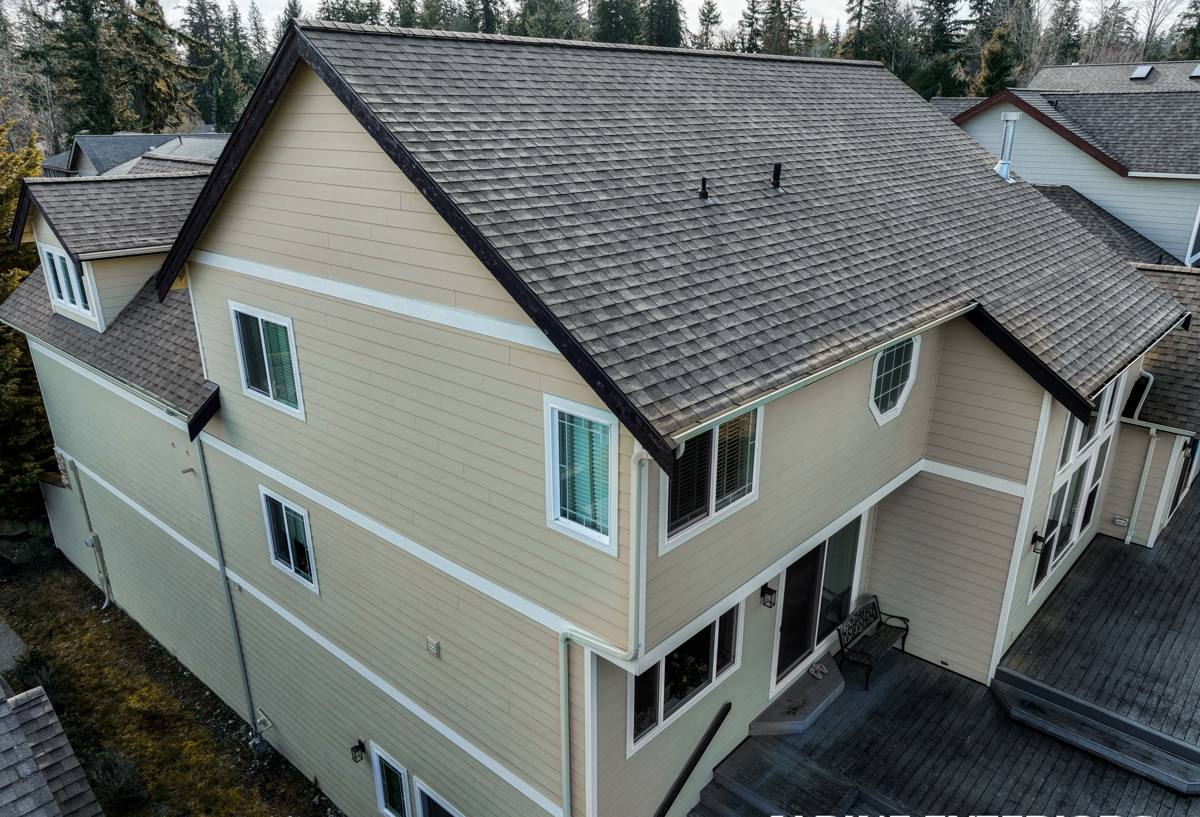
What the Local Climate Does to a Deck
Three conditions drive almost every deck problem we see in this area, and they compound each other.
Salt Air and Corrosion
Proximity to the water means airborne salt settles on everything, including fasteners, brackets, and any exposed metal hardware. Standard construction-grade screws and nails corrode faster here than they would inland. Corroding fasteners don't just look bad — they lose holding strength, and a ledger board or joist hanger held by rusting hardware is a structural problem waiting to happen, not a cosmetic one.
Driving Rain and Water Management
Storms coming off the water tend to arrive with wind behind them, which pushes rain sideways into ledger connections, under railings, and into any gap in the decking where water wouldn't normally reach. A deck built assuming rain only falls straight down will trap water in places a properly flashed and sloped deck would shed it from.
Extended Moss and Algae Season
Cooler, damp stretches that run long in this part of Washington give moss and algae far more time to establish than they'd get in a drier climate. Once moss takes hold on decking boards or stair treads, it holds moisture against the wood constantly and turns into a genuine slip hazard, especially on stairs and any north-facing or shaded sections of the deck that don't get direct sun to dry out.
Decking Material Options for Marietta Homes
There's no single right material for every deck — it depends on budget, how much upkeep you want to take on, and how exposed the deck is to weather. Here's how the common options stack up specifically against salt air, rain, and moss.
| Material | Salt Air / Corrosion Resistance | Moss & Moisture Behavior | Maintenance |
|---|---|---|---|
| Pressure-Treated Wood | Good if fastened with coated or stainless hardware | Absorbs moisture; needs sealing to resist moss and rot | Annual cleaning and re-sealing recommended |
| Cedar | Naturally decay-resistant but fasteners still need to be corrosion-rated | Sheds water reasonably well; still needs periodic treatment | Moderate — staining/sealing every couple years |
| Composite Decking | Excellent — no wood fasteners exposed on the surface | Doesn't rot, but moss and algae can still grow on the surface film | Low — periodic washing to prevent surface buildup |
| PVC / Capped Polymer | Excellent | Best moisture resistance of the group; still needs occasional cleaning | Lowest — no sealing or staining required |
Composite and PVC decking have become popular in this area precisely because they remove the yearly sealing cycle that wood demands in a wet climate. That said, plenty of homeowners still want the look and feel of real wood, and a well-built, properly maintained wood deck holds up fine here too — it just asks more of you over time.
What a Correctly Built Deck Involves in This Location
The visible decking material is only part of the story. Most of the deck failures we get called out to inspect trace back to something underneath the surface that wasn't done right the first time.
Footings Set to Proper Depth
Footings need to be sized and set to the depth required by local code, not just deep enough to "feel solid." Undersized or shallow footings shift over time, especially in ground that goes through repeated wet-dry cycles.
Ledger Attachment and Flashing
The ledger board — where the deck attaches to the house — is the single most common point of failure on decks near the water. It needs proper flashing that directs water away from the house sheathing, not just caulk and a hope. A poorly flashed ledger lets water track behind it and rot both the ledger and the wall structure behind it, often invisibly for years.
Corrosion-Rated Fasteners and Hardware
Given the salt air here, we use hot-dip galvanized or stainless steel fasteners and structural hardware rather than standard coated screws. It costs a little more up front and saves you from hardware failure well before the decking itself would need replacing.
Airflow Underneath the Deck
Decks built low to the ground or over enclosed space need enough ventilation underneath to let moisture escape. Without it, the underside of the joists and decking stays damp far longer after every rain, which accelerates rot and gives moss and mildew a place to start.
Our Process From Estimate to Finished Deck
- On-site assessment. We look at the site's exposure — how much direct sun it gets, which direction storms typically hit it from, drainage around the footing area, and any existing structure we're tying into.
- Material and layout discussion. We walk through material trade-offs honestly, based on your budget and how much maintenance you actually want to take on, not just what looks best in a sample chip.
- Written estimate. You get a clear scope and price before any work starts — no surprise change orders for things we should have caught up front.
- Permitting. We handle the permit process for work that requires it under Whatcom County requirements.
- Construction. Footings, framing, ledger flashing, decking, and railings, built to hold up to the conditions specific to this area, not a generic build.
- Final walkthrough. We go over the finished deck with you, including what maintenance it'll need and roughly when.
Maintenance Realities for a Marietta Deck
Every deck needs some maintenance. What changes near the water is how often, and how much moss and salt exposure factor into the schedule. A realistic maintenance checklist for this area looks like this:
- Sweep debris and standing moisture off the deck surface regularly, especially in shaded areas that don't get direct sun
- Clean moss and algae off boards and stair treads before they build up — this is a slip-safety issue, not just appearance
- Check fasteners and railing hardware annually for early signs of corrosion, even if you used corrosion-rated hardware
- Reseal or restain wood decking on the schedule appropriate to the product — don't wait until it visibly needs it, since wood decking near the water dries out and re-absorbs moisture faster than inland
- Inspect the ledger board area and flashing periodically for any signs of water tracking behind it
- Keep gutters and downspouts near the deck clear so runoff isn't dumping extra water onto or under the structure
None of this is dramatic work, but skipping it in this climate catches up with a deck faster than it would somewhere drier.
Permits and Whatcom County Considerations
Most new deck construction and many significant deck repairs or rebuilds require a permit under Whatcom County requirements, particularly once you're dealing with structural framing, footings, or attaching to the house. Requirements can vary depending on deck height, size, and whether it's a new build or a repair, so it's worth confirming before work starts rather than after. We handle this step as part of our process so you're not left tracking down permit requirements on your own.
Why a Crew That Already Works Marietta Matters
A deck built by someone unfamiliar with this stretch of Whatcom County coastline can still be built competently — but "competently" for a dry inland climate isn't the same standard needed here. Knowing to spec corrosion-rated hardware without being asked, flashing a ledger for wind-driven rain rather than just vertical rainfall, and planning for a moss season that runs longer than most areas of the state aren't things you learn from a general framing manual. They're things you learn from building and later repairing decks in this exact kind of weather, repeatedly.
We're a local crew serving Birch Bay and the surrounding Whatcom County area, including Marietta. That means when we spec a material or a fastening approach, it's based on what actually holds up here — not a generic build that happens to look right on install day.
Get a Free Estimate
If you're planning a new deck or need to replace one that hasn't held up to the local weather, we're happy to take a look and give you a straightforward, no-pressure estimate. Use the form below to get started.