 Birch Bay
 Building a Deck That Belongs on Point Whitehorn's Bluffs
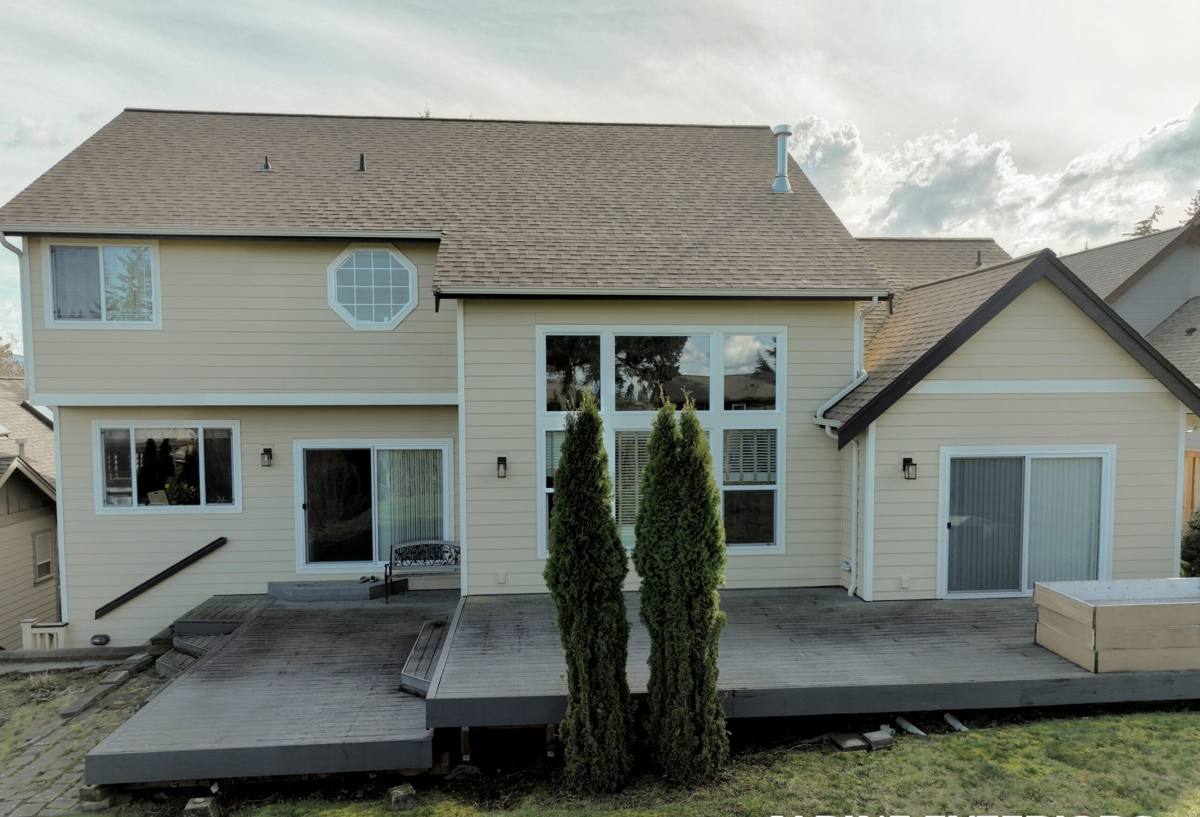
Point Whitehorn sits on the exposed side of Birch Bay, Whatcom County, where homes look out over the water and take the weather straight off it. A deck built here has a different job than one built a few miles inland. It has to shrug off salt-laden wind, shed driving rain instead of holding onto it, and get through a moss season that runs long under the fir and cedar cover many of these lots have. We've built and repaired decks throughout Birch Bay and Point Whitehorn long enough to know which shortcuts fail first out here — loose fasteners, sealed-in moisture, boards that never quite dry — and we build to avoid them rather than to hit a low number on a bid.
This page is about one project type, in one neighborhood: a custom deck built for Point Whitehorn's specific conditions. If you're comparing bids or just trying to understand what a correct job looks like here, this is the detail that matters.
What Salt Air, Driving Rain, and Shade Actually Do to a Deck
None of these three factors on their own would be unusual for a Pacific Northwest deck. Together, and over enough seasons, they're what separates a deck that's still solid at year fifteen from one that's soft, stained, or structurally questionable by year eight.
Salt Air
Salt-laden air carries fine airborne salt that settles on any exposed metal — fasteners, brackets, hinges, railing hardware — and accelerates corrosion well beyond what you'd see a few miles inland. Standard galvanized coatings can hold up for a while, but on an open, wind-exposed lot near the water, the coating wears thinner and faster than it would on a sheltered inland deck.
Driving, Wind-Driven Rain
Rain that comes in sideways behaves differently than rain that falls straight down. It finds its way behind railing posts, up under flashing laps, and into ledger connections that a calmer climate would never test. A deck detail that's "good enough" in a low-wind yard can leak or rot within a few seasons out here if it wasn't built with driving rain specifically in mind.
Shade, Tree Cover, and Slow Drying
Many Point Whitehorn lots carry mature fir and cedar, which is part of the appeal of living there but also means decks get less direct sun and more standing damp air than an open, treeless yard would. Boards that don't get a chance to dry out between rain events are exactly the boards that grow moss, hold rot, and get slick underfoot.
Choosing a Decking Material That Will Actually Last Here
There's no single "correct" decking material for every home — budget, look, and how much maintenance you want to do all factor in. But some materials tolerate this specific climate better than others, and it's worth understanding the trade-offs before you pick one.
| Material | Moisture Behavior | Coastal / Salt Air Durability | Maintenance |
|---|---|---|---|
| Pressure-treated lumber | Absorbs and releases moisture readily; prone to cupping and checking if not maintained | Good if hardware is matched correctly; the chemicals used to treat modern lumber can accelerate corrosion of the wrong fastener type | Needs re-sealing every 1–2 years in this climate to perform well |
| Cedar | Naturally moisture- and rot-resistant; still needs to shed water, not hold it | Handles salt air reasonably well but greys and softens faster in shaded, damp spots | Periodic cleaning and oiling to keep its color and resist moss |
| Composite / capped composite | Doesn't absorb water into the board itself; performance depends on proper drainage underneath | Very good — no wood fibers to rot, less susceptible to salt-driven decay | Low; periodic washing to keep moss and algae from gripping the surface texture |
Composite tends to be the lowest-maintenance choice for a shaded, salt-exposed Point Whitehorn lot, but it isn't automatically the right call for every homeowner — some people want the look and feel of real wood and are willing to keep up with it. We'll walk you through the honest trade-offs for your specific lot rather than steer you toward whatever's easiest for us to install.
Hardware and Fasteners: the Detail Most Decks Get Wrong
This is where a lot of decks quietly fail years before the decking itself would need replacing. Fasteners and structural hardware are almost always the first thing to give out in a salt-air environment, and they're also the easiest thing for a contractor to under-spec because the difference doesn't show up until well after the invoice is paid.
- Hot-dip galvanized structural connectors (joist hangers, post bases, straps) hold up better than mill-galvanized or electro-plated hardware in coastal exposure.
- Stainless steel fasteners — 305 or 316 grade — are worth the added cost on railings, ledger boards, and any connection you don't want to reopen and re-drive in five years.
- Fastener-to-lumber compatibility matters: modern pressure-treated lumber uses chemical formulations that corrode the wrong metal faster. We match fastener coating to the treatment chemical, not the other way around.
- Hidden fastener systems on composite decking need to be rated for the environment they're installed in — not every clip system is.
None of this is visible once the deck is finished, which is exactly why it's the detail that gets skipped when a bid comes in low.
Framing, Footings, and Drainage Built for This Ground
A deck's structure does its work underneath the boards, out of sight, for the life of the deck. Getting it right the first time matters more here than in a drier, calmer climate because problems compound faster once moisture gets where it shouldn't be.
Ledger Flashing
Where a deck attaches to the house, the ledger board and its flashing are the single most common point of failure on any Pacific Northwest deck — and driving rain makes a marginal flashing detail fail faster. We flash and seal this connection to shed water away from the house band board, not just cover it.
Footings and Frost Depth
Footings need to be set below the local frost depth and sized for the soil conditions on your specific lot. Whatcom County has its own frost-depth and footing requirements, and soil on bluff-adjacent or wooded lots can vary quite a bit from one yard to the next — we check actual site conditions rather than assuming a standard footing spec will do.
Joist Protection and Drainage
Joist tape over the top of framing lumber keeps standing water off exposed end grain and fastener penetrations, which meaningfully extends the life of the frame underneath composite or wood decking. Deck boards also need correct gap spacing and a slight slope away from the house so water sheds instead of pooling.
Bluff Proximity and Site-Specific Review
Some Point Whitehorn properties sit on or near the marine bluff above the water. If your lot is close to a bluff edge or shoreline, your project may involve additional site review beyond a standard deck permit. We'll flag this early in the process if it applies to your property, rather than let it surface as a surprise partway through.
Living With a Long Moss Season
Moss on a deck isn't just cosmetic — it holds moisture against the board surface and turns a deck slick underfoot, which is a real fall hazard on stairs and near railings. In a shaded, tree-covered Point Whitehorn yard, moss season can run considerably longer than it would on an open, sunny lot.
A few build decisions make an ongoing difference:
- Board spacing wide enough to let air move and water drain, without being so wide it feels unfinished underfoot
- Skirting with ventilation gaps rather than sealed skirting, so air can move under the deck and it isn't a trapped, damp space
- Surface texture choice — some composite finishes shed moss more easily than deeply grooved profiles
- Keeping the deck clear of overhanging branches and debris where it's reasonable to do so, since decomposing needles and leaves hold moisture right where boards need to dry
No deck in this climate will be entirely moss-free forever. The goal is a design that doesn't work against you — one where moss is a periodic cleaning task, not a structural problem waiting to happen.
Railings, Stairs, and Permitting
Guardrails, baluster spacing, and stair dimensions aren't optional design choices — they're set by code, and they exist because deck falls are a real and common cause of injury. Most attached decks above a certain height in Whatcom County require a permit and an inspection before and after the work. We handle the permitting process as part of the job rather than leaving it to the homeowner to sort out, and we build railings and stairs to meet code the first time, not to pass on a second inspection.
Our Process for a Point Whitehorn Deck Build
Every deck we build goes through the same core process, adjusted for the specifics of your lot:
- On-site walkthrough to assess sun exposure, tree cover, wind direction, and soil/footing conditions specific to your yard
- Material and hardware recommendations based on that assessment, with honest trade-offs explained — not a one-size-fits-all package
- Permit application and any site-specific review your property requires
- Footing and framing work, including ledger flashing and joist protection, built to code minimums or better
- Decking, railing, and stair installation with fasteners matched to the material and the coastal environment
- Final walkthrough with you before we consider the job done
Before we start any bid, we check a short list of site-specific items so nothing gets discovered mid-build:
- Distance from the house to any bluff edge or shoreline, if applicable
- Existing tree cover and how much sun the deck area actually gets across the day
- Soil conditions at the footing locations, not just a general assumption
- Condition of the house band board and existing siding where a ledger will attach
- Whether the deck height, attachment, or location triggers a Whatcom County permit or additional review
Why Hire a Crew That Already Works Point Whitehorn
A deck contractor who mostly works inland, drier neighborhoods will still build you something that looks right on the day it's finished. The difference shows up two or three winters later — in whether the fasteners are still tight, whether the ledger connection is still dry, and whether the boards are staying ahead of the moss instead of losing to it. Working this specific stretch of Whatcom County regularly means we already know how a given lot's orientation to the water, its tree cover, and its soil tend to behave, and we build for that from the first footing rather than learning it the hard way on your project.
If you're planning a new deck or replacing one that didn't hold up, we're happy to take a look and give you a straightforward, no-pressure estimate — just fill out the form below.