 Birch Bay
 California Creek's Siding Problem Isn't Like Everywhere Else
The California Creek area sits in one of the wetter, greener pockets of Birch Bay, tucked close to the water with mature tree cover overhead. That combination is good for shade and privacy, and it's hard on exterior siding. Homes here deal with three things at once: salt-laden air drifting in off the bay, driving rain that gets pushed sideways during winter storms, and a long, damp shoulder season where moss and algae have plenty of time to take hold on north-facing walls and anything shaded by trees. A siding product that's merely "rated for the Pacific Northwest" isn't necessarily rated for this specific mix.
We install siding across Whatcom County, but California Creek gets treated as its own case. A wall facing open water salt spray behaves differently than a wall tucked under fir trees a quarter mile inland, and the right installation detail on one can be the wrong detail on the other.
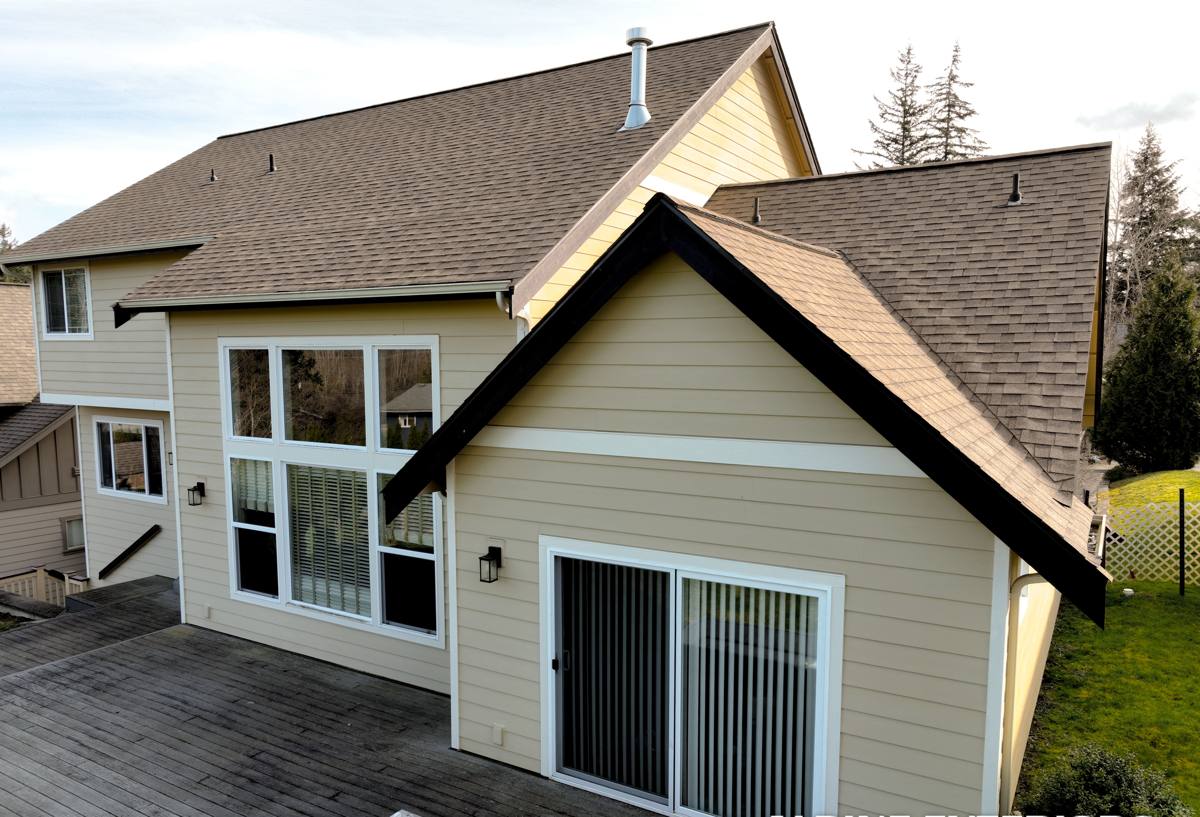
Why Fiber Cement Is the Right Material Here
Wood-based siding products — cedar, primed spruce, LP SmartSide — share a common weakness in this environment: they're organic material, and organic material is what moss, algae, and rot fungus feed on. In a climate with this much sustained moisture and shade, that's a losing fight over time, no matter how well the product is installed or maintained.
Fiber cement doesn't give moss and rot the same foothold. It's cement, sand, and cellulose fiber pressed and cured into a dense, stable board. It doesn't swell and shrink with humidity the way wood does, it doesn't feed fungal growth, and it holds up to direct salt spray far better than wood or vinyl over a 20-30 year horizon. That's why we standardized on James Hardie fiber cement and don't install vinyl, LP SmartSide, or cedar — not because those products can't be installed correctly, but because we don't think they're the right long-term answer for a climate like this one.
What Salt Air Actually Does to a Wall
Salt air isn't just a smell — airborne salt is corrosive to metal fasteners, flashing, and trim, and it accelerates the breakdown of paint film and caulk. On a home near the bay, that means fastener choice and flashing material matter more than they would fifteen miles inland. It also means paint film quality matters: a factory-applied finish that resists fading and chalking under UV and salt exposure will outlast a field-applied coat, which is one of the practical advantages of a factory-finished product over site-painted wood or fiber cement.
What a Correct Fiber Cement Job Involves
Fiber cement siding fails early almost exclusively because of installation mistakes, not because the material itself gave out. In a high-moisture area like California Creek, the margin for error is smaller than it would be in a drier climate. A correct install comes down to a handful of details that are easy to skip and expensive to fix later.
Clearance and Drainage
Siding needs a minimum gap above roof lines, decks, and grade — typically 6 inches above roofing and paved surfaces, more above soil — so water and splash-back don't wick into the bottom edge of the boards. On wooded, damp lots this gets ignored more than it should, because landscaping and grading often creep up over the years after the original siding went on.
Flashing and Water Management
Every window, door, and horizontal trim transition needs proper flashing and a drainage plane behind the siding — not caulk alone. Caulk is a maintenance item; flashing is the actual water management system. We install a weather-resistant barrier and rain screen detailing so that any water that does get past the surface has somewhere to go besides into the wall assembly.
Fastening
Corrosion-resistant fasteners, driven correctly (not overdriven, which crushes the board's fiber and creates a wick point) and into framing, not just sheathing. In a salt-air environment we're deliberate about fastener material — this is not a place to use whatever's cheapest.
Joints, Caulking, and Touch-Up Paint
Factory-cut and factory-primed edges hold paint far better than field-cut edges left untreated. Every cut end gets sealed before it goes up, and joints get the manufacturer-specified sealant, not a generic caulk that will fail in a few winters.
James Hardie Compared to the Alternatives
| Material | Moisture/Moss Resistance | Salt Air Durability | Finish | Typical Lifespan (installed to spec) |
|---|---|---|---|---|
| James Hardie fiber cement | High — non-organic, doesn't feed rot or moss growth | Strong, especially with ColorPlus factory finish | Factory-baked ColorPlus finish or field paint | 30+ years |
| Cedar / primed spruce | Low-moderate — organic material, needs consistent maintenance | Weathers faster; finish breaks down sooner | Field-applied stain or paint | 10-20 years with diligent upkeep |
| Vinyl | Doesn't rot, but traps moisture behind it if installed poorly | Can become brittle and fade faster in coastal UV/salt exposure | Color molded through, fades over time | 20-30 years, but dents/cracks and can't be repainted easily |
| LP SmartSide (engineered wood) | Moderate — treated, but still wood-based and moisture-sensitive at cut edges | Edge-sealing critical; failures often start at cuts and seams | Factory primed or finished | 20-30 years if maintenance is kept up |
Every product in that table can perform well if it's installed correctly and maintained. We chose to specialize in one — James Hardie — because we'd rather be excellent at installing the product we think holds up best in this climate than adequate at installing five.
Our Process for a California Creek Home
- Free on-site walkthrough — we look at moss/algae staining, existing siding condition, drainage around the foundation, tree cover and shade patterns, and any past water intrusion signs before we quote anything
- Written estimate that breaks out material, tear-off (if applicable), flashing and water barrier work, and labor — no vague lump sums
- Tear-off of old siding down to sheathing, with an inspection for hidden rot or water damage before anything new goes up
- Weather-resistant barrier and rain screen installation, sized for the specific exposure of each wall
- Flashing at every window, door, and horizontal transition before siding installation begins
- HardiePlank, HardieShingle, or HardiePanel installation per James Hardie's fastening and clearance specifications
- Final walkthrough with the homeowner, including a plain-English rundown of what maintenance (if any) the finish will need going forward
Signs an Older California Creek Home Needs Attention
We get called out to homes in this area for a fairly consistent set of issues, most of which trace back to the climate rather than bad luck:
- Dark green or black staining on north- and shade-facing walls that keeps returning after pressure washing — a sign moss and algae have gotten into the material itself, not just the surface
- Soft or spongy spots near the bottom edge of walls close to grade, decks, or downspouts — usually a drainage clearance problem
- Paint or stain that's peeling in sheets rather than fading evenly — often a sign moisture is trapped behind the finish
- Rust streaking from fasteners or trim — a red flag for non-corrosion-resistant hardware used in a salt-air zone
- Visible gaps or cracking caulk at window and door trim, which lets wind-driven rain track behind the siding
Living With Fiber Cement in This Climate
Even the right material benefits from a little seasonal attention here. A rinse-down once or twice a year knocks back moss and algae before it takes hold, especially on shaded walls. It's worth checking caulk lines at trim and penetrations every couple of years, since UV and salt exposure break down sealant faster near open water than they do further inland. Beyond that, a properly installed Hardie system with a factory ColorPlus finish is genuinely low-maintenance — that's the point of choosing it for a climate that's hard on everything else.
Why a Local Crew Matters for This Job
Fiber cement installation standards don't change block to block, but judgment calls do — how much clearance to add above a low spot in the yard, which walls need extra rain screen detailing because of shade and prevailing wind, where fastener corrosion resistance actually matters versus where it's overkill. A crew that's worked other homes in the Birch Bay and California Creek area has already made those calls on similar lots, in the same weather, with the same moss and salt exposure. That's not something you can fully substitute with a general specification sheet, even a good one.
If you're weighing a siding project on a California Creek home — whether it's a full replacement, a repair to storm or moisture damage, or you're just trying to figure out what's causing recurring moss staining — we're happy to take a look and give you a straight answer, even if that answer is "you don't need full replacement yet." Reach out for a free, no-pressure estimate using the form below.