 Birch Bay
 Cottonwood Beach Sits Right at the Edge of Whatcom County's Toughest Siding Climate
Homes along Cottonwood Beach face a combination of stresses that most inland Whatcom County houses never deal with. Salt-laden air drifts off the water almost daily, driving rain comes in sideways during winter storms, and the shaded, moisture-heavy microclimate near the shoreline keeps moss and algae active for a large part of the year. Add in the temperature swings between summer sun exposure and damp winter conditions, and you have an environment that ages ordinary siding materials faster than almost anywhere else in Birch Bay.
This isn't a page about siding in general. It's about one product, James Hardie fiber cement, installed correctly on one type of home: the waterfront and near-waterfront properties around Cottonwood Beach that take the brunt of Birch Bay's marine weather every single day.
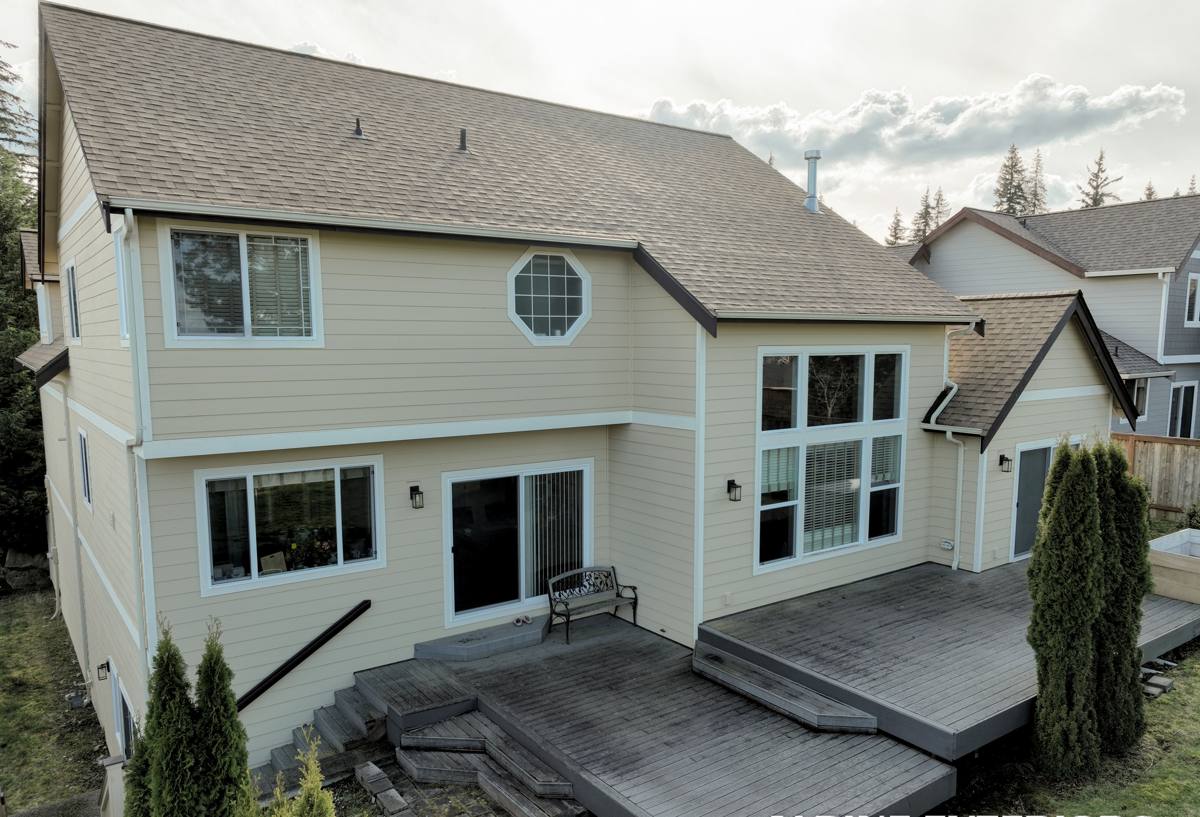
Why Salt Air and Moisture Change the Siding Equation
Salt Air Accelerates Everything
Airborne salt is corrosive to metal fasteners and trim, and it settles into porous or poorly sealed siding surfaces over time. On a house set back from the water, this happens slowly. On a Cottonwood Beach lot with a direct sightline to the bay, it happens continuously, day after day, year-round.
Driving Rain Finds Every Gap
Wind-driven rain off the water doesn't just fall on a wall, it pushes into it. Any siding product with weak seams, poor flashing, or joints that were caulked instead of properly lapped and drained will eventually let moisture behind the cladding. Once water gets behind siding on a home this close to the shoreline, it has ideal conditions to cause real damage before anyone notices.
Moss and Algae Have a Long Growing Season
Shaded, damp, north-facing walls near the water can stay wet for days after a storm. That's exactly the environment moss and algae need to establish. Materials that absorb moisture or have a rough, porous surface give these organisms something to grab onto; smooth, factory-sealed surfaces make it much harder for growth to take hold.
Why This Is a One-Product Answer for Us
We install James Hardie fiber cement siding exclusively. We don't offer vinyl, LP SmartSide, Cemplank, Allura, primed spruce, or cedar as alternatives, and on a property like the ones along Cottonwood Beach, that's not a marketing position, it's a practical one. Each of those alternatives has a real weakness that matters more here than it would on a sheltered inland lot: vinyl can warp and doesn't hold paint if a color change is ever wanted, engineered wood products are vulnerable to sustained moisture exposure at cut edges and seams, and untreated wood species need aggressive, ongoing maintenance to survive salt air without rot or insect damage.
James Hardie fiber cement is non-combustible, dimensionally stable in swings of humidity, and finished at the factory with ColorPlus coating, a baked-on finish that resists fading and doesn't rely on job-site paint adhesion the way wood trim does. That combination is why it's the only product we put on homes in this neighborhood.
Choosing the Right Hardie Product Line for a Waterfront Lot
James Hardie makes climate-engineered product lines (HZ5 and HZ10) specifically because siding performance requirements differ by region. For Cottonwood Beach, that means selecting the line and profile suited to a wet, coastal-influenced Pacific Northwest environment rather than defaulting to whatever is standard elsewhere in the country.
| Product Choice | Where It Fits Best on This Lot | Why It Matters Here |
|---|---|---|
| HardiePlank lap siding | Most elevations, standard walls | Traditional look, strong track record in wet climates, wide color range |
| HardiePanel vertical siding | Accent walls, gable ends, modern designs | Fewer horizontal seams for water to catch on exposed elevations |
| HardieTrim boards | Corners, window and door trim | Matches the fiber cement's moisture stability, avoids mismatched wood trim rot |
| ColorPlus finish | All visible siding and trim | Factory-cured finish holds up to UV and salt exposure better than field-applied paint |
The right choice depends on the home's exposure, its existing architecture, and which walls take the most direct weather. We walk each property and make that call based on what the house actually faces, not a one-size answer.
What a Correct Installation Actually Involves Here
Fiber cement siding performs exactly as well as the installation behind it, and that's especially true in a marine environment where mistakes get tested by weather almost immediately. A few details matter more on a Cottonwood Beach home than they would further inland:
- Weather-resistive barrier and flashing first. Every penetration, window, and door needs proper flashing and a correctly lapped water-resistive barrier underneath the siding, so any moisture that does get past the surface has a way to drain back out.
- Correct fastener type and placement. Fasteners need to be corrosion-resistant and driven per Hardie's specifications, not overdriven or underdriven, since improperly set fasteners are a common source of cracking and premature wear near salt air.
- Manufacturer-specified gaps and clearances. Hardie requires specific clearances from grade, roof lines, and adjoining trim so water can shed and the material isn't sitting in standing moisture.
- Caulking used correctly, not as a substitute for flashing. Caulk seals; it doesn't waterproof a joint that should have been flashed. Relying on sealant alone at butt joints and trim is one of the most common shortcuts that fails first in wind-driven rain.
- Painted or factory-finished cut edges. Any field cut on ColorPlus siding needs the cut edge sealed to maintain the moisture protection the factory finish is designed to provide.
None of this is unique to Hardie installation in theory, but skipping any one of these steps shows up faster on a home exposed to daily salt air and driving rain than it would on a sheltered lot across town.
Our Process for Cottonwood Beach Projects
- On-site assessment. We look at which elevations take direct weather off the water, existing moisture or moss patterns, current trim and flashing condition, and any signs of past water intrusion before recommending a scope.
- Product and profile selection. Based on that assessment, we specify the Hardie line, plank or panel profile, and color that fit the home's exposure and design.
- Tear-off and substrate check. We remove the existing siding and inspect the sheathing underneath for hidden rot or moisture damage before anything new goes up, since covering a compromised substrate defeats the purpose of new siding.
- Weather barrier and flashing installation. This is the layer that actually keeps water out long-term, and it goes in before a single piece of Hardie touches the wall.
- Siding installation to manufacturer spec. Correct fastening, clearances, and joint treatment, following Hardie's published installation requirements for this climate zone.
- Final inspection and walkthrough. We check seams, trim, and caulking details with the homeowner before calling the job finished.
Maintenance Expectations in a Salt Air, Moss-Prone Setting
Correctly installed James Hardie siding is low-maintenance, but "low" doesn't mean "none," especially this close to the water. Homeowners in Cottonwood Beach should expect a slightly different upkeep rhythm than someone siding a house on the other side of Birch Bay.
| Task | Typical Frequency Here | Why It Matters on This Lot |
|---|---|---|
| Rinse salt residue with fresh water | A few times a year, more on direct-exposure walls | Reduces buildup on trim and around fasteners |
| Inspect caulking at joints and trim | Annually | Sealant degrades faster under UV and salt exposure than in sheltered areas |
| Check for moss on shaded elevations | Twice a year, spring and fall | Shaded, damp walls near the water stay wet longer, giving moss more time to establish |
| Look at gutters and drainage paths | Before and after winter storm season | Driving rain overwhelms clogged gutters fastest on exposed shoreline elevations |
Why It Matters to Hire a Crew That Already Works This Neighborhood
Cottonwood Beach isn't a generic Whatcom County lot, and treating it like one is how installations end up under-built for the conditions. A crew that already works this stretch of shoreline knows which elevations typically take the worst of the wind-driven rain, how shaded, moisture-heavy walls behave differently than sun-exposed ones a few hundred feet away, and how existing trim and flashing tend to hold up over time in this specific setting. That familiarity shows up in the small decisions, where extra flashing goes, which joints get more attention, which product line makes sense for a given elevation, that separate a siding job that looks fine on installation day from one that's still performing correctly in ten years.
What to Look for When Evaluating a Siding Contractor Here
- James Hardie factory-trained or certified installers, not a crew treating fiber cement like any other lap siding.
- A written scope that specifies product line, profile, and fastening approach, not just "Hardie siding" as a line item.
- Willingness to explain flashing and weather-barrier details before the first piece of siding goes up.
- Local project history in coastal or waterfront-adjacent conditions, not just inland installs.
- A clear answer on how cut edges and field modifications will be sealed and finished.
- A realistic maintenance conversation, not a "zero maintenance" promise that doesn't match how salt air actually behaves.
Ready to Talk About Your Home
If you own a home along Cottonwood Beach and you're weighing a siding replacement, we're glad to come take a look, walk the exposed elevations with you, and talk through what a correctly built James Hardie installation would involve on your specific house. There's no pressure and no obligation, just a straightforward assessment from a crew that installs one product and knows this shoreline. Fill out the form below to schedule a free estimate.