 Birch Bay
 Why Sandy Point Siding Takes More Punishment Than Most
Sandy Point sits right at the water, and that location cuts both ways. The same exposure that makes it a great place to live also means the siding on these homes deals with a harder combination of conditions than a house a mile or two inland. Salt-laden air off the water works on fasteners, trim, and paint film year-round. Wind-driven rain doesn't just fall on these homes — it gets pushed sideways into seams, laps, and corner boards during winter storms. And the tree cover and persistent damp that define this stretch of Whatcom County keep north- and shade-facing walls wet and mossy for months at a time.
None of that is unique to any one house in the neighborhood — it's the baseline. Siding that's rated for a dry inland climate, or installed the way it would be installed forty miles from salt water, tends to show problems here years before it should: swollen edges, cracked caulk joints, streaking, moss creeping up from the bottom courses, and fasteners bleeding rust through the paint. A siding job in Sandy Point has to be planned around these facts from the start, not patched around them later.
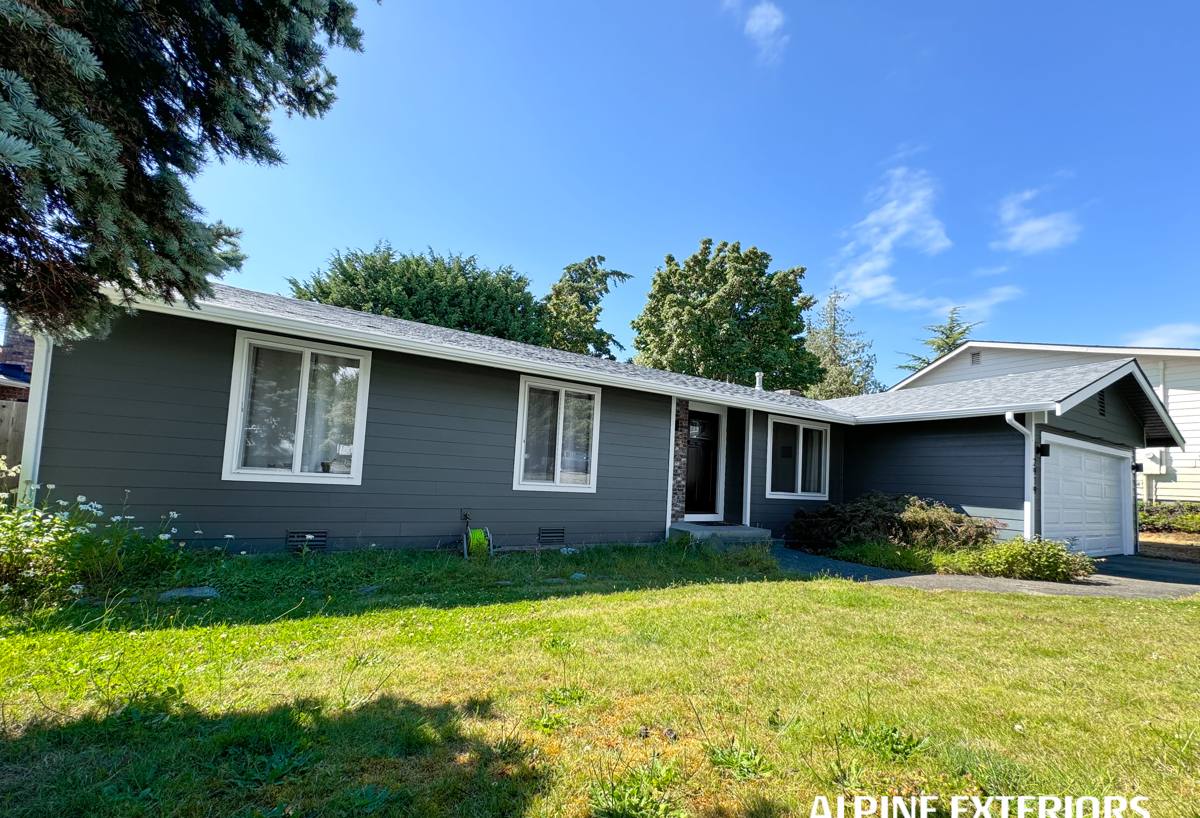
What James Hardie Brings to a Waterfront Climate
We install James Hardie fiber cement exclusively, and in a location like Sandy Point that's not a marketing preference — it's a practical one. Hardie siding is cement, sand, and cellulose fiber, not wood or a wood byproduct. It doesn't absorb bulk water the way engineered wood siding can, it won't rot, and it's not a food source for the moss and mildew that thrive in this kind of damp, shaded environment. It's also non-combustible, which matters anywhere but carries extra weight for homes near dry brush or wildfire smoke exposure during the summer.
HZ5 Engineering for This Region
Hardie manufactures its siding in climate-specific formulations, and the HZ5 line is engineered for the wetter, harsher weather patterns found in the Pacific Northwest. It's built to hold up against repeated wet-dry cycling and the freeze-thaw swings that happen along the Whatcom County coastline — exactly the stress pattern Sandy Point sees every winter.
ColorPlus Factory Finish
Most of the siding we install uses Hardie's ColorPlus finish — a baked-on, factory-applied color coat rather than field-applied paint. In a salt-air environment, this matters more than it does elsewhere: factory finishes cure under controlled conditions and bond more consistently than paint applied on-site in variable humidity. That translates to better fade and chip resistance and touch-up product that's color-matched, rather than a homeowner guessing at a paint store years later.
What a Correct Install Looks Like Here — Not Just Anywhere
Fiber cement siding is only as good as the installation underneath it, and that's especially true this close to the water. The material itself resists moisture, but the assembly behind it — the water-resistive barrier, flashing, fastening, and joints — is what actually keeps a home dry over twenty or thirty years. Cutting corners on any one of these shows up faster in Sandy Point than it would in a drier part of the state.
Drainage Plane and Rainscreen Detailing
We install a proper weather-resistive barrier and, on most Sandy Point homes, a rainscreen gap behind the siding. That gap lets any water that gets past the cladding drain and dry out instead of sitting against the wall sheathing — critical when wind-driven rain is a regular event rather than an occasional storm.
Flashing at Every Transition
Windows, doors, deck ledgers, and roof-to-wall intersections are where water finds its way in. Every one of these transitions gets flashed correctly, with materials and laps that shed water down and out rather than trapping it. This is the part of a siding job that's invisible once it's finished — and the part that determines whether the house stays dry.
Fasteners and Hardware
In a salt-air environment, fastener choice matters. We use corrosion-resistant fasteners appropriate to Hardie's installation specs, set at the correct depth and spacing — not gun-fired at whatever depth is fastest. Overdriven or underdriven fasteners are one of the most common causes of premature siding failure, and they're avoidable with the right crew and the right pace.
Joints, Caulking, and Clearances
Butt joints get treated correctly rather than just caulked and painted over, siding is held off grade, decks, and roofing at the clearances Hardie specifies, and caulk is used only where it's supposed to be used — as a detail, not as a substitute for correct flashing.
Our Process for a Sandy Point Project
We keep the process straightforward, and every step accounts for the site conditions specific to this location.
1. On-Site Assessment
We walk the home and look specifically at the sides facing prevailing wind and water, shaded areas prone to moss, and any spots where the existing siding shows staining, swelling, or fastener corrosion. This tells us where problems are already starting and where the assembly needs extra attention.
2. Tear-Off and Sheathing Check
Old siding comes off and we inspect the sheathing underneath before anything new goes up. If there's hidden moisture damage from a prior installation, it gets addressed before the new barrier and siding go on — covering up a wet wall with new siding just delays a bigger problem.
3. Weather Barrier and Rainscreen Install
The drainage plane goes on correctly, seams lapped and taped, before any siding is hung.
4. Hardie Installation to Spec
Siding, trim, and flashing go on following James Hardie's published installation guidelines, not a shortcut version of them. This is also where the fastening and joint details above get executed.
5. Final Walkthrough
We go over the finished job with the homeowner, check caulk lines and paint touch-up, and make sure everything is clean before we consider the job done.
What Drives Cost on a Sandy Point Siding Job
Every home is different, but the factors below are the ones that most commonly move a project's scope and price on this stretch of coastline.
| Cost Factor | Why It Matters in Sandy Point |
|---|---|
| Sheathing condition | Waterfront homes with older or previously-damaged siding sometimes need sheathing repair before new siding can go on correctly |
| Home exposure | Walls facing prevailing wind and water often need more flashing and trim detail than sheltered elevations |
| Existing moss or moisture damage | Shaded, damp walls may need remediation and extra drying time before install begins |
| Siding profile and finish | Lap width, texture, and ColorPlus color selection all affect material cost |
| Trim and detail work | Corner boards, window trim, and fascia detailing add labor but are where a lot of long-term performance is decided |
| Access and site conditions | Waterfront lots can have tighter access or landscaping considerations that affect staging and timeline |
We walk every home in person before giving a number — general ranges without seeing the actual condition of the walls aren't useful to anyone.
Living With Hardie Siding in a Moss-Prone, Salty Climate
Hardie siding is low-maintenance compared to wood or engineered wood alternatives, but "low-maintenance" doesn't mean "no maintenance" — especially this close to the water and under this much tree cover. A short annual routine keeps a correctly installed job performing the way it should for decades.
- Rinse siding annually with a garden hose to clear salt residue and organic buildup, especially on shaded elevations
- Keep gutters clear so overflow isn't running down the face of the siding
- Trim back vegetation and tree limbs that keep any wall in constant shade and moisture
- Check caulk joints at trim and penetrations once a year and have any cracked or missing caulk redone promptly
- Watch for moss starting at the bottom courses or in shaded corners and address it early rather than letting it establish
- Avoid pressure washing directly into laps and joints — a soft wash is safer for the finish and the seals behind it
Why It Matters That We Already Work This Neighborhood
A crew that's worked other homes in Sandy Point and along Birch Bay isn't guessing at how this environment behaves — they've already seen which elevations take the worst weather, how fast moss establishes on shaded walls here, and what happens to a siding job that skips flashing details or uses the wrong fasteners near the water. That experience shows up in the decisions made before the first piece of siding goes up, not just in the finished look.
It also means we're not learning Hardie's installation requirements on someone's house — we install this product exclusively, on homes with exactly this kind of exposure, and that repetition is what keeps a warranty-eligible install actually warranty-eligible years down the road.
Why We Don't Install Anything Else Here
We get asked from time to time about vinyl or engineered wood alternatives, usually because they cost less upfront. In a climate like this one, that upfront savings tends to get eaten up by shorter service life, more maintenance, or moisture-related repairs down the road — vinyl can warp and fade under UV and temperature swings, and wood-based products are more vulnerable to the sustained moisture and moss this location produces. We standardized on James Hardie because it's engineered for exactly these conditions, backed by a strong transferable warranty, and because we can install it to spec every time rather than juggling different products with different failure points.
If you're weighing siding options for a Sandy Point home, we're glad to walk the property, look at what's actually going on with your current siding, and give you an honest read on what it would take to do the job right. There's no pressure and no charge for the visit — just fill out the form below to get started.