 Birch Bay
 Sandy Point sits right up against the water, and that changes what a roof has to survive. Homes here take a steady diet of salt-laden air, wind-driven rain off the Strait, and a moss season that runs longer than it does even a few miles inland in Birch Bay proper. A metal roof can handle all of that better than most other materials — but only if it's the right system, installed the right way, by a crew that understands what this specific stretch of Whatcom County coastline does to a house over time.
This page covers what metal roofing means for a home in Sandy Point specifically: the conditions your roof is actually up against, what a correct installation looks like, how we approach the job, and why local experience matters as much as the material itself.
Why Sandy Point Is a Different Roofing Environment
Sandy Point's exposure to the water is its main selling point as a place to live, and its biggest challenge as a place to keep a roof intact. A few things stack up here that don't hit the same way a few miles inland:
- Salt air corrosion. Airborne salt accelerates corrosion on fasteners, flashing, and any metal component that isn't rated and finished for a marine-adjacent environment.
- Wind-driven rain. Storms coming off the water don't just fall straight down — they drive rain sideways and up under laps, ridges, and penetrations that would stay dry in a calmer setting.
- Extended moss and moisture season. Shade, humidity, and the region's long wet stretch give moss and algae more time to establish than in drier parts of the county, and moss holds moisture against a roof surface far longer than open air ever would.
- Wind loading. Waterfront lots are more exposed to sustained wind, which puts more stress on panel fastening and edge details than a sheltered inland roof ever sees.
None of this means metal roofing is a bad fit for Sandy Point — it's the opposite. Properly specified and installed, metal handles salt air, wind, and moisture better than most roofing materials available. The catch is that "properly specified and installed" is doing a lot of work in that sentence, and it's where a lot of roofs — metal or otherwise — fall short.
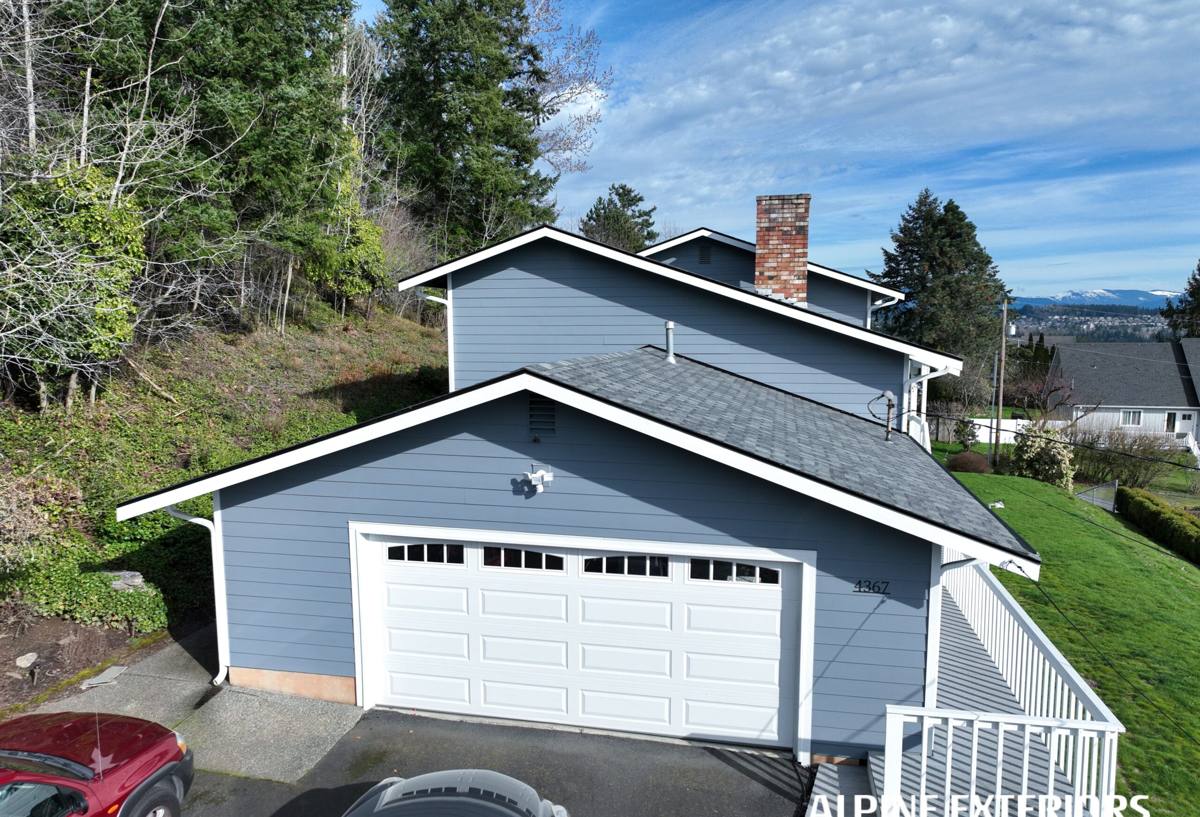
What a Metal Roof Needs to Do in This Climate
Corrosion Resistance Starts With the Fasteners
The panels themselves usually aren't the weak point on a coastal metal roof — the fasteners are. A roof can have a good-quality steel or aluminum panel system and still fail early because it was hung with standard fasteners that weren't rated for a salt-air environment. We spec corrosion-resistant fasteners and flashing components matched to the panel material, so the whole system ages at roughly the same rate instead of the hardware failing years before the panels do.
Sealed, Not Just Covered
Wind-driven rain finds gaps that gravity-fed rain never would. Every penetration — vents, flashing transitions, ridge caps — has to be sealed and mechanically detailed to shed water even when it's coming in sideways, not just laid over the top and caulked. This is a detail-work problem more than a material problem, and it's where a lot of roof leaks trace back to on any home near open water.
A Surface Moss Can't Get a Foothold On
Metal roofing already has an advantage over shake or asphalt shingle when it comes to moss — there's no organic surface for spores to root into the way there is with wood or granule-surfaced shingles. That said, moss and algae can still build up in valleys, behind vent stacks, and anywhere debris collects and holds moisture, even on metal. Panel profile and how debris is allowed to shed off the roof both affect how much of a moss problem you'll actually deal with over the life of the roof.
Choosing the Right Metal System for a Waterfront Lot
Not every metal roofing product is built the same way, and the differences matter more here than they would on a sheltered inland roof. We steer Sandy Point homeowners toward standing-seam systems with concealed fasteners over exposed-fastener panel systems in most cases — the trade-offs are worth understanding before you decide.
| Factor | Standing Seam (Concealed Fastener) | Exposed-Fastener Panel |
|---|---|---|
| Fastener exposure | Fasteners are hidden under the seam, out of direct weather | Fasteners penetrate the panel face, exposed to rain and salt air |
| Long-term maintenance | Lower — no exposed fastener seals to inspect or replace | Higher — exposed fastener washers age and can need resealing over time |
| Upfront cost | Higher material and labor cost | Lower upfront cost |
| Wind-driven rain performance | Strong — seams are the primary water barrier, not a sealant | Adequate if installed and maintained correctly, more sealant-dependent |
| Typical fit | Waterfront and higher-exposure lots | More sheltered inland locations, budget-driven projects |
We'll still install an exposed-fastener system when that's the right call for a homeowner's budget and the specific exposure of their lot — it's a legitimate product, not a corner-cut. But on a waterfront property in Sandy Point, we walk clients through the maintenance trade-off honestly before they decide, because the fastener seals on that system are exactly the kind of detail that wind-driven rain and salt air will test hardest over the years.
What a Correct Installation Actually Involves
The panel material gets most of the attention, but the install details are what determine whether a metal roof performs for its full service life on a lot like this one. A correct job includes:
- Deck inspection and prep. Metal only performs as well as what it's fastened to — any soft, rotted, or under-ventilated decking gets addressed before panels go on, not covered up.
- Underlayment matched to exposure. A high-quality synthetic or self-adhered underlayment gives the roof a secondary water barrier, which matters more on a wind-driven-rain coastline than it does inland.
- Correct panel layout and overlap. Panel direction and overlap have to account for prevailing wind and rain direction off the water, not just follow a standard inland layout.
- Flashing at every transition. Valleys, chimneys, skylights, and wall intersections are where most roof leaks actually start — these get custom-fit flashing, not generic trim.
- Fastener spacing for wind load. Waterfront exposure calls for tighter fastener spacing and stronger edge fastening than a sheltered inland install.
- Ventilation. Proper intake and exhaust ventilation keeps moisture from building up under the panels, which matters in a climate this wet for this much of the year.
How Our Process Works
1. On-Site Assessment
We walk the roof and the attic or crawlspace, check the deck condition, look at existing ventilation, and note the specific exposure of the lot — how open it is to wind off the water, where shade and moisture tend to sit, and what the current roof (if there is one) tells us about how the house has weathered so far.
2. Honest Recommendation
We'll tell you which panel system fits your budget and your lot's actual exposure, including where a lower-cost option is genuinely fine and where it isn't. If a standing-seam system isn't necessary for your specific location, we won't push it just because it's the higher-margin option.
3. Written Estimate
You get a clear breakdown of materials, labor, and scope before any work starts — no vague allowances that turn into change orders once the job is underway.
4. Installation
Deck prep, underlayment, panels, and flashing are installed in that order, with each step checked before moving to the next. We don't cover a deck issue with underlayment and hope it doesn't come up again in five years.
5. Final Walkthrough
Before we consider the job done, we walk the roof and the site with you, cleanup included, and answer any questions about maintenance going forward.
Maintenance for a Salt-Air, High-Moss Environment
A metal roof is low-maintenance compared to most alternatives, but "low-maintenance" isn't "no-maintenance" on a lot exposed to the Strait. A short annual checklist keeps a well-installed roof performing for the long run:
- Clear debris from valleys and around penetrations before it holds moisture through the wet months
- Check gutters and downspouts, since coastal storm volume can overwhelm undersized or clogged drainage fast
- Look for early moss or algae growth in shaded valleys and address it before it spreads
- Have flashing and sealant points inspected every few years, especially around chimneys and vent penetrations
- Rinse accumulated salt residue off the roof surface periodically if the home is in a particularly exposed spot
We're happy to walk you through this at the end of a job, and available if something comes up down the line.
Why Hire a Crew That Already Works in Sandy Point
Metal roofing isn't a complicated product on paper, but installing it correctly on a waterfront lot is a different job than installing it on a sheltered inland roof, and it shows up in the details — fastener choice, flashing design, panel layout relative to wind direction. A crew that mostly works inland Whatcom County jobs isn't necessarily thinking about salt-air corrosion or wind-driven rain the way a crew that works this shoreline regularly is. That's not a knock on general roofing skill — it's just a different set of conditions that takes local, repeated exposure to get right by habit rather than by guesswork.
We work throughout Birch Bay and the surrounding Whatcom County coastline, including Sandy Point, and we build our specs and our process around what actually holds up out here, not around a generic inland installation standard.
Get a Free Estimate
If you're planning a metal roof for a home in Sandy Point — new construction, a replacement, or you're just weighing your options — we're glad to come take a look and give you a straight answer on what your roof needs and what it will cost. No pressure, no hard sell, just an honest assessment. Use the form below to request a free estimate.