 Birch Bay
 Roofing in an Exclave: Why Point Roberts Needs a Different Approach
Point Roberts sits on its own peninsula, cut off from the rest of Whatcom County by the Canadian border. That geography does more than make it a quirky place to live — it shapes what a roof has to survive and who is realistically available to work on it. Homes here take on marine air blowing straight off Boundary Bay, long stretches of driving rain in the fall and winter, and a moss season that can run most of the year in shaded spots. A roof built or repaired without that in mind tends to fail early, often in ways that aren't obvious until there's water damage inside.
New roof installation in Point Roberts isn't just "the same job as Birch Bay, but with a border crossing." The materials, the fastening details, and the maintenance plan all need to account for a coastal microclimate that's a notch harsher than most of Whatcom County's mainland.
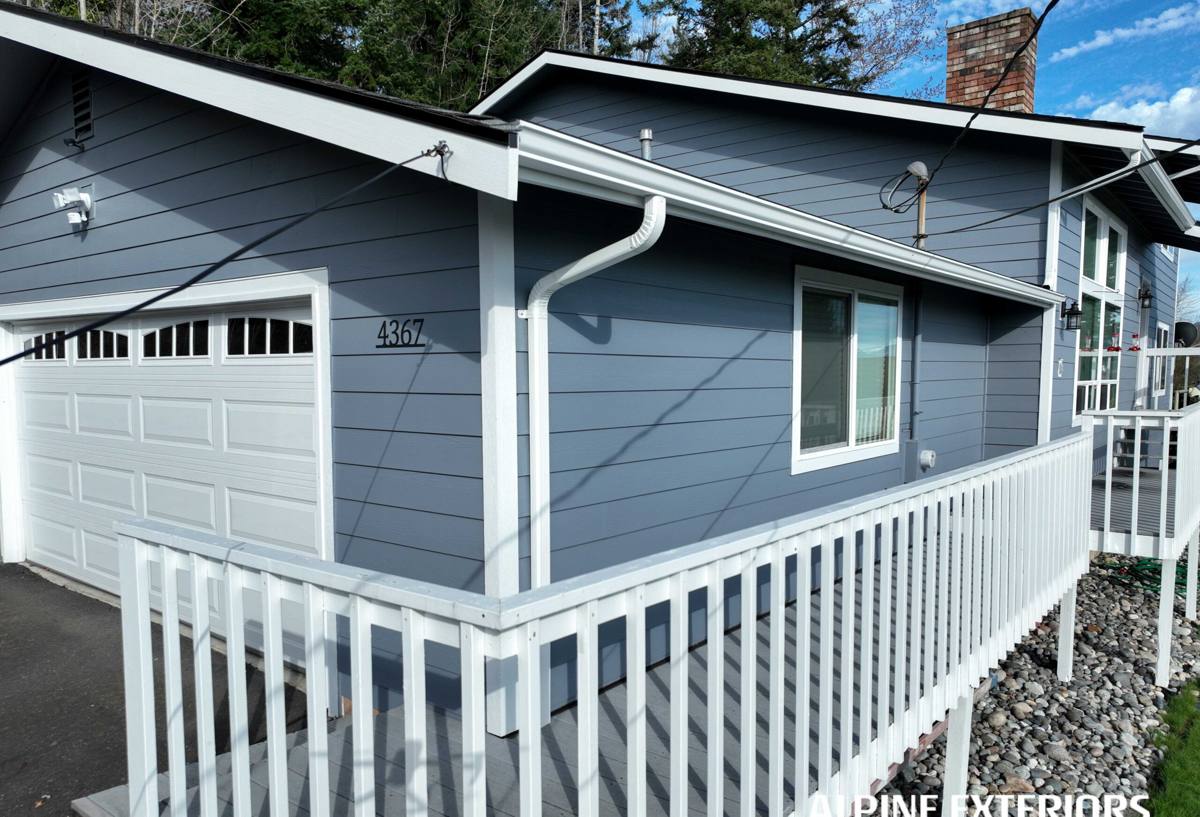
What Salt Air, Rain, and Moss Actually Do to a Roof
Salt Air
Airborne salt from Georgia Strait and Boundary Bay accelerates corrosion on anything metal — fasteners, flashing, drip edge, vent caps, and gutter hardware. Standard electro-galvanized nails and screws can start rusting years before they should. Once a fastener corrodes, it loses grip, and that's how shingles start lifting in wind long before the roofing material itself is worn out.
Driving Rain
Point Roberts gets rain that doesn't fall straight down — wind off the water pushes it sideways, driving water up under shingle edges, around chimneys, and into any gap in the flashing. A roof detail that would be fine in a calmer inland location can leak here simply because the water pressure and angle are different.
Moss
Shade from mature trees, cool damp air, and long wet stretches make this one of the better environments for moss growth anywhere in the county. Moss isn't just cosmetic — it holds moisture against the roofing material, works its way under shingle tabs and lifts them, and adds weight. Left alone for a few seasons, moss growth is one of the most common reasons we see otherwise sound-looking roofs with rot underneath at tear-off.
Signs a Point Roberts Home May Need a New Roof
- Granules collecting in gutters or at downspout outlets — a sign asphalt shingles are wearing thin
- Shingles that are cupping, curling at the edges, or visibly lifting in wind
- Dark streaking or thick moss mats, especially on north-facing slopes
- Rusted nail heads, streaked staining below metal flashing, or corroded gutter hangers
- Daylight visible through the roof deck from inside the attic
- Soft spots underfoot during an inspection walk, which usually mean deck rot
- A roof at or past 20-25 years old (asphalt) with no major work done
Any one of these can often be handled with a repair. Several at once, especially deck damage or repeated leak points, usually mean a full replacement is the more honest recommendation.
Why the Border Matters for Getting a Roof Done
Point Roberts residents already know the logistics: getting materials, equipment, and a crew onto the peninsula means crossing into Canada and back, or arranging delivery through a limited number of routes. That's not a small detail for a roofing project. Some contractors simply won't take Point Roberts jobs because of the extra time and border coordination involved, which shrinks the pool of people willing to bid the work and can leave homeowners waiting longer or paying a premium for the inconvenience.
A crew that already routinely works Point Roberts has that logistics problem solved — material orders timed to avoid delays, a plan for equipment and dumpster/debris hauling, and no surprise "we can't get a crew out there" excuses mid-project. That matters as much as the roofing knowledge itself.
What a Correct New Roof Installation Includes
A roof is a system, not just a layer of shingles. Skipping any of the following is where premature failures usually start, especially in a climate this wet and salty.
Tear-Off and Deck Inspection
We remove the old roofing down to the deck rather than layering over it, because you can't evaluate or fix rot, soft spots, or old damage you can't see. Any damaged decking gets replaced before anything new goes down.
Underlayment
A synthetic underlayment provides the water barrier beneath the shingles. In a driving-rain environment, ice-and-water shield style membrane at eaves, valleys, and around penetrations gives extra protection where wind-driven water is most likely to find a way in.
Flashing
New flashing at chimneys, skylights, sidewalls, and valleys — not a reuse of old, corroded pieces. This is one of the most common corner-cutting spots in cheap re-roofs, and it's also the most common source of leaks afterward.
Ventilation
Balanced intake and exhaust ventilation keeps moisture from building up in the attic, which reduces the conditions that let moss, mold, and deck rot take hold from underneath.
Fasteners and Hardware
Corrosion-resistant fasteners matter more here than in a drier, inland part of the county. We don't cut corners on nails and screws to save a small amount on material cost, since that's the piece most exposed to salt air over time.
Roofing Material Options for a Coastal Climate
| Material | How It Handles This Climate | Maintenance Consideration |
|---|---|---|
| Architectural asphalt shingle | Good balance of cost and durability; algae-resistant granule options help slow moss/algae staining | Periodic moss treatment and gutter clearing recommended |
| Standing seam metal | Sheds driving rain well and handles wind uplift strongly when properly installed | Needs corrosion-resistant fasteners and coatings near salt air; installation quality is critical |
| Cedar shake | Traditional Pacific Northwest look | Higher moisture and moss maintenance burden in a shaded, damp coastal setting; shorter realistic lifespan here without diligent upkeep |
| Synthetic composite shingle | Resists moisture absorption and moss better than wood | Product quality varies significantly by manufacturer; installation sensitivity is higher |
We don't push cedar shake as a default recommendation on Point Roberts homes with heavy shade or tree cover — not because it's a bad product everywhere, but because the moisture and moss maintenance burden in this specific setting is honestly higher than most homeowners want to keep up with. Asphalt and metal are where most of our Point Roberts installs land, chosen based on the home's exposure, roofline, and budget.
Our Installation Process
- On-site inspection and estimate — we walk the roof, check the attic, and assess deck condition before quoting anything
- Material selection — options laid out honestly, including trade-offs for this specific site's sun/shade and wind exposure
- Scheduling and logistics — material delivery and crew timing planned around Point Roberts access, so there's no mid-project scramble
- Tear-off and deck repair — old roofing removed, deck inspected and repaired as needed
- Underlayment, flashing, and ventilation installed — the system components that actually stop leaks
- New roofing installed to manufacturer specification, not shortcuts
- Final walkthrough — gutters, flashing, and cleanup checked with the homeowner before we consider the job done
What Drives the Cost of a New Roof Here
| Factor | Why It Matters in Point Roberts |
|---|---|
| Roof size and complexity | More valleys, dormers, and penetrations mean more flashing work and labor |
| Deck condition | Rot from long-term moss or leaks adds replacement decking to the job, usually discovered at tear-off |
| Material choice | Asphalt, metal, and composite options span a wide cost range and differ in coastal durability |
| Access and logistics | Point Roberts' border-crossing logistics for material delivery and disposal factor into scheduling and cost |
| Ventilation and flashing upgrades | Bringing older ventilation or flashing up to current standards adds some cost but reduces future leak risk |
We give straightforward, written estimates broken out by these factors rather than a single vague number, so you know what you're actually paying for.
Keeping a New Roof Performing Long-Term
- Clean gutters and downspouts at least twice a year, more often under fir or cedar trees
- Have moss treated before it forms thick mats, not after shingles are already lifting
- Trim back overhanging branches to cut down shade and debris buildup
- Check attic ventilation isn't blocked by insulation or storage
- Have flashing and fastener condition checked every few years, since salt air corrosion is gradual and easy to miss
- Address small leaks immediately — in this climate, small leaks don't stay small
Why Local Experience on Point Roberts Specifically Matters
Whatcom County has a wide range of microclimates, and Point Roberts' combination of salt exposure, wind-driven rain, and moss pressure is on the harsher end of it. A crew that mainly works drier, more sheltered inland areas may not default to the flashing and fastener choices this location actually needs. A crew that already handles the border logistics, understands the local permitting through Whatcom County, and has seen how roofs age specifically on this peninsula is going to make fewer assumptions and fewer mistakes.
If you're weighing a repair against a full replacement, or just want a straight answer on what your roof actually needs, we're happy to take a look. Reach out for a free, no-pressure estimate using the form below.