 Birch Bay
 Roofing Built for the Nooksack Area's Climate
Homes in the Nooksack area of Whatcom County deal with a roofing climate that's tougher than it looks from the ground. Winters bring long stretches of driving rain that finds every weak seam and undersized flashing detail. The proximity to the Salish Sea means salt-laden air works its way inland on prevailing winds, accelerating corrosion on metal fasteners, flashing, and vents. And the shade, humidity, and mild temperatures that make this part of Washington beautiful also make it one of the best moss-growing environments on the West Coast. A roof here isn't just shedding water for a few stormy months — it's under load nearly year-round.
That combination is why "good enough" roofing decisions tend to show their weaknesses fast in this area. A shingle rated for a drier climate, a flashing detail that's technically code-minimum, or a ventilation setup that was never balanced properly will all age faster here than they would somewhere with less rain and less moss pressure. Roof replacement done right in Nooksack means designing the whole system — materials, ventilation, flashing, and underlayment — around those specific stresses, not just laying down new shingles over the same old problems.
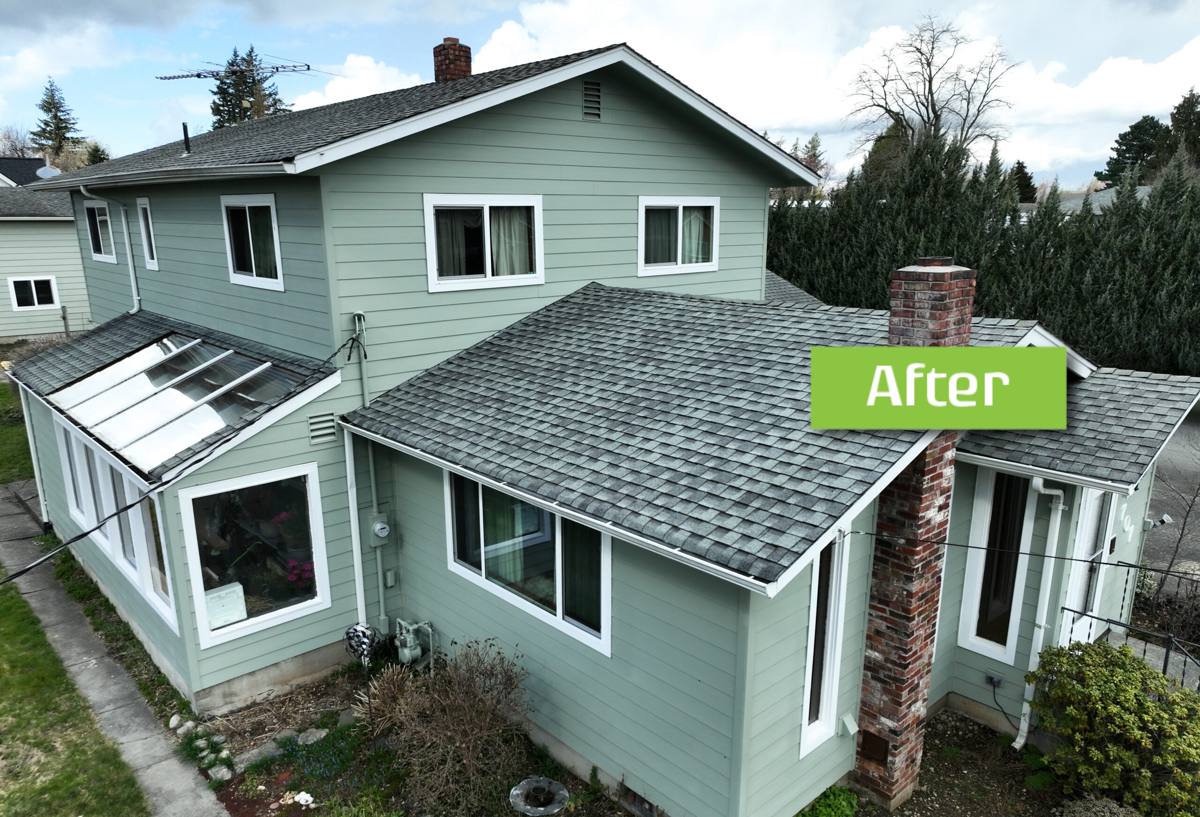
Signs a Nooksack Roof Needs Replacement, Not Another Repair
Not every aging roof needs a full tear-off. But there's a point where patching becomes throwing money at a system that's already failed. Homeowners in this area should start planning for replacement, rather than another round of repairs, when they see:
- Granule loss heavy enough that shingles look patchy or bald in sun-facing and moss-prone areas
- Curling, cupping, or cracked shingles across multiple slopes, not just one isolated section
- Persistent moss or algae staining that keeps returning within a season or two of cleaning
- Soft spots, sagging, or visible deflection when walked or viewed from a ladder
- Daylight visible through the roof deck from inside the attic
- Interior water stains, especially near chimneys, skylights, or valleys after heavy rain events
- A roof approaching or past 20-25 years old for asphalt shingle, especially if it's had multiple past repairs
One or two of these on their own might still be repairable. Several at once, especially combined with age, usually means the underlying materials — decking, underlayment, flashing — have absorbed enough moisture cycling that patching the surface won't fix what's happening underneath.
What a Correct Roof Replacement Actually Involves
Full Tear-Off, Not Overlay
In a climate this wet, installing new shingles over an old layer traps moisture, hides deck problems, and voids most manufacturer warranties. A correct replacement strips the roof down to the deck so every layer underneath can actually be inspected and addressed, not just covered up.
Deck Inspection and Repair
Once the old roofing is off, the plywood or OSB decking gets inspected board by board. Any wood that's soft, delaminating, or water-stained from long-term leaks gets replaced before anything new goes down. Skipping this step is one of the most common shortcuts in cheap roof jobs, and it's the one that causes the most expensive failures later.
Underlayment Suited to a Wet Climate
A synthetic or self-adhered underlayment provides the actual water barrier beneath the shingles. In an area that sees driving, wind-blown rain, we pay particular attention to ice-and-water shield or self-adhered membrane at eaves, valleys, and any low-slope transitions where wind-driven water is most likely to work its way backward under standard shingle laps.
Flashing at Every Penetration
Chimneys, skylights, plumbing vents, and roof-to-wall transitions are where the overwhelming majority of leaks originate — not in the open field of shingles. Correct flashing means new step flashing, counterflashing, and pipe boots at every penetration, not reused flashing tucked under new shingles to save time.
Balanced Ventilation
Intake at the eaves and exhaust at the ridge need to work together to move air through the attic. Without that balance, moisture from the living space condenses on the underside of the deck, which shortens the life of the very roof you just installed and contributes to the mold and moss conditions this climate already favors.
Choosing Roofing Materials for Salt Air, Rain, and Moss
There's no single "best" roofing material for every home — it depends on budget, roof pitch, architectural style, and how much long-term maintenance the homeowner wants to take on. Here's how the common options stack up for this specific climate:
| Material | Moss / Algae Resistance | Salt Air Durability | Typical Lifespan Here | Maintenance |
|---|---|---|---|---|
| Architectural asphalt shingle (standard) | Moderate — benefits from algae-resistant granules | Good; use corrosion-resistant fasteners and flashing | 20-30 years | Periodic moss removal, gutter clearing |
| Algae-resistant (AR) asphalt shingle | Better — copper/zinc granules slow algae growth | Good | 25-30 years | Lower moss upkeep than standard shingle |
| Standing seam metal | Excellent — smooth surface sheds moss spores | Very good with proper coated/coastal-rated panels and fasteners | 40-50+ years | Low; occasional debris clearing |
| Cedar shake/shingle | Poor without diligent upkeep — moss favors the texture | Fair; hardware needs to be corrosion-rated | 20-30 years with maintenance | High — regular treatment and cleaning required |
For most Nooksack-area homes, an algae-resistant architectural shingle offers the best balance of upfront cost and reduced moss maintenance. Metal roofing costs more initially but performs exceptionally well against both moss and long-term salt exposure, which makes sense for homeowners planning to stay long-term or who are tired of annual moss treatments. We're honest about the trade-offs of cedar in this climate: it can look excellent, but it demands a maintenance commitment that many homeowners underestimate when they choose it, particularly with the moisture and shade conditions common in this part of Whatcom County.
Our Roof Replacement Process, Start to Finish
- On-site inspection. We walk the roof (or use a drone where pitch or safety requires it) and check the attic from the inside for ventilation, moisture, and deck condition.
- Written estimate. A clear scope of work — materials, ventilation plan, flashing details, and price — with no vague allowances or surprise add-ons hidden in the fine print.
- Material selection. We walk through options based on your budget, roof style, and how much moss and salt-air resistance matters for your specific lot and tree cover.
- Scheduling around weather. We plan for a dry work window and have a plan for tarping and protecting the home if conditions shift mid-project — this matters more here than in drier climates.
- Tear-off and deck inspection. Old roofing comes off, decking is inspected and repaired as needed, with photos so you can see exactly what was found underneath.
- Underlayment, flashing, and ventilation installation. Each layer goes down correctly rather than covered up quickly.
- Final walkthrough. We review the finished roof with you, cover warranty details, and answer any questions about ongoing care.
Ventilation and Moisture: The Half of the Job That Gets Skipped
A lot of roof replacements in this region focus entirely on the visible layer — shingles and color — while shortchanging attic ventilation. That's a mistake in a climate with this much ambient humidity and rainfall. Poor ventilation traps warm, moist air against the underside of the roof deck, which speeds up rot, encourages mold, and can quietly void shingle warranties that require documented airflow. When we replace a roof, we evaluate soffit intake and ridge or box-vent exhaust as part of the same project, not as a separate add-on — because a new roof installed over an unbalanced ventilation system will fail early no matter how good the shingles are.
Moss, Algae, and Keeping a New Roof Looking New
Even the best roofing system benefits from basic seasonal care in an area with this much shade, moisture, and moss pressure. A few habits go a long way toward protecting the investment:
- Keep overhanging branches trimmed back to reduce shade and debris buildup on the roof surface
- Clear gutters and downspouts at least twice a year so water isn't backing up under the eaves
- Have moss growth professionally treated and removed before it works under shingle edges, rather than scraping it yourself, which can lift granules and damage the surface
- Watch for zinc or copper strips near the ridge, which release trace amounts of metal ion runoff that naturally slow moss regrowth on the slopes below
- Schedule a roof check after major windstorms to catch lifted shingles or damaged flashing early
None of this replaces a properly installed roof — but paired with correct materials and ventilation, it meaningfully extends the life of the system and keeps small issues from becoming leaks.
Why It Matters to Hire a Crew That Already Works This Area
Roofing crews that mostly work drier inland climates or come from out of the region don't always account for how aggressively this area's rain, humidity, and moss pressure age a roof. A crew that regularly works Nooksack and the surrounding Whatcom County communities has already seen which flashing details fail first in this rainfall pattern, which materials actually hold up against local moss pressure, and how to sequence a tear-off around a weather window that can close quickly. That local pattern recognition is hard to substitute with a generic install, no matter how good the materials are on paper.
It also means accountability doesn't disappear once the crew leaves. A local roofing contractor is reachable for warranty questions, follow-up inspections after a bad storm, or a straight answer about whether something you're seeing is normal wear or a real problem.
Timing, Permits, and Working Around Weather
Roof replacement in this part of Washington is a weather-dependent project. Late spring through early fall generally offers the most reliable dry stretches for tear-off and installation, though a well-run crew can work through shoulder-season windows with the right tarping and scheduling discipline. Most jurisdictions in Whatcom County require a building permit for a full roof replacement, and we handle that process as part of the job rather than leaving it for the homeowner to sort out. Planning ahead — rather than waiting until an active leak forces the issue — gives you more flexibility on scheduling and material lead times, especially for anything beyond standard asphalt shingle.
If your roof is showing its age or you just want a straight, no-pressure opinion on whether repair or replacement makes sense for your home, we're happy to take a look. Use the form below to request a free estimate — no obligation, just an honest assessment from a crew that knows what this climate does to a roof.