 Birch Bay
 Why Windows Take a Beating Near Point Whitehorn
Point Whitehorn sits right up against the marine air coming off the water north of Birch Bay, and that changes what a window has to survive. It isn't just rain — it's salt-laden wind driving moisture sideways into every gap, joint, and reveal in a window assembly. Add Whatcom County's long, low-sun moss season, where shaded north and west walls stay damp for weeks at a stretch, and you've got a climate that finds every weakness in a window's frame, glazing, and flashing within a few winters.
Homes in this part of Birch Bay tend to be wooded, shaded, and close enough to the water that hardware corrodes faster than it would a few miles inland. We've replaced windows here where the glass itself was still fine, but the frame, weep holes, or hardware had failed from years of salt exposure and standing moisture. That's the local reality an energy-efficient window job has to account for — not just picking a window with a good energy rating, but installing it so the assembly actually keeps water and air out of this specific environment.
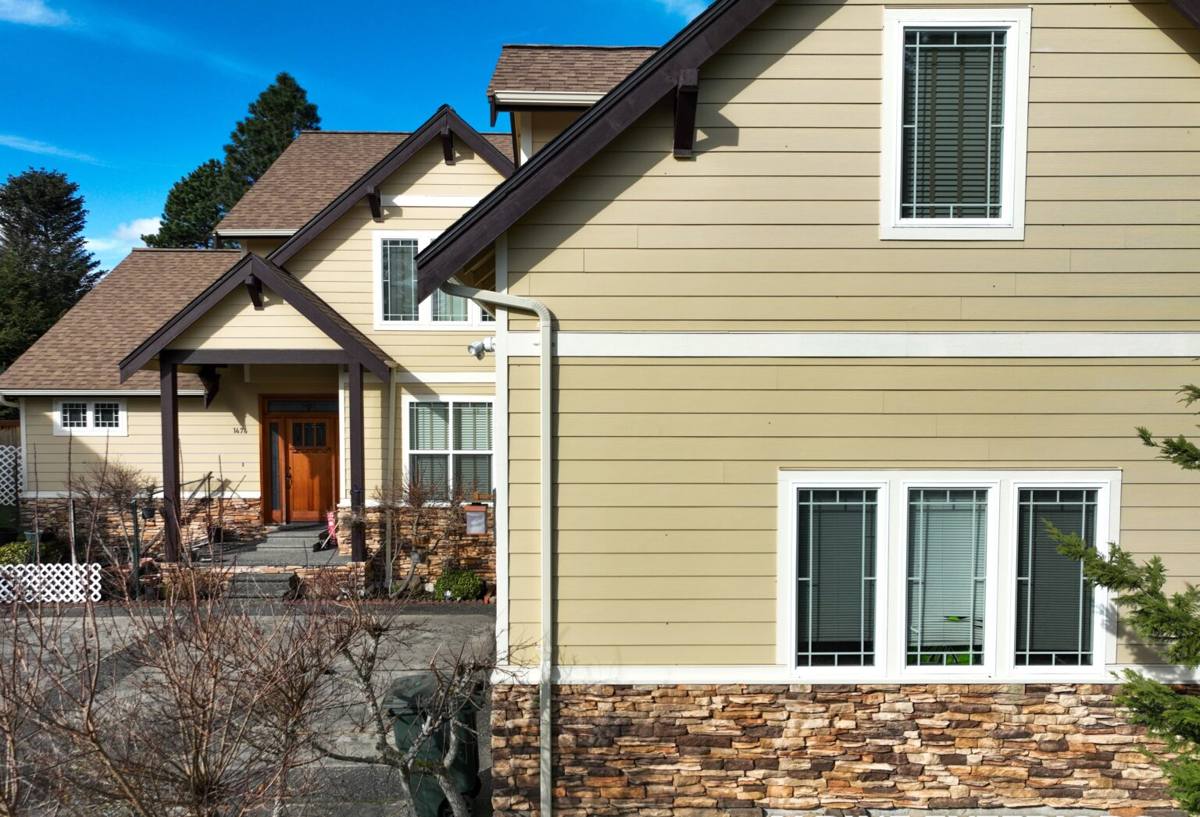
What "Energy-Efficient" Actually Means for This Climate
Every new window sold today carries an NFRC label with a few key numbers, and they matter more here than the marketing language on the box:
- U-factor — how much heat escapes through the window. Lower is better for our mild-but-damp winters, where the goal is keeping interior heat in without overheating anything in summer.
- SHGC (Solar Heat Gain Coefficient) — how much solar heat passes through. Point Whitehorn's tree cover and marine overcast mean most homes don't need aggressive solar blocking, so this number should be matched to each wall's actual sun exposure, not applied blanket-style across the house.
- Air leakage rating — arguably the most important number in a driving-rain climate, since air leaks and water intrusion usually travel the same path.
Low-E coatings and argon or krypton gas fills between panes are standard on any decent window now, and they genuinely help with comfort and heating costs. But in this climate, the coating and gas fill matter less than whether the window was sealed and flashed correctly on install day. A high-spec window installed loosely will underperform a mid-grade window installed right, every time.
Frame Material: What Holds Up Here and What Doesn't
We get asked constantly whether vinyl, fiberglass, or wood-clad is "the best" window. There's no universal answer — it depends on exposure, budget, and how much upkeep a homeowner wants to take on. Here's how the common options actually behave in a salt-air, high-moisture environment like Point Whitehorn:
| Frame Material | Moisture & Salt Air Behavior | Upkeep | Where It Fits |
|---|---|---|---|
| Vinyl | Won't rot or corrode; UV can chalk the finish over many years | Low — occasional cleaning | Most efficient value option for typical elevations |
| Fiberglass | Very stable in temperature and moisture swings; handles salt air well | Low | Higher-exposure walls, larger openings, tighter tolerances |
| Wood-clad | Interior wood needs the cladding and seals intact to stay protected from driving rain | Higher — seals and finish need monitoring | Homeowners prioritizing a wood interior look |
| Aluminum | Conducts heat and cold readily; hardware and fasteners are more exposed to corrosion near the shoreline | Moderate | Limited use; usually not our first recommendation this close to the water |
We're not going to tell you one material is "bad" — each has a legitimate place. Our job is to steer you toward the option that matches your home's actual exposure, not the one that's easiest to sell. On shaded, moss-prone walls that stay wet longest, we lean toward materials and hardware finishes that don't depend on a perfect paint job to keep performing years down the road.
Glass Package Options
Double-pane with low-E coating and argon fill is the baseline for any efficient window today. Triple-pane adds another layer of insulation and sound dampening, which some homeowners value given how much wind and rain noise a single-pane or older double-pane window lets through — but it also adds weight and cost. We'll walk through whether that trade-off makes sense for your specific openings rather than defaulting to the upsell.
Where Window Jobs Actually Fail: Installation, Not the Product
Most window failures we're called out to inspect in this area aren't product defects — they're installation shortcuts that didn't account for how hard driving rain hits a wall here. A correct install includes:
- Sill pan flashing under every opening, so any water that does get past the window has somewhere to drain instead of pooling against the framing.
- Proper shingle-lap flashing sequencing — house wrap, flashing tape, and window flange layered so water is always directed outward and downward, never trapped behind the siding.
- Integration with the siding, not just the rough opening — since we work in siding as well as windows, we pay close attention to how the window's flashing ties into the wall's weather-resistive barrier and drainage plane, which is where a lot of window-only installers leave gaps.
- Backer rod and quality exterior sealant at the perimeter, sized and installed correctly rather than just caulked over a gap.
- Insulated, air-sealed shim space around the frame so the window isn't just watertight but also isn't leaking conditioned air around its edges.
Skip any one of these steps and you can end up with a window that has a great energy rating on paper but still lets in wind-driven rain during the next winter storm — or worse, hides a slow leak inside the wall cavity that isn't obvious until there's rot or mold.
Our Process for a Point Whitehorn Window Job
1. On-Site Assessment
We look at each opening individually — sun and wind exposure, condition of the existing flashing and sheathing, and whether the siding around the window needs to come off further than the immediate opening to tie the new flashing in correctly.
2. Product Selection
We go over frame material, glass package, and NFRC numbers for your specific walls, not a one-size answer for the whole house. North- and west-facing openings that stay damp longest sometimes call for different choices than a sheltered south wall.
3. Removal and Opening Prep
Old windows come out carefully so we can inspect the framing and sheathing underneath for hidden rot or old leak damage before anything new goes in. This is often where we find the real story behind why old windows were underperforming.
4. Flashing and Weatherproofing
Sill pan, tape, and house wrap integration happen before the new window is set — this step is what actually determines whether the window stays dry through years of Whatcom County winters.
5. Setting, Sealing, and Siding Tie-In
The window is shimmed, leveled, insulated, and sealed, then the surrounding siding and trim are restored so the wall's drainage plane is continuous, not patched around the new opening.
6. Walkthrough and Cleanup
We check operation, weatherstripping, and locks on every window, clean up the site, and go over warranty coverage on both the product and our installation work before we consider the job finished.
Signs Your Current Windows Are Losing the Battle
Homeowners in this area often live with a failing window longer than they need to because the symptoms show up gradually. Worth checking for:
- Fogging or a permanent haze between panes (a sign the seal has failed and gas fill has escaped)
- Soft or discolored trim and sill areas, especially on shaded or north-facing walls
- Visible moss or persistent green staining creeping onto the frame or nearby siding
- Drafts you can feel by hand along the frame edge on a windy day
- Hardware that's stiff, corroded, or difficult to latch — common where salt air reaches exposed metal
- Condensation forming on the inside of the glass regularly, beyond normal seasonal humidity
Any one of these on its own isn't necessarily an emergency, but a few of them together usually mean the window assembly — not just the glass — has started to fail.
Living With Windows in a Salt-Air, Moss-Prone Climate
Even a well-installed window benefits from a little seasonal attention here. Rinsing salt residue off frames and hardware a couple times a year keeps corrosion from getting a foothold, especially on anything with exposed metal components. Keeping gutters and nearby vegetation clear reduces how long moisture sits against upper window trim, and a quick check of exterior caulking each fall — before the wet season sets in — catches small gaps before they become winter leaks. None of this requires much time, but skipping it in this environment tends to shorten a window's working life more than people expect.
Why Hire a Crew That Already Works Point Whitehorn
Window replacement here isn't the same job as it would be twenty miles inland. A crew that regularly works this stretch of Whatcom County knows which walls take the worst of the driving rain, how far moss and moisture damage typically travels into framing before it's visible, and how local siding types tie into a window's flashing details. That familiarity shows up in fewer surprises during removal and a tighter, more weather-appropriate install — not in anything flashy, just in the details holding up when the next storm rolls in off the water.
If you're weighing whether your current windows need replacing or just repair, or you're ready to plan a full window upgrade for a Point Whitehorn home, we're happy to take a look and give you an honest, no-pressure estimate — use the form below to get started.