 Birch Bay
 Living on the Water in Semiahmoo Means Different Deck Rules
Semiahmoo sits right up against the water, and that changes what a deck has to survive. A deck built the way you'd build one twenty miles inland won't hold up the same way out here. Salt-laden air off the bay works on metal fasteners and connectors year-round, wind-driven rain gets pushed sideways into places a typical deck design assumes will stay dry, and the long stretch of gray, wet months every fall through spring gives moss and algae plenty of time to take hold on any surface that doesn't drain and dry properly. None of that is a reason to skip a deck — it just means the materials, the fastening system, and the substructure need to be chosen and built with that exposure in mind from day one.
This page is specifically about composite decking for homes in and around Semiahmoo. If you're comparing materials or planning a build or replacement, this covers what actually matters here in Whatcom County's marine climate — not generic decking advice that ignores where you live.
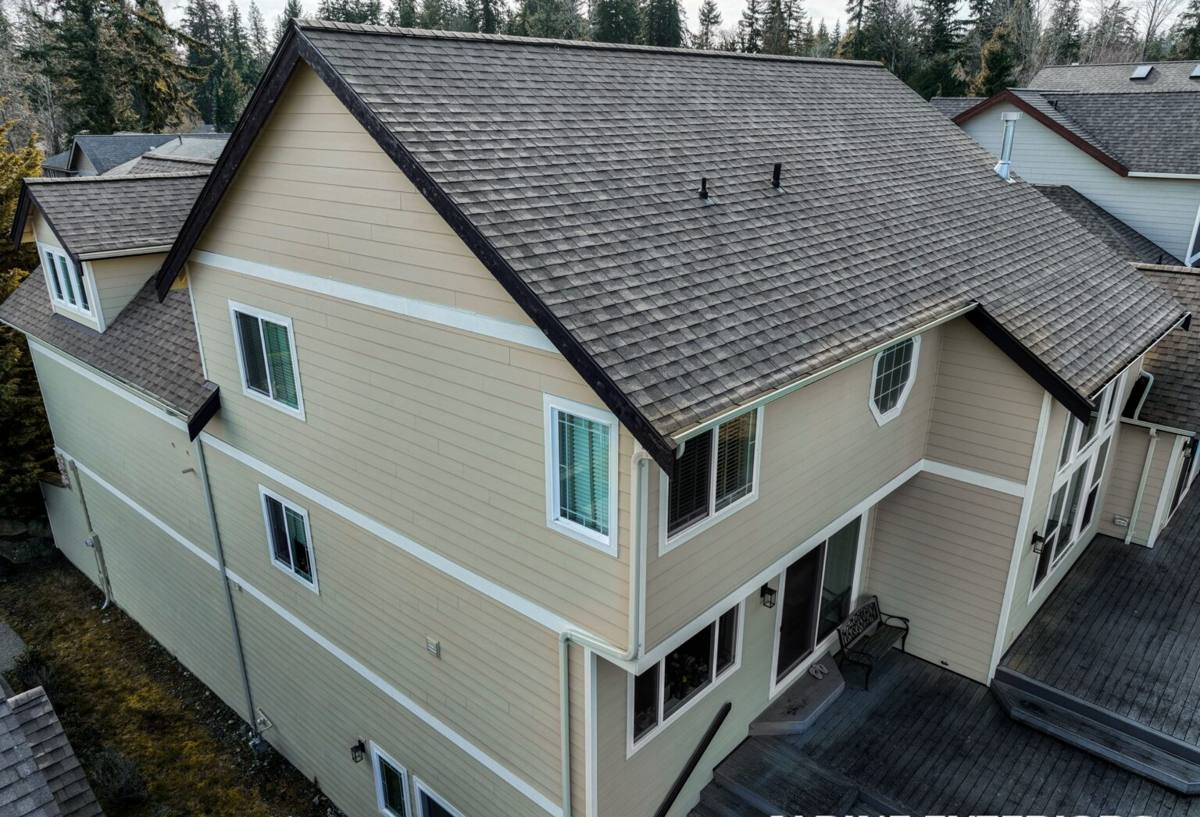
Why Composite Decking Works for This Climate
Composite decking — a blend of wood fiber and recycled plastic, capped with a protective outer layer on most modern boards — was developed specifically to solve the problems wood decking runs into in wet, humid climates. It doesn't absorb water the way solid wood does, so it isn't prone to the swelling, cupping, and splintering that shows up on wood decks after a few Pacific Northwest winters. It doesn't need annual staining or sealing to keep moisture out, which matters a lot in a location where you'd otherwise be fighting that maintenance every single year.
That doesn't mean composite is maintenance-free or bulletproof — no decking material is. It means the maintenance burden shifts from "protect the wood from water" to "keep the surface clean so organic growth doesn't get a foothold," which is a much more manageable job in a climate like this one. We'll get into what that upkeep actually looks like further down.
What Correct Composite Decking Installation Looks Like
Composite boards are only as good as what's underneath and holding them. Most of the complaints we hear about composite decking — boards that sag, fasteners that pop, boards that stay damp and grow algae faster than they should — trace back to a substructure or fastening job that wasn't built for the material or the exposure, not a flaw in the decking itself.
Substructure and Framing
Composite is heavier and behaves differently under load than solid wood, so joist spacing needs to match the manufacturer's specification for the board profile you're using — this is often tighter than what you'd get away with on a wood deck. On a waterfront or exposed site, we also look hard at how the frame is ledgered to the house and whether the existing structure (if we're replacing an old deck) is actually sound enough to build on, rather than just assuming it is.
Fasteners and Flashing
Salt air is hard on standard fasteners. We use corrosion-resistant hardware rated for coastal exposure — hidden fastener clip systems where the board profile allows it, or coated/stainless screws where face-fastening is called for. Ledger flashing where the deck meets the house is non-negotiable; this is one of the most common places water gets into a wall assembly on a deck that "looks fine" for a few years before a problem shows up.
Drainage and Airflow
A deck that can't shed water and dry out underneath is a deck that grows moss and algae faster, regardless of what the boards are made of. That means correct board spacing, a frame that isn't trapping water against the house, and enough clearance and airflow underneath the deck for the substructure to actually dry between rain events — which, in this climate, isn't optional.
Composite vs. Wood vs. PVC: What Actually Differs
Homeowners in Semiahmoo usually end up comparing three options. Here's an honest breakdown of how they stack up for this specific climate:
| Factor | Composite | Pressure-Treated Wood | PVC/Cellular |
|---|---|---|---|
| Upfront cost | Mid-range | Lowest | Highest |
| Moisture resistance | Strong (capped boards) | Weak — needs regular sealing | Very strong |
| Annual maintenance | Periodic cleaning | Sanding/staining/sealing | Periodic cleaning |
| Moss/algae resistance | Good, especially capped boards | Poor without upkeep | Good |
| Typical lifespan | 25–30+ years | 10–15 years with upkeep | 25–30+ years |
| Feel underfoot | Wood-like | Wood | Plastic-like |
Wood is still a reasonable choice for homeowners who want the lowest upfront cost and are committed to real annual maintenance. PVC costs more but shrugs off moisture almost entirely. Composite lands in the middle on price while cutting the maintenance burden dramatically compared to wood — which is why it's become the most common choice we install for homes dealing with the kind of exposure Semiahmoo gets.
Moss, Algae, and Salt: What Semiahmoo Decks Deal With Every Year
Two things drive most of the deck problems we see out here: standing organic growth and corrosion.
The long wet season — roughly fall through spring — gives moss and algae a long runway on any deck surface that stays damp, especially shaded areas under trees or on the north side of a house. Composite boards with a quality cap layer resist this better than uncapped composite or wood, but no surface is immune if it never fully dries out. Boards need periodic washing, and shaded or low-airflow areas need it more often than sun-exposed sections.
Salt air is the other factor, and it's easy to underestimate because the damage is slow. It attacks unprotected metal — fasteners, brackets, railing hardware — well before it does anything visible to the decking surface itself. This is why hardware selection matters as much as board selection on a project this close to the water.
Our Installation Process
We keep the process straightforward and honest about what your site actually needs:
- On-site assessment: We look at your existing deck or build site, check for structural issues, drainage problems, and exposure (sun, shade, wind direction, distance from the water).
- Material and layout discussion: We walk through board options, colors, and layout based on your home and budget — no upselling to a product your project doesn't need.
- Structural work: Framing, ledger flashing, and substructure work is done to spec for the composite product being installed, not a generic wood-deck standard.
- Installation: Boards, fasteners, and railing are installed with corrosion-resistant hardware suited to this climate.
- Walkthrough: We go over basic care with you before we leave — what to expect, what to watch for, and how often to clean it given your site's sun and shade exposure.
Keeping a Composite Deck Looking Right in This Climate
Composite cuts the maintenance workload compared to wood, but "low-maintenance" isn't "no-maintenance," especially this close to the water. A basic seasonal routine goes a long way:
- Sweep debris (leaves, needles, moss spores) off the deck regularly, especially in fall
- Wash the surface with mild soap and water (or a composite-safe cleaner) a couple times a year — more often in shaded or low-airflow spots
- Rinse salt residue off railings and hardware periodically if the deck faces open water or gets direct spray
- Keep gutters and downspouts near the deck clear so runoff isn't dumping extra water onto the deck or substructure
- Check that furniture, planters, and rugs aren't trapping moisture against the boards for long stretches
- Inspect railing hardware and fasteners annually for early signs of corrosion, especially on waterfront-facing sides
None of this is heavy work — it's the kind of upkeep most homeowners can do in an afternoon a couple times a year. The point is just staying ahead of moisture and organic growth instead of catching it after it's established.
Why a Crew That Already Works Semiahmoo Matters
A lot of deck problems in this area don't come from bad materials — they come from a build that was designed for a drier, less salt-exposed climate. A crew that hasn't worked waterfront Whatcom County properties before might not think twice about standard fasteners, might not flash a ledger board as carefully as a coastal site demands, or might not account for how much longer a shaded deck stays damp here compared to somewhere inland. We work Birch Bay, Semiahmoo, and the surrounding waterfront regularly, so the hardware, spacing, and drainage decisions on your deck aren't guesswork — they're the same calls we make on every project out here that has to deal with the same salt air, driving rain, and moss season your home does.
If you're planning a new composite deck or replacing an aging one in Semiahmoo, we're happy to take a look and give you a straight assessment — no pressure, no upsell, just an honest read on what your site needs. Fill out the form below for a free estimate.