 Birch Bay
 Why Decks Near Semiahmoo Wear Out Faster Than the Manual Says
Semiahmoo sits right on the water, close enough to the Canadian border that homes there get the full weather package: salt-laden air off the bay, driving rain that comes in sideways off Georgia Strait weather systems, and a wet season that stretches long enough for moss and algae to get a real foothold on any horizontal wood surface. A deck built to a generic national spec, or one installed by a crew that mostly works drier inland neighborhoods, tends to show problems years before it should. Fastener corrosion shows up early. Board cupping and splitting show up early. Substructure rot hides underneath and shows up only when someone finally pulls a board.
None of that is exotic knowledge — it's just what happens when a structure spends every winter damp and every year breathing salt air. The fix isn't a different kind of deck, it's building and detailing the deck correctly for that exposure from the start.
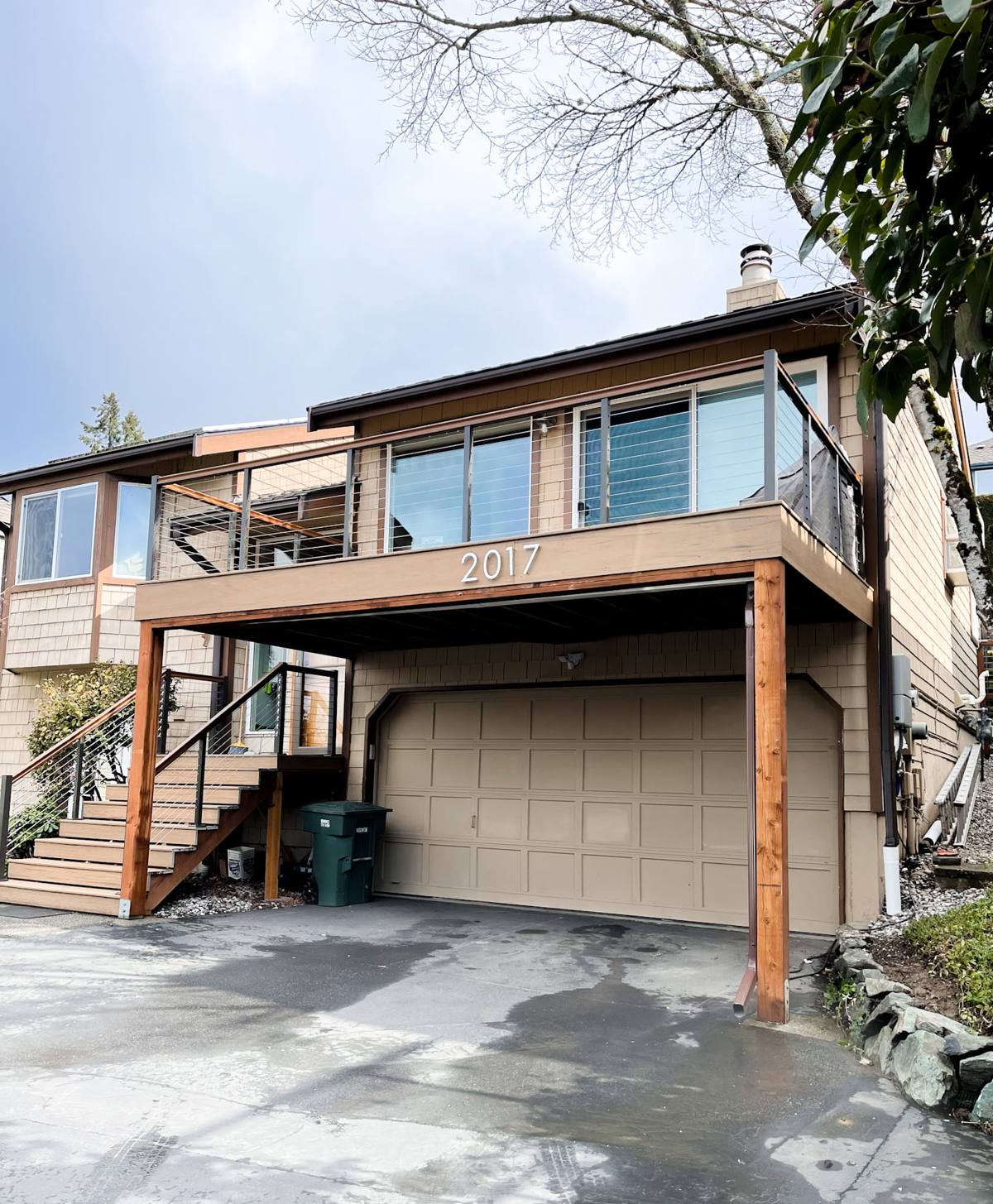
What "Deck Replacement" Actually Covers
Homeowners often call about a "deck repair" and it turns out to be a replacement once we get boards up. There's a real difference, and it matters for both cost and safety:
- Repair — swapping a handful of boards, sistering a joist, replacing a rail section. Appropriate when the framing underneath is sound and the damage is isolated.
- Partial replacement — decking and rail system come off, but posts, beams, and footings are reused after inspection because they check out.
- Full replacement — decking, framing, ledger attachment, and often footings are removed and rebuilt because the substructure has rot, undersized framing, or an unsafe ledger connection that no amount of surface repair fixes.
In a marine-exposure area like Semiahmoo, we see more decks land in the "partial" or "full" category than a homeowner expects, simply because moisture damage travels — a soft board on the surface is often the visible tip of a joist or ledger problem underneath.
The Ledger Connection Is Where Most Failures Start
The ledger board — the piece that bolts the deck to the house — is the single most important structural detail on any deck, and it's also the detail most likely to be done wrong on an older or DIY-built deck. In a wet, salt-air climate, a poorly flashed ledger traps moisture against the house band joist and rim, which rots both the deck attachment and the wall framing behind it. This is not a cosmetic issue; it's a structural one, and it's the reason we treat ledger flashing as non-negotiable on every replacement, not an upgrade option.
A correct ledger detail includes proper flashing that sheds water away from the house, code-rated structural screws or through-bolts (not deck screws), and a gap or membrane that keeps the ledger from sitting wet against the siding. On a full replacement, this is the first thing we address, before a single deck board goes down.
Choosing Materials for This Exposure
There's no single "best" decking material — there's a best material for a given budget, maintenance appetite, and exposure. For a waterfront or near-waterfront Semiahmoo property, here's how the common options actually compare in this climate:
| Material | How It Handles Salt Air & Rain | Maintenance | Typical Lifespan Here |
|---|---|---|---|
| Pressure-treated wood | Fine if sealed regularly; end grain and fastener holes are the weak points for moisture intrusion | Annual cleaning, re-sealing every 1-2 years | 10-15 years with upkeep |
| Cedar | Naturally rot-resistant but softens with constant damp/moss cycling if not maintained | Regular cleaning, periodic oil or stain | 12-18 years with upkeep |
| Composite decking | Doesn't absorb moisture into the board itself; resists moss staining much better than wood | Periodic washing, no sealing/staining | 25-30+ years, mfr-dependent |
| PVC/capped polymer | Fully sealed surface, best resistance to moisture and salt residue | Occasional washing | 25-30+ years, mfr-dependent |
Fasteners and hardware matter as much as the decking material. On a marine-air job we spec stainless or heavy hot-dip galvanized fasteners and connectors rated for coastal exposure — standard zinc-coated hardware corrodes faster here and is a common cause of premature squeaking, staining, and loosening.
Why We're Selective About Certain Wood Products in This Climate
Some lower-grade treated lumber and thin-profile wood composites perform noticeably worse under constant damp-and-dry cycling — they're more prone to surface checking, warping, or moisture wicking at cut ends. Our standard is to only install products we're confident will hold up to Whatcom County's wet season year after year, which sometimes means steering a homeowner toward a different grade or material than what's cheapest at first glance. That's a maintenance and longevity call, not a knock on any single brand.
Structural Details That Matter More Near the Water
A few things we pay extra attention to on Semiahmoo-area replacements, beyond the ledger:
- Footings and post bases — kept off grade contact with proper post bases so the base of the post isn't sitting in standing water after heavy rain.
- Joist protection — joist tape or flashing on top of framing so fastener penetrations don't become moisture entry points.
- Airflow underneath — adequate clearance and ventilation under low decks so the substructure can actually dry out between storms instead of staying damp all winter.
- Fastener spec — coastal-rated hardware throughout, not just at the ledger.
- Board spacing — gapping set to allow for the swelling/shrinking cycle typical of this climate, especially with wood decking.
Our Deck Replacement Process
Every job starts with an actual inspection, not a guess from the driveway. That means getting under the deck where possible and probing framing, ledger, and posts for soft spots before we scope the work.
- On-site assessment — framing, ledger, footings, and decking condition, with photos of anything hidden that needs replacing.
- Scope and material discussion — repair vs. partial vs. full replacement, and an honest walkthrough of material trade-offs for your budget and how you use the space.
- Permitting — pulled as required for the scope of work before construction starts.
- Demolition — removal of decking, rail, and any framing that doesn't pass inspection, with debris hauled off.
- Structural rebuild — ledger flashing, framing, footings, and posts brought up to current code where the scope requires it.
- Decking and rail installation — with attention to fastening, spacing, and drainage detail specific to this climate.
- Final walkthrough — so you know what the deck needs going forward, not just a handoff.
Permits and Local Code
Deck replacement work in Whatcom County generally requires a permit once you're touching structural elements — framing, footings, ledger attachment, or guardrail height and spacing — rather than a simple like-for-like board swap. Guardrail height, baluster spacing, and stair requirements are code items inspectors check closely, and they're also the details most likely to be out of date on an older deck. We handle the permit process as part of the job rather than leaving it to the homeowner to sort out, and we build to current code even when the existing deck was grandfathered under an older standard.
Cost Factors on a Semiahmoo Deck Replacement
Every deck is different, but the same handful of variables drive most of the cost swing between jobs:
| Factor | Why It Moves the Price |
|---|---|
| Extent of hidden damage | Rotted framing found once boards come off adds labor and material beyond the original scope |
| Decking material chosen | Composite and PVC cost more up front than wood but less over the deck's lifetime in maintenance |
| Deck height and stairs | Elevated decks and multi-run stairs add framing, railing, and code complexity |
| Footing condition | Footings that don't meet current code or frost depth need to be replaced, not reused |
| Rail and guard style | Cable, glass, and custom rail systems cost more than standard baluster rail |
We'd rather give you a real number after seeing the deck than a rough figure that doesn't hold up once we're under it.
Keeping a New Deck Healthy in This Climate
A well-built deck still needs seasonal attention here — the climate doesn't let anything coast. A short list that actually matters:
- Sweep debris and standing leaves off the deck surface regularly, especially in fall, so moisture and organic matter don't sit against the boards.
- Clean moss and algae off the surface at the start of each wet season before it gets established, rather than after it's stained the boards.
- Check fastener heads and rail connections annually for corrosion or loosening.
- Keep gutters and downspouts near the deck clear so runoff isn't dumping directly onto or under the structure.
- For wood decking, re-seal or re-stain on the schedule the product actually needs — skipping a cycle in this climate costs more than the maintenance would have.
Why a Crew That Already Works Semiahmoo Matters
A deck built by a crew that mainly works drier, inland projects can look fine on install day and still be under-detailed for what a Whatcom County waterfront winter will do to it. Knowing to over-build the ledger flashing, spec coastal-rated fasteners as standard rather than upsell, and set drainage and airflow correctly under the frame isn't guesswork — it's pattern recognition from having replaced decks in this exact exposure before. We're a Birch Bay-based crew, and Semiahmoo is inside our regular service area, not a special trip.
If you're dealing with soft boards, a wobbly rail, or just want an honest read on whether your deck needs repair or full replacement, we're glad to take a look. Fill out the form below for a free, no-pressure estimate — no obligation, just a straight answer on where your deck actually stands.