 Birch Bay
 Marietta's Shoreline Climate Asks More of Your Siding
Marietta sits along the water on the edge of Birch Bay, in a stretch of Whatcom County where the weather comes straight off the marine air. Homes here deal with a combination that inland siding never has to survive: salt-laden air drifting in off Drayton Harbor and the bay, wind-driven rain that hits walls sideways instead of straight down, and a wet season that stretches long enough for moss and algae to get a real foothold on anything that stays damp. None of these factors alone would wreck a siding job. Together, over years, they expose every shortcut a lesser installation might have taken.
Salt air is corrosive to exposed metal fasteners and hardware, and it accelerates the breakdown of paint films and coatings that weren't formulated for coastal exposure. Driving rain finds every gap in flashing, every under-caulked seam, and every place where siding wasn't held off the wall assembly correctly. And moss doesn't just look bad — a mat of moss or algae holds moisture against a wall surface for days after the rain stops, which is exactly the condition that rots wood-based products and blisters cheap paint. A siding installation in Marietta has to be built for all three, not just look good on a dry install day.
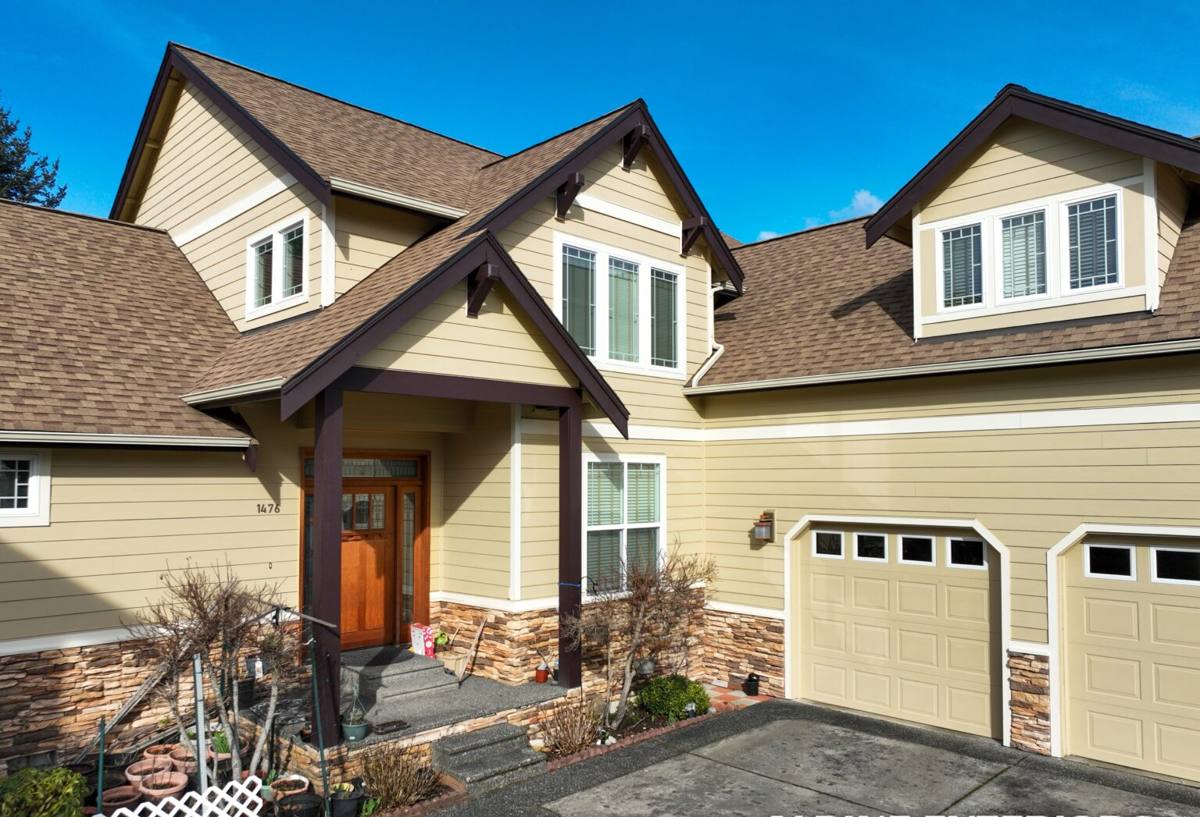
What "Correct" Actually Means for This Job
Siding installation isn't really about nailing boards to a wall — it's a water management system. In a coastal microclimate like Marietta's, the details that matter most are the ones you can't see once the job is finished:
- Weather-resistive barrier and rainscreen gap: A properly lapped house wrap behind the siding, with a drainage gap that lets any water that gets past the cladding drain and dry instead of sitting against the wall sheathing.
- Flashing at every penetration: Windows, doors, hose bibs, light fixtures, and vents all need step or head flashing installed in the correct shingle-lap order — not caulk used as a substitute for flashing.
- Fastener selection: Corrosion-resistant, coastal-rated fasteners driven correctly (not overdriven, not underdriven) so the siding can move slightly with temperature and humidity without cracking around the nail head.
- Clearance and gapping: Siding held up off decks, patios, and grade, with the manufacturer's specified gaps at butt joints, trim, and inside corners so it can shed water and breathe.
- Factory-finished, factory-sealed cut edges: Field cuts sealed per the manufacturer's specification so raw edges aren't left to absorb moisture.
Skip any one of these and the siding can still look fine for a season or two. In a wind-driven-rain, high-moss environment like Marietta, the problems show up as trapped moisture, wall rot, and premature paint failure — usually a few years after the crew that cut corners is long gone.
Why We Install Only James Hardie Fiber Cement
We made a decision a long time ago to install one siding system, done correctly, rather than offer every option and let quality vary by product. That system is James Hardie fiber cement.
Vinyl siding is inexpensive and easy to install fast, but it's a plastic product that expands and contracts significantly with temperature swings, can warp or crack in wind-driven rain and impact events, and offers no real fire resistance. LP SmartSide, primed spruce, and cedar are wood-based products — even with engineered treatments or careful priming, wood-based siding is more vulnerable to the moisture cycling and moss growth that define this stretch of coast, and it typically demands a more aggressive repainting and recaulking schedule to stay ahead of rot. Cemplank and Allura are also fiber cement, and they're reasonable products on paper — but we standardized on one manufacturer so our crews master one installation spec, one set of flashing details, and one warranty structure, rather than splitting expertise across competing systems.
James Hardie fiber cement is non-combustible, dimensionally stable across our wet winters and warm-dry summers, and available in HZ5 formulations engineered for the kind of moisture exposure Marietta sees. The ColorPlus factory finish is baked on and warranted separately from the substrate, which matters directly in salt air, where field-applied paint tends to fail first at the film, not the board. Hardie backs its products with a strong transferable limited warranty, which carries real weight if you sell the home. None of that replaces correct installation — but starting with the right material means the installation details actually hold up instead of fighting a product that wasn't built for this exposure.
Our Process for a Marietta Siding Installation
1. On-Site Assessment
We walk the exterior with you, checking existing siding condition, wall sheathing, trim, window and door flashing, and any areas already showing moss, staining, or soft spots. Coastal homes often have hidden moisture damage behind siding that looks fine from the street, so we look past the surface.
2. Tear-Off and Sheathing Check
Old siding comes off down to the sheathing, which we inspect for rot or water damage before anything new goes up. Any compromised sheathing gets repaired or replaced — covering damaged sheathing with new siding just hides the problem.
3. Weather Barrier and Rainscreen
A new weather-resistive barrier is installed and properly lapped, with a rainscreen drainage gap behind the siding so any incidental moisture can drain and the wall assembly can dry.
4. Flashing and Trim
Windows, doors, and every penetration get flashed correctly before trim and siding go on. This is the single most important step for keeping driving rain out of the wall.
5. James Hardie Installation to Spec
Siding is installed with manufacturer-specified fastener patterns, clearances, and joint gapping, using coastal-rated fasteners throughout.
6. Final Walkthrough
We walk the finished exterior with you, checking caulk lines, paint touch-up at cut ColorPlus edges, and overall fit before calling the job done.
Signs a Marietta Home May Need New Siding
Coastal exposure tends to produce specific warning signs before a full failure. Worth checking for:
- Moss or dark algae staining that returns quickly after cleaning, especially on north- and west-facing walls
- Soft or spongy spots when you press on siding near the bottom courses or around window trim
- Paint that's peeling, bubbling, or chalking faster than a normal repaint cycle would explain
- Visible gaps, warping, or buckling at siding seams and corners
- Rusted or popped fastener heads showing through the siding surface
- A musty smell or visible staining on interior walls that back up to exterior siding
Cost Factors for a Marietta Siding Installation
Every home is different, but the same handful of variables drive the price on most siding jobs in this area:
| Factor | Why It Matters |
|---|---|
| Home size and wall complexity | More square footage, more corners, gables, and dormers means more material and more labor hours |
| Sheathing condition | Rot or water damage found during tear-off adds repair work before new siding can go on |
| Siding profile chosen | Lap width, shingle-style panels, and board-and-batten each price differently in material and install time |
| Trim and detail work | Window casings, corner boards, and fascia detailing add labor beyond the flat wall area |
| Access and site conditions | Waterfront lots, tight setbacks, or difficult scaffolding access affect crew efficiency |
| Removal and disposal | Tearing off and hauling away old siding (vinyl, wood, or old fiber cement) adds cost versus new construction |
Because these variables shift so much from house to house, an accurate number comes from an on-site look, not a phone estimate.
Why Local Experience in Marietta Matters
A crew that already works this stretch of Whatcom County knows things a visiting contractor has to learn on your dime: which wall orientations take the worst of the driving rain off the bay, where moss tends to establish first, how the local building department handles siding and moisture-barrier inspections, and what fastener and flashing details actually hold up through a full wet season here rather than just through the install date. That experience shows up in fewer callbacks and a siding system that's still doing its job a decade later, not just at the final walkthrough.
Caring for Your New Siding After Installation
James Hardie siding, installed correctly, is low-maintenance — but "low" isn't "zero," especially this close to the water. A little upkeep keeps it looking and performing like new:
- Rinse the exterior periodically to keep salt residue and airborne debris from building up on the surface
- Trim back vegetation and tree branches that shade walls and keep them damp longer than they should be
- Check caulk lines at trim and penetrations yearly and touch up before gaps let water in
- Address any moss or algae growth early with a gentle wash rather than letting it establish
- Keep gutters and downspouts clear so roof runoff isn't dumping directly onto siding or foundation walls
If your Marietta home's siding is showing its age, or you're planning ahead for a replacement, we're happy to take a look and walk you through what your home actually needs — no pressure, no obligation. Reach out for a free estimate using the form below.