 Birch Bay
 Storm Damage Roof Repair for Semiahmoo Homes
Semiahmoo sits right on the water in Whatcom County, and that location is exactly what makes roofs here wear differently than roofs fifteen miles inland. Wind off Semiahmoo Bay, salt-laden air, and long stretches of wet, low-sun weather put a specific kind of stress on shingles, flashing, and underlayment. When a storm rolls through and lifts shingles, drives rain sideways under flashing, or drops branches on a roof plane, the damage is rarely as simple as "one bad spot." We repair storm-damaged roofs for homeowners in Semiahmoo and the surrounding Birch Bay area, and we approach every job the same way: figure out what actually failed, fix that correctly, and stop pretending a bead of caulk is a repair.
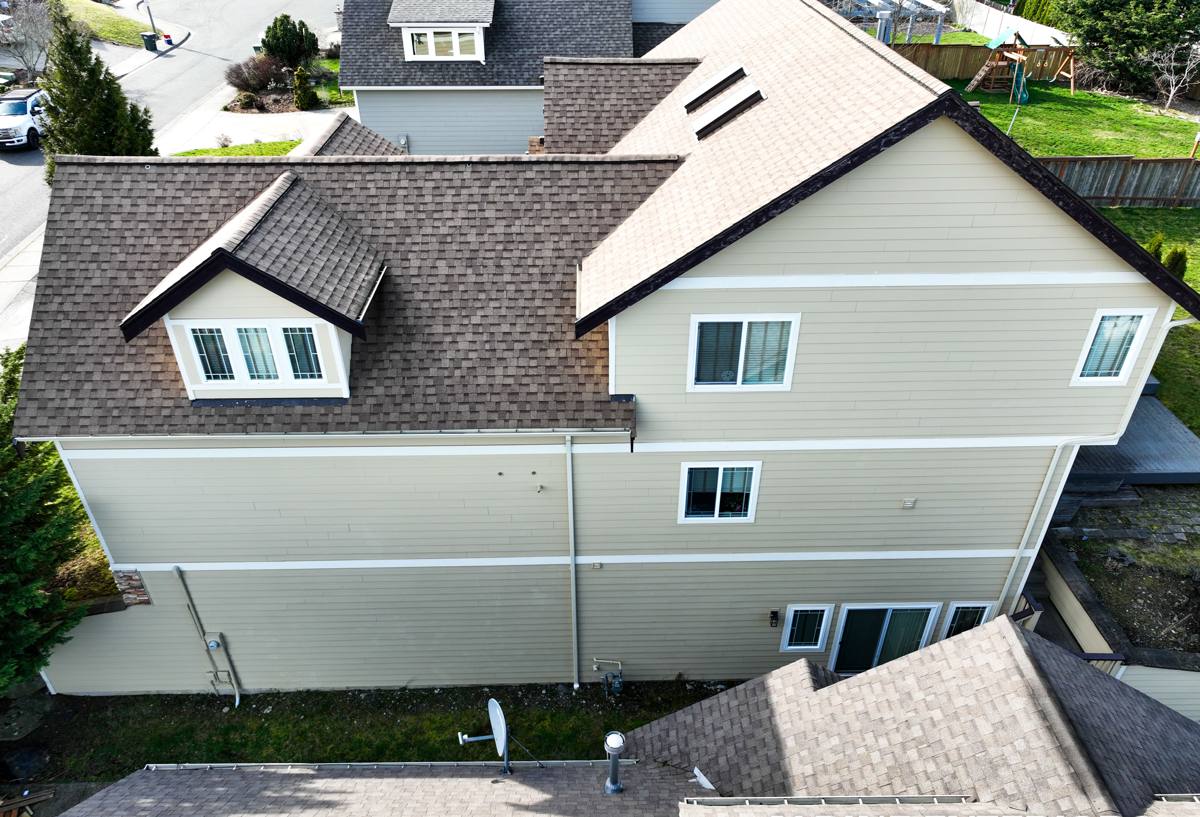
Why Semiahmoo Roofs Take a Different Kind of Beating
Storm damage doesn't happen in a vacuum. The reason a wind event or a heavy rain does more damage to a shoreline roof than the same storm would do inland comes down to a few conditions that are constant in this part of Whatcom County.
Salt Air and Fastener Corrosion
Homes close to Semiahmoo Bay live in a steady mist of salt air. Over years, that air accelerates corrosion on exposed metal — roofing nails, flashing, vent boots, and gutter hardware all age faster here than they would on a house set back from the water. A storm doesn't create that corrosion, but it finds it. Wind-driven rain will exploit a flashing seam that's already lost its seal, or work loose a fastener that's already thinned from years of salt exposure. What looks like sudden storm damage is often a weak point that salt air had already been working on for a long time.
Wind Exposure Along the Shoreline
Open water means open wind. Homes in Semiahmoo and along the Birch Bay shoreline take direct gusts without the buffering that tree lines and hills provide further inland. That wind loading is what lifts shingle tabs, peels back ridge caps, and tears at ing edges — the parts of a roof designed to shed water, not fight uplift. Once a shingle edge lifts even slightly, subsequent storms get underneath it more easily, so damage tends to compound over a season rather than stay isolated to one event.
A Long, Wet Moss Season
Whatcom County's mild, damp climate means moss has a long growing window on north-facing and shaded roof planes. Moss holds moisture against the shingle surface long after a storm has passed, which softens granules, accelerates shingle aging, and can work its way under tabs and flashing over time. A roof with active moss growth is more vulnerable to storm damage than a clean one, because the moss has already been undermining the seal between shingles and slowly lifting edges.
What Actually Counts as Storm Damage
Homeowners often assume storm damage means a hole in the roof. In practice, most storm-related repair calls in this area involve less dramatic but still serious issues:
- Wind-lifted or torn-off shingle tabs, especially at ridges, hips, and roof edges
- Flashing that's been bent, separated, or pulled away from chimneys, skylights, and wall intersections
- Granule loss from wind-driven rain and debris, which shortens the remaining life of the shingle
- Punctures or bruising from wind-thrown branches and debris
- Displaced or cracked ridge caps and vent boots that let wind-driven rain work its way underneath
- Water staining on interior ceilings or in the attic that shows up days after the actual storm
That last one is worth pausing on. A lot of storm damage doesn't announce itself right away. Water can travel along rafters or sheathing before it shows up as a stain, so a roof that "looks fine" from the ground after a storm can still have an active leak developing.
What a Correct Storm Repair Actually Involves
Start With an Honest Inspection
Before any repair, we get on the roof and look at the whole system — not just the spot the homeowner points to. Storm damage often has a source (a lifted shingle, a failed flashing seam) and a symptom (a stain on the ceiling three feet away), and those two things aren't always in the same place. We check shingles, flashing, ridge caps, vent boots, gutters, and — where accessible — the attic side of the roof deck for water intrusion.
Match Materials, Don't Improvise
A patch repair only holds up if the materials and the tie-in method match what's already on the roof. Mismatched shingle profiles, wrong nail patterns, or flashing that isn't integrated correctly with the existing underlayment will fail again in the next storm, often faster than the original damage took to develop. Where an exact shingle match isn't available because of age or discontinued product lines, we're upfront about that trade-off before starting the work.
Get the Flashing and Sealing Details Right
Most storm-repair failures we see on re-inspection aren't shingle problems — they're flashing problems. Flashing that's reused when it shouldn't be, sealant used in place of proper metal work, or fasteners driven into old, corroded holes instead of fresh material all lead to repeat leaks. Given the salt-air environment around Semiahmoo, we lean toward corrosion-resistant fasteners and proper step and counter-flashing details rather than shortcuts that might hold for a season but not for years.
Our Process for Semiahmoo Storm Repairs
- Contact and initial description. Tell us what you noticed — a missing shingle, a stain, debris on the roof — and roughly when the storm hit.
- On-site inspection. We walk the roof and check the attic where possible, documenting the actual extent of damage rather than just the visible symptom.
- Written scope and estimate. You get a clear explanation of what failed, what needs to be repaired versus replaced, and an honest cost range — no pressure to upgrade beyond what the damage requires.
- Repair. We complete the work with matched materials and proper flashing detail, not a surface patch.
- Follow-up check. For significant repairs, we recommend a follow-up look after the next heavy rain to confirm the fix is holding under real conditions, not just a garden-hose test.
Repair or Replace? Weighing the Factors
Not every storm-damaged roof needs a full replacement, and not every roof is worth repairing again. The right call depends on the roof's age, how widespread the damage is, and what condition the rest of the roof is in.
| Factor | Leans Toward Repair | Leans Toward Replacement |
|---|---|---|
| Roof age | Under 12-15 years, otherwise sound | Nearing or past expected shingle lifespan |
| Damage extent | Isolated to one section or a few spots | Spread across multiple slopes or repeat problem areas |
| Underlying condition | Deck and underlayment intact | Soft decking, widespread moss damage, or prior water intrusion |
| Storm history | First significant damage in years | Recurring storm damage each season |
| Shingle match | Matching shingles still available | Discontinued profile, patch would be visibly mismatched |
We'll give you our honest read on which side of that table your roof falls on. If a repair is the right call, we won't push a replacement — and if the roof is genuinely past the point where another repair makes sense, we'll say that too, along with why.
A Note on Insurance Claims
Many storm repairs in Whatcom County get filed as insurance claims, especially when damage follows a named windstorm or a documented weather event. We're not a public adjuster and won't promise a claim outcome, but we can provide a clear, itemized description of the damage and the repair scope, which is generally what insurers ask for. If you're planning to file a claim, it's worth getting an inspection soon after the storm — insurers are more responsive to damage reports that are close in time to the event.
Why a Crew That Already Works Semiahmoo Matters
Storm repair isn't just about roofing skill in general — it's about recognizing what's normal for this specific stretch of coastline versus what's an active problem. A crew that regularly works Semiahmoo and Birch Bay roofs has already seen how salt air ages this area's flashing, how moss behaves on shaded north slopes near the water, and which wind patterns tend to do the most damage. That local pattern recognition is what separates a repair that solves the actual problem from one that just addresses the symptom the homeowner happened to notice.
We also know that a lot of homes in this area are second homes or seasonal residences, which means damage can go unnoticed for weeks between visits. If that's your situation, a straightforward inspection after a significant storm — even without visible signs from the outside — is a reasonable precaution rather than an overreaction.
Storm Damage Checklist for Semiahmoo Homeowners
After a significant windstorm or heavy rain event, here's what's worth checking or having checked:
- Ceiling stains or discoloration, especially near chimneys, skylights, and exterior walls
- Shingle debris (granules or pieces) collected in gutters or on the ground near downspouts
- Visible gaps, lifted edges, or missing shingles from the ground or a safe vantage point
- Bent or displaced flashing around chimneys, vents, and roof-wall intersections
- Sagging or soft spots noticeable from inside the attic
- Debris — branches, needles, or moss clumps — sitting on the roof surface after the storm
- Gutters pulling away from the fascia or overflowing during rain
If any of these show up, it's worth getting a professional look before the next storm compounds the problem — small, contained damage is far cheaper to fix than damage that's been open to weather for another season.
If you're dealing with storm damage on a Semiahmoo or Birch Bay roof, we're glad to take a look. The estimate is free, there's no pressure to sign anything on the spot, and you'll get a straight answer about what actually needs to happen — just fill out the form below to get started.