 Birch Bay
 Terrell Creek's Marine Climate Asks More of Siding Than People Expect
Terrell Creek sits close enough to the water that homes here deal with a different set of pressures than siding further inland in Whatcom County. Salt-laden air moves through steadily, wind-driven rain hits siding at angles that plain lap siding wasn't built for, and the long, damp shoulder seasons common to this stretch of the Pacific Northwest give moss and algae months at a time to take hold on north-facing walls and anything shaded by trees. None of that is dramatic on its own, but stacked together year after year, it's what separates siding that looks good for five years from siding that looks good for thirty.
Salt Air
Salt in the air isn't just a coastal curiosity — it's corrosive to metal fasteners and trim, and it accelerates the breakdown of finishes that weren't formulated to handle it. Paint applied on-site tends to chalk and fade faster in a salt-air environment than a factory-cured finish does, which matters when you're deciding what to put on a home that sits a short distance from Birch Bay.
Driving Rain
Storms coming off the water don't just fall straight down — wind pushes rain sideways into wall assemblies, testing every seam, joint, and piece of flashing. Siding that relies on caulk alone to keep water out, rather than proper lapping and flashing, tends to fail at exactly the details installers were tempted to rush.
A Long Moss Season
Shaded, damp conditions here can run from fall through spring, and moss doesn't need much of a foothold — a rough-textured surface, a spot that stays wet a day longer than the rest of the wall, a section that never sees direct sun. Once established, moss holds moisture against the siding surface, which is a problem for anything that isn't dimensionally stable when wet.
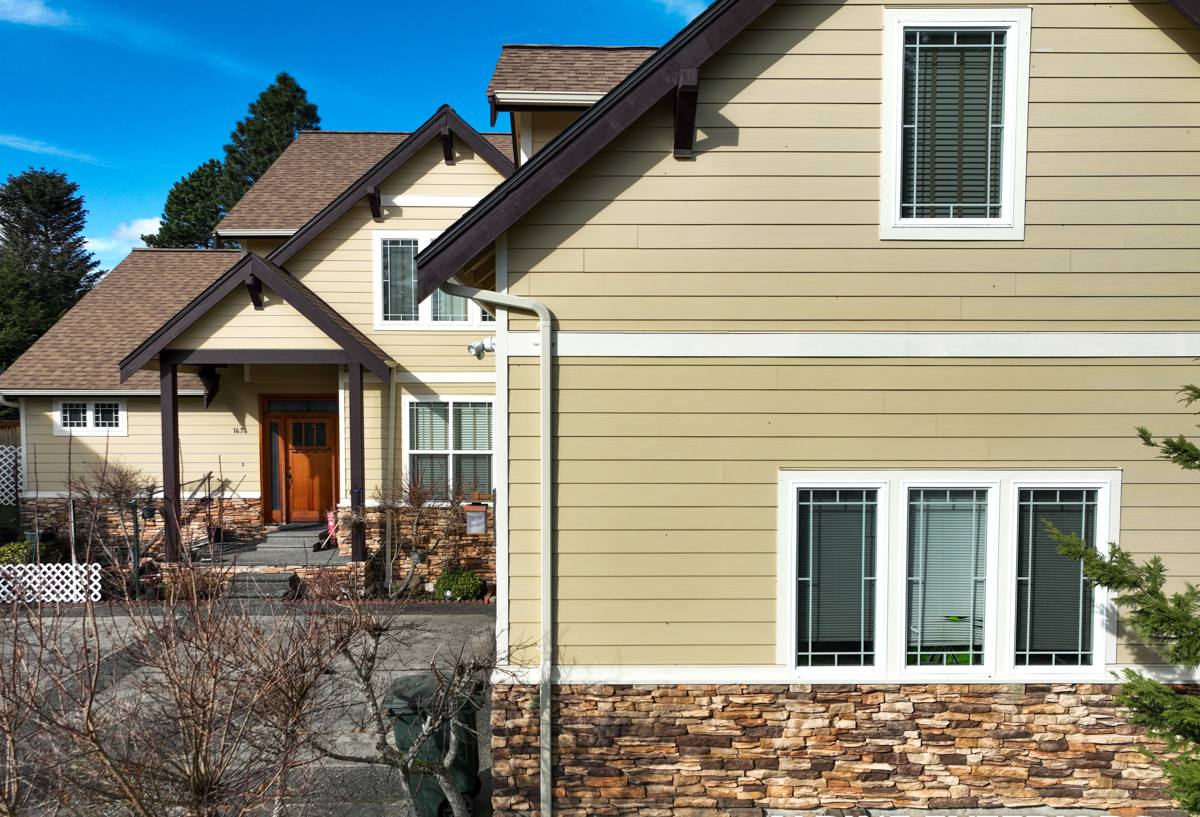
What Correct James Hardie Installation Involves Here
James Hardie fiber cement is engineered to handle moisture better than wood-based sidings, but the product only performs as well as the installation behind it. A handful of details matter more in a Terrell Creek install than they would in a drier inland climate.
- Proper flashing at every horizontal transition — windows, doors, roof lines, and trim boards all need flashing that directs water out and down, not caulk standing in for flashing.
- Correct gapping and sealing — Hardie's specifications call for specific clearances at butt joints and against dissimilar materials so panels can move without trapping water.
- Fastener placement and type — corrosion-resistant fasteners driven to the manufacturer's pattern, not overdriven or placed to save time.
- A drainage plane behind the siding — a weather-resistive barrier and, where called for, a rainscreen gap so incidental moisture has somewhere to go.
- Ground clearance — keeping the bottom edge of the siding far enough above grade, decks, and soil that splashback and standing moisture aren't a constant issue.
Skip any one of these and the siding itself can be flawless while the wall behind it still takes on water. This is the gap between "installed" and "installed to spec," and it's where most long-term siding problems actually start.
Which James Hardie Products Make Sense for This Area
Whatcom County falls within James Hardie's HZ5 engineering zone, which covers regions with more moisture exposure and freeze-thaw cycling than the softer HZ10 climates further south. That's not marketing — it changes how the product is formulated and what performance to expect. For Terrell Creek specifically, we typically recommend:
HardiePlank Lap Siding
The standard choice for most homes — available in several profiles and widths, and the workhorse for the flat, overlapping wall coverage most houses need.
HardieShingle
Used selectively for gable accents or a shingle-style look without the maintenance burden of real cedar shingles, which struggle in this climate's damp, shaded conditions.
HardieTrim
Fiber cement trim boards around windows, corners, and fascia so the whole envelope — not just the field siding — is built from the same moisture-resistant material.
All of it comes with a factory-applied ColorPlus finish baked on under controlled conditions, which holds up to salt air and UV exposure noticeably better than paint applied on-site after installation.
How James Hardie Compares to Other Siding Options in This Climate
Homeowners in Terrell Creek considering a re-side usually have the same handful of materials on their shortlist. Here's how they compare specifically for a marine, moss-prone climate:
| Material | Salt Air & Moisture Behavior | Moss & Algae Resistance | Maintenance Burden |
|---|---|---|---|
| James Hardie fiber cement | Non-combustible, dimensionally stable when wet; factory finish resists chalking | Doesn't feed mold/fungus growth the way wood-based products can | Occasional wash, repaint on a much longer cycle |
| Vinyl siding | Won't rot, but can warp or become brittle over time and relies heavily on caulking at seams | Smooth surface resists moss somewhat, but seams and laps can trap grime | Low, but cracked/faded panels are hard to color-match later |
| Cedar / wood siding | Absorbs moisture, prone to swelling and checking in wet climates | Organic material — moss and mildew take hold readily in shade | Regular sealing/painting, ongoing moss treatment |
| LP SmartSide (engineered wood) | Wood-strand core is more moisture-sensitive than fiber cement at cut edges and seams | Better than raw cedar, still an organic substrate | Moderate — edge sealing and seam maintenance matter |
This is why our crews only install James Hardie: in a climate that punishes anything moisture-sensitive, the material itself is doing a lot of the long-term work, before installation quality even enters the picture.
Signs a Terrell Creek Home May Need New Siding
A lot of siding problems here don't announce themselves — they show up as small, easy-to-dismiss signs first.
- Moss or dark streaking that returns within weeks of being cleaned off
- Paint that's peeling, bubbling, or needing a fresh coat every 2-3 years instead of holding for a decade
- Soft, spongy, or crumbling spots when you press on the siding, especially near the bottom courses
- Visible gaps opening up at trim boards, corners, or butt joints
- Warping, cupping, or panels that no longer sit flat against the wall
- A noticeable jump in heating bills, which can point to a wall assembly that's no longer doing its job
Any one of these on its own might just need a repair. Several at once, especially on the sides of the house that face prevailing wind and rain, usually means the siding has reached the end of what it can reasonably protect.
Our Process for a Terrell Creek Project
Assessment and Moisture Check
We start by looking at what's actually happening behind the existing siding where we can, not just what it looks like from the driveway — paying particular attention to north- and west-facing walls, areas under tree cover, and anywhere moss has been an ongoing problem.
Prep and Flashing Detail
Old siding comes off, the wall gets inspected and repaired as needed, and flashing goes in at every window, door, and horizontal transition before a single piece of Hardie board goes up.
Installation to Manufacturer Spec
Panels are hung with the fastener pattern, gapping, and clearances James Hardie specifies for this climate zone — not shortcuts that happen to look fine on installation day but fail the wall a few years later.
Final Walkthrough
We check caulking, trim, and touch-up paint at cut edges before calling the job finished, and walk the property with the homeowner so nothing gets missed.
Scheduling Around Terrell Creek's Weather Windows
Fiber cement needs a reasonably dry wall assembly behind it to install correctly — you don't want to close up a wall that never had a chance to dry out first. In a climate where the wet season can stretch from fall well into spring, project timing matters more here than it would somewhere drier. We watch for stretches of workable weather rather than just picking a date and hoping, and we sequence the job — tear-off, sheathing repair, weather barrier, flashing, then siding — so an open wall isn't left exposed to the weather any longer than it has to be. It's a scheduling discipline as much as an installation one, but skipping it is how a good product ends up trapping the exact moisture it was supposed to keep out.
Why It Matters to Hire a Crew That Already Works This Area
Terrell Creek isn't a generic building site — a crew that's worked this neighborhood already knows which walls take the worst of the wind-driven rain, how far moss tends to creep by late winter, and where drainage patterns around a lot tend to cause trouble if siding is installed too close to grade. That local pattern recognition doesn't replace following the manufacturer's installation spec, but it does mean fewer surprises and fewer callbacks for problems that were predictable from the start.
Living With and Caring for Your New Siding
James Hardie siding is low-maintenance, not no-maintenance. A little seasonal attention keeps it performing the way it's designed to:
- Rinse the siding gently once or twice a year, especially shaded and north-facing walls where moss is most likely to start
- Keep gutters clear so overflow isn't running down the face of the siding
- Trim back vegetation and tree branches that keep a wall shaded and damp longer than necessary
- Avoid high-pressure washing directly at seams and joints, which can force water where it doesn't belong
- Have caulking and touch-up paint checked periodically, particularly at cut ends and trim intersections
If your Terrell Creek home is due for new siding, or you're not sure whether what's on it now still has good years left, we're glad to take a look. Fill out the form below for a free, no-pressure estimate.