 Birch Bay
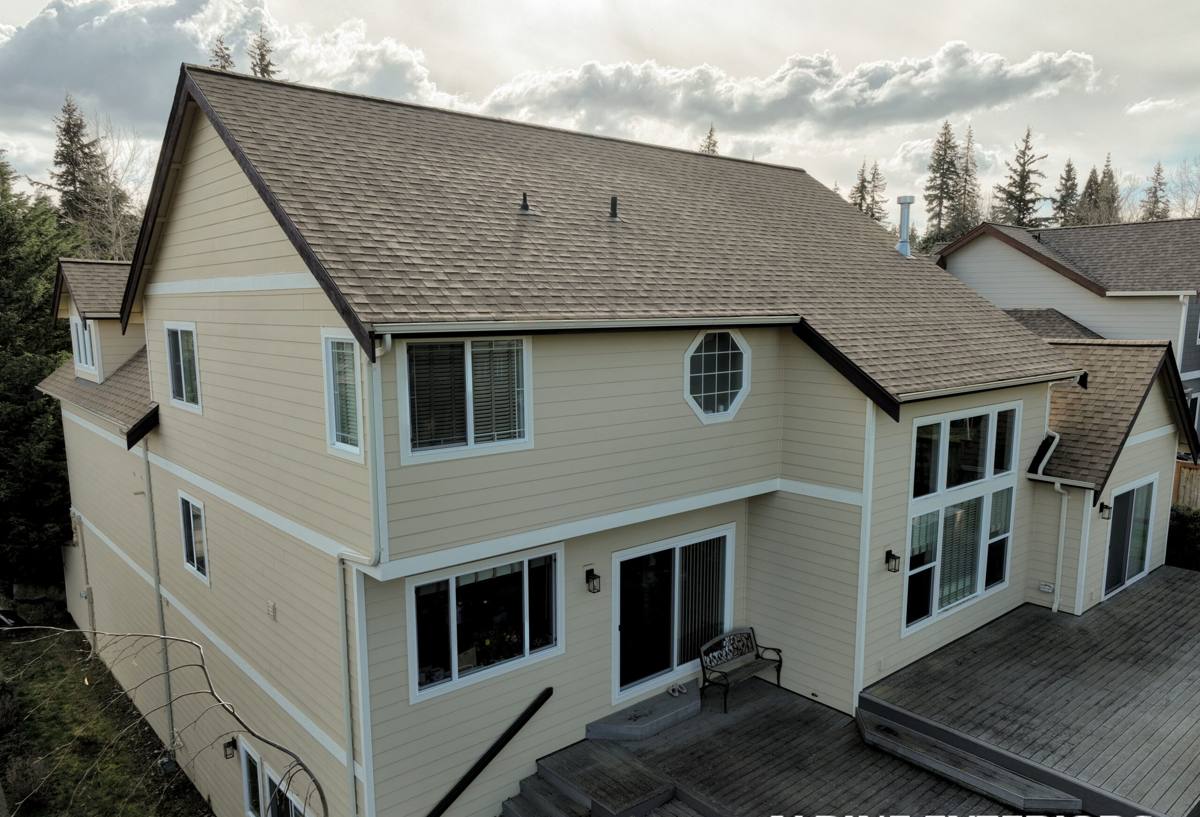
 Asphalt Shingle Roofing Built for Lummi Island Conditions
Lummi Island sits out in the salt water and weather of Whatcom County, and that changes what a roof has to survive. A shingle roof here isn't just shedding rain — it's absorbing salt-laden air off the water, taking wind-driven rain sideways under normal flashing details, and growing moss on any north-facing slope that doesn't get direct sun for months at a stretch. Asphalt shingle roofing done right for this area accounts for all three. Done wrong, or done with mainland assumptions about what "normal" weather exposure looks like, it shows up early as granule loss, curling edges, and soft spots around penetrations.
We work Lummi Island as part of our regular Whatcom County service area, alongside Birch Bay and the surrounding coastline. That matters more than it sounds like it should — a roofing crew that only occasionally makes the trip out tends to detail a roof the same way they would anywhere else. A crew that's out here regularly has already seen which details hold up and which ones fail first in this specific exposure.
What the Local Climate Actually Does to a Shingle Roof
Salt Air
Homes close to the water take in salt-laden moisture in the air, not just in wind-blown spray during storms. Over years, that salt exposure accelerates corrosion on exposed metal — nail heads, flashing, vent stacks, and any hardware that isn't rated for coastal use. A roof that looks fine from the ground can have flashing that's thinning out or fasteners that are rusting under the shingle tabs. It's one of the reasons material choice and fastener choice matter more here than on a roof twenty miles inland.
Driving Rain and Wind
Storms coming off the water don't just drop rain straight down — they push it sideways, which means water finds its way into laps, seams, and flashing details that would stay dry in a calmer, more sheltered spot. Roofs on Lummi Island need tighter sealing at every penetration and valley, and shingle courses that are nailed and sealed to hold under wind uplift, not just gravity.
Moss and Shade
Tree cover and long stretches of overcast, damp weather mean moss and algae get a real foothold on shaded or north-facing roof slopes. Moss isn't just cosmetic — as it grows, it lifts shingle edges, holds moisture against the roof deck, and speeds up granule loss. A roof that's shaded most of the day needs a different maintenance rhythm than one that gets full sun, and the shingle product itself can help or hurt that fight.
What a Correct Asphalt Shingle Job Actually Involves
"Reroofing" gets treated like a single step by a lot of homeowners, but a roof that's actually built for this climate is really a stack of decisions, each one mattering:
- Deck inspection and repair — any soft, delaminated, or water-stained sheathing gets replaced before a single shingle goes down. Shingles nailed over a bad deck fail early no matter how good the shingle is.
- Underlayment — a synthetic or ice-and-water underlayment in valleys, eaves, and other vulnerable areas gives a second line of defense when wind-driven rain gets past the shingle surface.
- Flashing — step flashing at walls, counterflashing at chimneys, and properly lapped flashing at valleys and penetrations, using corrosion-resistant metal appropriate for coastal exposure.
- Ventilation — balanced intake and exhaust airflow keeps the attic dry and temperature-regulated, which protects the deck from the underside and helps prevent the kind of trapped moisture that speeds up moss and rot.
- Shingle installation — correct nailing pattern and placement (not just "enough nails"), proper starter course, and consistent exposure so every course locks the one below it against wind.
- Ridge and hip detail — capped and sealed correctly, since ridges take the most direct wind exposure on the whole roof.
Skip or shortcut any one of those steps and the roof might still look fine for a season or two — but it won't hold up through a full cycle of wet winters the way it should.
Our Process for Lummi Island Roofing Projects
Getting materials and crew out to the island is a real logistical factor, and we plan around it rather than treating it as an afterthought. Because access involves ferry scheduling, we build projects with tighter material staging and a clear day-by-day plan, so the crew isn't making repeat trips for things that should have been on-site from the start.
- On-site assessment — we walk the roof (or use a lift/drone where the pitch or access calls for it), check the deck condition where visible, and look at ventilation, flashing, and any moss or algae staining that points to trapped moisture.
- Written estimate — covering scope, material selection, and a realistic timeline that accounts for ferry access and weather windows, not just labor hours.
- Material staging — everything needed for the job is ordered and delivered to the island in a coordinated load, minimizing back-and-forth trips that eat into good weather days.
- Tear-off and deck repair — old roofing removed, deck inspected and repaired as needed, with damaged areas addressed before dry-in.
- Dry-in and flashing — underlayment and flashing installed first, so the roof is weather-tight even if shingle work spans more than one day.
- Shingle installation and final inspection — courses installed to spec, ridge capped, site cleaned of debris and nails, and a final walkthrough with the homeowner.
Choosing the Right Shingle for This Exposure
Not every asphalt shingle product is built the same, and the differences matter more in a coastal, moss-prone climate than they do in a drier or more sheltered one. Here's how the common tiers generally compare for a Lummi Island roof:
| Shingle Type | Typical Lifespan | Wind Rating | Best Fit |
|---|---|---|---|
| 3-tab (economy) | 15–20 years | Lower | Budget-driven projects, outbuildings, less wind-exposed roof faces |
| Architectural / dimensional | 25–30 years | Moderate–high | Most primary residences; good balance of durability and cost |
| Premium / designer | 30+ years | High | Full sun/wind exposure, homeowners prioritizing longevity and appearance |
| Algae-resistant (copper/zinc-infused granules) | Same as base tier, extended appearance life | Same as base tier | Shaded or north-facing roofs prone to moss and streaking |
For most homes on Lummi Island, we lean toward an architectural shingle with algae-resistant granules as the practical default — it holds up to wind and salt exposure better than 3-tab, and the algae resistance directly addresses the moss and streaking problem that shaded island roofs deal with. Premium shingles are worth the upgrade for homes with especially exposed roof planes or homeowners who want the longest possible service life, but they're not a strict necessity everywhere.
Fastener and Metal Choices Matter Too
Because of salt air exposure, we pay attention to fastener and flashing material, not just the shingle brand. Hot-dip galvanized or stainless fasteners and appropriately rated flashing metal cost a little more up front but avoid the early corrosion that undermines an otherwise good roofing job near the water.
Moss, Algae, and Ongoing Roof Maintenance
Even the right shingle product benefits from some basic upkeep on a shaded, damp roof. A short annual routine goes a long way:
- Keep overhanging branches trimmed back to let more light and airflow reach shaded roof sections.
- Clear gutters and valleys of needles and debris so water doesn't pool and feed moss growth.
- Have moss physically removed (not scraped aggressively) rather than left to spread, since it lifts and loosens shingle edges over time.
- Check attic ventilation periodically — blocked soffit or ridge vents trap moisture and accelerate problems from the underside of the roof.
- Schedule a visual roof check after major windstorms, since driving rain events are when small flashing or seal issues tend to reveal themselves as leaks.
Repair or Full Replacement? Signs to Watch For
Not every roofing issue means a full tear-off. Isolated flashing failures, a small number of damaged shingles after a storm, or a single leaking penetration can often be repaired. Full replacement makes more sense when:
- Granule loss is widespread and shingles are visibly curling or cupping across multiple slopes.
- The roof is past or near the end of its expected service life for its shingle tier.
- There's evidence of deck damage — sagging, soft spots, or staining visible from the attic.
- Moss coverage is heavy and has already lifted shingle edges in multiple areas rather than staying surface-level.
- Repeated repairs are being needed in different spots each year — a sign the roof system as a whole is wearing out, not just one section.
We'll always tell you honestly which category a roof falls into rather than defaulting to the more expensive option.
Why It Matters to Hire a Crew That Already Works Lummi Island
A roofing job on Lummi Island isn't logistically identical to one in town. Ferry access affects scheduling and material delivery, and the exposure this close to the water means flashing, fastener, and shingle choices that work fine elsewhere can underperform out here. A crew that already routes projects through this part of Whatcom County has worked out the scheduling and material-staging side of the job, and has seen firsthand which shingle and flashing details actually hold up against salt air, wind-driven rain, and a long moss season — not just which ones perform well in a showroom or a drier climate.
That local pattern-recognition is hard to get from a crew that treats the island as an occasional add-on stop. It shows up in fewer callbacks, fewer surprises mid-project, and a roof that's actually specified for the conditions it has to survive.
Get a Free Estimate for Your Lummi Island Roof
If you're dealing with an aging roof, visible moss, or you just want an honest read on what condition your shingles are in, we're happy to take a look. We'll walk the roof, explain what we find in plain terms, and put together a written estimate with no pressure to move forward before you're ready.