 Birch Bay
 Why Birch Bay Village Roofs Wear Differently
Homes in Birch Bay Village sit close to the water, and that changes how a roof ages compared to a house twenty miles inland. Salt-laden air off the Strait of Georgia works on exposed metal year-round — nails, flashing, vent stacks, and drip edge corrode faster here than in a typical Whatcom County subdivision. Add in driving rain that comes sideways off the bay during winter storms, and you get wind-driven water finding every weak seam, lap, and fastener a roof has. Then there's moss. Birch Bay's mix of shade, humidity, and mild winters gives moss and algae a long growing season, and once it takes hold on shingles it holds moisture against the roof deck long after the rain has stopped.
None of this means a roof here is doomed to fail early. It means the materials, fastening details, and ventilation have to be chosen and installed with this specific exposure in mind. A roof replacement done to a generic standard, without accounting for salt air and near-constant moisture, tends to show flashing corrosion, moss regrowth, and granule loss years before it should.
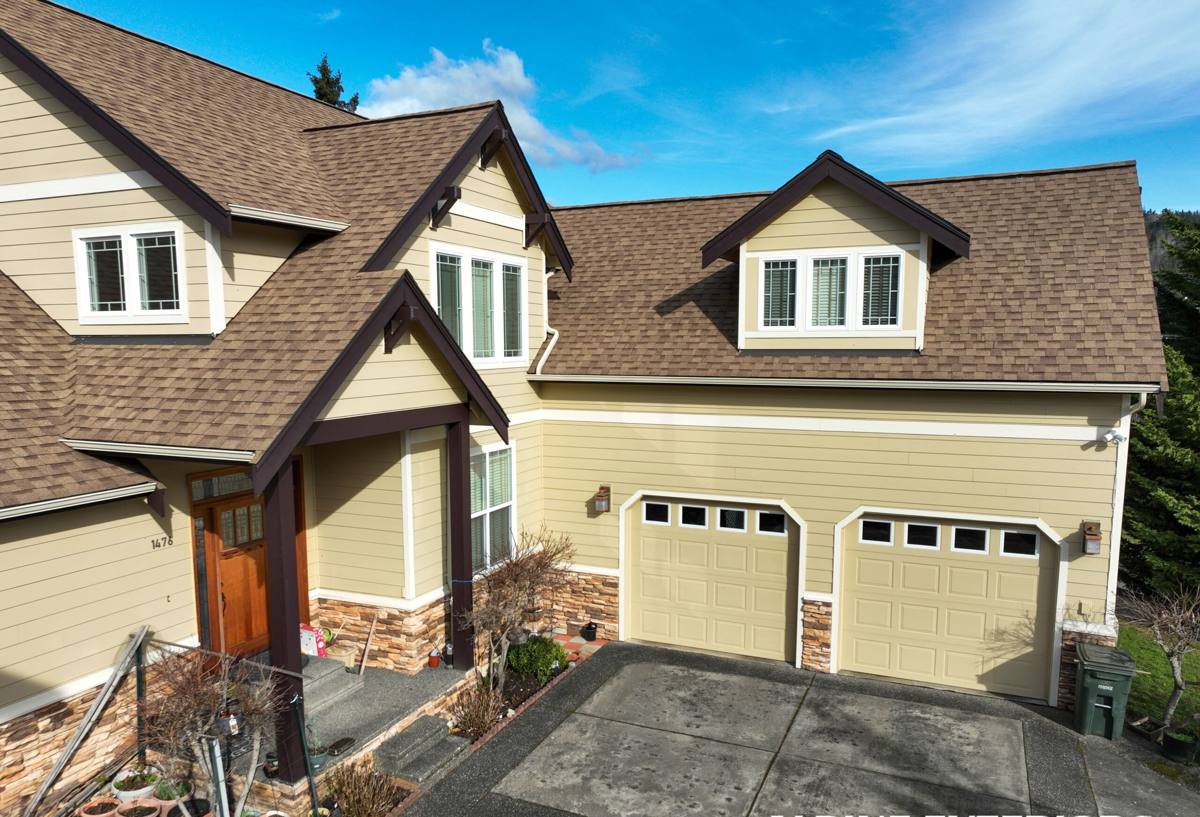
Signs Your Roof Replacement Can't Wait
Most roofs give warning signs well before a leak shows up inside the house. In Birch Bay Village, we typically see homeowners call us after noticing one or more of the following:
- Shingles that are curling, cupping, or losing granules faster on the side of the roof facing the water
- Dark streaking or thick moss growth on north-facing or shaded slopes
- Rusted or lifting flashing around chimneys, skylights, and vent pipes
- Soft spots, sagging, or visible daylight in the attic where there shouldn't be any
- A roof that's already had multiple repair patches over the last several years
Any one of these on its own might not mean full replacement is due immediately. But when a roof is showing two or three of them at once, patch repairs usually stop being cost-effective and a full replacement becomes the more honest recommendation.
What a Correct Roof Replacement Involves
A roof replacement is more than stripping old shingles and nailing down new ones. Done right, especially in a coastal-influenced spot like Birch Bay, it involves several steps that each protect against a different failure mode:
- Full tear-off down to the deck — layering new shingles over old is common in some markets, but it traps moisture and hides deck damage, which is a bad trade-off in a wet climate.
- Deck inspection and repair — any plywood or OSB that's soft, delaminated, or water-stained gets replaced before anything new goes on. Skipping this is the single most common cause of early roof failure.
- Ice and water shield at eaves, valleys, and around every penetration, not just where code minimums require it. This is the layer that stops wind-driven rain from working its way back up under the shingles.
- New flashing at chimneys, walls, and vent stacks — reusing old flashing is a shortcut that shows up as a leak within a few seasons near salt air.
- Balanced ventilation so the attic can actually dry out between wet spells instead of staying damp, which is what feeds moss and rot from underneath.
- Underlayment and shingle installation to manufacturer spec, with fastening patterns suited to wind exposure rather than the bare minimum.
Every one of these steps matters more in Birch Bay Village than it would on a sheltered inland lot, because the margin for error is smaller when the roof is dealing with salt exposure and heavier rain loads from day one.
Attic and Ventilation Check
Before we quote a replacement, we look at the attic, not just the roof surface. Poor or blocked ventilation is one of the biggest reasons roofs in this area develop moss and premature wear. If the intake and exhaust venting aren't balanced, moisture from daily living gets trapped under the deck and works against the new roofing from the inside, regardless of how good the shingles are.
Choosing Materials for a Marine-Influenced Climate
There's no single "best" roofing material for every home, but some perform noticeably better than others under salt air, driving rain, and moss pressure. We walk homeowners through the real trade-offs rather than pushing one product:
| Material | Salt Air / Moisture Performance | Moss Resistance | Typical Lifespan |
|---|---|---|---|
| Architectural asphalt shingle | Good, with proper flashing and fasteners | Better with algae-resistant granules | 25–30 years |
| Standing seam metal | Very good when properly coated and fastened | Excellent — sheds moss naturally | 40+ years |
| 3-tab asphalt shingle | Fair — thinner profile, more exposed fasteners | Fair | 15–20 years |
| Wood shake / shingle | Requires diligent maintenance in wet climates | Poor without regular treatment | Varies widely with upkeep |
For most Birch Bay Village homes, we lean toward architectural shingles with algae-resistant granules or a standing seam metal roof, depending on budget and roof style. We're generally cautious about wood shake and shingle roofs in this specific climate — not because the material is bad, but because it demands a level of ongoing maintenance (regular treatment, cleaning, and moisture management) that most homeowners don't want to keep up with year after year next to the water. That's a maintenance-burden and moisture-behavior trade-off we'll walk through honestly, not a knock on the product itself.
Ventilation, Moss, and Long-Term Moisture Control
Moss doesn't just sit on top of a roof looking bad — it holds water against the shingle surface, which shortens the life of the roofing material and can work its way under tabs and flashing over time. In Birch Bay, shaded roof slopes and the area's long damp season give moss a real advantage. Zinc or copper strips near the ridge can help discourage regrowth on new roofs, and we factor moss exposure into how we detail valleys and shaded slopes during installation. Combined with balanced attic ventilation, this is what keeps a new roof looking and performing like new well past the first few winters, instead of showing streaking and growth in year two or three.
Our Process, Start to Finish
We keep the process straightforward because homeowners in Birch Bay Village deserve to know what's happening on their roof and why:
- An on-site inspection of the roof surface, flashing, and attic — not just a drive-by estimate.
- A written estimate that explains material options and cost factors in plain terms, no pressure tactics.
- Scheduling that accounts for weather windows, since we won't tear off a roof ahead of a storm system coming off the water.
- Full tear-off, deck repair as needed, new flashing, underlayment, and ventilation work, then the new roofing material.
- A final walk-through and cleanup, including a magnetic sweep for stray nails around the yard and driveway.
What Affects the Cost of a Birch Bay Village Roof
Every roof is different, and we won't quote a number without seeing the actual roof. But the main variables that move the price up or down are consistent:
| Cost Factor | Why It Matters |
|---|---|
| Roof size and pitch | Steeper roofs take longer and require more safety setup |
| Deck condition | Rotten or soft plywood found during tear-off adds material and labor |
| Material choice | Standing seam metal costs more upfront than asphalt but lasts far longer |
| Number of penetrations | Chimneys, skylights, and multiple vent stacks each need custom flashing |
| Access and site conditions | Tree cover, tight lot lines, and staging space affect labor time |
We'd rather explain these factors up front than hand over a low number that changes once tear-off starts. If we find deck damage or other issues once the old roof is off, we'll show you before doing the work, not after.
Why a Crew That Already Works Birch Bay Village Matters
Roofing crews that only occasionally work this close to the water often underestimate how much salt exposure and wind-driven rain change the job. A crew that regularly works Birch Bay Village knows which flashing details hold up here, how much ventilation this kind of moss season actually calls for, and how to sequence a tear-off around weather coming off the bay instead of getting caught mid-job. That familiarity isn't marketing — it shows up in fewer callbacks and a roof that's still performing well a decade later, not just at the final walk-through.
After Your New Roof: A Maintenance Checklist
A correctly installed roof still benefits from basic upkeep, especially in this climate. A short list we give every Birch Bay Village homeowner after a replacement:
- Have gutters cleared at least twice a year so wind-driven rain has somewhere to go
- Check for moss regrowth on shaded slopes each spring and address it early
- Keep overhanging branches trimmed back to reduce shade and debris buildup
- Look at flashing around chimneys and vents after major windstorms
- Schedule a quick visual inspection every couple of years, even with no visible problems
None of this is intensive, but skipping it is how a well-installed roof loses years off its lifespan in a climate like this one.
If your roof in Birch Bay Village is showing wear, moss, or you're just not sure how much life it has left, we're happy to take a look and give you a straightforward, no-pressure estimate using the form below.