 Birch Bay
 Board & Batten Siding Built for Blaine's Coastal Climate
Blaine sits at the northern edge of Whatcom County, right up against Semiahmoo Bay and the Strait of Georgia, and homes here take a different kind of beating than siding installed fifty miles inland. Salt-laden air works into every seam, fastener, and cut edge. Storms roll in off the water and drive rain sideways into walls that a calmer climate would never test. Long, gray winters keep north- and shade-facing walls damp enough to grow moss for months at a stretch. Board and batten siding — with its bold vertical lines and exposed batten strips — is a popular look for Blaine homes, from waterfront properties to newer builds set back from the shoreline, but it only holds up long-term if it's specified and installed with this exact climate in mind.
We install board and batten using James Hardie fiber cement exclusively. This page covers what that means for a Blaine home specifically: how the local climate changes the installation details, what a correct job actually involves, and what to expect if you're weighing this style for your house.
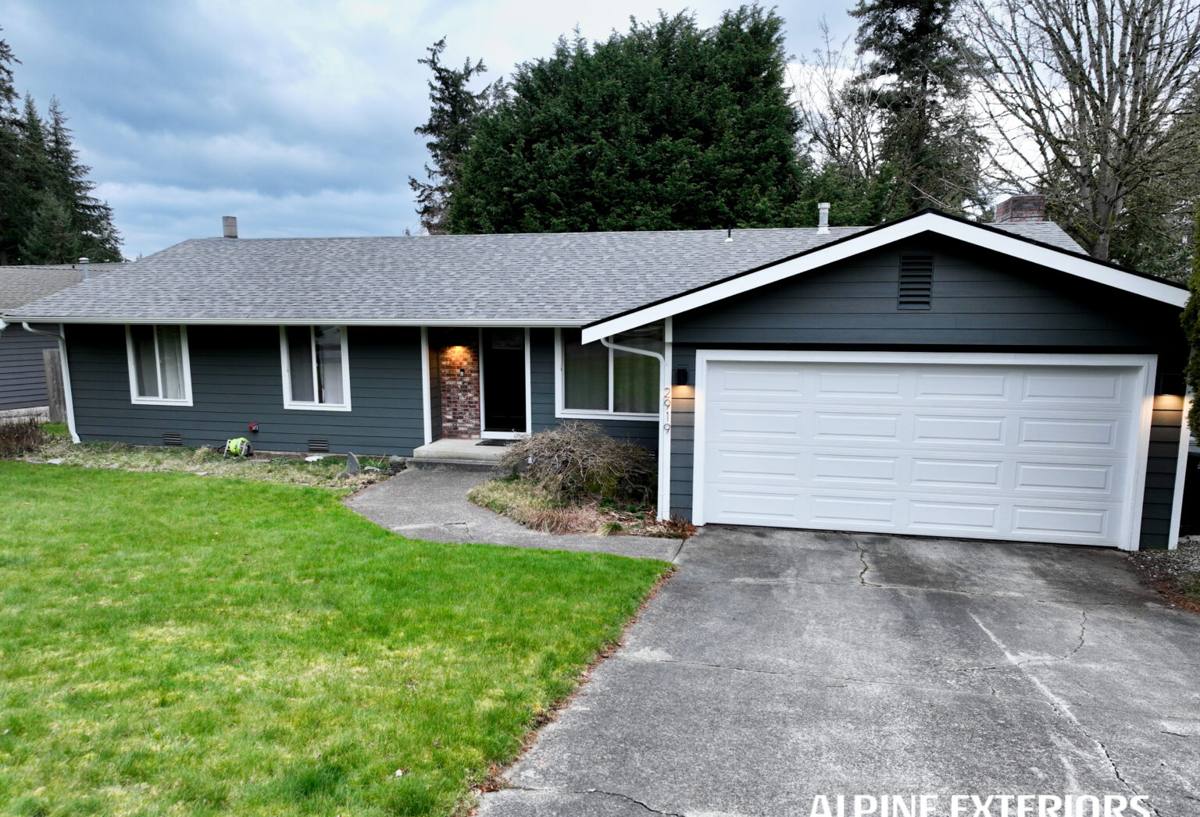
Why Blaine's Climate Is Hard on Vertical Siding
Salt Air and Coastal Exposure
Airborne salt is corrosive to metal and abrasive to finishes. On a home a few blocks from the water, fasteners, flashing, and trim hardware all face accelerated corrosion compared to the same materials installed further inland. Board and batten has more exposed vertical seams and more fastener points per square foot than plain lap siding, so the fastener and flashing choices matter more here than they would on a similar home in a drier, inland part of the county.
Wind-Driven Rain
Blaine's exposure to storms coming across open water means rain doesn't just fall — it gets pushed horizontally into wall assemblies with real force. Vertical siding profiles like board and batten rely on the battens themselves, the panel joints beneath them, and the water-resistive barrier behind everything to keep that driven rain from finding its way to the sheathing. Any gap in that system shows up faster in a wind-driven rain climate than it would somewhere calmer.
Moss, Shade, and Slow-Drying Walls
Whatcom County's marine climate keeps humidity high and sun exposure low for large stretches of the year, especially on north-facing and tree-shaded walls. That combination is exactly what moss and algae need to take hold. Siding that can't dry out between rain events stays damp longer, and prolonged dampness against any wall material — fiber cement included — is what eventually causes problems, whether that's finish breakdown, staining, or, on lesser materials, swelling and rot.
What Correct Board & Batten Installation Involves
Panel and Batten Layout
Board and batten is built from a base panel with vertical batten strips fastened over the seams, or from individual boards installed with reveals and battens covering the gaps. Layout has to account for window and door openings, corner details, and consistent batten spacing across the whole elevation — get the layout wrong and it's visible from the street for the life of the house.
Fastening for Coastal Wind Loads
Fastener type, spacing, and penetration depth all need to match both the manufacturer's specification and the wind exposure category for a coastal Whatcom County lot. Corrosion-resistant fasteners are non-negotiable this close to salt water — the wrong fastener can start staining and loosening years before the siding itself would ever fail.
Water Management Behind the Siding
A correctly built wall assembly manages water in layers: a weather-resistive barrier against the sheathing, properly lapped and sealed housewrap or building paper, and in many cases a rainscreen gap that lets any moisture that does get past the cladding drain and dry out instead of sitting against the wall. This layered approach matters more on vertical siding in a driving-rain climate than it does on a sheltered, inland wall.
Flashing and Trim Details
Every window head, sill, corner, and horizontal transition is a place where water wants to get behind the siding. Correct flashing at these points — not caulk alone — is what actually keeps a board and batten wall dry over decades, not just through the first few winters.
James Hardie Board & Batten Systems We Install
James Hardie offers more than one way to achieve a board and batten look, and the right choice depends on the home's style and the effect you want. The table below compares the two most common approaches we use on Blaine projects.
| System | Look | Best Fit | Notes |
|---|---|---|---|
| HardiePanel Vertical Siding with battens | Clean, continuous vertical panel with evenly spaced battens over the seams | Full elevations, modern or farmhouse-style homes | Efficient coverage; battens conceal panel joints and add the classic board and batten shadow line |
| Board and batten from individual Hardie boards | More traditional, slightly more texture and shadow variation | Accent walls, gables, mixed-material facades | More labor-intensive layout; often paired with HardiePlank lap siding elsewhere on the same home |
Both systems come through in James Hardie's ColorPlus factory finish, which matters in a coastal climate — a factory-cured finish holds up to salt air and UV exposure more consistently than field-applied paint, and it carries its own finish warranty separate from the substrate warranty.
Why We Install Only James Hardie in Blaine
Board and batten can be built from several materials — engineered wood, vinyl, real cedar, or fiber cement — and each has a fair case made for it. Engineered wood board and batten is lighter and quicker to install; vinyl board and batten is inexpensive; real wood has genuine character. We've chosen not to install any of those on Blaine homes, and the reasoning comes down to this specific climate.
Engineered wood products are wood at their core, which means they're only as good as the moisture barrier protecting them and the caulking maintained over their lifetime — a real concern in a climate that keeps walls damp for months. Vinyl board and batten flexes and fades with UV and temperature cycling, and its seams and battens are typically snapped or clipped rather than mechanically fastened the way fiber cement is, which changes how it performs in sustained wind-driven rain. Real cedar is a beautiful, legitimate material, but it demands a maintenance commitment — refinishing, sealing, and vigilant moisture management — that most homeowners underestimate until the upkeep bills start arriving.
James Hardie fiber cement doesn't have those trade-offs. It's non-combustible, dimensionally stable in a wet-dry climate, engineered in HZ5 and similar formulations for regions like the Pacific Northwest, and backed by a strong transferable warranty when installed to spec. That's why it's the only board and batten material that leaves our trucks.
Our Board & Batten Process for Blaine Homeowners
- On-site assessment: We look at wall orientation, shade exposure, existing moisture damage, and how exposed the home is to wind off the water before recommending a layout or system.
- Product and color selection: We walk through HardiePanel and Hardie board options, batten spacing, and ColorPlus color choices suited to the home's style and the coastal light.
- Tear-off and substrate check: Removing the old siding lets us actually inspect the sheathing for hidden moisture damage before anything new goes up — a step that can't be skipped on a home this close to the water.
- Water-resistive barrier and rainscreen installation: This is the layer that does the real work over the life of the siding, and it goes in before a single batten is fastened.
- Panel, board, and batten installation: Fastened to manufacturer spec with corrosion-resistant hardware sized for this exposure.
- Flashing, trim, and caulking: Detailed at every penetration and transition, not just at the obvious spots.
- Final walkthrough: We go over the finished work with the homeowner and explain what basic maintenance to expect going forward.
What Board & Batten Siding Costs in Blaine
Board and batten typically costs somewhat more than plain lap siding in the same material, mainly because of the extra batten strips, more detailed layout work, and additional labor time per square foot. Beyond that, a handful of factors move the price for a specific Blaine home more than anything else.
| Cost Factor | Why It Matters |
|---|---|
| Wall square footage and elevation count | More surface area and more corners/gables means more layout and cutting time |
| Existing sheathing condition | Moisture-damaged sheathing found during tear-off needs repair before new siding goes on |
| Batten spacing and pattern | Tighter spacing or a mixed-material facade adds labor beyond a straightforward full-wall install |
| Wind exposure of the lot | Homes with direct water exposure may need heavier-duty fastening and flashing detail |
| Trim and accent complexity | Window and door surrounds, corner boards, and gable detailing all add time |
We give every Blaine homeowner a specific, written estimate after seeing the actual home — broad averages don't account for what's really going on behind the existing siding.
Maintenance in a Salt Air, Moss-Prone Climate
James Hardie fiber cement is low-maintenance compared to wood or engineered wood alternatives, but "low-maintenance" isn't "no-maintenance" — especially this close to the water. A simple annual routine keeps a board and batten installation performing the way it's designed to for decades.
- Rinse the siding once or twice a year to clear accumulated salt film, especially on walls facing the water
- Check caulking at window and door trim, and at batten ends, for cracking or separation
- Look for early moss or algae growth on shaded, north-facing walls and clean it before it spreads
- Confirm gutters and downspouts are directing water away from the wall base, not saturating it
- Watch for any gaps opening up between battens and the base panel over time
- Keep an eye on paint or ColorPlus finish condition and address touch-ups before bare substrate is exposed
Why Hire a Crew That Already Works in Blaine
A contractor who's worked across Whatcom County's coastal communities already knows which walls on a given lot take the worst of the weather, what wind exposure category applies, and how local building requirements handle water-resistive barriers and flashing details. That's knowledge that only comes from doing the work here repeatedly — not from a general siding background applied to a coastal job for the first time. It also means faster, more accurate estimates, because we're not guessing at how this climate behaves; we're accounting for it by default.
If you're considering board and batten siding for a home in Blaine, we're happy to take a look and put together a free, no-pressure estimate — just fill out the form below.